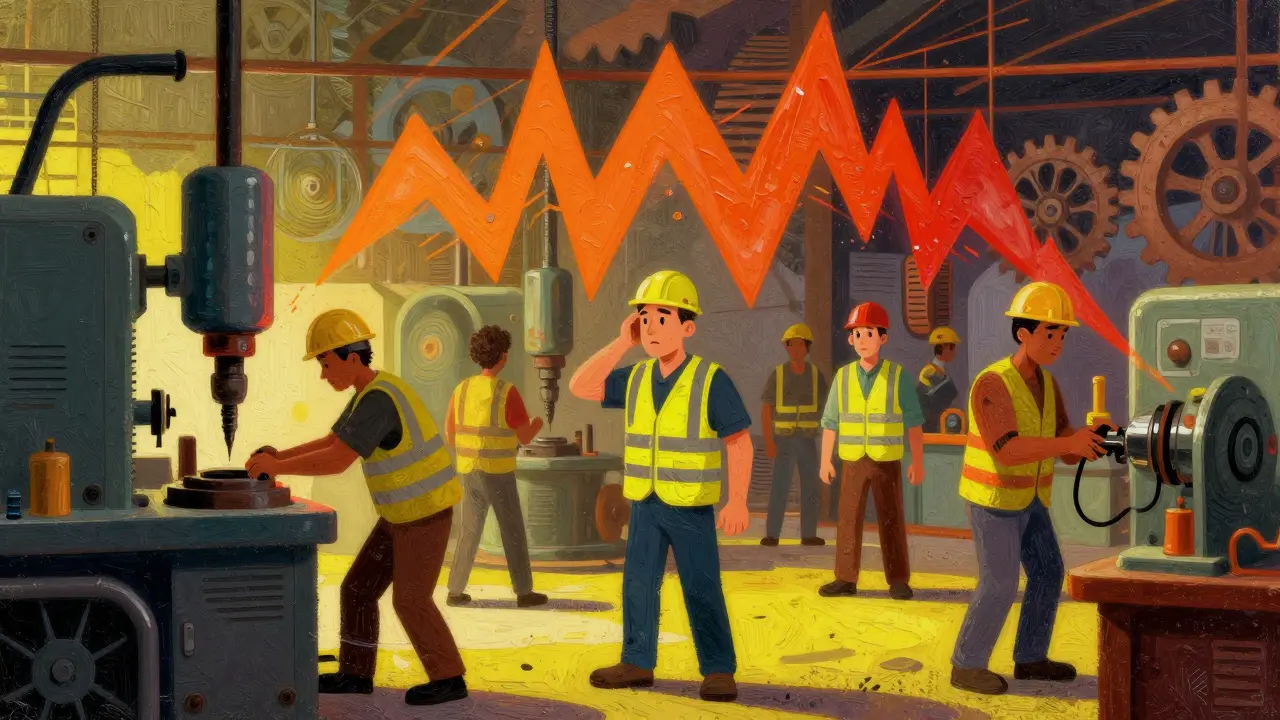
You hear the hum of machinery every day. It’s just background noise, right? Wrong. For millions of workers, that constant roar is silently stealing their ability to hear clearly, one decibel at a time. Noise-induced hearing loss (NIHL) doesn’t happen overnight. It creeps in, often unnoticed until it’s permanent. That’s why Hearing Conservation Programs are not just paperwork-they are your first line of defense against irreversible damage. If you manage a team or work in a loud environment, understanding these programs isn't optional. It’s a legal requirement under OSHA regulations. But more importantly, it’s about keeping people healthy. This guide breaks down exactly what these programs entail, how testing works, and what you need to do to stay compliant and safe.
What Is a Hearing Conservation Program?
A Hearing Conservation Program (HCP) is a structured set of workplace safety protocols designed to protect employees from the harmful effects of occupational noise. Established under OSHA’s regulation 29 CFR 1910.95, this standard mandates specific actions when noise levels reach dangerous thresholds. The goal is simple: prevent hearing loss before it starts. The trigger for an HCP is specific. If employee noise exposures equal or exceed an 8-hour time-weighted average (TWA) of 85 decibels (measured on the A-scale with slow response), employers must implement the program. Think of 85 dBA as the warning line. Cross it, and you’re in the danger zone where long-term exposure causes damage. According to NIOSH, approximately 22 million American workers face these hazardous levels annually. That’s a massive group at risk, which is why the program exists.
But there’s a difference between the "action level" and the "permissible exposure limit." The action level is 85 dBA. The permissible exposure limit (PEL) is 90 dBA. You don’t wait until you hit 90 dBA to act. Once you hit 85 dBA, the clock starts ticking on your compliance obligations. Ignoring this distinction is one of the most common mistakes companies make, leading to costly citations and, worse, injured workers.
The Five Core Components of Compliance
An effective HCP isn’t a single task; it’s a system. OSHA specifies five primary components that must work together. Missing even one can render the entire program ineffective.
- Noise Monitoring: You have to know how loud it is. This involves using calibrated sound level meters or noise dosimeters to map out areas where exposure hits 85 dBA TWA or higher. If you change equipment or processes, you must re-monitor. Noise isn’t static; neither should your data be.
- Audiometric Testing: Regular hearing tests track changes over time. This is the diagnostic heart of the program.
- Hearing Protection: Providing earplugs or earmuffs isn’t enough. They must attenuate noise to at least 90 dBA TWA, and employees must know how to use them correctly.
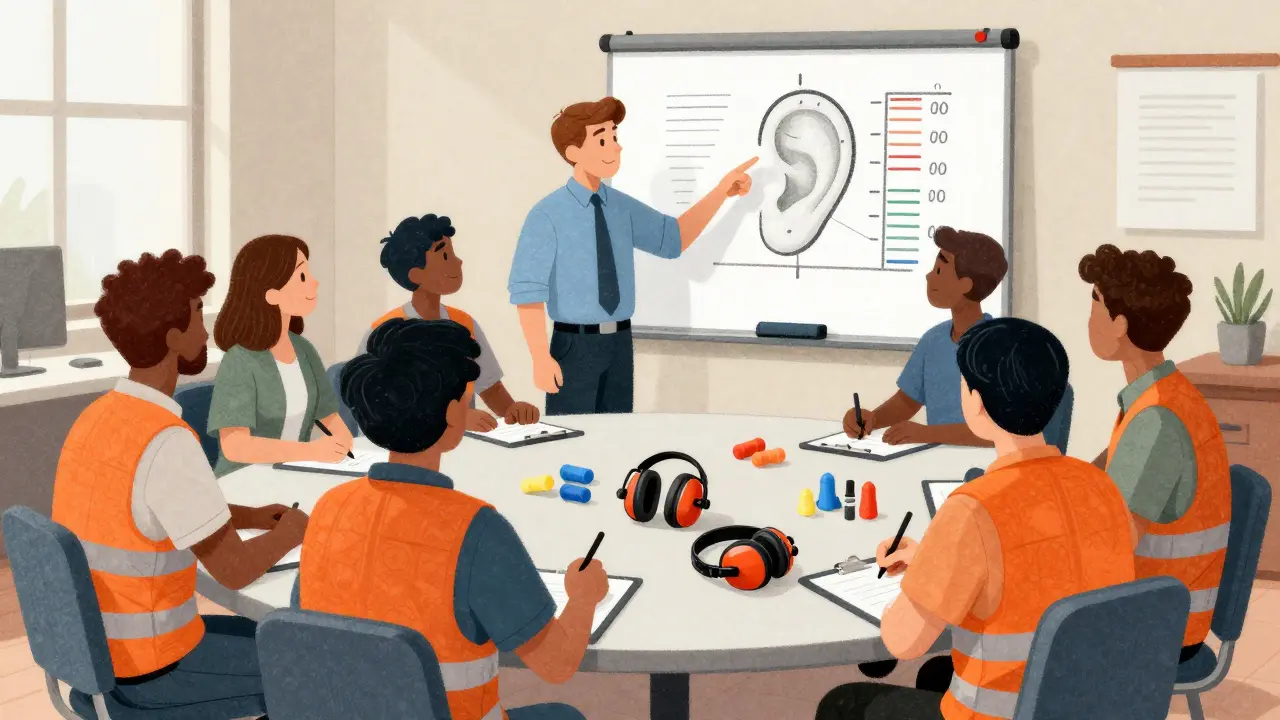
- Training: Workers need annual education on noise hazards, protector fit, and test results. Awareness drives participation.
- Recordkeeping: Documentation proves compliance. Keep noise monitoring records for two years and audiometric results for the duration of employment.
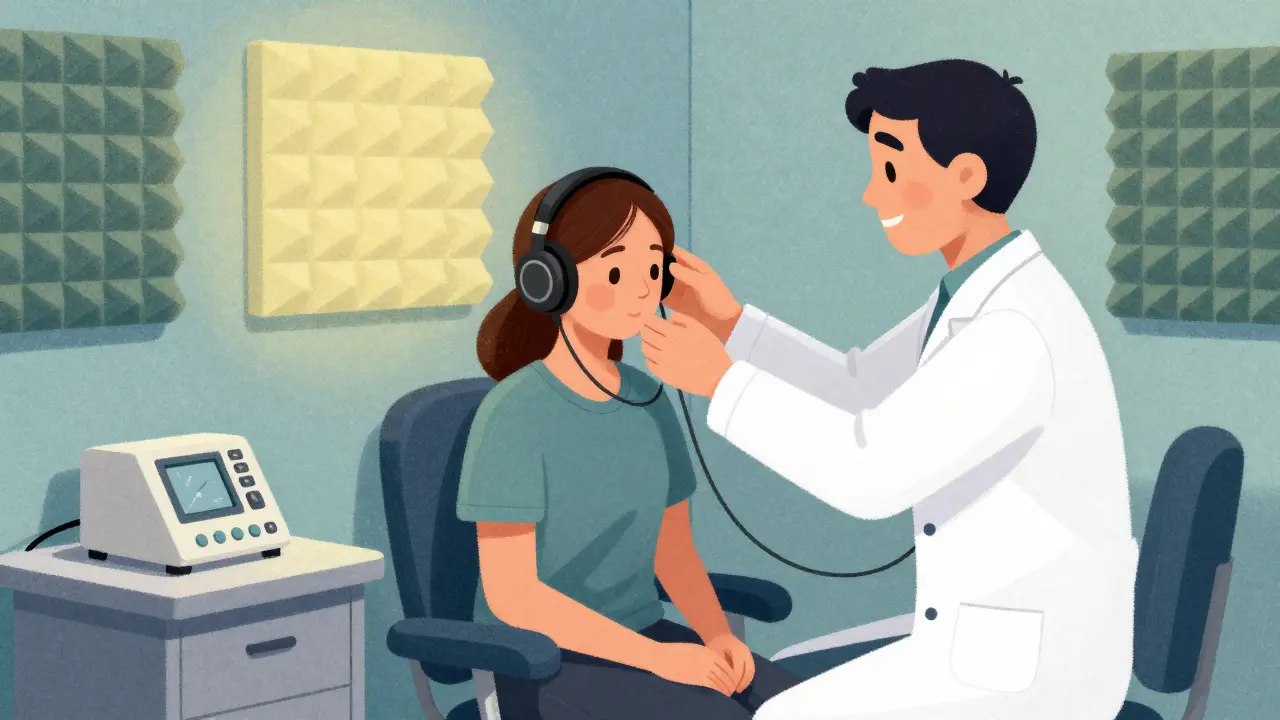
Understanding Audiometric Testing Protocols
Testing is where many programs stumble. It’s not just about plugging someone into a machine. Precision matters. Here’s how it should work:
- Baseline Audiogram: Within six months of an employee’s first exposure at or above the action level, they get a baseline test. Crucially, the employee must be free from workplace noise for at least 14 hours prior to this test. Why? Temporary threshold shifts from recent noise exposure can skew results, making normal hearing look damaged or vice versa.
- Annual Follow-ups: After the baseline, tests happen yearly. Frequencies tested include at minimum 500, 1000, 2000, and 3000 Hz. Some states, like California under Title 8 Section 5097, require additional frequencies.
- Environment Matters: Tests must occur in rooms meeting strict background sound pressure levels. A noisy hallway invalidates the test. The audiometer itself must meet ANSI specifications (currently SC-1969, though updates are proposed).
| Requirement | Standard/Rule | Purpose |
|---|---|---|
| Pre-test Quiet Period | 14 hours minimum | Eliminate temporary threshold shift interference |
| Test Frequencies | 500, 1000, 2000, 3000 Hz (min) | Capture high-frequency loss first |
| Room Acoustics | Appendix C Background Levels | Ensure signal clarity |
| Equipment Calibration | ANSI SC-1969 | Guarantee measurement accuracy |
Responding to a Standard Threshold Shift
What happens if the test shows a decline? A Standard Threshold Shift (STS) is defined as an average change of 10 dB or more at 2000, 3000, and 4000 Hz compared to the baseline. Detecting an STS triggers immediate action within 30 days:
- Notify the Employee: Send written notice within 21 days of determination. Transparency builds trust.
- Refit and Retrain: Ensure their hearing protectors are working. Maybe the current pair isn’t sealing properly.
- Upgrade Protection: Provide devices with greater attenuation if needed.
- Medical Referral: If pathology is suspected, refer for clinical audiological evaluation.
Implementation Challenges and Costs
Running an HCP isn’t cheap, but ignoring it is pricier. The average cost ranges from $250 to $400 per employee annually, with audiometric testing eating up 45-55% of that budget. Small businesses struggle most, with a 37% non-compliance rate compared to 18% for larger firms. Common hurdles include inconsistent employee participation (reported by 68% of safety managers) and difficulties with proper fit testing (52%). Mobile audiometric units help here, reducing downtime by 60% compared to off-site clinics. Consider investing in mobile services if travel time kills participation rates. Financially, the stakes are high. OSHA issued 1,842 citations for hearing violations in fiscal year 2022, a 17% jump from 2020. Penalties range from $15,625 to over $156,000 per violation. Beyond fines, workplaces with effective HCPs see 5-10% higher productivity and 15-20% lower absenteeism. Healthy ears mean focused minds.
Future Regulatory Changes
The rules aren’t static. OSHA’s 2023 initiative proposes modernizing standards, including updating audiometer calibration to ANSI S3.6-2018 and expanding test frequencies to include 4000 and 6000 Hz. These changes aim to catch earlier signs of damage. While implementation costs may rise by 8-12%, experts predict preventing 150,000 additional cases of hearing loss annually. Stay ahead of the curve by reviewing current practices now.
When does my company need a Hearing Conservation Program?
You need an HCP whenever employee noise exposure equals or exceeds an 8-hour time-weighted average (TWA) of 85 decibels (dBA). This is known as the action level. Do not wait for the permissible exposure limit of 90 dBA; compliance requirements start at 85 dBA.
How often must audiometric testing be performed?
A baseline audiogram is required within six months of an employee's first exposure at or above the action level. After that, annual audiometric testing is mandatory for all covered employees.
What is a Standard Threshold Shift (STS)?
An STS is a change in hearing threshold relative to the baseline audiogram of an average of 10 dB or more at 2000, 3000, and 4000 Hz. Detecting an STS requires specific employer actions, including notification, refitting, and potential medical referral.
Why is the 14-hour quiet period important before testing?
Exposure to loud noise can cause a temporary threshold shift, masking true hearing status. A 14-hour quiet period ensures the baseline or follow-up test reflects actual, permanent hearing health rather than temporary fatigue.
What are the penalties for non-compliance with OSHA hearing standards?
OSHA penalties vary based on severity but can range from $15,625 to over $156,000 per violation. In 2022, OSHA issued nearly 1,842 citations for hearing conservation violations, highlighting strict enforcement.
Ramanath Rao
May 28, 2026 AT 17:37Wait a minute, you are telling me that the government is actually trying to save our ears? That sounds suspiciously like they want to keep us working longer without complaining. I have been in factories in Chennai for twenty years and nobody ever gave me an earplug until my boss got fined. Now suddenly everyone cares about decibels? It feels like a trap. Why do we need all this paperwork when we just need quiet machines? The cost of these programs is huge for small businesses here. We cannot afford $400 per person. Is this really safety or just another way for big corporations to squeeze money out of us while pretending to care?
Victoria Mangiapane
May 30, 2026 AT 00:50Ugh, reading this makes my head hurt. Who has time for all this nonsense? Just wear earplugs if it's loud, duh. But no, we need 'programs' and 'protocols' and 'audiometric testing'. It’s so boring and dry. I tried to read past the first paragraph but honestly, who cares about OSHA regulations? My hearing is fine, I’m only thirty. This whole thing seems like overkill. Why can’t companies just buy better equipment instead of making us fill out forms every year? It’s such a waste of energy.
Angela Niculescu
May 30, 2026 AT 11:57Actually, ignoring the noise is worse than the paperwork. You think your hearing will just stay perfect forever? No. It degrades silently. People complain about regulations because they hate rules, not because they love losing their ability to hear their grandchildren speak. The data is clear. 22 million workers are at risk. If you think wearing foam plugs once a week is enough, you are deluding yourself. Fit matters. Attenuation matters. The system exists because humans are terrible at self-preservation when it comes to slow-acting hazards. Stop being contrarian for no reason and accept that science says loud noises destroy hair cells in your cochlea permanently.
Victoria Mangiapane
May 30, 2026 AT 19:28Oh great, now I feel guilty for not caring. Thanks for ruining my day with facts. I guess I am doomed then. Whatever. I’ll just turn up the music louder to drown out the guilt.
Joseph Teichman
June 1, 2026 AT 15:56good point angela. most guys ignore the fit test. they just shove the plug in and move on. it doesnt seal right. i saw a video where they used those custom molded ones and the difference was night and day. also the 14 hour quiet period is key. if u work late shift u cant get accurate results next morning. needs more emphasis on that part.
Nivetha Narayanan
June 2, 2026 AT 03:47Hey hey! Let’s keep it positive! 😊 Hearing health is super important for our overall vibe! I totally agree that we should look after ourselves. The article mentions that healthy ears mean focused minds, which is so true! When I listen to good music, it lifts my spirits instantly. So protecting that gift is amazing! Maybe we can make the tests fun? Like a competition for best silence score? lol jk but seriously, let’s support each other in staying safe. High five for awareness! ✨
Tim Reynolds
June 2, 2026 AT 10:48The 14-hour quiet period requirement; it is not merely a medical precaution. It is a control mechanism. Think about it. They want to ensure your baseline is pure, unadulterated by the industrial hum they force upon you. Why does the ANSI standard change so frequently? To keep us compliant? To keep us paying? The correlation between increased testing frequency and corporate profit margins is too strong to ignore. They monitor us, they test us, they record us. All while the real solution-silencing the machinery-is deemed too expensive. It is a surveillance state of the senses.
Groman Neta
June 2, 2026 AT 21:48This entire post is written by someone who has never had to manage a budget. The author assumes that compliance is a simple checklist. It is not. It is a bureaucratic nightmare that drains resources from actual safety improvements. The mention of 'valuable information' is ironic given the lack of practical advice for small business owners. You cite NIOSH statistics but fail to address the logistical impossibility of implementing these standards in remote locations. The tone is condescending. The structure is rigid. It reads like a textbook excerpt rather than a helpful guide. Truly disappointing analysis.
Ryan Jones
June 4, 2026 AT 18:18i mean... why do we trust osha anyway? they are part of the problem. the fines are just a line item for big corps. they pay it and keep running the loud machines. meanwhile regular workers lose their hearing and get nothing. the 'program' is just theater. pretend safety. i bet the audiometers are rigged to show normal results unless there is obvious damage. its all a show to avoid lawsuits. dont fall for it. protect yourself off the books.