
Imagine if the most powerful tool for protecting your heart wasn’t a pill, but what’s on your plate. For decades, cardiologists have known that food is medicine, yet choosing the right approach can feel like navigating a maze of conflicting advice. You’ve probably heard of the Mediterranean diet, the DASH diet, and the rising trend of plant-forward eating. But which one actually works for you? And more importantly, which one can you stick to without feeling deprived?
The good news is that you don’t need to guess. Science has spent years testing these patterns, and the results are clear. These aren’t fad diets designed to strip pounds off in a week; they are evidence-based strategies proven to lower blood pressure, reduce inflammation, and slash the risk of cardiovascular disease. In this guide, we’ll break down exactly how each diet works, where they overlap, and how to pick the one that fits your life.
Why Food Matters More Than Ever for Your Heart
Cardiovascular disease remains the leading cause of death globally, but it is also largely preventable. The American Heart Association’s 2021 Dietary Guidance update, published in *Circulation*, classifies specific dietary patterns as "Tier 1" recommendations. This means they have the strongest evidence base for reducing heart disease risk. We’re talking about the Mediterranean diet, DASH (Dietary Approaches to Stop Hypertension), and plant-forward eating styles.
These diets work by targeting the root causes of heart trouble: high blood pressure, unhealthy cholesterol levels, and chronic inflammation. They do this not by restricting calories aggressively, but by flooding your body with nutrients that repair and protect your blood vessels. Think of it as upgrading the infrastructure of your circulatory system from the inside out.
The Mediterranean Diet: A Lifestyle, Not a Restriction
The Mediterranean diet is an eating pattern inspired by the traditional foods of countries bordering the Mediterranean Sea, particularly Greece and Italy, focusing on healthy fats, plants, and moderate animal protein. It was formally defined in 1993 by the Oldways Preservation Trust in collaboration with Harvard School of Public Health, building on data from Ancel Keys’ famous Seven Countries Study in the 1950s.
This isn’t a rigid set of rules. It’s a flexible framework. The core principle is simple: fill your plate with plants. You eat plenty of fruits, vegetables, whole grains, legumes, nuts, and seeds. Olive oil replaces butter as your primary fat source. Fish and poultry appear regularly, while red meat is treated as an occasional treat-no more than once or twice a month. Wine is optional and consumed in moderation, usually with meals.
Why does it work? The magic lies in the fats. The diet provides about 35-40% of calories from fat, but mostly monounsaturated and polyunsaturated fats from olive oil and nuts. Saturated fat stays below 8% of total calories. This combination lowers LDL (bad) cholesterol and reduces inflammation. A 2023 study in *Nutrients* found that high adherence to this diet significantly lowered the risk of fatal and non-fatal cardiovascular events over ten years.
Many people find this diet easier to sustain long-term because it doesn’t ban entire food groups. As one user noted in a 2024 Reddit discussion, it feels like a lifestyle rather than a temporary fix. However, finding high-quality extra-virgin olive oil and adjusting to new flavors can take a few weeks of practice.
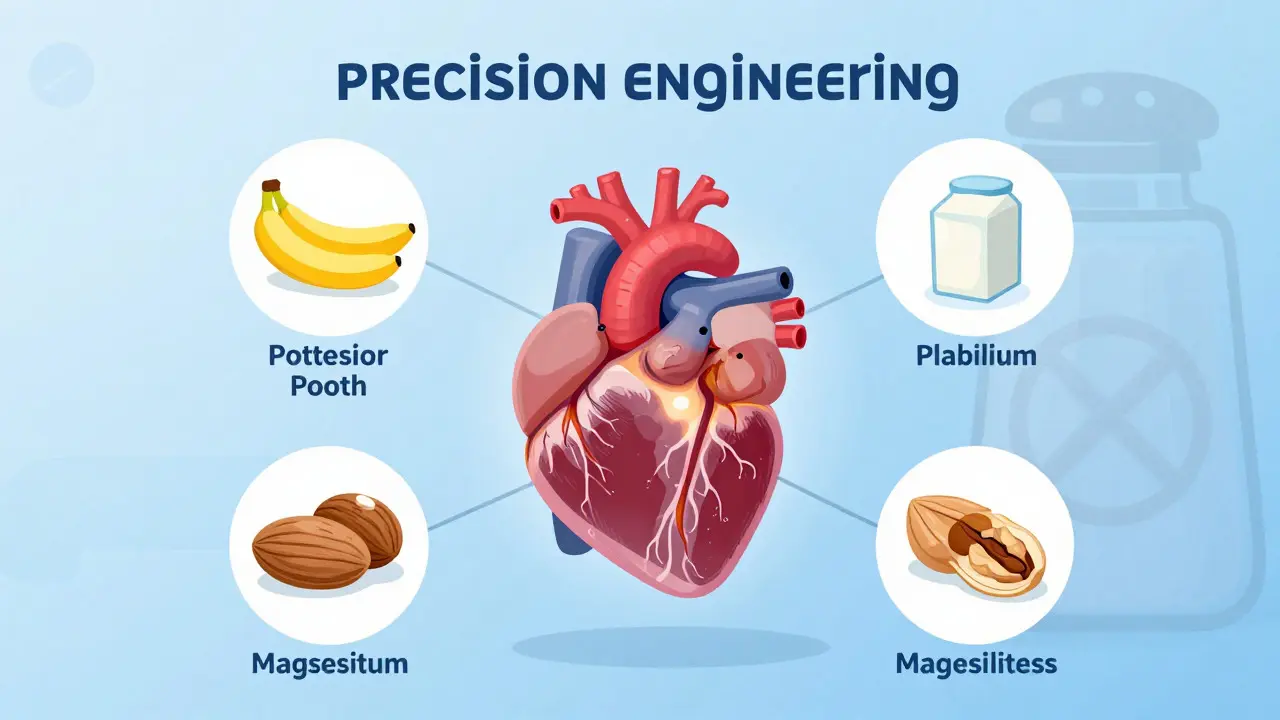
The DASH Diet: Precision Engineering for Blood Pressure
The DASH diet is a structured eating plan developed by the National Institutes of Health specifically to combat hypertension through precise nutrient targets, emphasizing low sodium, high potassium, calcium, and magnesium. Unlike the Mediterranean diet’s cultural roots, DASH was born in a lab. Developed in the mid-1990s under Dr. Frank Sacks at Harvard, it was designed to lower blood pressure without medication.
DASH is more prescriptive. It gives you exact serving counts. On a standard 2,000-calorie day, you aim for 6-8 servings of grains, 4-5 servings of vegetables, 4-5 servings of fruit, and 2-3 servings of low-fat dairy. Crucially, it strictly limits sodium to 1,500-2,300 mg per day. It also caps saturated fat at less than 6% of total calories.
The results are dramatic. The original 1997 trial published in the *New England Journal of Medicine* showed systolic blood pressure drops of 5.5-11.4 mm Hg. Later studies confirmed that DASH lowers blood pressure by about 11/6 mm Hg overall. For people with existing hypertension, the drop is even more significant relative to their baseline. It’s no surprise that in 2023, U.S. News & World Report ranked DASH slightly higher than the Mediterranean diet specifically for heart health.
However, the strictness comes at a cost. Many Americans struggle with the sodium limit, especially when eating out. The average American consumes over 3,400 mg of sodium daily. Cutting that in half requires reading every label and cooking most meals at home. While effective, it can feel restrictive compared to the looser guidelines of other plans.
Plant-Forward Eating: Flexibility Meets Science
Plant-forward eating is a broad dietary approach that prioritizes plant-based foods like vegetables, fruits, whole grains, and legumes while allowing flexible inclusion of animal products in smaller amounts. This isn’t a single diet with a rulebook. It’s a philosophy. You don’t have to be vegan or vegetarian. You just make plants the star of the show.
Research supports this shift. Even modest moves toward plant-based foods yield benefits. The OmniHeart study, published in *JAMA Internal Medicine*, tested variations of the DASH diet, including one that replaced carbohydrates with unsaturated fats from plants. All versions lowered blood pressure, but the plant-heavy approaches offered additional metabolic benefits.
Why is this trending? Because it’s adaptable. You can apply plant-forward principles to any cuisine. Whether you’re making tacos, stir-fry, or pasta, you simply increase the ratio of beans, veggies, and whole grains while shrinking the portion of meat. A 2024 Nielsen survey found that 42% of Americans now incorporate mostly plant-based meals at least three days a week. It’s the fastest-growing segment because it removes the guilt associated with strict elimination diets.
Comparing the Big Three: Which Is Right for You?
Choosing between these diets depends on your specific health goals and personal preferences. Let’s look at the key differences side-by-side.
| Feature | Mediterranean Diet | DASH Diet | Plant-Forward Eating |
|---|---|---|---|
| Primary Goal | Overall cardiovascular risk reduction | Blood pressure control | General health and flexibility |
| Fat Source | Olive oil, nuts (higher fat) | Low-fat dairy, lean proteins (lower fat) | Varies (often plant oils) |
| Sodium Limit | Moderate (not strictly defined) | Strict (1,500-2,300 mg/day) | Flexible (focus on whole foods) |
| Animal Protein | Fish/poultry regular, red meat rare | Lean meats/fish in controlled portions | Optional, small portions |
| Sustainability Rating | High (flexible, tasty) | Medium (strict tracking required) | High (easy to adapt) |
| Best For | Long-term heart health, weight management | Hypertension, quick BP results | Beginners, ethical/environmental concerns |
If you have high blood pressure, DASH might be your best starting point due to its targeted sodium restriction. If you want a sustainable lifestyle change that improves overall longevity, the Mediterranean diet offers robust protection against mortality. If you’re new to healthy eating or find strict rules overwhelming, plant-forward eating allows you to progress at your own pace.
Practical Steps to Get Started Today
You don’t need to overhaul your kitchen overnight. Start with small, manageable shifts that align with your chosen path.
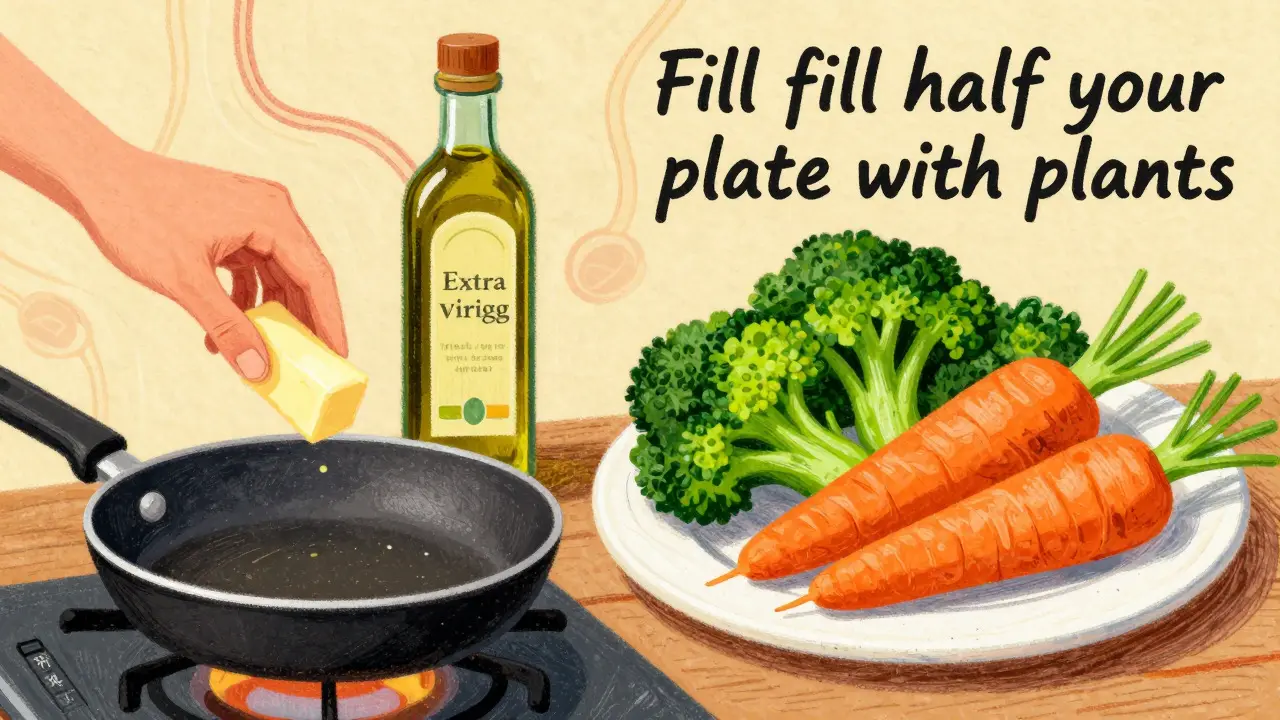
- Swap your fats: Replace butter with extra-virgin olive oil for cooking and dressings. Add a handful of walnuts or almonds to your breakfast.
- Cut the salt: Read nutrition labels. Aim for less than 2,300 mg of sodium per day. Use herbs, spices, lemon juice, and vinegar to flavor food instead of salt shakers.
- Fill half your plate with plants: At lunch and dinner, ensure 50% of your plate consists of vegetables and fruits. Add beans or lentils for fiber and protein.
- Choose whole grains: Switch from white bread and rice to brown rice, quinoa, oats, or whole-wheat pasta. These provide steady energy and heart-protective fiber.
- Limit processed meats: Reduce intake of bacon, sausages, and deli meats. Opt for grilled chicken, fish, or tofu instead.
For those struggling with the transition, resources are available. The National Heart, Lung, and Blood Institute offers free DASH meal plans. The Oldways Preservation Trust provides Mediterranean recipe collections. Remember, consistency beats perfection. Even partial adherence yields benefits.
Common Challenges and How to Overcome Them
No diet is perfect, and each has hurdles. The Mediterranean diet’s wine recommendation isn’t suitable for everyone, especially those with liver issues or addiction history. DASH’s strict sodium limits can be difficult to maintain in social settings or when dining out. Plant-forward eating may require learning new recipes to avoid boredom.
To tackle these, prepare ahead. Keep healthy snacks like fruit and nuts on hand. When eating out, ask for sauces on the side and choose grilled options. If you miss meat, try plant-based proteins like tempeh or edamame. Don’t let setbacks derail you. One bad meal doesn’t undo weeks of progress.
Can I combine the Mediterranean and DASH diets?
Yes, many experts recommend blending them. This hybrid approach, sometimes called "Medi-DASH," combines the heart-healthy fats of the Mediterranean diet with the blood pressure-lowering sodium restrictions of DASH. Recent trials suggest this combination can produce superior outcomes for both lipid profiles and blood pressure control.
Is the DASH diet too strict for everyday life?
It can feel restrictive initially, especially the sodium limit. However, many people find that their taste buds adjust within a few weeks, making salty foods seem overly strong. Starting with the 2,300 mg target before moving to 1,500 mg can make the transition smoother.
Do I need to give up all meat for plant-forward eating?
No. Plant-forward eating emphasizes plants but allows animal products in moderation. You can still enjoy chicken, fish, or eggs, but they become accents rather than the main focus of your meals.
Which diet is best for lowering cholesterol?
The Mediterranean diet is particularly effective for improving lipid profiles due to its high content of monounsaturated fats and fiber. It has been shown to significantly reduce LDL cholesterol and triglycerides.
Are these diets expensive to follow?
While fresh produce and quality oils can cost more, buying in bulk and focusing on seasonal vegetables can keep costs down. Studies suggest full adherence may cost about $1.50 more per day than the average American diet, but the long-term savings on healthcare often outweigh this initial investment.