Why Your Pharmacy’s Consultation Service Is Your Best Bet for Medication Safety
You take multiple medications. Maybe it’s blood pressure pills, diabetes meds, a cholesterol drug, and something for your joints. You’ve been on them for months-or years. But have you ever sat down with your pharmacist and gone through them all, one by one? Most people haven’t. And that’s a problem.
Pharmacists aren’t just the people who hand you your pills. They’re trained to spot dangerous drug interactions, catch dosing mistakes, and find cheaper alternatives that work just as well. In fact, a 2023 study showed that pharmacist-led consultations in VA hospitals prevented over 1,200 serious adverse drug events in just one year. That’s not luck. That’s expertise.
And here’s the kicker: you visit your pharmacy nearly twice as often as you see your doctor. That means your pharmacist sees you more than anyone else in the healthcare system. They’re the last line of defense against medication errors. But only if you ask.
What Happens During a Pharmacy Consultation?
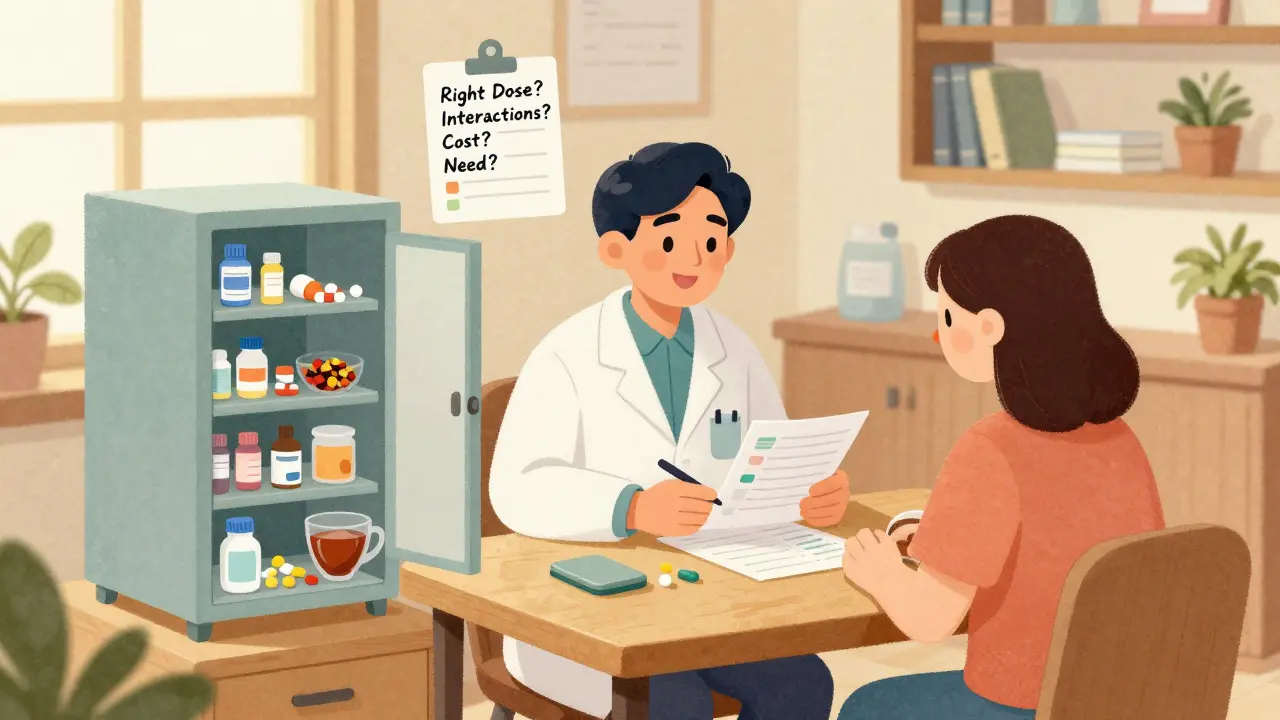
A medication consultation isn’t a quick chat while they hand you your prescription. It’s a structured review-usually 15 to 20 minutes long-where the pharmacist sits down with you, asks questions, and goes through every single medication you’re taking.
They’ll check:
- Are you taking the right dose of each drug?
- Do any of your medications interact dangerously with each other?
- Are you taking something you don’t actually need?
- Is there a cheaper version available?
- Are you taking your meds the way you’re supposed to?
They’ll also compare your list of medications to what your doctor says you should be on. Often, there are gaps. Maybe you stopped a pill after a side effect and never told your doctor. Or maybe you started a new supplement and forgot to mention it. Pharmacists catch these things-every day.
One real case from a VA clinic: a patient was on dangerously high doses of insulin. The pharmacist noticed the pattern, flagged it, and called the doctor. That one check prevented a life-threatening low blood sugar episode.
Who Should Use This Service? (And Why You Might Be Eligible for Free Help)
You don’t need to be sick or in crisis to use this service. In fact, the best time to use it is when you’re stable.
If you’re on Medicare Part D and take three or more chronic condition medications (like diabetes, heart disease, or asthma), you’re likely eligible for a free comprehensive medication review. That’s right-no extra cost. In 2023, over 14 million Medicare beneficiaries got this service at no charge.
Even if you’re not on Medicare, many private insurers now cover medication consultations. Rates vary, but most charge between $25 and $75 per session. That’s less than a co-pay for a doctor’s visit-and way cheaper than an ER trip caused by a bad drug interaction.
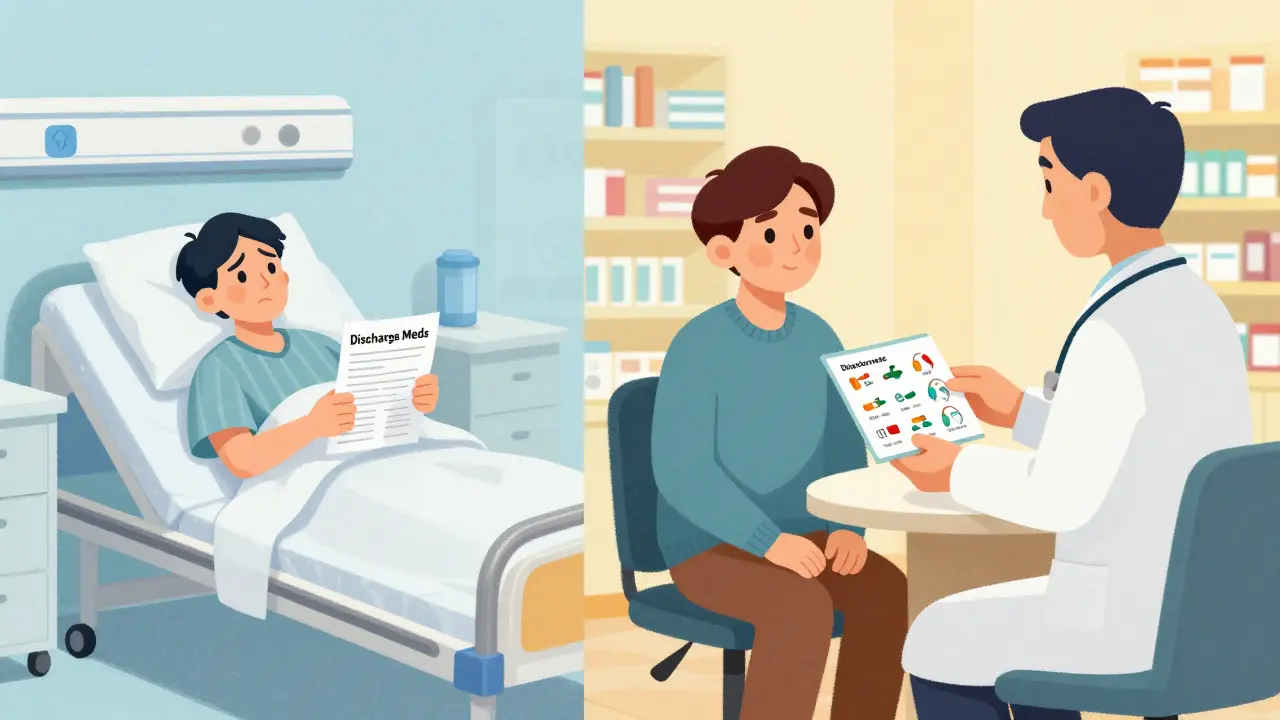
And if you’ve recently been discharged from the hospital? That’s a red flag. Studies show that 40% of patients leave the hospital with medication lists that are wrong, incomplete, or confusing. A pharmacist can fix that before you get home.
How to Get the Most Out of Your Consultation
Don’t just show up and wait. Be ready.
- Bring everything. Include prescriptions, over-the-counter pills, vitamins, supplements, and even herbal teas. Don’t assume they’re harmless. St. John’s Wort can interfere with blood thinners. Grapefruit juice can make cholesterol drugs toxic.
- Write down your questions. Are you confused about when to take your pills? Do you feel dizzy after your morning dose? Did your doctor say to stop one of your meds but you’re still taking it? Write it all down.
- Ask for a written plan. A good pharmacist will give you a personal medication record-a simple list of everything you take, with doses and times. Keep it on your fridge or in your wallet.
- Ask about cost. Pharmacists know about patient assistance programs, generics, and mail-order discounts. One patient saved $200 a month just by switching to a generic version their pharmacist recommended.
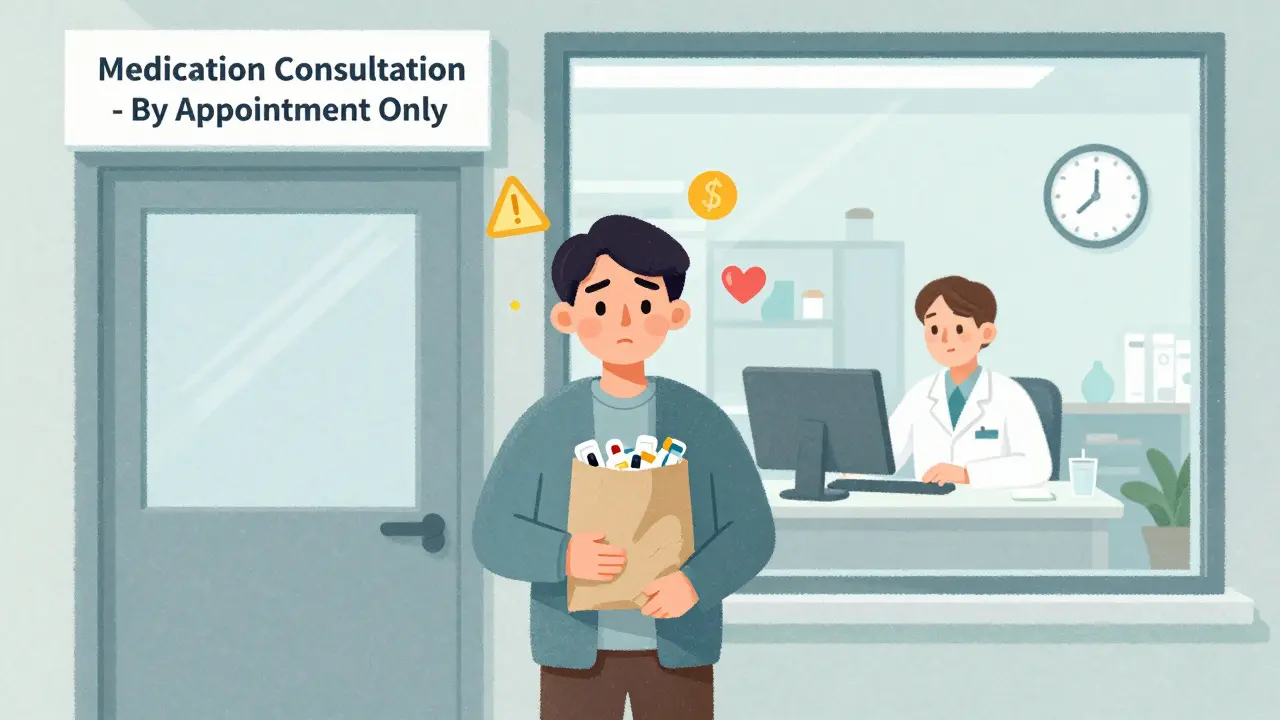
And if they’re busy? Ask to schedule a time. Most pharmacies now offer dedicated consultation hours. You don’t have to wait in line.
What If Your Pharmacy Doesn’t Offer Consultations?
It’s 2025. Nearly 97% of U.S. community pharmacies offer some kind of medication consultation. But not all are set up the same way.
If your pharmacy doesn’t have a private room, ask if they can move to the back or schedule a call. Many now offer phone or video consultations. In fact, 62% of pharmacies offer virtual reviews now-up from just 18% before the pandemic.
If they say they don’t do consultations, ask why. Is it because they don’t have time? Or because they don’t know how? You can ask to speak to the pharmacist-in-charge. Most pharmacists want to help-they just need you to ask.
And if your pharmacy still won’t help? Switch. Find one that does. Your safety matters more than convenience.
Real Stories: What Patients Have Gained From These Consultations
People don’t always realize how much they’ve been at risk until it’s pointed out.
One woman in Ohio was taking four different painkillers-two prescription, two over-the-counter. Her pharmacist found she was hitting the maximum daily dose of acetaminophen, which can cause liver failure. She stopped one, switched to a safer option, and avoided hospitalization.
A man in Florida was taking a blood thinner and a common antacid. The pharmacist spotted a dangerous interaction that could cause dangerous bleeding. He switched antacids and his doctor agreed.
On Reddit, one user wrote: “My pharmacist caught a deadly interaction my doctor missed. I thought I was fine. Turns out, I was one week away from a stroke.” That post got over 140 upvotes. People are talking about it-because it happens more than you think.
Barriers and How to Overcome Them
There are still problems. Pharmacists are stretched thin. In high-volume stores, they might only have 6 minutes per patient. That’s not enough for a real review.
But here’s the thing: you can help fix this.
- Book ahead. Don’t wait until you’re picking up your refill. Call or go in during off-hours (mornings or midweek) to schedule a consultation.
- Be patient. Pharmacists are busy. But if you’re polite and clear about why you’re there, they’ll make time.
- Ask for documentation. If they give you a printed plan, keep it. If they don’t, ask for one. It’s part of the standard of care.
And if you’re still not sure? Ask your doctor to refer you. Many doctors now send patients directly to pharmacists for medication reviews. It’s becoming standard practice.
The Bigger Picture: Why This Matters
Medication errors are one of the leading causes of preventable harm in healthcare. The Institute of Medicine estimates that Americans suffer over 1.5 million medication-related injuries every year. Many of these happen because no one took the time to look at the full picture.
Pharmacists are the only healthcare professionals whose entire job is focused on medicines. They don’t diagnose. They don’t operate. They just know drugs-inside and out.
When you use their consultation service, you’re not just getting advice. You’re preventing a hospital stay. You’re avoiding a dangerous side effect. You’re saving money. And you’re taking control of your own health.
It’s not complicated. Just ask. Your pharmacist is waiting to help.
Is the pharmacy consultation service free?
If you’re on Medicare Part D and take three or more chronic condition medications, the consultation is free. Many private insurers also cover it, typically charging $25-$75 per session. Always ask your pharmacy or insurance provider to confirm your coverage.
Do I need an appointment for a consultation?
Not always, but it’s highly recommended. Many pharmacies offer dedicated consultation hours or allow you to book a time online or over the phone. Walk-ins are often rushed, so scheduling ensures you get the full 15-20 minutes you need.
What should I bring to my consultation?
Bring all your medications: prescriptions, over-the-counter drugs, vitamins, supplements, and even herbal remedies. Also bring a list of your current conditions, allergies, and any recent changes in how you feel. The more complete your list, the better the advice.
Can a pharmacist change my medication?
No, only your doctor can prescribe or change your medication. But a pharmacist can identify problems and recommend alternatives. They’ll contact your doctor with suggestions, and your doctor will decide whether to make the change. In 22 states, pharmacists can now initiate certain medications under collaborative agreements-but that’s still limited.
How often should I get a medication review?
At least once a year, or anytime you start or stop a medication, change doses, or are discharged from the hospital. If you’re on multiple chronic medications, consider scheduling reviews every six months. Your pharmacist can help set up a reminder system.
What if I don’t trust my pharmacist?
You have the right to choose your pharmacy. If you feel rushed, dismissed, or unheard, find another pharmacy that offers consultation services. Look for one with a private consultation room and staff who take time to explain things. Your safety is worth the effort.
Next Steps: What to Do Right Now
Don’t wait until something goes wrong.
- Call your pharmacy today and ask if they offer medication consultations.
- If they do, schedule one for next week.
- While you’re at it, write down every medication you’re taking-every pill, every supplement, every drop.
- Ask if you’re eligible for a free review under Medicare or your private insurance.
That’s it. No forms. No appointments with specialists. Just a simple conversation with someone who knows your meds better than anyone else.
Your health is your responsibility. But you don’t have to do it alone.
Janette Martens
December 29, 2025 AT 23:25Marie-Pierre Gonzalez
December 31, 2025 AT 17:00Louis Paré
January 1, 2026 AT 17:04Mimi Bos
January 2, 2026 AT 14:14Payton Daily
January 3, 2026 AT 23:45Kelsey Youmans
January 4, 2026 AT 10:45Sydney Lee
January 5, 2026 AT 18:46oluwarotimi w alaka
January 6, 2026 AT 22:26Debra Cagwin
January 7, 2026 AT 03:58