Medication Side Effect Risk Calculator
Risk Factors Assessment
Select the factors that apply to you to calculate your estimated risk level for adverse drug reactions.
Estimated Risk Level
Recommendation
Complete the assessment to receive personalized advice based on current medical guidelines.
Imagine walking into a pharmacy with a prescription that looks perfectly safe on paper. The doctor checked the dosage, the pharmacist verified the interaction, and you head home feeling confident. But what if your body reacts differently than the average patient? What if your past health struggles are quietly setting the stage for a reaction that could land you in the emergency room?
This isn't just a hypothetical scenario. It is happening every day. Your medical history is not just a record of what has happened to you; it is a biological map that dictates how your body processes chemicals. When doctors or patients ignore this map, the risk of medication side effects skyrockets. Understanding why requires looking beyond the pill bottle and into the complex interplay of genetics, age, organ function, and past drug exposures.
The Hidden Danger of Polypharmacy
One of the most significant factors in your medical history is simply how many medications you take. This phenomenon, known as polypharmacy, is a major driver of adverse drug reactions (ADRs). It is not uncommon for older adults or those with chronic conditions to manage multiple prescriptions simultaneously.
Data from the British Heart Foundation’s 2023 analysis paints a stark picture. Patients taking between five and nine medications are almost twice as likely (a 100% increased risk) to experience an adverse reaction compared to those taking fewer than five. If you are on ten or more medications, that risk triples (a 300% increase). Each additional medication adds approximately 7-10% to your overall ADR risk, according to a 2023 meta-analysis by the Agency for Healthcare Research and Quality (AHRQ).
| Number of Medications | Relative Risk Increase | Source Context |
|---|---|---|
| Fewer than 5 | Baseline | Standard reference group |
| 5 to 9 | 100% (2x risk) | British Heart Foundation 2023 |
| 10 or more | 300% (4x risk) | British Heart Foundation 2023 |
Why does this happen? It is not just about drugs clashing directly. It is about the cumulative burden on your liver and kidneys. Every medication must be metabolized and excreted. When you pile them on, these organs can become overwhelmed, leading to toxic buildups of one drug because another is slowing down its breakdown. This is why a "brown bag review"-bringing all your meds to your doctor-is crucial, yet often skipped.
Genetics: The Blueprint of Metabolism
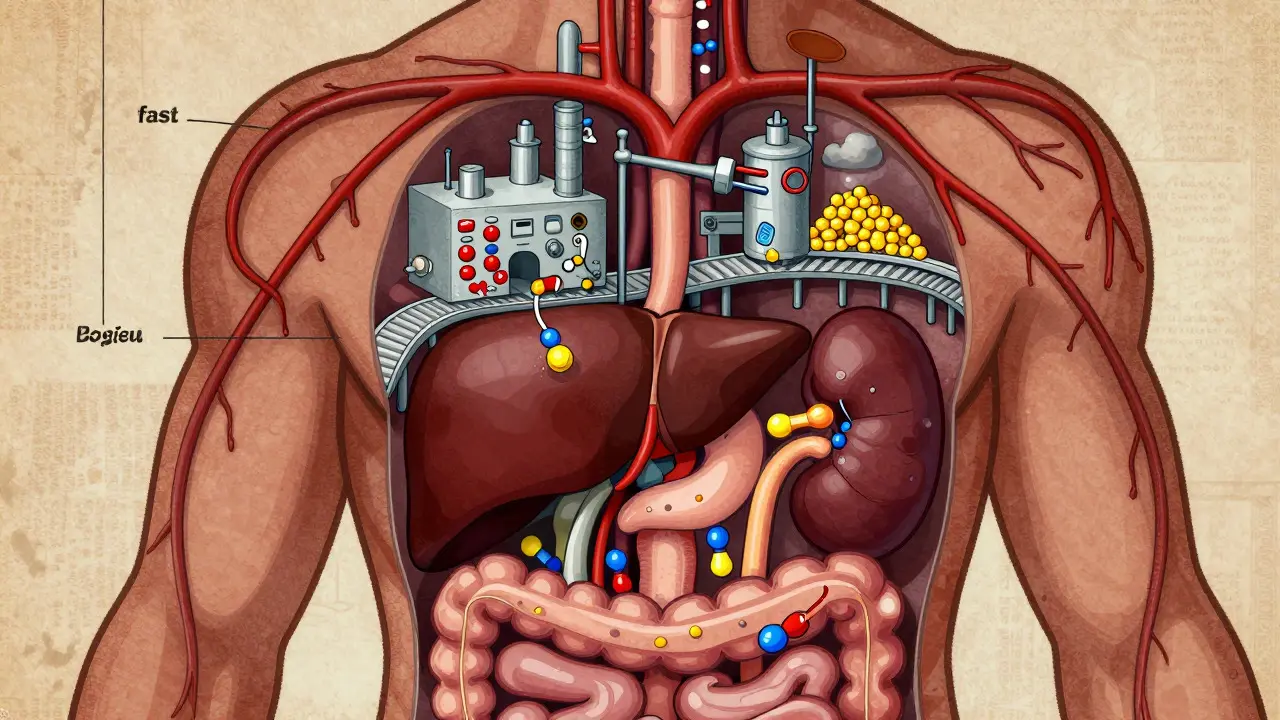
Your DNA plays a massive role in how you handle drugs, specifically through enzymes in your liver called Cytochrome P450 (CYP450). These enzymes act like scissors, cutting up medication molecules so they can leave your body. However, genetic variations mean some people have "fast" scissors and others have "slow" ones.
The Merck Manual’s 2024 clinical reference highlights that hereditary factors affecting liver metabolism can increase medication levels in the blood by anywhere from 30% to 500%. If you are a "poor metabolizer" due to your genetics, a standard dose of a common painkiller or antidepressant could accumulate to toxic levels. Conversely, "ultra-rapid metabolizers" might process a drug so quickly it never works at all.
This is where pharmacogenomics comes in. Newer platforms, such as YouScript (cleared by the FDA in 2023), analyze specific gene-drug interactions to predict these risks. Studies suggest these tests can reduce ADRs by 34% for patients with relevant genetic variants. Yet, adoption remains low, with only 5.7% of US healthcare systems using these tools as of mid-2024. Until this becomes standard, your family history of drug reactions should be treated as a critical warning sign.
Age and Physiological Decline
Aging changes everything. As we get older, our bodies change in ways that make us more vulnerable to medication errors. The American Geriatrics Society reports that patients over 65 experience three to five times more adverse drug reactions than younger adults.
This is largely due to two factors: reduced kidney function and changes in body composition. Chronic kidney disease (CKD) reduces renal clearance by 50-75%. Since many drugs are eliminated through urine, a declining eGFR (estimated glomerular filtration rate) means drugs stay in your system longer. The American Academy of Family Physicians notes that renal function decline affects 15% of US adults over 60, necessitating dose adjustments for 30% of commonly prescribed medications. Shockingly, a 2021 audit found these adjustments were overlooked in 45% of prescribing decisions.
Additionally, older adults often have less body water and more body fat. This alters how water-soluble and fat-soluble drugs distribute in the body, potentially leading to higher concentrations in sensitive tissues like the brain, increasing the risk of confusion or falls.
Organ Health: Liver and Kidney Function
Beyond aging, preexisting diseases that alter drug absorption or elimination are major historical risk factors. The American Medical Association’s 2023 data shows that patients with chronic kidney disease require dosage adjustments for 40% of commonly prescribed medications. Those with hepatic (liver) impairment need modifications for 25% of drugs.
If you have a history of hepatitis, fatty liver disease, or alcohol use disorder, your liver’s ability to detoxify medications is compromised. Similarly, if you have diabetes or hypertension that has affected your kidneys, your filtration system is slower. Ignoring these historical conditions leads to overdosing, even when the label says "take one tablet." This is why regular blood tests monitoring creatinine and liver enzymes are non-negotiable for patients on long-term therapy.
Gender Disparities in Drug Reactions
Your sex also shapes your risk profile. Older women experience adverse drug reactions at least 50% more frequently than men, according to the British Heart Foundation. This disparity is partly biological-women often have lower body weight, different hormone levels, and slower gastric emptying-but it is also historical.
For decades, women were underrepresented in clinical trials. Between 2010 and 2020, women comprised only 22% of participants in cardiovascular drug trials, per FDA data. This led to dosing protocols based primarily on male physiology. As a result, standard doses may be too high for many women, leading to higher rates of side effects like nausea, dizziness, or bleeding.
Past Allergies and Cross-Reactivity
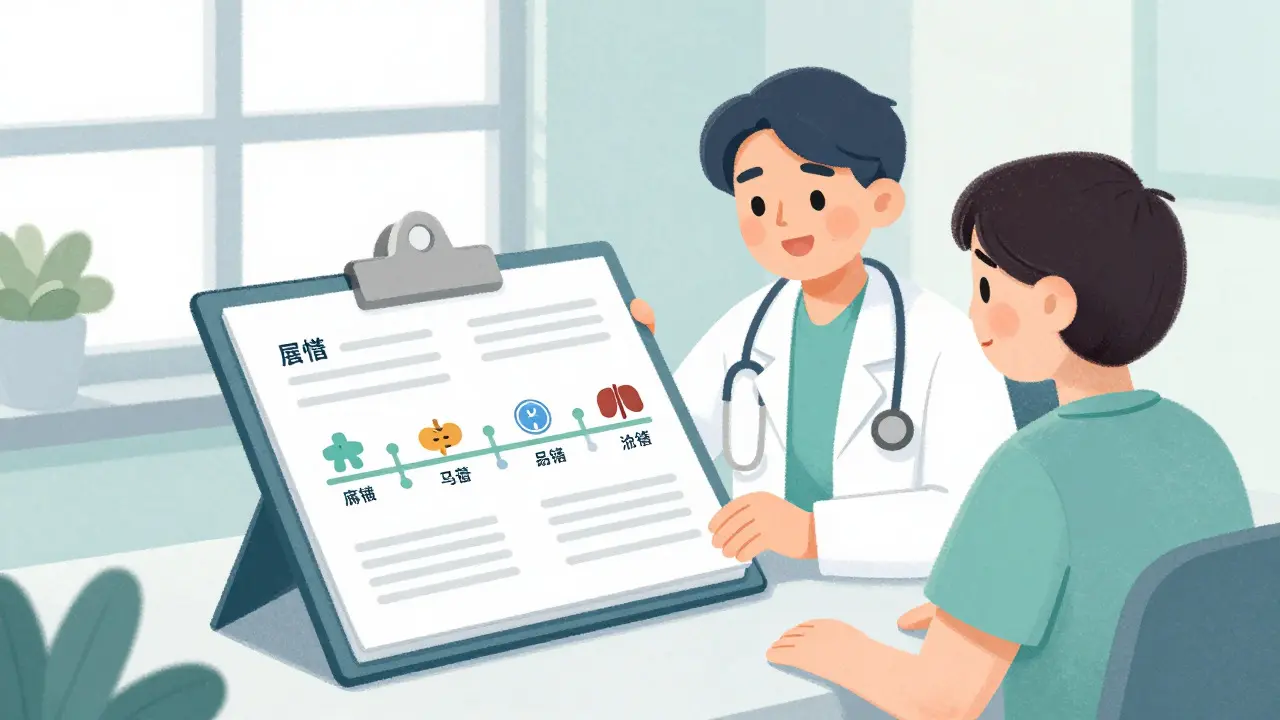
Have you ever had a rash after taking penicillin? That history matters more than you think. A 2009 study in BMC Family Practice showed that patients with a history of adverse reactions to one drug class have a 30-40% higher likelihood of cross-reactivity with similar medications. For example, someone with a penicillin allergy faces an 8-fold higher risk of reacting to cephalosporins.
This is not just about allergies. It includes intolerances. If ibuprofen caused stomach ulcers in the past, other NSAIDs like naproxen will likely do the same. Doctors must look at the mechanism of action, not just the brand name. Keeping a personal "drug reaction card" can save you from repeating painful or dangerous mistakes.
Cognitive Factors and Adherence Patterns
Your mental health history and cognitive status are also critical. Impaired cognition carries an extraordinary 13.0 odds ratio for preventable medication errors, according to a JAMA Internal Medicine study. If you have dementia or memory issues, missing doses or doubling up creates unpredictable blood levels of the drug, leading to toxicity or treatment failure.
Cost-related nonadherence is another hidden historical factor. About 25% of patients skip doses to save money. This intermittent use leads to 37% higher rates of treatment failure and a 28% increased risk of ADRs when patients restart without proper titration. The body goes through withdrawal and re-exposure cycles, stressing the system unnecessarily.
Mitigating the Risks: Actionable Steps
So, how do you protect yourself? The most effective strategy, supported by a 2023 Cochrane Review of 14 randomized controlled trials, is structured medication review with deprescribing. This approach reduces ADRs by 22% in patients with polypharmacy. Yet, only 18% of eligible patients receive these reviews annually.
- Request a Med Review: Ask your doctor or pharmacist for a comprehensive review of all your meds, including over-the-counter supplements.
- Track Your History: Keep a written list of every drug you’ve taken, especially any that caused side effects. Include the year and the reaction.
- Monitor Organ Function: Ensure your doctor checks your kidney (eGFR) and liver enzymes regularly, especially if you are over 60.
- Discuss Genetics: If you react poorly to common drugs, ask about pharmacogenomic testing.
- Be Honest About Use: Tell your provider if you skip doses due to cost or forgetfulness. They can adjust the regimen or find cheaper alternatives.
Incomplete medication histories contribute to 23% of preventable hospital admissions, with the average patient having 3.2 undocumented or inaccurate medication elements per admission. Your advocacy is your best defense. By understanding how your history influences your risk, you move from being a passive recipient of care to an active partner in your safety.
How does kidney disease affect medication side effects?
Kidney disease reduces the body's ability to filter drugs from the blood. The American Medical Association notes that patients with chronic kidney disease need dosage adjustments for 40% of common medications. Without these adjustments, drugs can build up to toxic levels, causing severe side effects.
What is polypharmacy and why is it risky?
Polypharmacy is the concurrent use of multiple medications. It increases the risk of adverse drug reactions because drugs can interact with each other, overwhelming the liver and kidneys. Taking 5-9 medications doubles the risk of side effects, while 10+ medications quadruples it.
Can my genes determine how I react to drugs?
Yes. Genetic variations in CYP450 enzymes can cause medication levels to vary by 30-500%. Pharmacogenomic testing can identify if you are a poor or ultra-rapid metabolizer, helping doctors choose safer drugs and doses.
Why are women at higher risk for medication side effects?
Women experience ADRs 50% more often than men due to biological differences and historical underrepresentation in clinical trials. Standard dosing protocols were often developed based on male physiology, which may not account for female-specific pharmacokinetics.
How can I reduce my risk of adverse drug reactions?
Request a structured medication review to identify unnecessary drugs (deprescribing). Keep a detailed history of past drug reactions. Regularly monitor kidney and liver function. Be honest with your doctor about missed doses or cost concerns.