
Imagine you are a doctor holding a prescription pad. A patient walks in with severe back pain. You know opioids can help, but you also know they carry heavy risks. In 2024, nearly 108,000 Americans died from drug overdoses. That number is not just a statistic; it represents a crisis that has reshaped how we treat pain. The old rules of prescribing are gone. Today, medication safety is the top priority for every clinician and patient.
The landscape changed dramatically in early 2025. New guidelines from the Centers for Disease Control and Prevention (CDC) and strict labeling changes from the Food and Drug Administration (FDA) have tightened the screws on opioid use. These aren't just suggestions anymore. They are backed by hard data showing that higher doses equal higher death rates. If you are managing pain or treating patients, understanding these new thresholds is no longer optional-it is essential for survival.
Understanding the New Dosage Thresholds
The most critical change in the 2025 guidelines revolves around Morphine Milligram Equivalents (MME). This metric standardizes different opioids into a single value so doctors can compare risks accurately. The CDC now sets two major red lines at 50 MME and 90 MME per day.
When a patient’s dose reaches or exceeds 50 MME/day, the risk of overdose jumps significantly. Data from 2022 to 2024 shows this level carries a 2.8 times higher risk compared to lower doses. At this point, clinicians must stop and reassess. Is the benefit still worth the risk? For doses hitting 90 MME/day, the advice is even stricter. Avoid them unless absolutely necessary. This usually only applies to active cancer treatment, palliative care, or end-of-life situations. Outside those contexts, pushing past 90 MME requires thorough documentation and justification.
| MME Level | Risk Factor | Clinical Action Required |
|---|---|---|
| < 50 MME/day | Baseline | Standard monitoring and follow-up |
| ≥ 50 MME/day | 2.8x higher overdose risk | Closely reassess benefits vs. risks; consider tapering |
| ≥ 90 MME/day | High mortality risk | Avoid unless justified (e.g., cancer/palliative); document thoroughly |
Why does this matter? Because small increases add up fast. The FDA’s updated labels warn that overdose risk rises by 1.7 times for every 20 MME increase above 50 MME/day. It is a steep cliff. Once you start climbing, falling becomes much more likely.
Acute Pain: The Three-Day Rule
If you hurt your back after lifting a box or have surgery, you expect painkillers. But how long should they last? The 2025 guidelines answer with a firm cap: three days. Initial opioid prescriptions for acute pain should rarely exceed a three-day supply. Extensions to seven days are allowed only when clinically justified. This is a big shift from previous years when seven days was often the default.
Dr. Jane Ballantyne, a leading voice in responsible prescribing, points out that each extra day beyond three increases the risk of long-term opioid use by 20%. Why? Because the brain adapts quickly. What starts as short-term relief can turn into dependence if the window stays open too wide. However, surgeons push back. The American Academy of Pain Medicine notes that 15-20% of surgical patients legitimately need more than three days. The key here is individualization. Don’t apply the rule blindly, but don’t ignore it either. Ask yourself: Does this patient really need opioids for day four? Or could non-opioid options take over?
Multimodal Pain Management: The Better Way
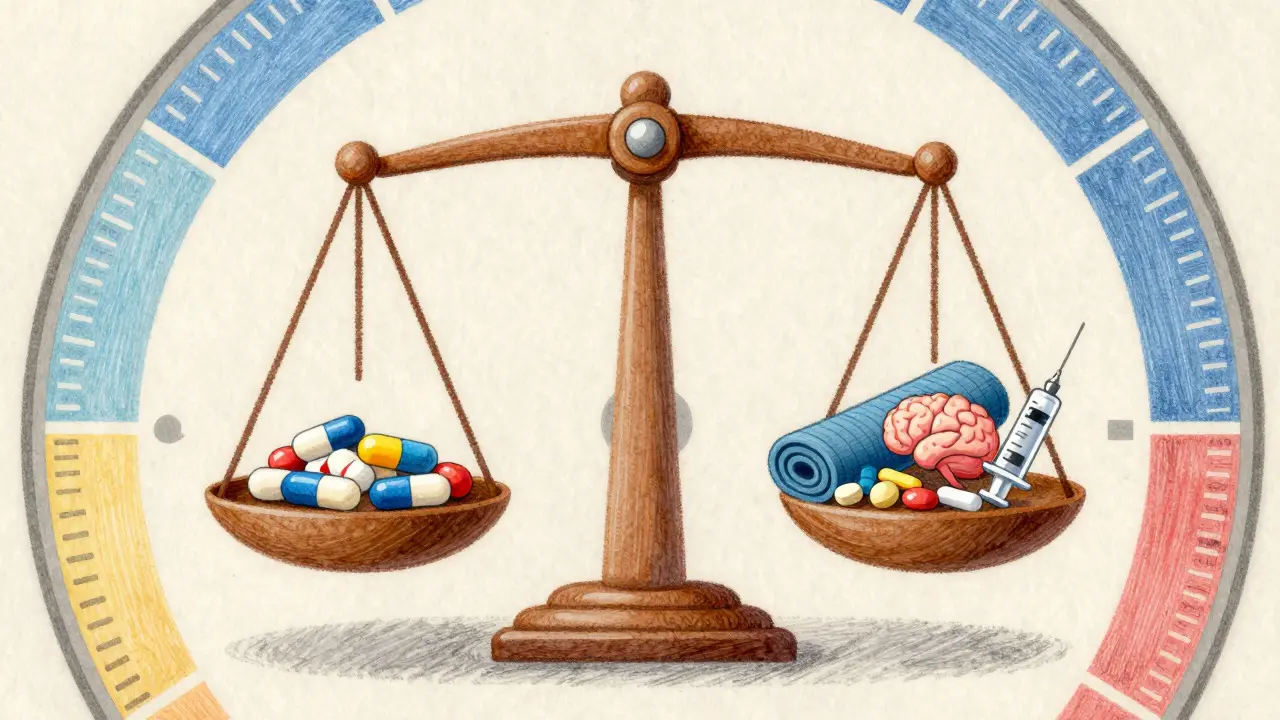
Opioids should never be the first line of defense. They are the last resort. The International Association for the Study of Pain (IASP) emphasizes that multimodal approaches form the foundation of modern treatment. This means combining different types of therapies to attack pain from multiple angles.
- Non-opioid medications: NSAIDs like ibuprofen or naproxen grow in popularity because they target inflammation without addiction risks. Acetaminophen combinations also offer strong relief with fewer side effects.
- Physical therapy: Movement helps heal. Practices with on-site physical therapy see 40-50% lower opioid prescribing rates while keeping pain control steady.
- Cognitive Behavioral Therapy (CBT): Pain is not just physical; it’s mental. CBT helps patients reframe their relationship with pain, reducing the urge to medicate excessively.
- Interventional procedures: Nerve blocks or injections can provide targeted relief without systemic drugs.
Think of it like building a house. You don’t rely on one pillar. You use beams, walls, and a roof. Similarly, layering treatments creates stability. When opioids are added, they become a small part of a larger strategy, not the whole structure.
Navigating Regulatory Changes and Safety Edits
Regulators are stepping in to enforce these guidelines. Starting January 1, 2025, the Centers for Medicare & Medicaid Services (CMS) mandated point-of-sale (POS) safety edits for all Part D sponsors. This means pharmacies now have "hard stops" built into their systems. If a prescription exceeds certain limits-like an initial fill for acute pain-the system flags it or blocks it entirely. There is also a care coordination edit based on the 90 MME threshold.
For patients, this feels like friction. For providers, it adds paperwork. Dr. Michael Chen, a primary care physician in Ohio, reported that while the three-day limit cut persistent opioid use by 35% in his practice, he saw 12 patients visit the ER due to uncontrolled pain after their supply ran out. It’s a trade-off. Safety comes with discomfort. But the bigger picture shows promise. States that fully implemented these edits saw a 28% drop in opioid-related hospitalizations. Dental procedures alone saw a 63% reduction in initial prescriptions. That is progress.
However, beware of abrupt changes. The FDA warns against rapidly reducing or stopping opioids. A 2024 study found a 23% spike in suicide attempts among patients whose doses were tapered too quickly. Withdrawal is brutal. Uncontrolled pain is dangerous. Tapering must be slow, careful, and supported by other treatments.
Tools for Clinicians: Risk Assessment and Monitoring
You cannot manage what you do not measure. Implementing these guidelines requires better tools. The Veterans Affairs (VA) Department offers an excellent model through its Opioid Safety Initiative (OSI) Toolkit. It integrates data from Prescription Drug Monitoring Programs (PDMPs), mental health records, and prior visits. Checking PDMPs before prescribing cuts overlapping prescriptions by 37%. It takes about 2.5 minutes per patient-a small price for preventing interactions.
Risk stratification helps tailor care. Use tools like the Opioid Risk Tool (ORT) or the Screener and Opioid Assessment for Patients with Pain (SOAPP). Here is how to interpret the scores:
- Low Risk (ORT score <4): Standard therapy with quarterly follow-ups.
- Moderate Risk (ORT score 4-7): More frequent monitoring. Explore non-opioid alternatives aggressively.
- High Risk (ORT score >8): Generally avoid opioids. If used, consult an addiction specialist immediately.
Documentation will take more time. Expect to spend 27% more time writing notes for patients on ≥50 MME. But this investment saves lives. It protects you legally and keeps patients safe.
Challenges Ahead: Workforce Gaps and Access
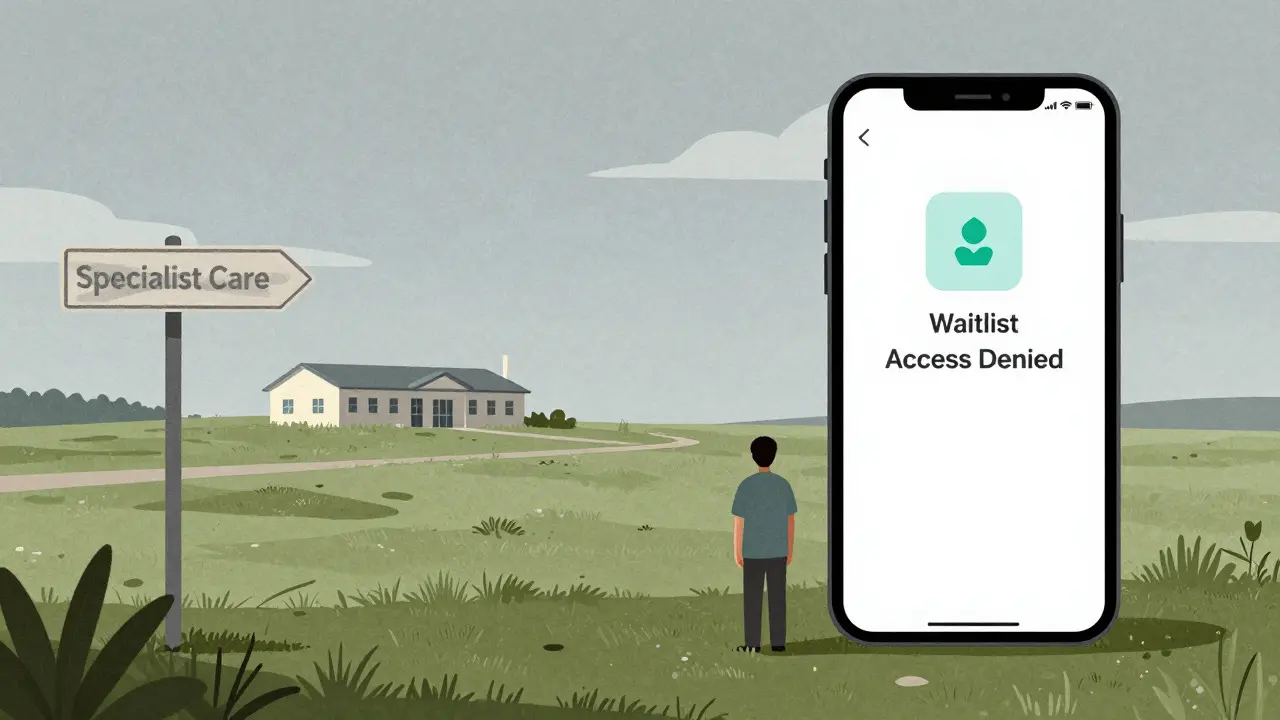
All these guidelines sound great on paper. In reality, implementation hits roadblocks. The biggest issue? A shortage of specialists. The 2025 National Pain Strategy Report identifies a gap of 12,500 pain management specialists needed to support these changes. Rural areas suffer most. Two-thirds of counties lack dedicated pain clinics. Without access to physical therapists or psychologists, patients fall back on pills.
Cost is another barrier. Full implementation costs practices an average of $18,500 upfront. Small clinics struggle with EHR modifications required for CMS safety edits. Forty-two percent report significant hurdles. Yet, the long-term savings are huge. The RAND Corporation estimates full adoption could save $16.3 billion annually in healthcare costs related to misuse. It’s an investment, not just an expense.
Looking forward, the CDC plans a 2026 update focusing on vulnerable groups like the elderly. For older adults, even 30 MME might be too high. Renal impairment also complicates dosing. As we refine these rules, the goal remains constant: balance. Prevent misuse without denying care. Protect patients without punishing them.
What is the maximum recommended daily dose of opioids according to 2025 guidelines?
The CDC recommends closely reassessing risks when doses reach 50 morphine milligram equivalents (MME) per day. Doses of 90 MME/day or higher should generally be avoided unless absolutely necessary for conditions like cancer or palliative care.
How many days should an initial opioid prescription last for acute pain?
Initial prescriptions for acute pain should typically be limited to a three-day supply. Extensions to seven days are permitted only when clinically justified and documented.
What are the risks of tapering opioids too quickly?
Rapidly reducing or abruptly discontinuing opioids can lead to severe withdrawal symptoms, uncontrolled pain, and increased risk of suicide. Studies show a 23% increase in suicide attempts among patients who experienced rapid tapers.
What is multimodal pain management?
Multimodal pain management combines various treatments such as NSAIDs, physical therapy, cognitive behavioral therapy, and interventional procedures to reduce reliance on opioids and improve overall pain control.
Do CMS safety edits affect all patients?
Yes, starting January 1, 2025, CMS mandated point-of-sale safety edits for Medicare Part D beneficiaries. These include hard limits on initial fills and alerts for cumulative doses exceeding 90 MME/day.