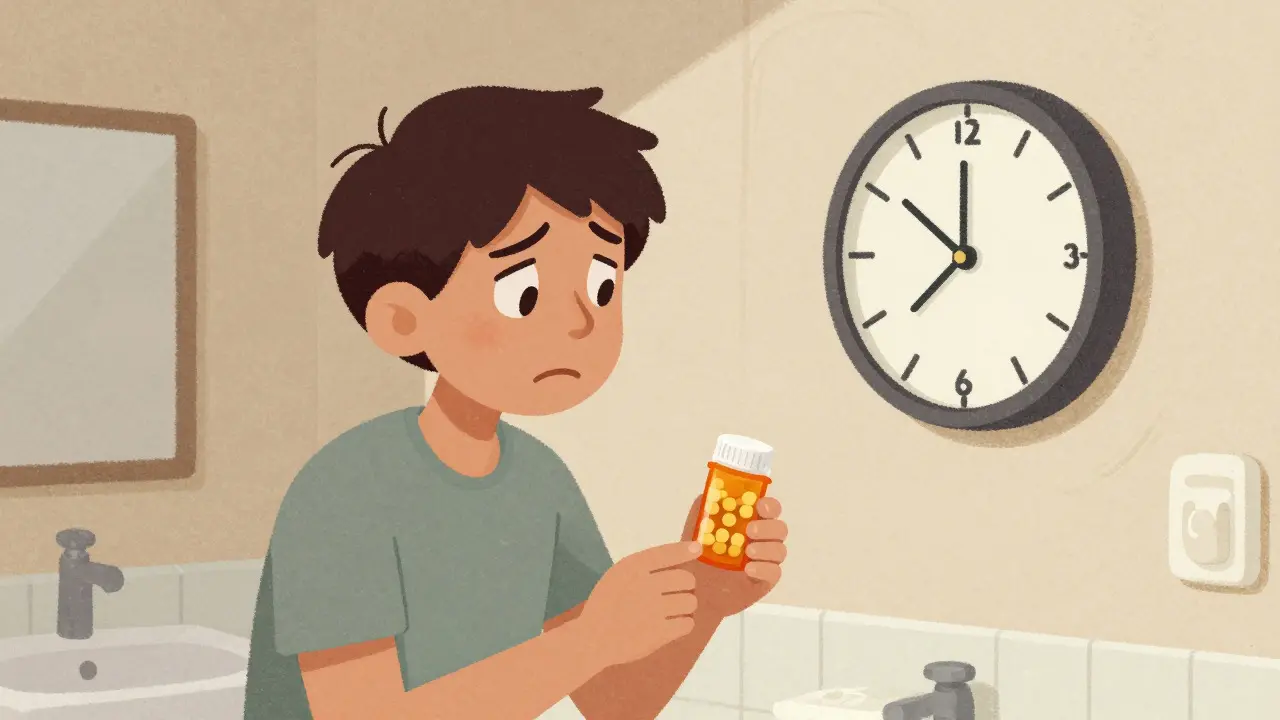
Forgetting a pill happens to the best of us. But when that pill is a blood thinner, medically known as an anticoagulant or antiplatelet agent used to prevent life-threatening blood clots, the stakes are significantly higher. You aren't just risking a headache; you are risking a stroke, a pulmonary embolism, or severe internal bleeding. The anxiety of realizing you’ve missed a dose can be paralyzing, but panic doesn’t help. What matters is knowing exactly which medication you take, how long it has been since your scheduled time, and what the specific guidelines say for that drug.
Blood thinners do not actually make your blood "thinner." Instead, they interfere with your body’s natural clotting process. This creates a delicate balance. Too little medication, and you risk dangerous clots forming in your veins or heart. Too much, and you risk excessive bleeding from minor injuries. Missing a dose disrupts this balance. Understanding the rules for each type of medication is the only way to stay safe.
Key Takeaways for Missed Doses
- Never double up: Taking two doses at once to "catch up" significantly increases your risk of severe bleeding complications.
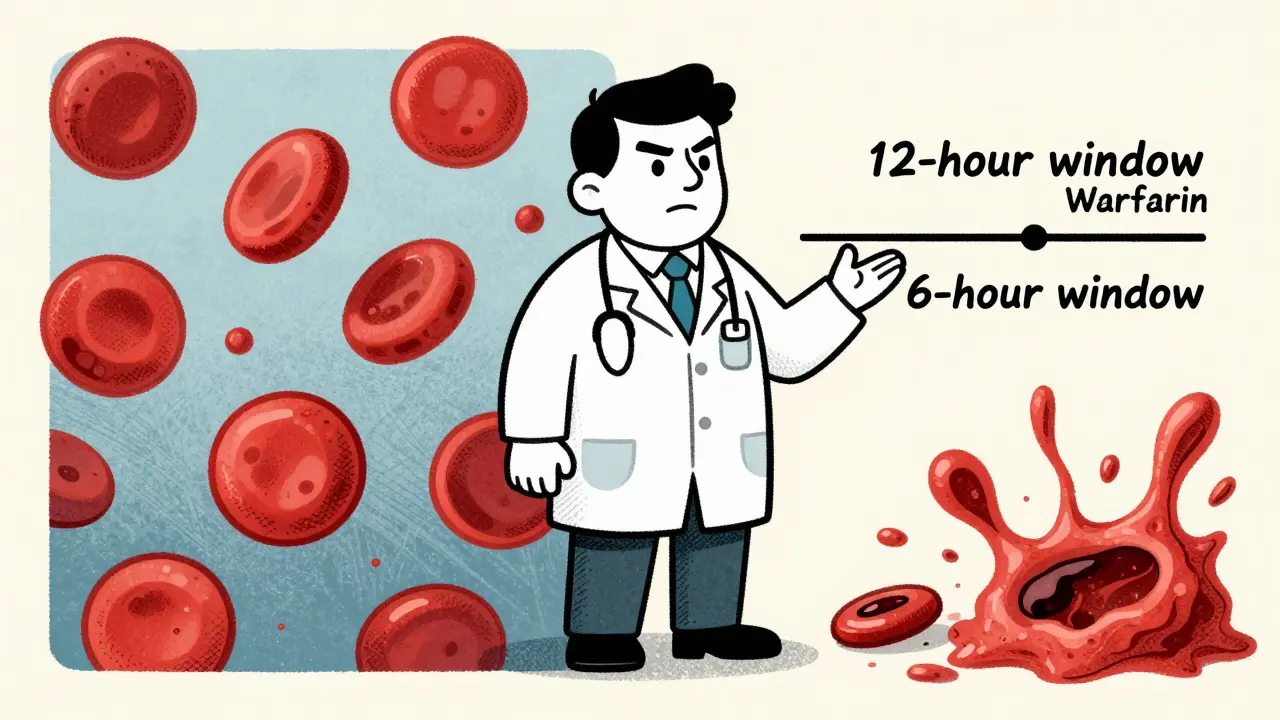
- Timing matters: Warfarin allows a 12-hour window, while newer drugs like apixaban (Eliquis) often have a stricter 6-hour rule.
- Track everything: Keep a log of missed doses and report them to your healthcare provider or anticoagulation clinic immediately.
- Watch for red flags: Severe headaches, dizziness, black stools, or unexplained bruising require immediate medical attention.
How to Handle a Missed Warfarin Dose
Warfarin (also known by brand names Coumadin and Jantoven) is a traditional anticoagulant that requires careful monitoring through International Normalized Ratio (INR) tests. Because warfarin stays in your system longer than newer medications, the rules for missed doses are slightly more flexible, but still strict.
If you miss a dose of warfarin, check the clock immediately. Most clinical guidelines, including those from the National Health Service (NHS) and the Anticoagulation Forum, provide a clear 12-hour window. If you remember within 12 hours of your scheduled time, take the missed dose right away. However, if it has been more than 12 hours, skip the missed dose entirely. Do not take it later in the day or the next morning. Just resume your regular schedule with your next planned dose.
There is also a common "midnight rule" used by many clinics. If you usually take your dose in the evening and forget, you can still take it before midnight. If you wake up the next morning and realize you forgot, do not take it then. Taking it late into the night or early morning can skew your INR levels unpredictably. Always write the missed dose in your yellow anticoagulant record book so your care team knows exactly what happened during your next test.
Managing Missed Doses of Newer Anticoagulants (DOACs)
Newer direct oral anticoagulants (DOACs) like apixaban (Eliquis), rivaroxaban (Xarelto), and dabigatran (Pradaxa) work differently. They have shorter half-lives, meaning they leave your system faster. This makes timing more critical because the protective effect wears off quicker if you miss a beat.
| Medication | Time Window | Action to Take |
|---|---|---|
| Apixaban (Eliquis) | Within 6 hours | Take the missed dose immediately. If more than 6 hours have passed, skip it. |
| Rivaroxaban (Xarelto) | Same day | Take it as soon as you remember on the same day. Never take two doses at once. |
| Dabigatran (Pradaxa) | Close to next dose? | Take if remembered soon after. If close to next scheduled dose, skip the missed one. |
For apixaban specifically, Northwestern Medicine advises that if it is more than six hours past your usual time, you should skip the dose. The logic here is simple: taking it too close to your next scheduled dose effectively doubles your exposure to the drug for a short period, spiking your bleeding risk. For rivaroxaban, the manufacturer states you should take it as soon as you remember on the same day, but again, never double up. Return to your normal schedule the following day.
The Golden Rule: Never Double Up
This cannot be stressed enough. Whether you are on warfarin, Eliquis, or Xarelto, never take two pills at once to make up for a missed dose. Doubling your dose does not instantly restore protection against clots in a safe way. Instead, it floods your system with anticoagulant activity, dramatically increasing the chance of major bleeding events. A study published in the Journal of Thrombosis and Haemostasis noted that adverse bleeding events are a primary concern when dosing schedules are disrupted. Stick to the "skip and resume" method if you are outside the safe time window.
When to Seek Immediate Medical Help
Sometimes, a missed dose isn't the only problem. You might experience symptoms that indicate a clot has already formed or that you are bleeding internally. These situations require urgent action. Call emergency services or go to the nearest hospital if you experience any of the following:
- Signs of Stroke: Sudden numbness or weakness (especially on one side of the body), confusion, trouble speaking, vision problems, or severe headache with no known cause.
- Pulmonary Embolism Symptoms: Sudden shortness of breath, sharp chest pain that worsens when breathing deeply, rapid heartbeat, or coughing up blood.
- Internal Bleeding Indicators: Black, tarry stools (which suggest gastrointestinal bleeding), red or brown urine, or vomiting material that looks like coffee grounds.
- Head Trauma: If you fall or hit your head while on a blood thinner, seek medical evaluation even if you feel fine. Intracranial bleeding can develop slowly.
The Family Diagnostic Clinic notes that unexplained bruising or extreme fatigue can also be warning signs. If you have missed more than one dose in a row, contact your anticoagulation clinic or doctor immediately for personalized advice. Do not wait for your next scheduled appointment.
Preventing Future Missed Doses
Adherence is the biggest challenge for patients on anticoagulants. Research indicates that missing doses accounts for a significant percentage of adverse events. To keep yourself safe, build robust systems into your daily routine.
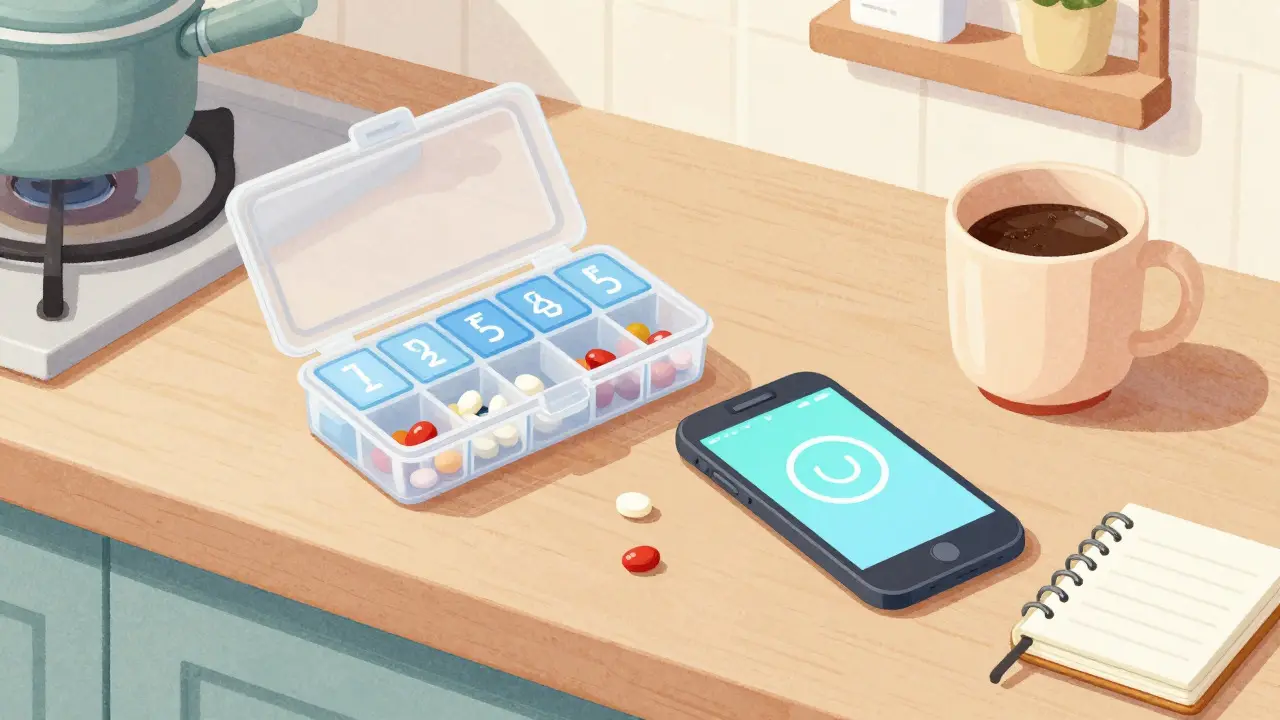
- Use Pill Organizers: Weekly pill boxes are cheap and effective. Seeing an empty slot provides instant visual confirmation that you’ve taken your medication.
- Set Digital Reminders: Use your phone or a smart speaker to set recurring alarms. Label them clearly, such as "Morning Blood Thinner," so you don't ignore them as spam calls.
- Link to Habits: Tie your medication to an existing habit, like brushing your teeth or having your morning coffee. Consistency reduces reliance on memory alone.
- Keep Refills Ready: Run out of medication? That’s a missed dose waiting to happen. Set up automatic refills with your pharmacy or order a week before you’re due to run out.
If you find yourself frequently forgetting, talk to your doctor. There may be alternative medications with different dosing frequencies (such as once-daily options) that fit your lifestyle better. Remember, the goal is consistent protection, not perfection. If you slip up, follow the guidelines above, report it, and move forward without guilt.
Frequently Asked Questions
What happens if I miss one dose of Eliquis?
If you miss a dose of apixaban (Eliquis), take it as soon as you remember on the same day. However, if it is more than 6 hours past your scheduled time, skip the missed dose and return to your regular schedule the next day. Never take two doses at once to make up for the missed one.
Can I take my warfarin dose the next morning if I forgot at night?
Generally, no. If you usually take warfarin in the evening and forget, you can take it before midnight. If you remember the next morning (more than 12 hours late), you should skip that dose and take your normal dose at the usual time. Taking it late can affect your INR levels.
Is it safe to double my dose if I missed yesterday's pill?
No, it is rarely safe to double up on blood thinners. Doing so spikes the concentration of the drug in your bloodstream, significantly increasing your risk of severe bleeding. It is safer to skip the missed dose if you are outside the recommended time window and resume your normal schedule.
Do I need a blood test if I miss a dose of Xarelto?
Unlike warfarin, Xarelto (rivaroxaban) typically does not require routine blood monitoring. However, if you miss multiple doses or experience symptoms of bleeding or clotting, contact your doctor. They may order tests to check your kidney function or clotting status depending on your specific health history.
What are the signs that a blood clot has formed after missing a dose?
Symptoms of a deep vein thrombosis (DVT) include swelling, pain, or warmth in one leg. Symptoms of a pulmonary embolism (PE) include sudden shortness of breath, chest pain, and rapid pulse. Stroke symptoms include facial drooping, arm weakness, and speech difficulties. Seek emergency care immediately if these occur.
Should I tell my doctor if I miss a dose?
Yes, especially if you are on warfarin. Record the missed dose in your anticoagulant logbook and inform your care team at your next appointment. If you miss multiple doses or have concerns about bleeding risks, call your clinic sooner for specific advice tailored to your condition.