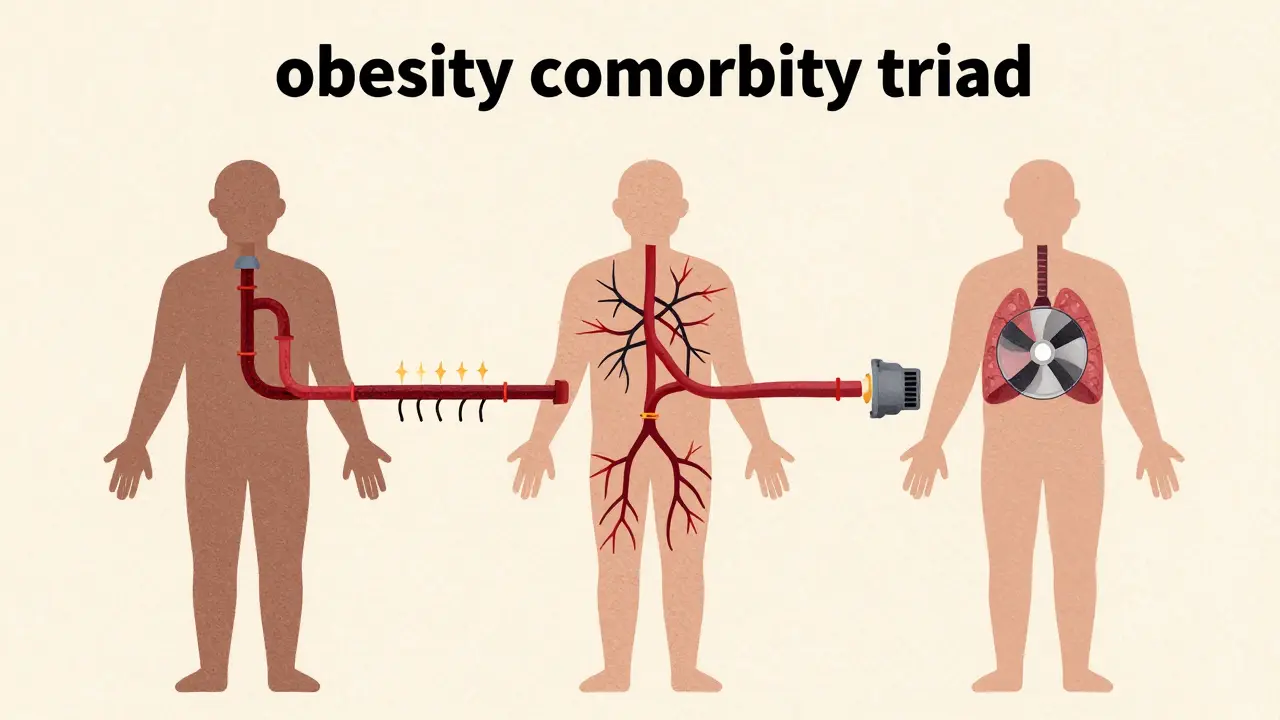
Imagine your body is a house. Now imagine the plumbing (your blood vessels), the electrical system (your nerves), and the ventilation (your breathing) are all starting to fail at the same time. That is essentially what happens when obesity triggers its three most dangerous partners: type 2 diabetes, heart disease, and obstructive sleep apnea. These conditions don't just show up together by chance; they feed off each other in a vicious cycle that makes treating one much harder if you ignore the others.
We often think of these as separate issues. You see a doctor for high blood sugar, another for snoring, and a third for chest pain. But recent medical research shows this "comorbidity triad" acts like a single, complex engine of damage. Understanding how they connect is the first step toward breaking the cycle.
The Triad Explained: How They Connect
Obesity is a chronic disease characterized by excessive body fat accumulation, typically defined by a Body Mass Index (BMI) of 30 or higher. It is not just about weight on a scale; it is about how that extra fat affects your organs.
Think of obesity as the spark. When you carry excess weight, particularly around your midsection, your body undergoes physical and chemical changes that set the stage for the other two conditions.
- Sleep Apnea (OSA): Extra fat deposits in the neck and throat narrow your airway. When you sleep, these tissues collapse, blocking your breathing. The Wisconsin Sleep Cohort Study found that every 1-unit increase in BMI raises your risk of developing OSA by 14%.
- Type 2 Diabetes (T2DM): Fat cells aren't just storage; they are active factories that release inflammatory chemicals. This causes insulin resistance, meaning your body can't use glucose properly. Obese individuals have 30-50% higher levels of inflammatory markers like C-reactive protein.
- Heart Disease (CVD): Your heart has to work harder to pump blood through a larger body. Meanwhile, the stress from poor sleep and high blood sugar damages your arteries. The combination creates a perfect storm for heart attacks and stroke.
A 2018 study called SLEEP-AHEAD revealed a startling connection: 86% of obese people with type 2 diabetes also had undiagnosed sleep apnea. This isn't a coincidence. It's a biological chain reaction.
The Domino Effect: From Snoring to Stroke
You might wonder, "Does my snoring really affect my heart?" The answer is yes, and the mechanism is brutal. Here is how the dominoes fall:
- Oxygen Drops: When you stop breathing during sleep (apnea), your oxygen levels plummet. Your brain panics and jolts you awake-often without you remembering-to breathe again.
- Adrenaline Spike: Each jolt releases adrenaline. This spikes your blood pressure and heart rate. Imagine doing this hundreds of times a night. No wonder your heart is stressed.
- Inflammation Rises: The lack of oxygen triggers inflammation throughout your body. This makes it even harder for your pancreas to manage blood sugar, worsening diabetes.
- Arteries Harden: Over years, this constant stress and inflammation cause plaque to build up in your arteries (atherosclerosis). A 2015 study in the journal Atherosclerosis found that having all three conditions increases your risk of a heart attack by 3.2 times compared to someone without them.
Dr. Virend Somers of the Mayo Clinic noted that untreated sleep apnea in obese diabetic patients increases cardiovascular mortality by 86%. That number is hard to ignore. Treating the sleep issue isn't optional; it's critical for saving your heart.
Why Diagnosis Is So Hard
If the connections are so clear, why do so many people go undiagnosed? The main problem is siloed healthcare. You visit an endocrinologist for diabetes, who focuses on your HbA1c levels. You visit a cardiologist for high blood pressure, who prescribes medication. Rarely does anyone ask, "How is your sleep?"
Data from the National Committee for Quality Assurance shows that only 17.8% of obese patients with type 2 diabetes actually get screened for sleep apnea. Meanwhile, forums like Reddit’s r/sleepapnea are filled with stories of people waiting 5 to 7 years for a diagnosis because doctors dismissed their fatigue as just "being tired from being overweight."
This delay is costly. A 2022 Health Affairs study calculated that obese patients with both diabetes and sleep apnea spend $12,300 more per year on healthcare than those with obesity alone. Most of that cost comes from emergency visits and hospitalizations for heart complications that could have been prevented.
Breaking the Cycle: Treatment Strategies
The good news? Breaking one link in the chain helps heal the others. You don't need to fix everything at once, but you do need a coordinated plan.
1. Treat the Sleep Apnea First
Continuous Positive Airway Pressure (CPAP) therapy is the gold standard. By keeping your airway open, CPAP stops the nightly oxygen drops and adrenaline spikes. Studies show that using CPAP for 4-6 hours a night can reduce cardiovascular events by 28% in obese diabetic patients. Plus, better sleep helps regulate hunger hormones, making weight loss easier.
2. Strategic Weight Loss
You don't need to lose 100 pounds to see results. Losing just 10-15% of your body weight can reduce your Apnea-Hypopnea Index (AHI)-the measure of sleep apnea severity-by 50%. The SLEEP-AHEAD trial showed that intensive lifestyle changes (175 minutes of exercise per week plus a controlled diet) led to an 8.6% weight loss, significantly improving sleep quality.
3. Medication Advances
New drugs are changing the game. GLP-1 receptor agonists, like semaglutide, were originally designed for diabetes. However, the 2024 LEADER-OSA trial showed they also shrink upper airway fat, directly improving sleep apnea independent of weight loss. This dual action makes them powerful tools for tackling the triad simultaneously.
| Treatment | Primary Target | Impact on Other Conditions | Key Benefit |
|---|---|---|---|
| CPAP Therapy | Sleep Apnea | Reduces blood pressure, improves insulin sensitivity | Immediate protection against cardiac stress |
| GLP-1 Agonists (e.g., Semaglutide) | Diabetes & Weight | Reduces airway fat, lowers AHI | Dual action on metabolism and breathing |
| Bariatric Surgery | Obesity | High remission rates for T2DM and OSA | Long-term metabolic reset |
| Lifestyle Intervention | All Three | Gradual improvement across all metrics | No side effects, sustainable long-term |
When to See a Specialist
You should consider asking for a sleep study if you have any of the following:
- You snore loudly and gasp for air during sleep.
- You feel exhausted despite getting 7+ hours of sleep.
- Your blood sugar or blood pressure is hard to control despite medication.
- Your partner notices you stopping breathing at night.
Use the STOP-Bang questionnaire as a quick check. If you score 3 or higher, you are at high risk for sleep apnea and need professional screening. Don't wait for a heart event to force the conversation. Proactive screening saves lives.
Can losing weight cure sleep apnea?
Weight loss can significantly improve or even resolve sleep apnea, especially if it is mild to moderate. Studies show that losing 10-15% of body weight can reduce the frequency of breathing pauses by half. However, severe cases may still require CPAP therapy even after weight loss, as anatomical factors play a role too.
Is sleep apnea linked to type 2 diabetes?
Yes, strongly. Sleep apnea causes intermittent hypoxia (low oxygen), which stresses the body and worsens insulin resistance. Research indicates that severe sleep apnea increases the risk of developing type 2 diabetes by 60%, independent of BMI. Treating sleep apnea can help lower blood sugar levels.
What is the best treatment for the obesity comorbidity triad?
There is no single "best" treatment, but a combined approach works best. This usually includes CPAP therapy for immediate sleep protection, GLP-1 medications or lifestyle changes for weight and blood sugar control, and regular monitoring of heart health. Bariatric surgery is an option for severe obesity and offers high remission rates for both diabetes and sleep apnea.
How does sleep apnea affect heart disease risk?
Sleep apnea puts immense strain on the cardiovascular system. The repeated drops in oxygen and surges in adrenaline raise blood pressure and cause inflammation. Untreated sleep apnea in obese diabetic patients increases cardiovascular mortality by 86%. It is a major modifiable risk factor for heart failure, atrial fibrillation, and stroke.
Should I get screened for sleep apnea if I have diabetes?
Absolutely. The American Diabetes Association recommends screening for sleep apnea in all patients with type 2 diabetes, especially those with a BMI over 30. Up to 80% of people with type 2 diabetes have undiagnosed sleep apnea. Early detection can prevent serious heart complications and improve diabetes management.