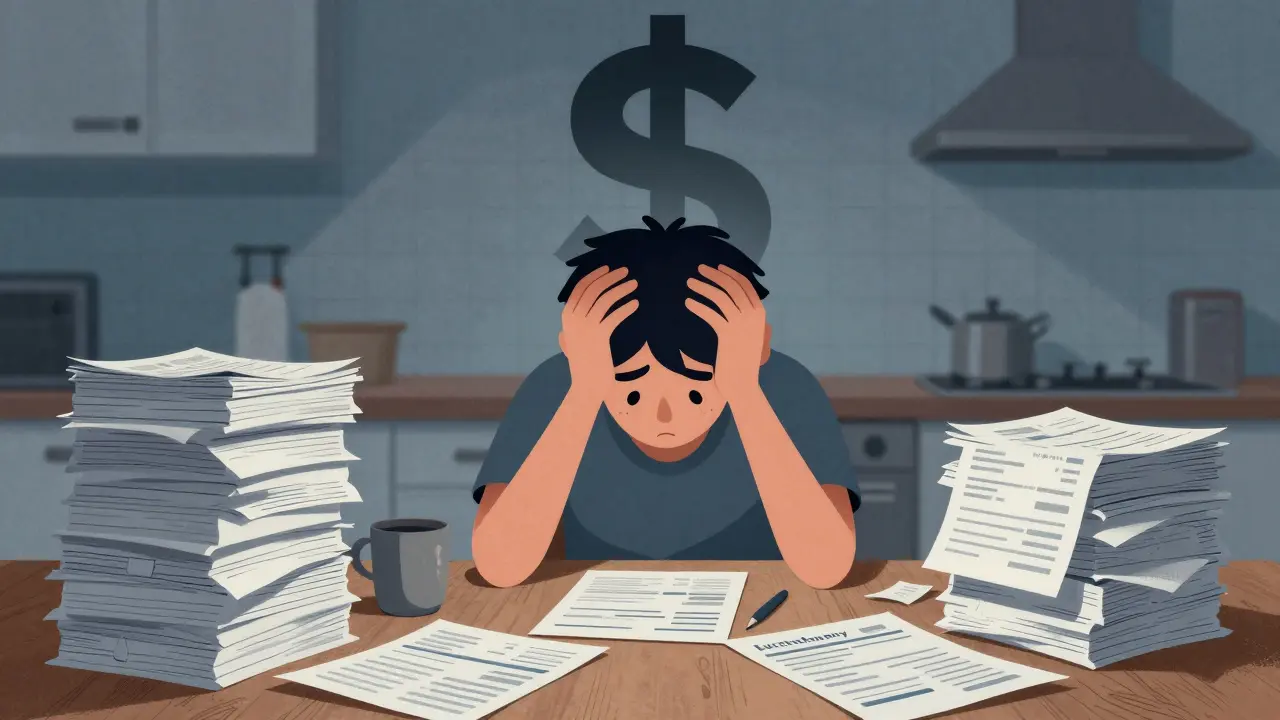
Medicine costs can hit hard when your insurance doesn't cover the full price. You might face a bill that feels impossible to pay. Many people assume they have no options if their plan says "no" or if the copay is too high. But there is a safety net you might not know about. Pharmaceutical companies run Patient Assistance Programs (PAPs), which are initiatives that provide free or discounted medications to financially vulnerable patients. These programs helped over 10 million Americans last year alone.
The problem? Getting approved isn't always straightforward. The rules change depending on who makes the drug, what your insurance looks like, and how much you earn. If you get the paperwork wrong, you get denied. And waiting weeks for a decision while needing medicine is stressful. This guide breaks down exactly who qualifies, what documents you need, and how to avoid the most common mistakes that lead to rejection.
Who Actually Qualifies for Patient Assistance?
Eligibility hinges on three main factors: your income, your insurance status, and where you live. Let's look at the numbers first because they are the strictest part of the process.
Most programs use the Federal Poverty Level (FPL) as their benchmark. In 2023, for example, the cutoff was often set at 400% to 500% of the FPL. That meant a single person earning up to $75,000 could qualify, while a family of four could make up to $153,000. However, these limits vary wildly by company and drug type. Pfizer's RxPathways program, for instance, has lower thresholds for primary care drugs (300% FPL) but higher ones for specialty oncology treatments (up to 600% FPL).
Your insurance status matters just as much. Here is the tricky part: many independent charity programs actually require you to have some form of insurance. A 2019 study found that 97% of independent charity PAPs excluded completely uninsured patients. On the flip side, manufacturer-specific programs often target those who are uninsured or underinsured by government plans. If you have commercial insurance from an employer, you might be disqualified entirely from certain manufacturer programs.
| Program Type | Income Limit (Approx.) | Insurance Requirement | Best For |
|---|---|---|---|
| Manufacturer PAPs | Up to 600% FPL for specialty drugs | Often requires uninsured or government underinsured status | High-cost specialty medications without commercial coverage |
| Independent Charity PAPs | Usually capped at 400-500% FPL | Frequently excludes uninsured; may require Medicaid/Medicare | Patients with specific chronic conditions needing broad access |
| Commercial PAPs | Varies by company policy | Requires active commercial insurance | Employed individuals facing high out-of-pocket costs |
Geography is another gatekeeper. You must be a US resident and receive treatment from a physician licensed in the United States. All major programs demand proof of a US address. If you live abroad or see a doctor overseas, these programs generally won't help you.
Navigating the Medicare Part D Maze
If you are on Medicare, the rules get complicated fast. Since the launch of Medicare Part D in 2006, the Centers for Medicare & Medicaid Services (CMS) have kept a close eye on how PAPs interact with your benefits. The key concept here is TrOOP, or True Out-of-Pocket costs.
To reach catastrophic coverage-where your copays drop significantly-you need to spend a certain amount out of pocket. In 2024, that threshold was $8,000. Here is the catch: if a PAP operates "outside the Part D benefit," the value of the free drug does not count toward your TrOOP. This means you might get the medicine for free today, but it delays you reaching the stage where all your future meds are cheap.
CMS guidelines from 2012 established that PAPs must maintain "separateness" from Part D benefits. This prevents manufacturers from artificially lowering reported costs. For Medicare beneficiaries, this creates a strategic dilemma. You need to check if the specific PAP you apply for counts toward your deductible. Some programs, like Takeda's Help At Hand, require you to first apply for "Extra Help" through Social Security. If you are denied Extra Help, you then submit that denial letter to prove you qualify for their assistance.
There is also a dangerous gap for people earning between 135% and 150% of the Federal Poverty Level. You might earn too much for Extra Help but still struggle with costs. Many manufacturer PAPs exclude this group unless they meet very specific hardship criteria. It is crucial to calculate your Modified Adjusted Gross Income (MAGI) carefully, as this is often the metric used rather than simple gross income.
Common Reasons Applications Get Denied
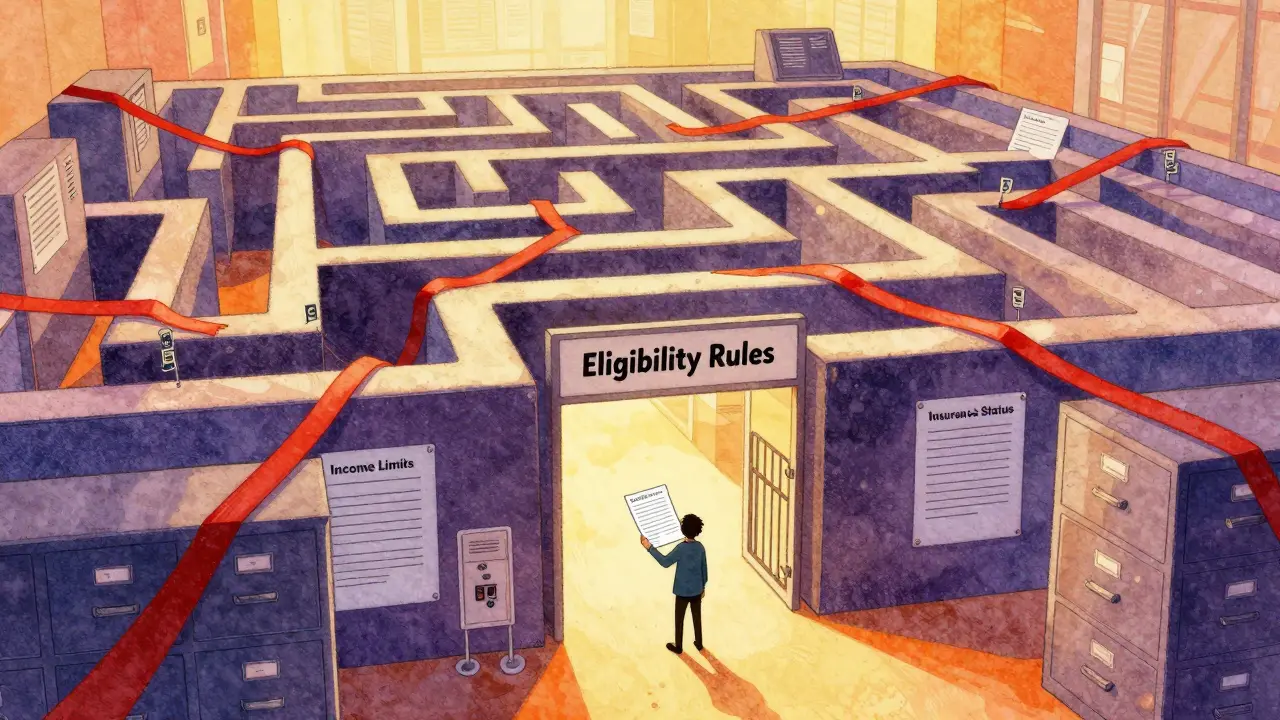
You do the work, you fill out the forms, and then... silence or a rejection letter. Why does this happen so often? Data from Reddit discussions and patient advocacy groups shows that initial denial rates can hover around 37%. Most of these rejections are not because you don't deserve help, but because of paperwork errors.
- Incomplete Documentation: This accounts for nearly 70% of denials. Did you attach the signed physician verification? Is your tax return clear? Missing one signature can kill the application.
- Income Verification Issues: About 22% of rejections stem from confusion over income calculations. Using the wrong year's taxes or failing to include spousal income when required leads to automatic disqualification.
- Commercial Insurance Status: As mentioned earlier, having standard employer-sponsored insurance is the biggest disqualifier for many manufacturer programs. If your plan covers the drug, even partially, the PAP may deny you.
A survey by the Medicare Rights Center found that 42% of applicants had to try three or more times before getting approved. Persistence pays off, but only if you fix the error each time. Don't just resubmit the same flawed packet. Call the navigator line-they are trained to spot these issues.
How to Apply Successfully: A Step-by-Step Guide
Applying takes time. AbbVie's user testing data showed the average application takes about 27 minutes to complete, but gathering documents takes days. Follow this workflow to minimize headaches.
- Identify the Right Program: Go directly to the drug manufacturer's website. Do not rely on third-party lists alone. Use tools like the Medicine Assistance Tool (MAT) to find programs compatible with your specific prescription.
- Gather Financial Proof: Have your W2 forms, recent paycheck stubs, or federal tax returns ready. Know your household size accurately-errors here caused 52% of calculation mistakes in one CMS analysis.
- Get Physician Buy-In Early: Your doctor needs to sign the enrollment form and verify your diagnosis. Merck's data shows this step takes an average of 28 days. Ask your doctor to prioritize this form as soon as you decide to apply.
- Check for "Extra Help" First (if on Medicare): If you are eligible for Low-Income Subsidy (LIS) through Social Security, apply for that first. Many PAPs will not accept your application until you have a denial letter from LIS.
- Submit and Track: Keep copies of everything. Note the date you submitted. If you don't hear back in two weeks, call. Average processing times are around 14.7 days, but delays happen.
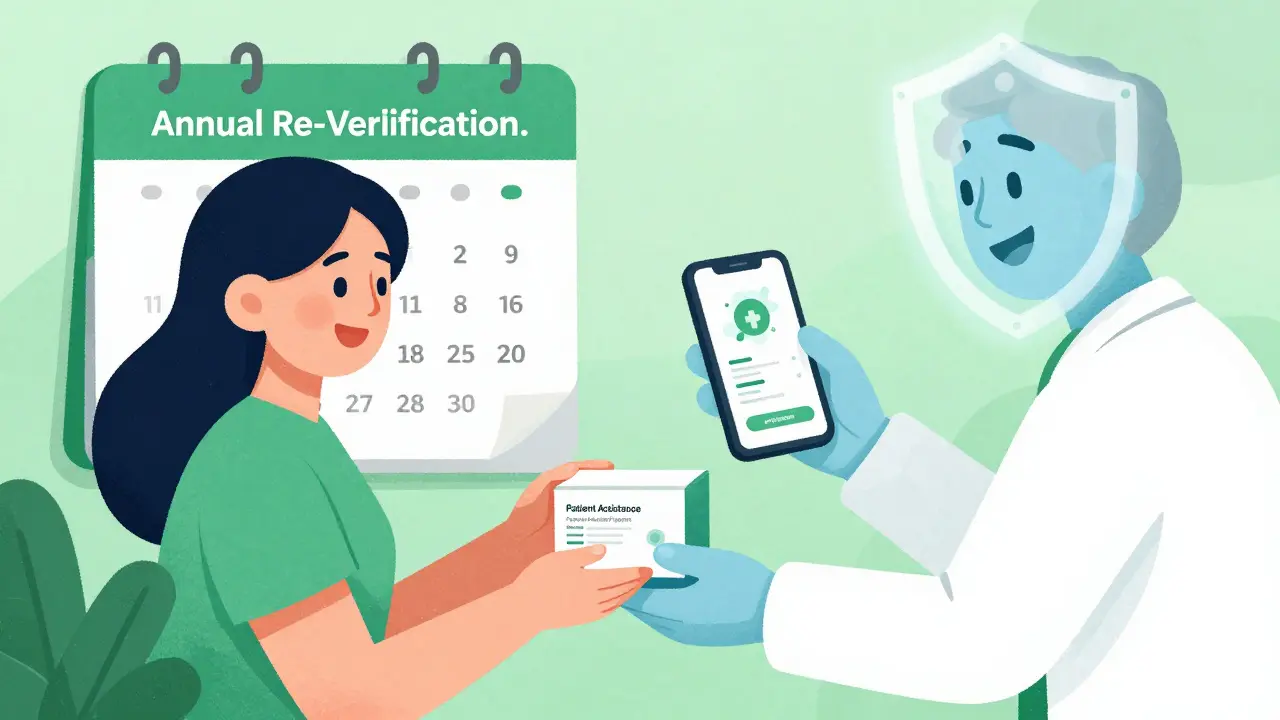
Once approved, stay vigilant. You usually need to re-verify your eligibility annually for primary care drugs and quarterly for specialty medications. GSK, for example, requires re-enrollment every 12 months. Set calendar reminders so you don't lose coverage due to administrative lapses.
The Future of Drug Assistance in 2026
The landscape is shifting. With the Inflation Reduction Act provisions kicking in, Medicare Part D out-of-pocket costs are capped at $2,000 annually starting in 2025. This cap might reduce the need for PAPs among some Medicare beneficiaries by up to 40%, according to projections. However, for the 27.5 million underinsured Americans, these programs remain vital.
We are also seeing a rise in "commercial PAPs." Twelve major manufacturers launched these between 2022 and 2023 specifically for insured patients facing high deductibles. If you have good insurance but a massive deductible, look for these newer programs. They bridge the gap that traditional PAPs ignore.
Technology is helping too. Pfizer integrated income verification with TurboTax in 2023, cutting application errors by 29%. Expect more digital automation in 2026, making the process faster and less prone to human error. But until then, double-checking your math and reading the fine print is your best defense against denial.
Can I apply for a Patient Assistance Program if I have private insurance?
It depends on the program. Most traditional manufacturer PAPs exclude patients with commercial insurance. However, new "commercial PAPs" are emerging specifically for insured individuals with high out-of-pocket costs. Check the specific eligibility criteria on the drug manufacturer's website.
Does free medication from a PAP count toward my Medicare deductible?
Usually, no. If the PAP operates "outside the Part D benefit," the value of the drug does not count toward your True Out-of-Pocket (TrOOP) costs. This means it won't help you reach catastrophic coverage faster. Always ask the program administrator or your pharmacist about TrOOP impact.
What is the income limit for most Patient Assistance Programs?
Most programs use 400% to 500% of the Federal Poverty Level (FPL) as a cutoff. For 2023, this was roughly $75,000 for a single person. Specialty drug programs may extend this to 600% FPL. Limits vary by company and drug type, so verify the current thresholds for your specific medication.
Why was my Patient Assistance Program application denied?
Common reasons include incomplete documentation (missing signatures), incorrect income calculations, or having ineligible insurance coverage. About 70% of denials are due to paperwork errors. Review your submission carefully and contact the program's support line for clarification.
Do I need to reapply for Patient Assistance every year?
Yes, typically. Most programs require annual re-verification for primary care drugs and quarterly re-verification for specialty medications. Failure to renew your eligibility on time can result in loss of benefits. Set reminders to submit updated income and insurance documents.