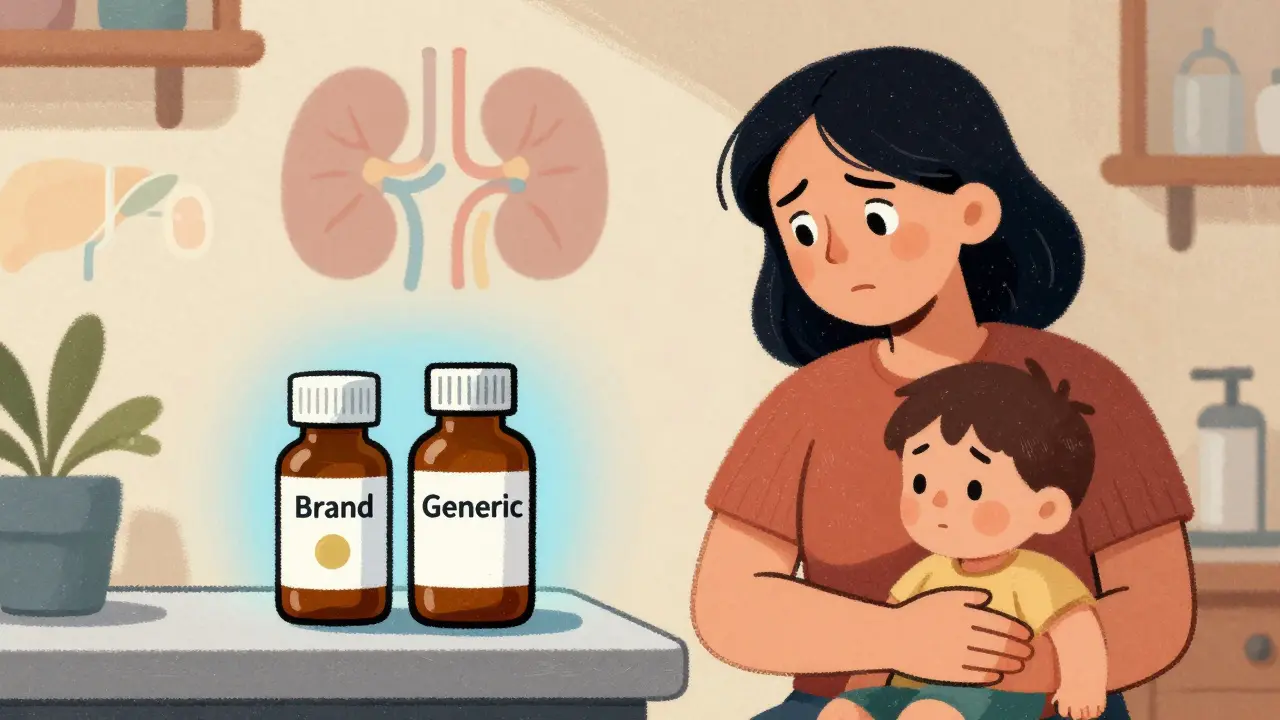
When you hand your child a spoonful of medicine, you expect it to work safely. You trust that the drug in the bottle is exactly what the doctor prescribed. But here is a hard truth: generic drugs are not always simple swaps for brand-name medications when it comes to children. Kids are not just small adults. Their bodies process chemicals differently, their organs are still developing, and their skin absorbs substances faster. A formulation that is perfectly safe for a forty-year-old might cause serious side effects in a toddler.
This gap between adult safety standards and pediatric reality creates hidden risks. While generic drugs save money and make healthcare accessible, they often lack specific testing data for young patients. Understanding these special considerations is vital for parents, pharmacists, and doctors who want to keep children safe from preventable medication errors.
The Physiology Gap: Why Kids Are Different
The core issue with pediatric generic drug safety lies in human biology. Children’s livers and kidneys-the primary organs responsible for breaking down and eliminating drugs-are immature. This means drug metabolism varies wildly by age. For example, infants under two years old have different glutathione production rates than adults, which changes how they handle toxins like acetaminophen. While adults risk liver damage from high doses, young children may be less susceptible to acute toxicity but more vulnerable to other metabolic shifts.
Consider aspirin. It is a common pain reliever for adults, yet it carries a severe warning for anyone under nineteen due to the risk of Reye’s syndrome, a rare but life-threatening condition affecting the brain and liver. Similarly, lamotrigine, an anticonvulsant, poses a higher risk of Stevens-Johnson syndrome-a severe skin reaction-in children compared to adults. These physiological differences mean that a generic equivalent must be scrutinized carefully. The active ingredient might be identical, but the body’s reaction to it can differ significantly based on developmental stage.
| Drug | Risk Factor | Pediatric Concern |
|---|---|---|
| Aspirin | Reye's Syndrome | Avoid in patients under 19 years |
| Lamotrigine | Skin Reaction | Higher risk of Stevens-Johnson syndrome in children |
| Verapamil | Cardiovascular | Increased complication risks in infants |
| Benzocaine | Methemoglobinemia | Avoid oral application in children under 2 years |
The Labeling Void and Off-Label Prescribing
One of the biggest hurdles in pediatric care is incomplete labeling. According to data from the FDA and studies published in JAMA, approximately 50% to 75% of drugs used in children have not been adequately studied to provide appropriate labeling information. When a drug lacks pediatric labeling, doctors often prescribe it "off-label." This means using the medication for an age group or dose that hasn't been officially approved by regulatory bodies.
Generic drugs exacerbate this problem. While brand-name manufacturers sometimes conduct pediatric trials to gain market exclusivity extensions, generic manufacturers are only required to prove bioequivalence to the brand name. They do not typically run new clinical trials on children. As a result, 60% of generic drugs still lack specific pediatric dosing information, compared to only 35% of brand-name drugs. This leaves clinicians guessing about the safest dosage for a growing child.
The Pediatric Research Equity Act (PREA) and the Best Pharmaceuticals for Children Act (BPCA) were introduced to close this gap, requiring some pediatric studies. However, compliance remains inconsistent. In 2024, the FDA mandated that generic manufacturers include pediatric-specific dosing information when available, with full implementation required by December 2025. Until then, the void persists, increasing the reliance on expert judgment rather than standardized guidelines.
Navigating the KIDs List
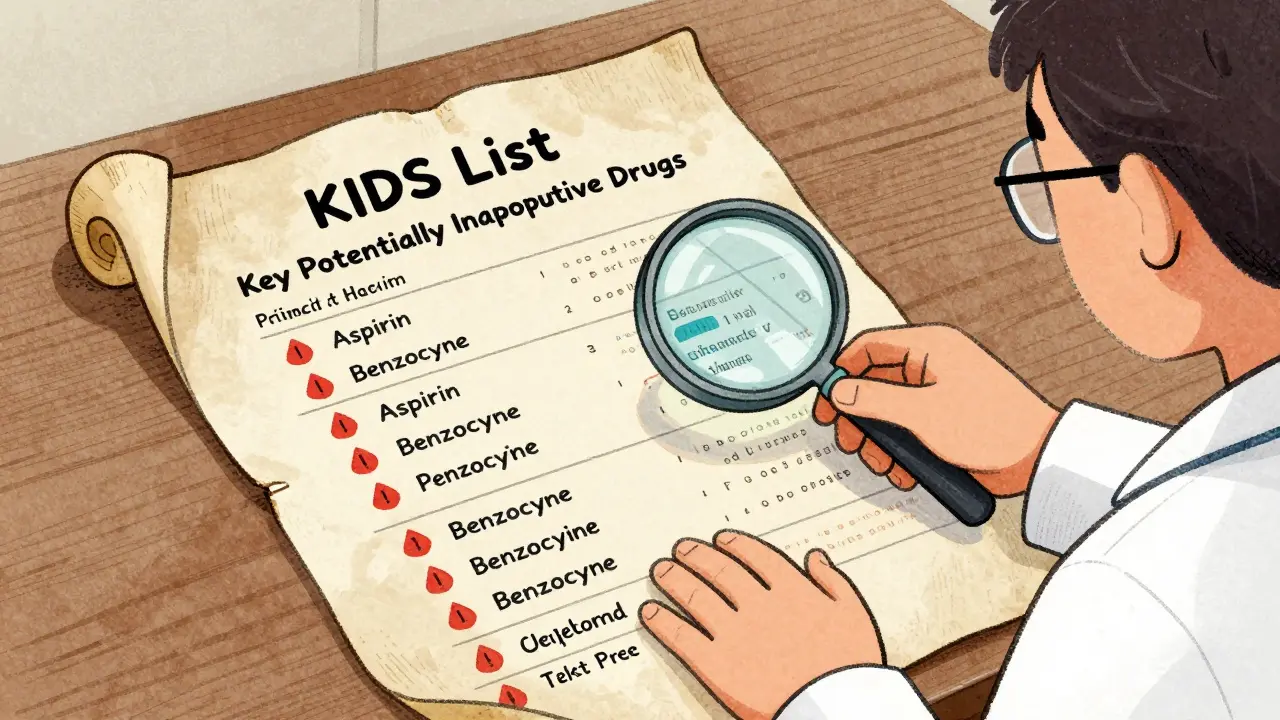
To help healthcare providers navigate these risks, the Pediatric Pharmacy Association (PPA) developed the KIDs List (Key Potentially Inappropriate Drugs List). This resource identifies thousands of drugs with known safety concerns in children. The 2025 update includes 4,149 drugs, categorizing them into "avoid" and "caution" recommendations based on evidence strength.
An "avoid" recommendation is used when potential adverse effects are life-threatening or when evidence is strong. For instance, promethazine, a generic antihistamine, carries a strong recommendation to avoid use in children under two years due to risks of respiratory failure and death. It advises caution for ages two to eighteen. Similarly, trimethobenzamide, a generic antiemetic, should be avoided in all patients eighteen years and younger due to acute dystonic reactions.
Topical medications also feature prominently on the list. Benzocaine and lidocaine viscous formulations carry strict age restrictions. Applying benzocaine orally to children under two can lead to methemoglobinemia, a condition where red blood cells cannot carry oxygen effectively. Lidocaine poses risks of central nervous system depression and seizures in very young children. Parents and caregivers must check these lists before applying over-the-counter topical generics to infants.
Inactive Ingredients and Formulation Risks
While the active ingredient in a generic drug matches the brand name, the inactive ingredients-fillers, binders, preservatives, and dyes-can differ. In adults, these variations rarely matter. In children, they can trigger allergic reactions or affect absorption. A parent reported on Reddit that their five-month-old developed a rash after switching from a brand-name cetirizine to a generic version, likely due to different preservatives. Another case involved a three-year-old experiencing severe diarrhea after switching to a generic loperamide.
Formulation characteristics also play a role. Liquid formulations account for 37% of pediatric medication errors. If a generic liquid has a different concentration or viscosity than the brand name previously used, it can lead to significant dosing mistakes. For example, if a child was accustomed to a 5mg/5mL suspension and switches to a generic 10mg/5mL suspension without adjusting the volume, they receive double the intended dose. This is why consistency in formulation matters as much as the drug itself.
Preventing Dosing Errors at Home and in Clinics
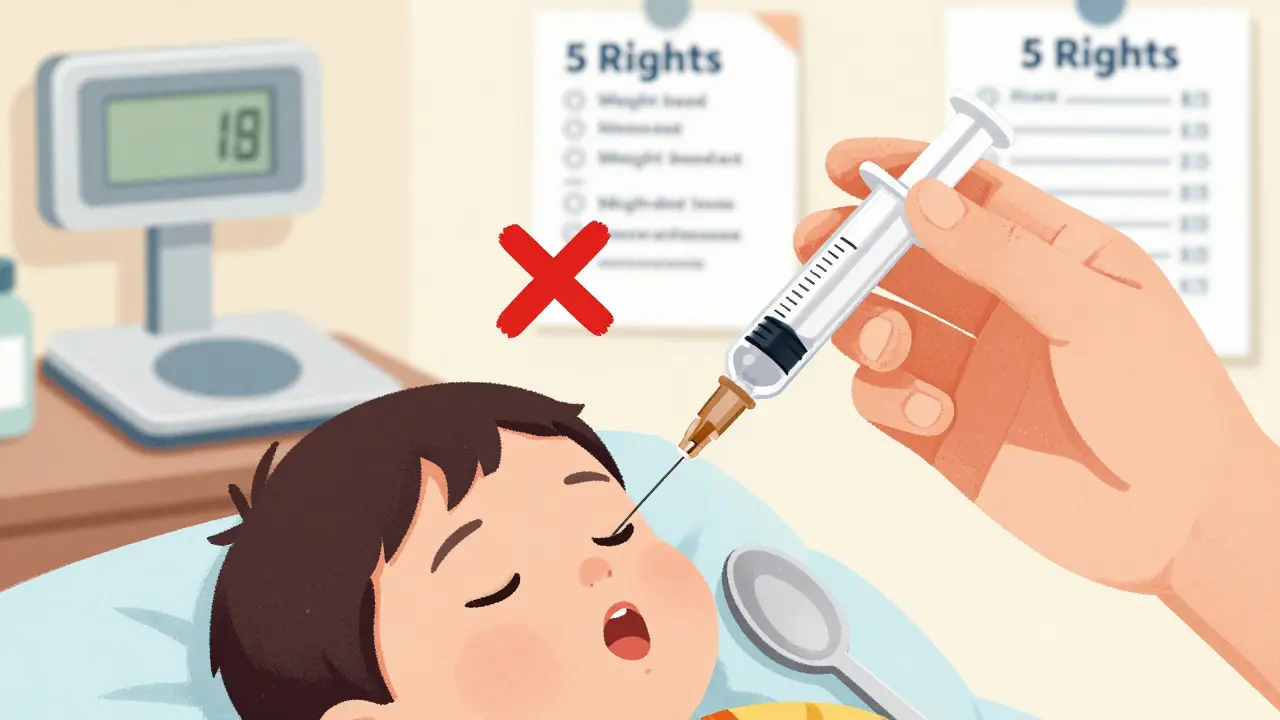
Medication errors are a leading cause of adverse events in children. The Institute for Safe Medication Practices (ISMP) highlights that weight-based dosing miscalculations account for 45% of these errors. To mitigate this, experts emphasize the "5 Rights" of medication administration: right patient, right drug, right dose, right route, and right time. For pediatrics, this expands to include the right concentration, right device, and right caregiver education.
Dr. John N. van den Anker, Chair of Pediatric Clinical Pharmacology at Children’s National Hospital, advocates for the "zero rule": never place a zero after a whole number (e.g., write 1 mg, not 1.0 mg) to prevent ten-fold dosing errors. Additionally, liquid medications should always be measured with oral syringes or calibrated cups, not household spoons. Using proper devices reduces dosing errors by up to 50%.
Healthcare systems implementing specialized training for staff have seen a 63% reduction in medication errors. For parents, maintaining an updated medication list-including over-the-counter and herbal products-is crucial. Seventy-eight percent of adverse events are preventable through proper medication reconciliation. Always read labels carefully, turn on lights to measure accurately, and never use expired medicines.
Regulatory Landscape and Future Trends
The regulatory environment is evolving to address these safety gaps. The FDA’s 2023 Pediatric Action Plan requires generic drug manufacturers to conduct pediatric studies when requested, though current compliance stands at only 42%. In contrast, the European Medicines Agency (EMA) has achieved 78% compliance with pediatric investigation plans, suggesting that stricter mandates could improve safety outcomes globally.
Market trends show growing awareness. The pediatric pharmaceutical market was valued at $114.7 billion in 2023, with generics comprising 85% of prescriptions. Industry adoption of pediatric-specific formulations is growing at 6.2% annually. Looking ahead, artificial intelligence is being explored to predict age-appropriate dosing for generic drugs, with early studies showing 89% accuracy. By 2030, analysts predict a 12.3% compound annual growth rate for pediatric-specific formulations, driven by both safety concerns and regulatory pressure.
Despite these advances, vigilance remains essential. Parents should feel empowered to ask pharmacists about inactive ingredients and formulation differences. Doctors should verify pediatric-specific labeling before prescribing generics. And regulators must continue pushing for comprehensive testing to ensure that every child receives safe, effective care.
Are generic drugs safe for children?
Generic drugs are generally safe and cost-effective, but they require special consideration for children. Because kids metabolize drugs differently than adults, and because many generics lack specific pediatric testing, there can be risks related to inactive ingredients, dosing concentrations, and age-dependent toxicity. Always consult a pediatrician or pharmacist before switching brands, especially for infants and toddlers.
What is the KIDs List?
The KIDs List (Key Potentially Inappropriate Drugs List) is a resource developed by the Pediatric Pharmacy Association. It identifies thousands of drugs, including generics, that pose safety risks to children. The list categorizes drugs into "avoid" and "caution" groups based on evidence strength, helping healthcare providers make safer prescribing decisions.
Why are off-label prescriptions common in pediatrics?
Off-label prescribing occurs when a drug is used for an age group or dose not officially approved by the FDA. This is common in pediatrics because 50-75% of drugs used in children lack adequate pediatric labeling. Manufacturers often skip pediatric trials due to cost and complexity, leaving doctors to rely on expert judgment and limited data.
How can I prevent medication errors at home?
To prevent errors, always use oral syringes or calibrated cups instead of household spoons for liquid meds. Follow the "zero rule" (write 1 mg, not 1.0 mg) to avoid decimal point mistakes. Keep an updated medication list, read labels carefully, and ensure proper lighting when measuring doses. Consult your pharmacist if you notice changes in taste, color, or your child's reaction after switching to a generic.
Do inactive ingredients in generics matter for kids?
Yes, inactive ingredients like preservatives, dyes, and fillers can differ between brand-name and generic drugs. While usually harmless for adults, these components can trigger allergic reactions or affect drug absorption in sensitive pediatric patients. If your child reacts poorly to a generic, discuss alternative formulations with your healthcare provider.
What is the "Dispense as Written" option?
"Dispense as Written" (DAW) is a designation doctors can add to prescriptions to prevent automatic substitution with a generic drug. This is useful when a brand-name formulation is medically necessary for a child due to known issues with generic equivalents, such as differing inactive ingredients or concentration levels. Parents can request this if they have had negative experiences with generics.