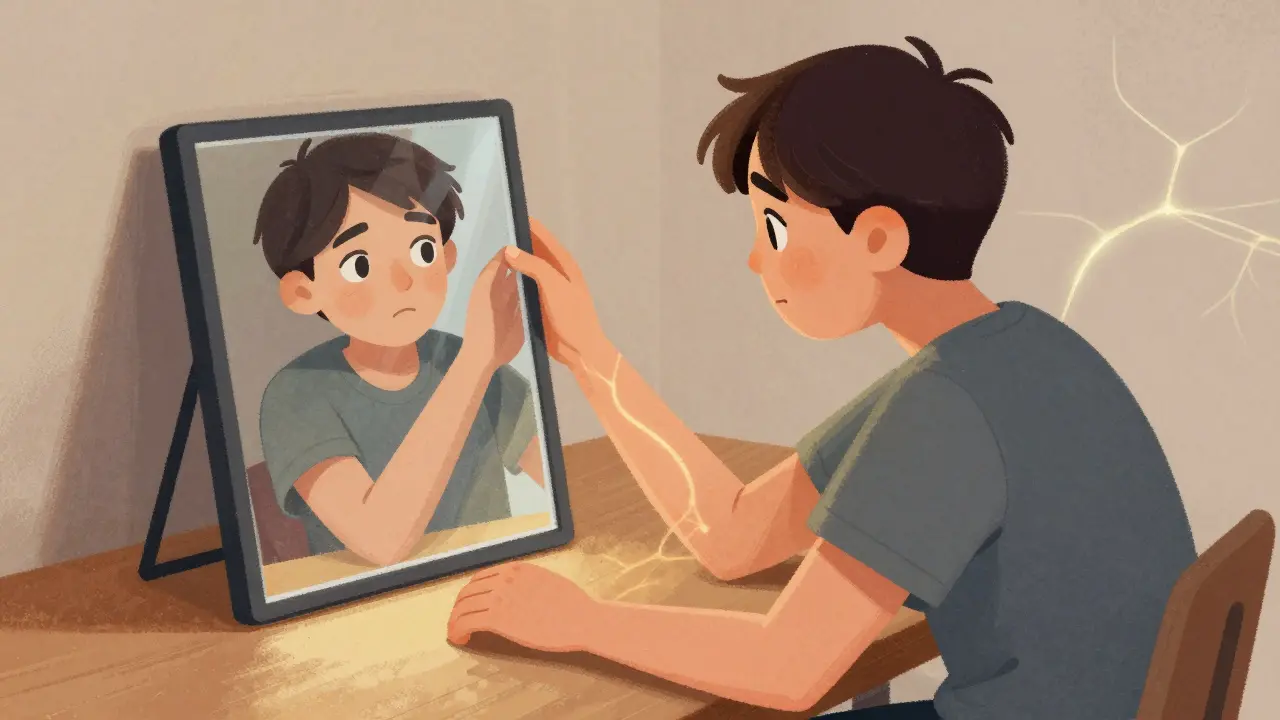
When someone loses a limb, their body doesn’t just lose muscle and bone-it loses the feeling of that limb too. But for 60% to 85% of amputees, the pain doesn’t disappear. Instead, it comes back as phantom limb pain (PLP): burning, cramping, or stabbing sensations in a limb that’s no longer there. This isn’t in their head. Brain scans prove it. The same areas that once controlled the missing limb light up when the pain hits. It’s a real, physical rewiring of the nervous system, not a psychological glitch.
Why Phantom Limb Pain Happens
Phantom limb pain doesn’t start at the stump. It starts in the brain. After amputation, nerves that once carried signals from the missing limb don’t just shut off. They keep firing. The spinal cord picks up these signals and sends them upward. Meanwhile, the brain, still expecting input from that limb, tries to make sense of the noise. Over time, it rewires itself. Areas that used to process sensation from the hand, for example, start responding to touch on the face or upper arm. This is called cortical remapping. When you touch your cheek, your brain might misinterpret it as pain in your missing fingers. Triggers are just as real as the pain itself. Fatigue, stress, cold weather, or even a tight prosthetic socket can turn a dull ache into a sharp spike. People who had chronic pain before amputation-like from diabetic neuropathy or severe trauma-are at higher risk. So are those who had intense pain right before or during surgery. The more pain you felt before losing the limb, the more likely you are to feel it afterward.How Medications Help (and Don’t Help)
Medication is the most common first step. But not all drugs work the same way, and side effects can be just as hard to deal with as the pain. Tricyclic antidepressants like amitriptyline and nortriptyline are the go-to. They’re not used for depression here-they block pain signals in the spinal cord. A typical dose starts at 10 mg at bedtime and slowly increases over weeks. About 45% of users report moderate relief, but 60% say they feel drowsy or dry-mouthed. Still, for many, the trade-off is worth it. Anticonvulsants like gabapentin and pregabalin were originally made for seizures, but they calm overactive nerves. Gabapentin starts at 300 mg a day and can go up to 3,600 mg. About 72% of users on Reddit reported improvement, but nearly 60% quit because of dizziness or brain fog. Pregabalin works faster but often leads to weight gain-40% of users gain 5 pounds or more in the first few months. NSAIDs like ibuprofen and naproxen help some people, especially if there’s inflammation in the stump. But they rarely touch the deep, burning pain of PLP. Studies show 65% feel relief at first, but 80% lose effectiveness after three to six months. Ketamine, an NMDA receptor blocker, is used in hospitals for stubborn cases. Given intravenously, it can shut down pain circuits for hours. But it’s not a long-term fix. It’s expensive, requires monitoring, and can cause hallucinations. Still, for people who’ve tried everything else, it can be a lifeline. Opioids like oxycodone or morphine are controversial. They work-sometimes very well-but the risk of dependence is real. The American Pain Society warns against using more than 50 morphine milligram equivalents (MME) daily. On pain forums, 35% of long-term users admit they became dependent. Most doctors now reserve opioids only when all else fails.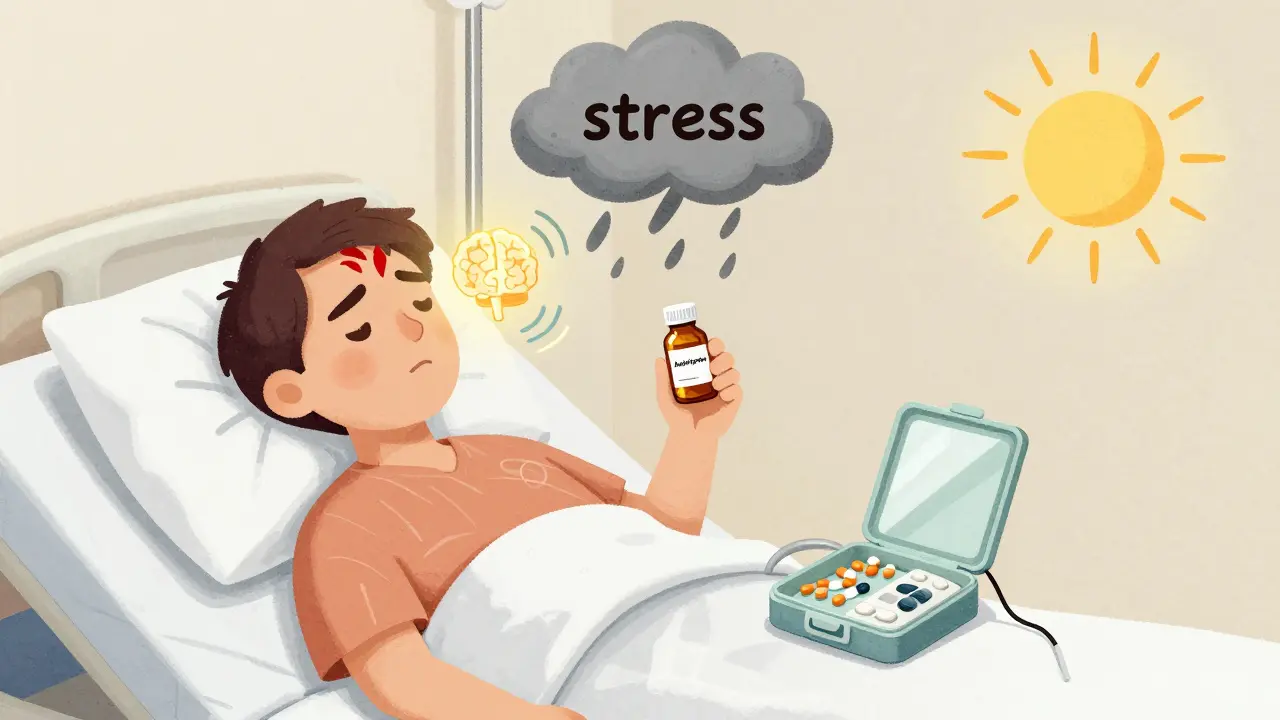
Mirror Therapy: Seeing Is Believing
Mirror therapy is one of the most fascinating non-drug treatments. It was pioneered by neuroscientist V.S. Ramachandran in the 1990s. The idea is simple: place a mirror vertically so it reflects your intact limb, making it look like you still have two limbs. Then, you move the good limb while watching its reflection. Your brain sees movement where it expects movement-and slowly, it relearns that the missing limb isn’t in pain. It sounds like magic, but brain scans show it works. When patients do mirror therapy daily, activity in the brain’s sensory areas decreases. Studies show about 50% of users get at least 30% pain reduction after four weeks. But it’s not easy. You need to do it 15 to 30 minutes a day, every day. A 2021 study found 40% of patients quit within eight weeks because they got bored or didn’t see quick results. The best time to start? Right after surgery. Even if pain hasn’t started yet, daily mirror therapy can reduce the chance of chronic PLP. Some clinics now give patients a mirror box before they leave the hospital.Other Non-Medication Options
Not everyone responds to mirror therapy or drugs. That’s where other tools come in. Transcutaneous Electrical Nerve Stimulation (TENS) sends mild pulses through the skin near the stump. It doesn’t fix the brain’s misfiring, but it can distract it. About 30-50% of users report moderate relief. It’s safe, cheap, and FDA-cleared. But you need to learn how to place the electrodes correctly-wrong placement makes it useless. Botox injections might sound odd, but they’re used for neuromas-tangled nerve ends that form at the stump. A few injections can reduce both pain and sweating in the area. One 2023 case study showed pain dropping from 8/10 to 3/10 and lasting 12 weeks. It’s not permanent, but for some, it’s the only thing that works. Spinal cord stimulation involves implanting a device that sends pulses to the spinal cord. It’s for severe cases that haven’t responded to anything else. Success rates are 40-60%. In January 2024, the FDA approved a new closed-loop system called Evoke from Saluda Medical that adjusts stimulation in real time. In trials, it cut pain by 65% on average. Biofeedback teaches you to control your body’s stress responses-heart rate, muscle tension-with real-time feedback. It’s not a quick fix, but over time, it helps reduce pain triggered by stress. About 25-40% of users see improvement.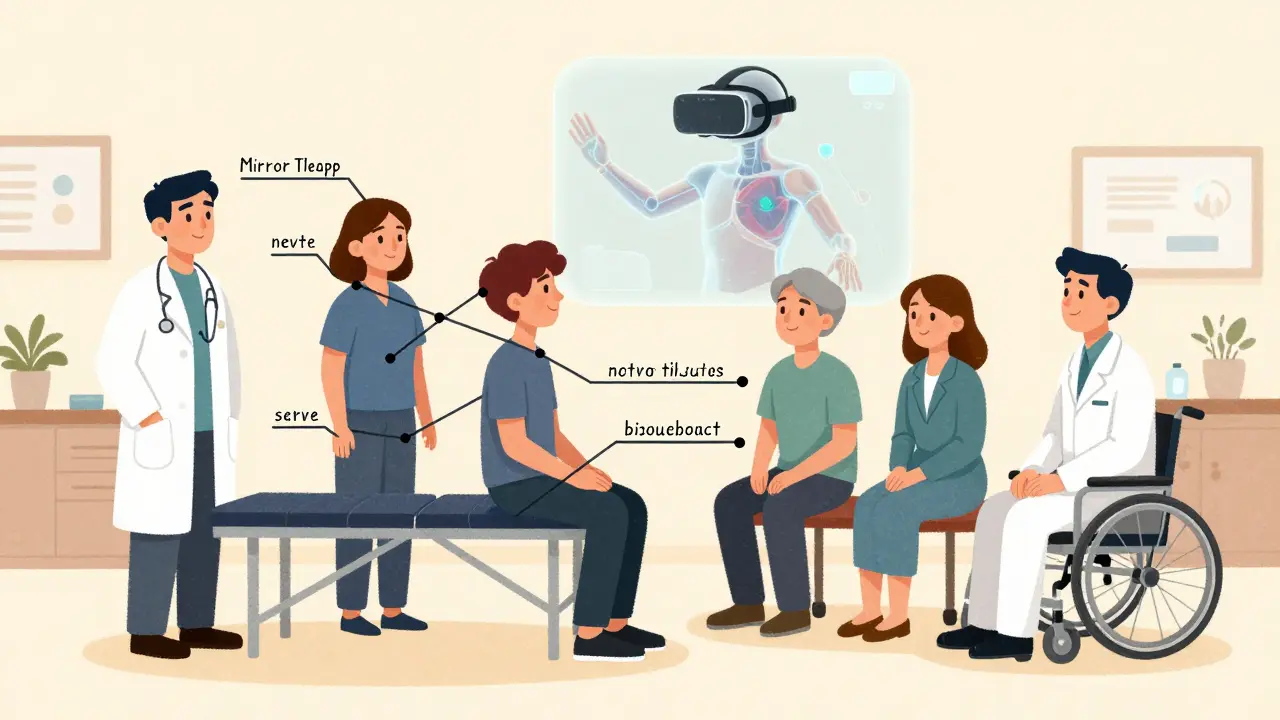
What Works Best? A Combined Approach
No single treatment cures phantom limb pain. The best results come from combining methods. A 2023 review in OrthoEvidence found that patients who used both medication and mirror therapy had twice the improvement of those using just one. Some clinics now offer full multidisciplinary programs: a pain specialist, physical therapist, psychologist, and prosthetist all working together. The future is promising. Virtual reality mirror therapy is being tested-instead of a physical mirror, patients wear a headset that shows a digital limb. Early results suggest adherence jumps from 60% to 85% because it’s more engaging. And new drugs are in the pipeline. A 2024 study tested a selective NMDA modulator that reduced pain by 50% without the side effects of ketamine.What to Do If You’re Struggling
If you’re living with PLP and nothing seems to help, don’t give up. Here’s what to try next:- Start with a low-dose tricyclic antidepressant (like amitriptyline 10 mg at night) and give it 4-6 weeks.
- Add mirror therapy: buy a mirror box online, do 20 minutes a day, every day.
- Ask your doctor about TENS or a referral to a pain clinic.
- Track your triggers: weather, stress, sleep, prosthetic fit. Adjust one at a time.
- Join a support group. The Amputee Coalition has over 12,000 members who’ve been there.
The key is persistence. Pain that lasts more than six months won’t disappear on its own. But with the right mix of tools, most people find relief-even if it’s not 100%. It’s not about curing the pain. It’s about taking back control.
Is phantom limb pain psychological?
No. Phantom limb pain is a neurological condition, not a mental one. Brain imaging studies show clear activity in areas that once controlled the missing limb. While emotions like stress can make it worse, the pain itself comes from nerve misfires and brain rewiring-not imagination.
How long does phantom limb pain last?
For many, it fades within months. But if it lasts more than six months, it’s unlikely to go away without treatment. Studies show persistent pain after this point has a "slim-to-none" chance of resolving on its own. Early intervention is key.
Can mirror therapy cure phantom limb pain?
Mirror therapy doesn’t cure it, but it can significantly reduce pain for about half of users. It works by tricking the brain into relearning that the limb isn’t in danger. It’s most effective when started early and done daily for at least four weeks.
What’s the best medication for phantom limb pain?
Tricyclic antidepressants like amitriptyline are the most commonly prescribed and often the most effective. Gabapentin and pregabalin are also widely used. But the "best" depends on the individual-side effects, other health conditions, and response vary. Many people need to try two or three before finding what works.
Do opioids help with phantom limb pain?
Opioids can reduce pain in the short term, but they carry high risks of dependence and tolerance. Experts now recommend them only for severe cases that don’t respond to other treatments. The American Pain Society advises limiting use to under 50 morphine milligram equivalents (MME) per day to avoid addiction.
Can phantom limb pain come back after it’s gone?
Yes. Even if pain disappears for months or years, it can return after stress, injury, infection, or changes in weather. That’s why ongoing management-even after improvement-is important. Keeping up with mirror therapy or occasional medication can prevent flare-ups.
Rachidi Toupé GAGNON
February 11, 2026 AT 11:11Just tried mirror therapy after 3 years of phantom pain and holy crap it worked 😍
15 mins a day, no magic, just consistency.
My missing hand stopped screaming at me like a banshee.
Worth every boring minute.
Also bought a $12 mirror box off Amazon-no need to overcomplicate it.
Stop waiting for a pill. Move. See. Believe.
Craig Staszak
February 11, 2026 AT 11:16So many options but honestly the tricyclics saved me
Started at 10mg at night felt like a zombie for a week then boom
Not gone but bearable
Also mirror therapy is weird as hell but if you do it like a ritual it works
My brain needed to see the hand move before it stopped pretending it was on fire
Ernie Simsek
February 12, 2026 AT 12:07Let’s be real-most of these meds are just trading one hell for another
Gabapentin turned me into a sleepwalking zombie
Pregabalin made me gain 12 lbs and forget my dog’s name
And don’t get me started on ketamine-hallucinating your own stump is not a feature it’s a bug 😅
But mirror therapy? That’s the only thing that didn’t make me want to quit life.
Also why is no one talking about TENS? It’s basically a cheap massage gun for your nerves
Alyssa Williams
February 14, 2026 AT 08:18Y’all are underestimating mirror therapy
I started it right after surgery-no pain yet
Now 18 months later? Zero phantom pain
It’s not a cure but it’s preventative magic
Do it daily like brushing your teeth
And if you think it’s silly-your brain doesn’t care
It just wants to believe the limb is still there
And guess what? It works
Reggie McIntyre
February 15, 2026 AT 16:46Wait so if the brain rewires itself after amputation… does that mean the phantom pain is literally the brain’s way of trying to fill a sensory void?
Like if you cut off a TV signal the screen just shows static?
And mirror therapy is like giving it a new channel?
That’s wild
Also-has anyone tried VR mirror therapy yet?
I saw a video where someone moved a digital leg and cried because it felt real
That’s the future right there
Sonja Stoces
February 17, 2026 AT 09:29They say phantom pain isn’t psychological but then why do all the studies say stress makes it worse?
And why do we only see this in amputees and not people who lose toes?
And why is ketamine the go-to when we have CBD and psychedelics that don’t make you hallucinate?
Also who funded this article?
Pharmaceuticals or mirror box companies?
Just saying
Kristin Jarecki
February 17, 2026 AT 16:01Thank you for this meticulously researched and clinically accurate overview.
The integration of neuroplasticity principles with multimodal therapeutic approaches is both scientifically sound and clinically actionable.
It is imperative that clinicians prioritize early intervention with mirror therapy, as the window for cortical reorganization is most malleable within the first three months post-amputation.
Furthermore, the emphasis on non-opioid pharmacotherapy aligns with current guidelines from the American Academy of Pain Medicine.
This is a model of patient-centered, evidence-based communication.
Suzette Smith
February 18, 2026 AT 06:35mirror therapy sounds like a scam but i tried it and now i can feel my foot again
not really but i swear it feels like it
weird
also my dog licks my stump now and it helps
not sure why
but it does
Autumn Frankart
February 19, 2026 AT 04:16They’re hiding the truth.
Phantom pain is caused by HAARP frequencies.
They test it on veterans.
That’s why it’s worse in winter-because the satellites are calibrated for cold weather.
And the mirror therapy? It’s just a distraction so you don’t notice the implants.
They’re using your neural pathways to map your brain for the next phase of mind control.
Check the FDA approval dates-every one lines up with a new satellite launch.
Wake up.
Pat Mun
February 20, 2026 AT 17:16So I’ve been living with this for 11 years now.
Tricyclics? Tried them. Felt like I was drowning in syrup.
Gabapentin? Made me forget my own birthday.
Ketamine? Saw my leg dancing with a raccoon. Not worth it.
But mirror therapy? I did it for 20 minutes every night for six months.
Some days I didn’t want to. Some days I cried.
But then one day I reached for my coffee with my phantom hand-and it didn’t hurt.
Not because it was gone.
But because my brain finally stopped screaming.
It’s not a cure.
It’s a quieting.
And that’s enough.
Keep going. Even if it feels pointless. Just keep going.
alex clo
February 21, 2026 AT 22:11While the article provides a comprehensive summary of current therapeutic modalities for phantom limb pain, it would benefit from a more nuanced discussion of individual variability in treatment response.
For instance, the efficacy of mirror therapy may be modulated by pre-amputation pain duration, psychological comorbidities, and proprioceptive memory retention.
Additionally, the role of neuroinflammation in persistent PLP remains underexplored in the literature, despite emerging evidence implicating glial cell activation in central sensitization.
Future research should prioritize longitudinal neuroimaging cohorts to map cortical reorganization dynamics in real time.
Joanne Tan
February 22, 2026 AT 18:40OMG I just started mirror therapy and my pain dropped from 8/10 to 3/10 in 3 days
no joke
it’s like my brain finally got the memo
also i did it while watching netflix so it didn’t feel like a chore
you don’t have to be perfect
just show up
and if you’re scared to try it
you’re not alone
i was too
but my leg stopped screaming
and that’s all that matters