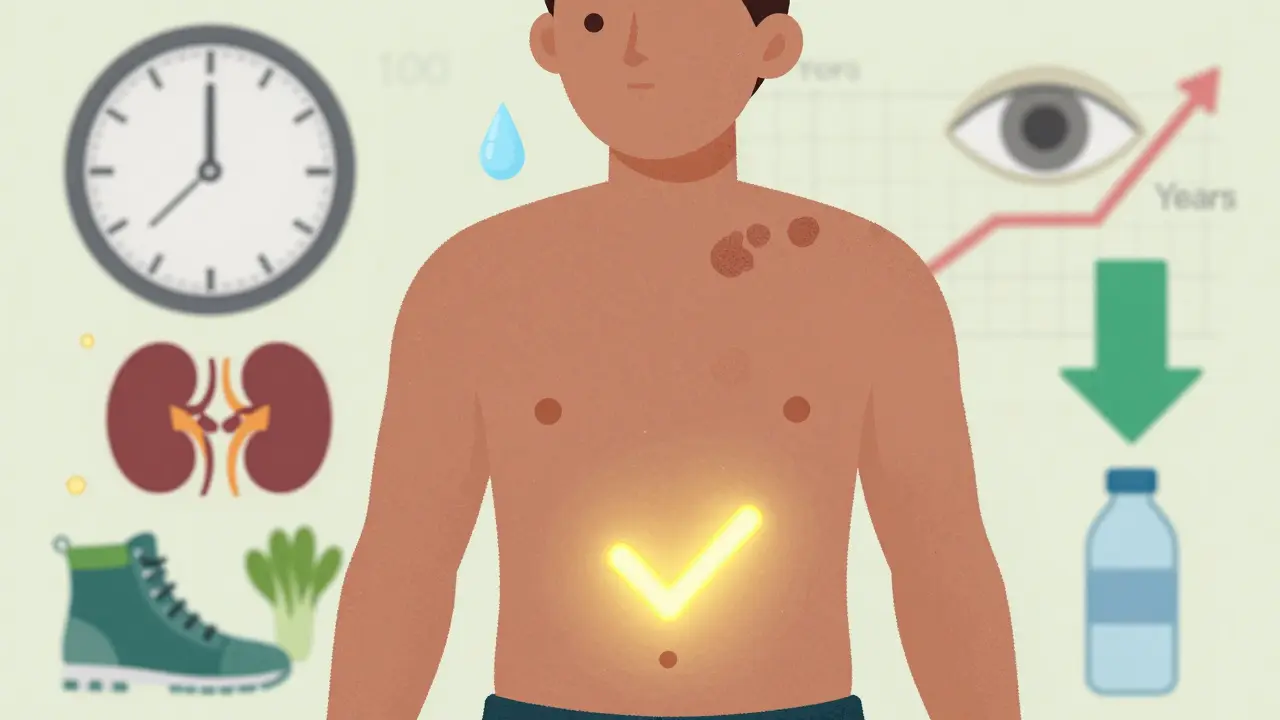
Most people with prediabetes don’t know they have it. Not because they’re ignoring their health, but because there’s often nothing to feel. No pain. No obvious warning. Just a quiet rise in blood sugar that slips under the radar-until it doesn’t. By the time symptoms show up, the window to stop progression to type 2 diabetes is narrowing fast. But here’s the truth: prediabetes isn’t a diagnosis you live with. It’s a signal. And if you catch it early, you can reverse it.
What Exactly Is Prediabetes?
Prediabetes means your blood sugar is higher than normal, but not high enough to be called type 2 diabetes. It’s not a disease-it’s a warning. The American Diabetes Association sets clear numbers: a fasting blood sugar between 100 and 125 mg/dL, an A1C between 5.7% and 6.3%, or a 2-hour glucose level of 140-199 mg/dL after a glucose test. These aren’t guesses. They’re based on decades of research, including the landmark Diabetes Prevention Program (DPP) study that showed lifestyle changes cut diabetes risk by 58%.
Think of it like a car with a check engine light. The car still runs. But if you ignore it, you risk a breakdown. Prediabetes is your body’s way of saying, “Something’s off.” And unlike many chronic conditions, this one can be fixed-with the right steps.
The Silent Signs (Yes, There Are Some)
The CDC says over 80% of people with prediabetes have no symptoms. That’s why screening matters more than waiting for clues. But when symptoms do appear, they’re not random. They’re biological responses to too much sugar in the blood.
- Constant thirst-drinking more than 3 liters a day without exercising? That’s your kidneys trying to flush out excess glucose. Every time they pull water from your body to do it, you get dehydrated and crave more fluids.
- Frequent urination-going more than 8 times a day? It’s the same process. Your kidneys are overwhelmed and dumping sugar into urine, dragging water with it.
- Blurred vision-when blood sugar spikes above 180 mg/dL, fluid shifts into the lens of your eye. It swells. Focus gets fuzzy. It’s temporary, but it’s a red flag.
- Unexplained fatigue-even after a full night’s sleep, you feel drained. Why? Your cells aren’t getting the glucose they need. Insulin resistance means sugar is stuck in your bloodstream, not fueling your muscles or brain.
- Darkened skin patches-especially on your neck, armpits, or groin. This is called acanthosis nigricans. It’s not just cosmetic. It’s a visible sign of high insulin levels trying to force sugar into cells.
- Slow healing cuts-if a scrape takes more than two weeks to close, your circulation and immune response are already being affected by elevated glucose.
- Tingling or numbness-especially in feet or hands. This is early nerve damage from sugar toxicity. It’s reversible if caught now.
- Increased hunger-you eat, but you’re still hungry. Your body can’t access glucose properly, so it screams for more fuel.
- Recurrent infections-women with prediabetes often get yeast infections three or more times a year. Men and women both report more urinary tract infections. High sugar feeds yeast and bacteria.
These aren’t myths. They’re measurable. A 2018 study in Diabetes Care found that for every 0.5% rise in A1C, depression scores (PHQ-9) increased by 1.5 points. Mood swings, brain fog, irritability-they’re not just stress. They’re metabolic.
Who Should Get Tested?
You don’t need to be overweight to have prediabetes. But certain factors raise your risk:
- BMI of 25 or higher (or 23 for Asian Americans)
- Family history of type 2 diabetes
- History of gestational diabetes
- Polycystic ovary syndrome (PCOS)
- Physical inactivity (less than 150 minutes of exercise a week)
- Age 45 or older
- High blood pressure or abnormal cholesterol
The U.S. Preventive Services Task Force recommends screening every 3 years for adults with risk factors. If you’ve already been told you have prediabetes, get tested every year. And if you’re over 65? Your risk jumps to nearly 50%. Screening isn’t optional-it’s essential.
How to Reverse It (The Proven Way)
Reversing prediabetes isn’t about extreme diets or expensive supplements. It’s about two things: moving more and eating better-with real numbers behind them.
The CDC’s National Diabetes Prevention Program shows that losing just 5-7% of your body weight and getting 150 minutes of moderate activity per week cuts your diabetes risk by more than half. That’s not magic. That’s science.
Let’s break it down:
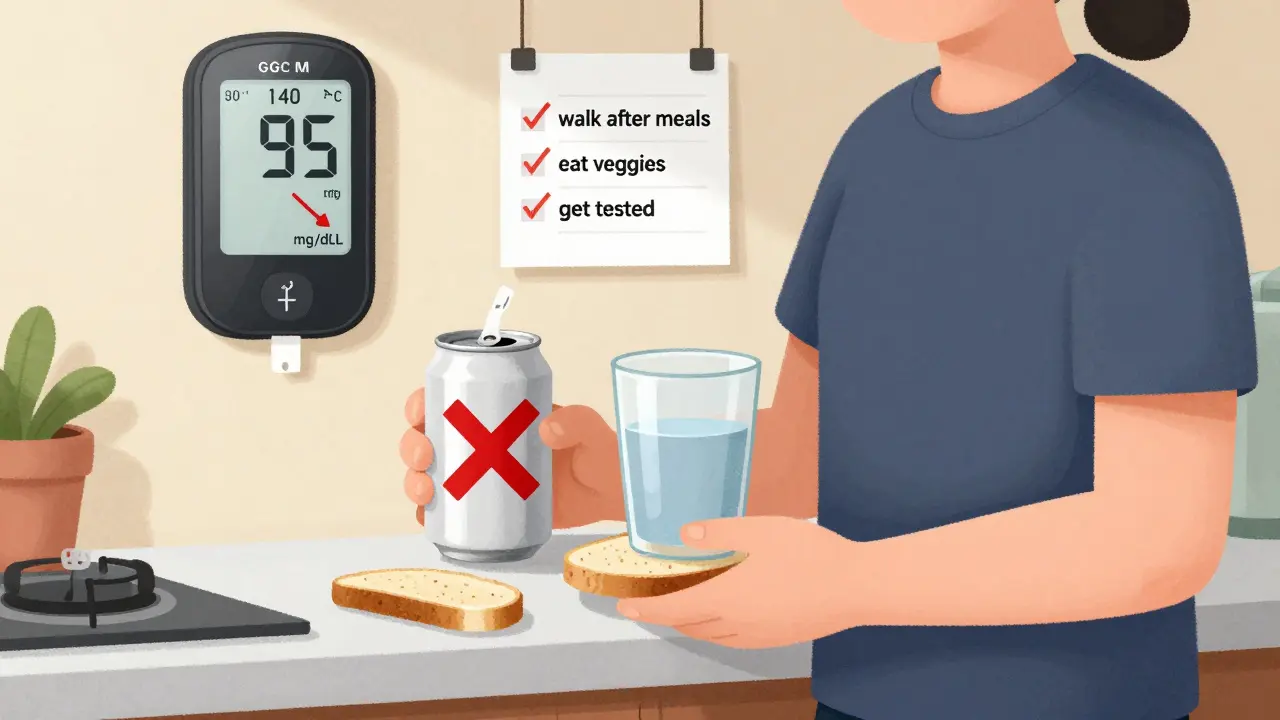
- Move daily-150 minutes a week means 30 minutes, 5 days a week. Doesn’t have to be gym workouts. Brisk walking, gardening, dancing, cycling-all count. A 2015 Lancet study found people who kept this up for 10 years still had a 27% lower diabetes rate than those who didn’t.
- Change your plate-cut processed carbs and sugary drinks. Focus on vegetables, lean proteins, whole grains, nuts, and legumes. The Look AHEAD trial showed that a diet of 1,200-1,800 calories a day (with 55-60% carbs, 25-30% fat) led to 8.6% weight loss in one year. That’s enough to normalize fasting glucose in over half of participants.
- Try the Mediterranean pattern-a 2023 study in Diabetes Care found that combining olive oil, fish, nuts, and vegetables with calorie control reversed prediabetes in 27.7% of people in just 12 months. That’s better than most medications.
And here’s the kicker: you don’t need to do it alone. Digital programs like Omada Health and Virta Health-both CDC-recognized-have completion rates over 85%. They use apps, coaches, and wearable trackers to keep you on track. One study showed Virta’s program reversed prediabetes in 60% of users after one year, with an average 12.2% weight loss.
Why Most People Fail (And How to Avoid It)
Here’s the hard truth: 30-40% of people who start lifestyle programs quit. Why? Two reasons:
- Time-62% say they’re too busy. But you don’t need an hour. Ten minutes of walking after meals lowers post-meal blood sugar spikes. Two 15-minute walks a day count.
- Diet changes-57% struggle to stick with food rules. Don’t try to overhaul everything overnight. Start with one swap: soda → sparkling water. White bread → whole grain. Candy → fruit. Small shifts build habits.
Forget “willpower.” Use structure. Schedule your walks like appointments. Prep meals on Sundays. Keep healthy snacks visible. Set reminders. These aren’t tricks-they’re tools proven to work.
What Happens If You Do Nothing?
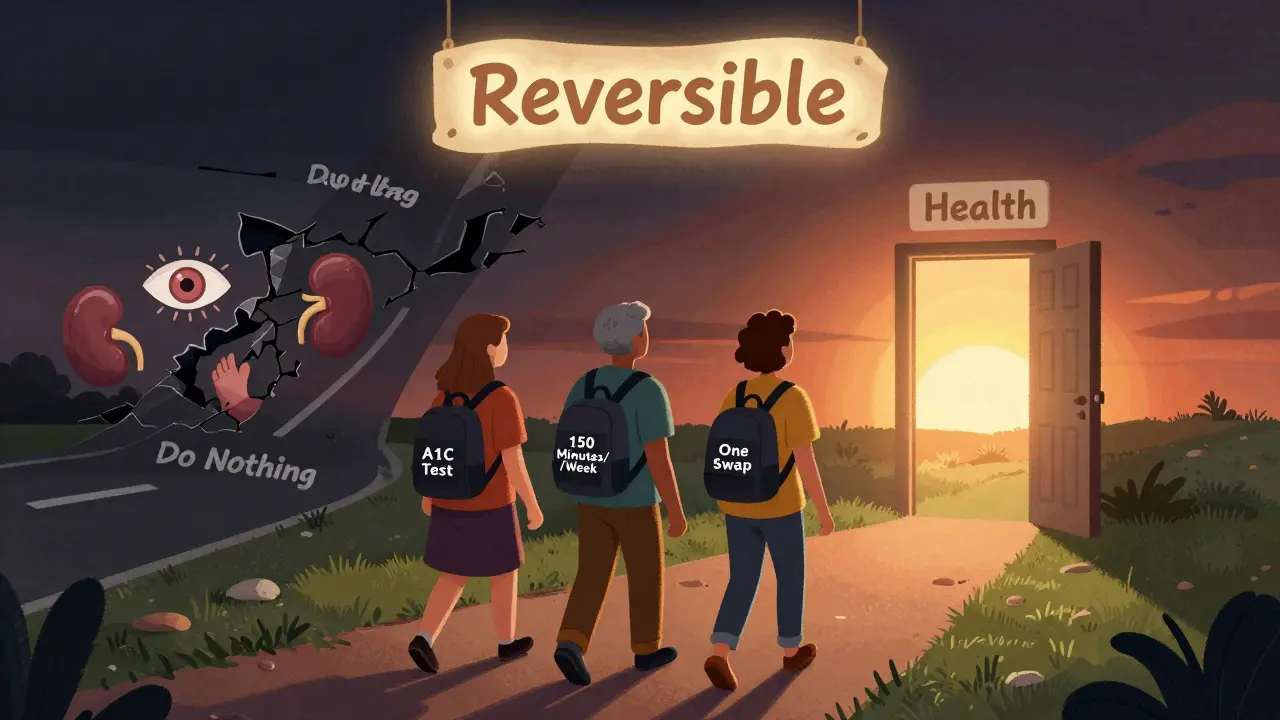
Without change, 15-30% of people with prediabetes develop type 2 diabetes within 5 years. That’s not a small risk. That’s a high probability. And once diabetes sets in, it’s not just about insulin shots or pills. It’s about nerve damage, kidney failure, vision loss, heart disease, and amputations.
But here’s the flip side: if you act now, you might never need those treatments. The Diabetes Prevention Program Outcomes Study followed people for 15 years. Those who made lifestyle changes cut their lifetime risk of diabetes by 27%. For those over 60? The drop was 46%.
What’s New in 2026?
Technology is making reversal easier than ever. Continuous glucose monitors (CGMs)-once only for diabetics-are now being used by people with prediabetes to see how food affects their blood sugar in real time. The ADA and European Association for the Study of Diabetes now recommend CGMs for those with A1C between 5.7% and 6.3% who are trying to reverse it.
And it’s not just about glucose. Researchers are looking at inflammation markers like CRP and IL-6, and hormones like adiponectin. These could one day predict who’s most likely to progress-and who can reverse it with minor changes.
For now, though, the answer is simple: move more, eat better, get tested. No pills. No surgery. Just you, your choices, and the science that proves it works.
Can you reverse prediabetes without losing weight?
Yes, but it’s harder. Weight loss helps because fat around the liver and pancreas directly interferes with insulin function. However, people who get regular exercise-even without weight loss-can still improve insulin sensitivity. A 2020 study in Diabetes Care showed that 150 minutes of weekly activity improved blood sugar control by 15-20% independent of weight change. So while losing 5-7% of your body weight gives the best results, movement alone still makes a difference.
Do I need medication to reverse prediabetes?
No, medication isn’t needed for most people. Lifestyle changes are more effective than metformin in preventing diabetes, according to the Diabetes Prevention Program. Metformin reduces risk by 31%, while lifestyle changes cut it by 58%. That’s why the ADA recommends lifestyle as the first step. Medication may be considered if you’re at very high risk (like having both prediabetes and obesity plus a family history), but even then, lifestyle should come first.
Is prediabetes the same as insulin resistance?
Prediabetes is the result of insulin resistance-or reduced insulin production. Insulin resistance means your cells stop responding well to insulin, so sugar builds up in your blood. That’s what pushes your numbers into the prediabetes range. Not everyone with insulin resistance has prediabetes yet, but almost everyone with prediabetes has insulin resistance. It’s the root cause.
Can I still eat carbs if I have prediabetes?
Absolutely-but not the wrong kinds. White bread, pastries, sugary cereals, and soda spike blood sugar fast. Whole grains like oats, quinoa, brown rice, and legumes? They’re fine in controlled portions. The key is pairing carbs with protein or fat to slow digestion. For example, apple with peanut butter, or whole grain toast with eggs. Portion control matters more than elimination.
How often should I get my blood sugar checked?
If you’ve never been tested and you’re over 45, get screened now. If you have risk factors (overweight, family history, etc.), get tested every 3 years. If you’ve been diagnosed with prediabetes, test annually. Some people use home glucose monitors to track post-meal spikes, but the A1C test every 6-12 months is the gold standard for seeing long-term trends.
Next Steps: What to Do Today
Don’t wait for symptoms. Don’t wait for a doctor’s appointment. Start now:
- Get your A1C tested. It’s a simple blood test-no fasting needed.
- Walk for 10 minutes after dinner. Do it every day for a week.
- Replace one sugary drink with water or unsweetened tea.
- Write down your food for three days. Look for patterns: do you snack more when stressed? Eat more carbs after dinner?
- Find one person to hold you accountable-a friend, partner, or online group.
Prediabetes isn’t a life sentence. It’s a turning point. And the best time to act was yesterday. The second-best time? Today.
John Cyrus
March 2, 2026 AT 03:29John Smith
March 2, 2026 AT 20:38Tobias Mösl
March 4, 2026 AT 07:05tatiana verdesoto
March 4, 2026 AT 21:13Ethan Zeeb
March 5, 2026 AT 16:21Darren Torpey
March 6, 2026 AT 19:57Lebogang kekana
March 8, 2026 AT 03:00Jessica Chaloux
March 9, 2026 AT 09:20Tildi Fletes
March 10, 2026 AT 04:28Siri Elena
March 11, 2026 AT 20:09Divya Mallick
March 12, 2026 AT 07:14