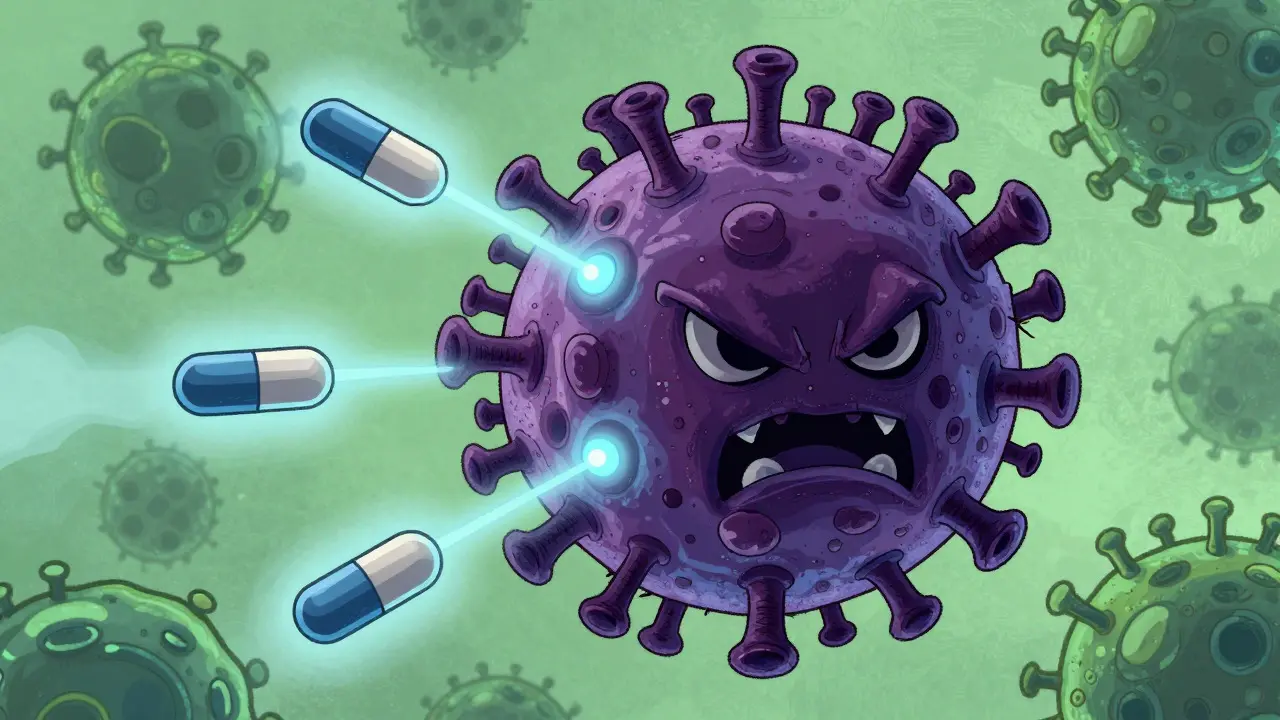
Imagine a treatment that doesn't just blast your body with poison to kill cancer, but instead sends in special agents designed to dismantle the specific machinery driving your tumor. That is the promise of targeted therapy, which uses drugs to precisely identify and attack cancer cells based on their unique molecular characteristics while sparing healthy tissue. This approach represents a massive shift from traditional chemotherapy, moving us into the era of precision medicine where your tumor’s genetic blueprint dictates the treatment plan.
The foundation for this revolution was laid by projects like The Cancer Genome Atlas (TCGA), launched in 2006, which mapped genomic alterations across thousands of patient samples. Today, targeted therapies dominate the landscape. As of 2024, 73% of new cancer drug approvals are targeted therapies. But how does it actually work, who qualifies, and what are the real-world challenges? Let's break down the science, the costs, and the current state of precision oncology.
How Targeted Therapy Works: The Science Behind the Drugs
To understand targeted therapy, you first need to understand what goes wrong in cancer at a cellular level. Cancer isn't just one disease; it's a collection of diseases driven by genetic errors. These errors generally fall into two categories:
- Gain-of-function mutations: These occur in oncogenes (like EGFR, ALK, or BRAF). Think of these as gas pedals stuck to the floor, telling the cell to divide uncontrollably.
- Loss-of-function mutations: These happen in tumor suppressor genes (like TP53 or PTEN). Imagine these as broken brakes, failing to stop abnormal cell growth.
Currently, about 92% of approved genetically targeted therapies focus on blocking those "stuck gas pedals" (oncogenes). It is much harder pharmacologically to fix broken brakes (tumor suppressors), though researchers are actively working on this next frontier.
The drugs themselves usually come in two forms:
- Small molecule inhibitors: These are tiny pills that can penetrate inside the cancer cell to block internal signaling pathways. An example is osimertinib, used for lung cancer with EGFR mutations.
- Monoclonal antibodies: These are larger proteins, often given via IV infusion, that attach to targets on the outside of cancer cells. Trastuzumab (Herceptin) for HER2-positive breast cancer is a classic example.
The result? Instead of killing all rapidly dividing cells (which causes hair loss and nausea associated with chemo), these drugs specifically disrupt the cancer's survival signals. For instance, selpercatinib achieves an 85% response rate in lung cancers with RET mutations, compared to only 30-40% with conventional chemotherapy.
Finding Your Match: Biomarker Testing and NGS
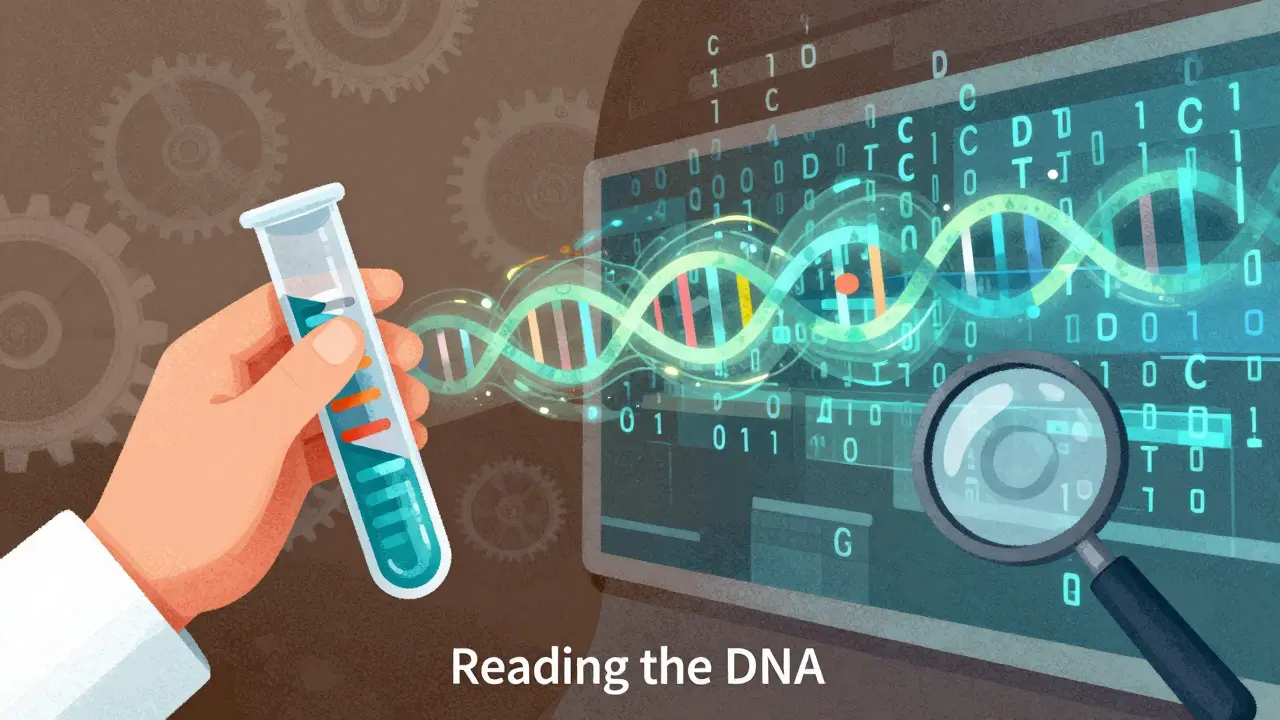
You can't use a key if you don't know which lock it opens. This is why biomarker testing is now standard practice for many advanced cancers. Doctors rely on Next-Generation Sequencing (NGS) to read the DNA of your tumor.
Tests like FoundationOne CDx or MSK-IMPACT analyze hundreds of cancer-related genes simultaneously. Here is what you need to know about the process:
- Sample requirements: You typically need a biopsy sample containing 20-50ng of DNA with at least 20% tumor cells to get reliable results.
- Turnaround time: Expect to wait 14-21 days for the report, according to major centers like MD Anderson.
- Cost: These comprehensive panels cost approximately $5,500 per test.
However, finding a match isn't guaranteed. Data from the AACR Project GENIE shows that currently, only about 13.8% of cancer patients have a mutation that matches an available targeted therapy. This highlights a critical gap: while the technology exists, actionable targets are still rare for many solid tumors.
Targeted Therapy vs. Traditional Chemotherapy
Why switch from chemo to targeted therapy? The numbers speak for themselves when a biomarker match is found. Let's look at non-small cell lung cancer (NSCLC) with EGFR mutations. In the landmark FLAURA trial, patients taking osimertinib (a targeted drug) had a median progression-free survival of 18.9 months. Those on platinum-pemetrexed chemotherapy lasted only 10.2 months. That’s a 54% reduction in the risk of the cancer growing.
| Feature | Targeted Therapy | Traditional Chemotherapy |
|---|---|---|
| Mechanism | Specific molecular pathway inhibition | Kills all rapidly dividing cells |
| Toxicity (Grade 3-4 events) | 15-30% | 50-70% |
| Average Monthly Cost | $15,000 - $30,000 | $5,000 - $10,000 |
| Response Rate (Unselected Patients) | 2-5% | Variable, but broader applicability |
| Quality of Life Impact | Generally lower side effects | Higher fatigue, nausea, immune suppression |
The trade-off is clear. Targeted therapies are significantly more expensive and only work if you have the right mutation. Without biomarker selection, targeted drugs fail in 95-98% of cases. Chemo is cheaper and works broadly, but it comes with a heavy toll on the body.
The Real Challenges: Resistance, Costs, and Access
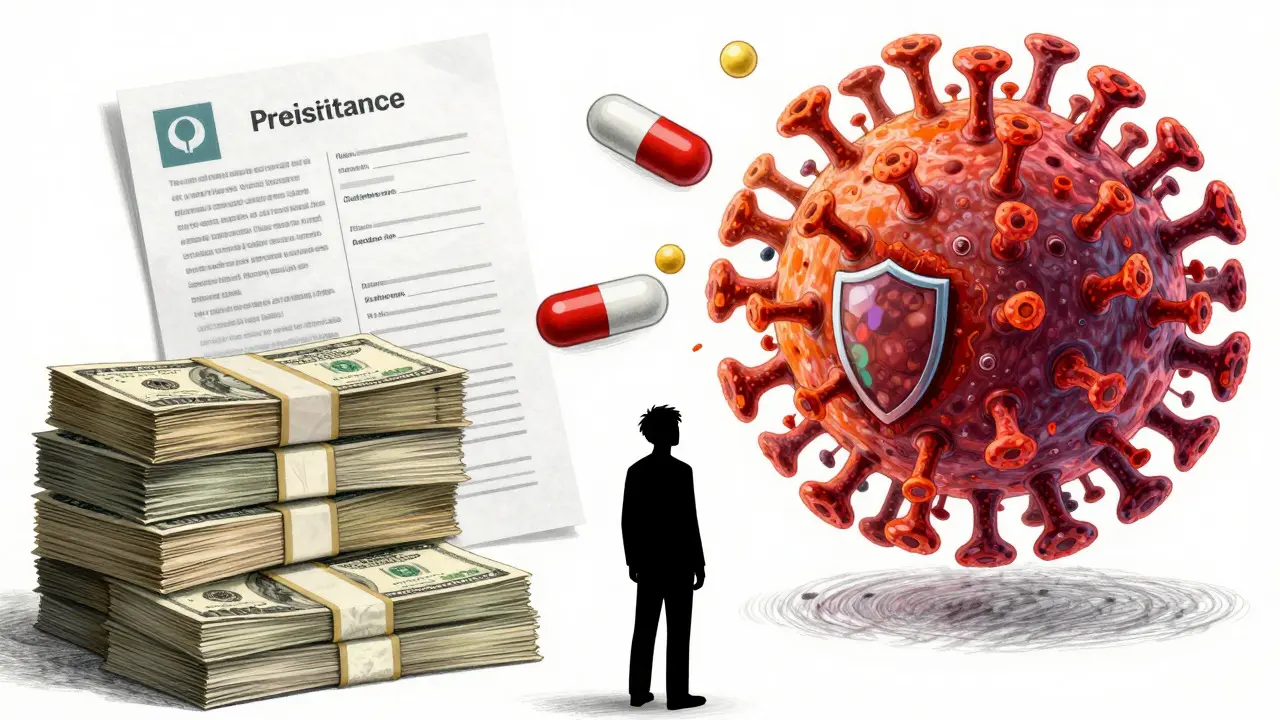
It’s not all good news. The biggest hurdle in targeted therapy is resistance. Cancer evolves. In 70-90% of patients, the cancer develops new mutations that allow it to bypass the drug’s blockage within 9-14 months. This is why doctors monitor patients closely, sometimes using liquid biopsies (blood tests) to detect resistance mutations earlier than scans can.
Then there is the issue of cost and access. With monthly bills reaching $30,000, financial toxicity is a severe problem. A University of Chicago study found that 40% of patients on targeted therapies report significant financial hardship. Insurance denials are common, particularly for "histology-agnostic" drugs-medicines approved for any cancer type with a specific mutation, regardless of where the tumor started. Patients with rare mutations like NTRK fusions often face battles to get coverage because insurers argue the drug isn't "standard" for their specific cancer origin, despite high response rates.
Access to testing itself is uneven. While 65% of advanced cancer patients in the US get genomic profiling, that number drops to 22% in Europe and just 8% in Asia. Furthermore, only 32% of community hospitals have molecular tumor boards-the multidisciplinary teams needed to interpret complex genetic reports-compared to 89% of major academic cancer centers.
What Comes Next? The Future of Precision Oncology
The field is moving fast. We are seeing a rise in "basket trials," where patients with different types of cancer but the same genetic mutation are treated together. The NCI-MATCH trial showed that 35% of patients with rare cancers responded to therapy based on their molecular profile rather than tumor location.
Artificial intelligence is also entering the picture. Tools like IBM Watson for Oncology are helping doctors interpret vast amounts of genomic data, showing high concordance with expert tumor boards. Looking ahead, the goal is to target those difficult tumor suppressor genes and combine therapies to prevent resistance. By 2030, experts predict that 40% of cancer patients will receive biomarker-directed therapies.
For now, if you or a loved one is facing an advanced cancer diagnosis, ask your oncologist about molecular profiling. Understanding your tumor’s genetics might open doors to treatments that are more effective and easier to tolerate than traditional options.
What is the difference between targeted therapy and immunotherapy?
Targeted therapy directly attacks specific molecules inside or on the surface of cancer cells to stop their growth. Immunotherapy, on the other hand, boosts your own immune system to recognize and fight cancer cells. They work through completely different mechanisms, though they are sometimes used together.
How long does targeted therapy last before resistance develops?
Resistance typically develops within 9 to 14 months for most patients. However, this varies widely depending on the specific drug and mutation. Some patients may respond for several years, while others may develop resistance sooner. Regular monitoring helps doctors adjust treatment plans quickly.
Is genetic testing covered by insurance?
Coverage varies significantly. Many insurers cover NGS testing for advanced cancers, but prior authorization is often required. About 55% of patients report facing insurance hurdles for genomic testing. It is crucial to check with your provider and insurer early in the process to avoid delays.
Can targeted therapy cure cancer?
In some cases, yes, particularly for certain blood cancers like chronic myeloid leukemia. For most solid tumors, targeted therapy is used to control the disease, shrink tumors, and extend life, turning cancer into a manageable chronic condition rather than an immediate acute threat. Complete cures are less common but possible in specific scenarios.
What are the common side effects of targeted therapy?
Side effects depend on the drug but are generally milder than chemotherapy. Common issues include skin rashes, diarrhea, high blood pressure, and liver enzyme changes. Severe adverse events (Grade 3-4) occur in 15-30% of patients, compared to 50-70% with traditional chemo. Most side effects are manageable with medication or dose adjustments.