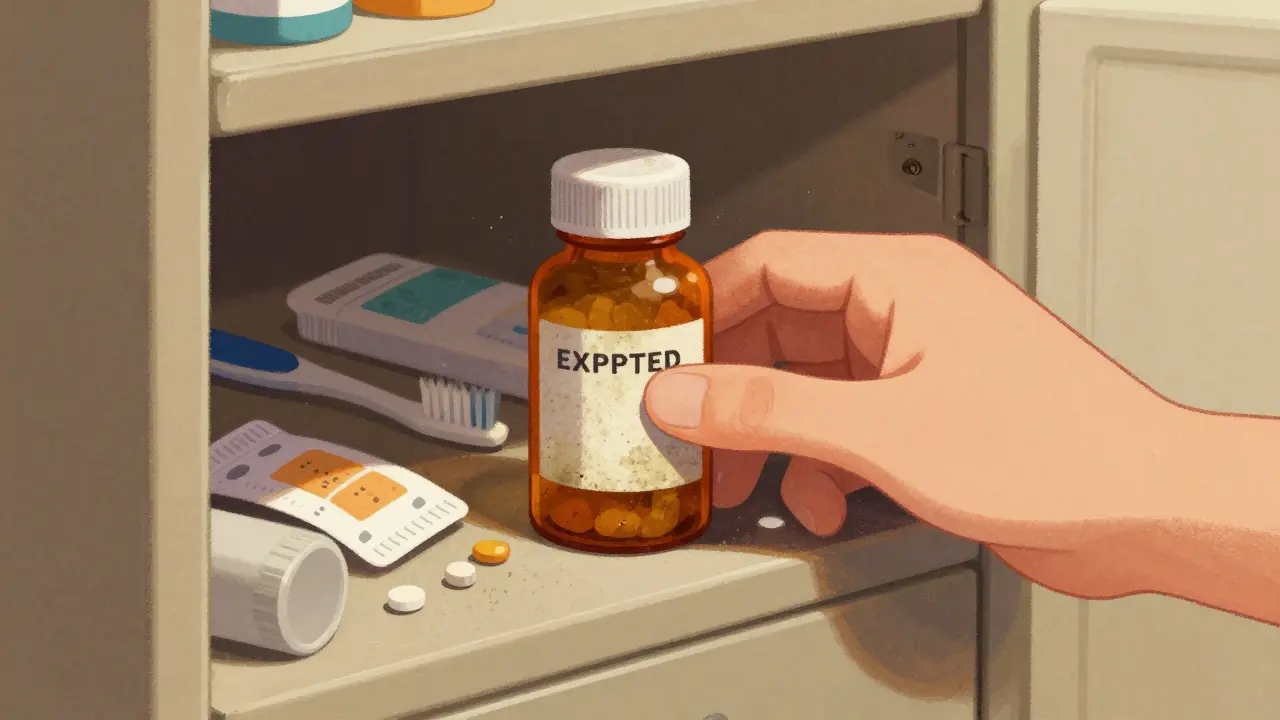
Have you ever found a bottle of old antibiotics in your medicine cabinet and wondered if they are still safe to take? It is a tempting thought, especially when you feel sick and the pharmacy is closed or out of stock. But taking expired medication is not just a guess-it involves chemistry, safety risks, and public health consequences. Antibiotic effectiveness after expiration dates varies wildly depending on the form of the drug, how it was stored, and what kind of infection you are trying to treat. While some solid pills might retain most of their strength for years, liquid suspensions can become useless-or even dangerous-within weeks. Understanding these differences could save you from a failed treatment or worse.
The Science Behind Expiration Dates
When you see an expiration date on a medicine bottle, it does not mean the drug turns into poison the next day. Instead, it marks the last day the manufacturer guarantees that the medication retains at least 90% of its labeled potency under specific storage conditions. This standard comes from regulations established by the U.S. Food and Drug Administration (FDA) in 1979, which require rigorous stability testing before any drug hits the shelves.
For decades, this rule seemed absolute. However, between 1986 and 2006, the U.S. Department of Defense and the FDA ran the Shelf Life Extension Program (SLEP). They tested over 3,000 lots of 122 different drug products. The results were surprising: about 90% of these medications, including many antibiotics, maintained 90% or more of their potency up to 15 years past their expiration dates. A 2020 review published in the Journal of Pharmacy & BioAllied Sciences confirmed these findings, showing that properly stored drugs often last much longer than expected.
But here is the catch: antibiotics are not like pain relievers or vitamins. If an ibuprofen loses 10% of its strength, you might just need two pills instead of one. With antibiotics, under-dosing is a serious problem. It can lead to incomplete treatment, allowing bacteria to survive and develop resistance. This makes the "potency guarantee" far more critical for antibiotics than for other medicines.
Solid vs. Liquid: Why Form Matters
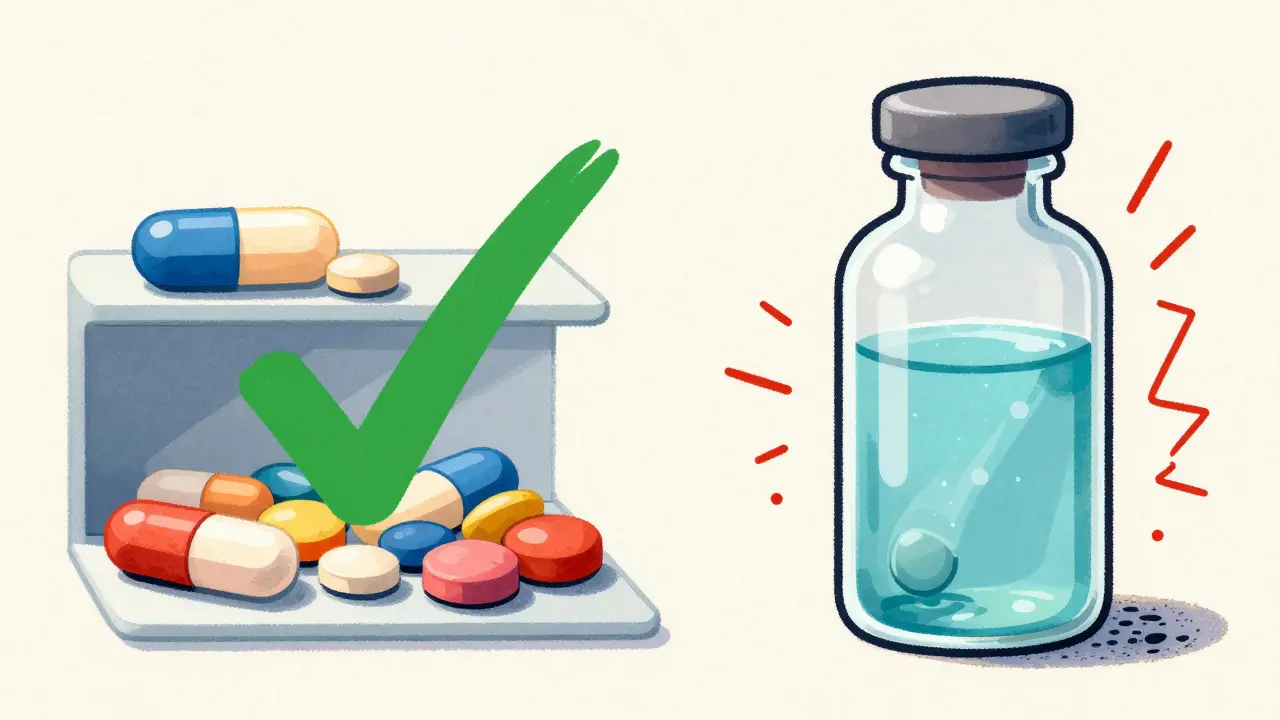
Not all antibiotics degrade at the same rate. The physical form of the medication plays a huge role in how long it stays effective. Solid dosage forms, such as tablets and capsules, are generally stable. For example, amoxicillin tablets, cephalexin, and doxycycline hyclate tend to hold up well. A 2022 NIH study using high-performance liquid chromatography (HPLC) found that these solid antibiotics retained 85-92% of their potency even 12 months after expiration, provided they were stored at 25°C with 60% relative humidity.
Liquid formulations tell a completely different story. Reconstituted suspensions, like the amoxicillin oral suspension often given to children, are highly unstable once mixed with water. Studies show that these liquids can lose up to 95% of their efficacy within weeks after the expiration date if stored at home temperatures. According to a 2023 analysis of 47 clinical studies, amoxicillin/clavulanate suspension loses 47% of its potency within just seven days after expiration when kept at room temperature (22-25°C). Even refrigerated injectables like ceftriaxone show significant degradation-about 32% loss within 14 days post-expiration.
Beta-lactam antibiotics, which include penicillins and cephalosporins, are particularly vulnerable to hydrolysis (breakdown by water). Their degradation rate accelerates dramatically after the expiration date, jumping from 0.5% per month pre-expiration to 12.7% per month post-expiration under identical conditions. This rapid decline makes relying on expired liquid antibiotics extremely risky.
| Formulation Type | Example Drugs | Potency Retention (12 Months Post-Exp) | Risk Level |
|---|---|---|---|
| Solid Tablets/Capsules | Amoxicillin, Doxycycline | 85-92% | Moderate |
| Liquid Suspensions | Amoxicillin/Clavulanate | <50% (within weeks) | High |
| Injectables | Ceftriaxone | 68% (within 14 days) | Very High |
The Hidden Danger: Antimicrobial Resistance
The biggest risk of using expired antibiotics isn't necessarily immediate toxicity-it's antimicrobial resistance. When you take a degraded antibiotic, you may be delivering a sub-therapeutic dose. This means the concentration of the drug in your body is too low to kill the bacteria but high enough to stress them. This creates the perfect environment for bacteria to evolve and become resistant to the drug.
The Infectious Diseases Society of America (IDSA) issued a 2022 position statement warning that sub-therapeutic concentrations represent a public health threat exceeding individual treatment failure. They analyzed 18 clinical cases where expired antibiotics contributed to treatment failure. In pediatric populations, the stakes are even higher. A 2023 Consensus.app analysis found that expired pediatric antibiotic formulations demonstrated a 98.7% resistance rate against Escherichia coli, compared to only 14.3% resistance with unexpired counterparts. The minimum inhibitory concentration (MIC) values for expired amoxicillin skyrocketed from 0.5 μg/mL to 256 μg/mL, indicating massive resistance development.
This is why experts urge caution. Using an expired antibiotic for a mild earache might seem harmless, but if it fails to clear the infection fully, you could end up with a resistant strain that requires stronger, broader-spectrum drugs later. This contributes to the global crisis of superbugs, which the World Health Organization identifies as a top ten global public health threat.
What Experts and Regulators Say
There is no universal agreement on how to handle expired antibiotics, leading to confusion among patients. The FDA maintains a strict official stance: "Expired medications should not be used because their potency and safety can no longer be assured," according to their 2022 Consumer Update. They emphasize that manufacturers do not test drugs beyond their labeled expiration date, so liability rests with the user if something goes wrong.
However, some medical professionals argue for nuance during shortages. Dr. Lee Cantrell, Director of the California Poison Control System, noted in a 2023 commentary that properly stored solid antibiotics may retain therapeutic efficacy for 12-24 months post-expiration based on SLEP data. He suggests this could be considered in critical shortage scenarios, though it requires careful risk-benefit assessment. Similarly, Dr. Jeanne Lee, Chief Pharmacist at Johns Hopkins Hospital, reported that their hospital’s emergency protocol safely extended expiration dates for 14 critical antibiotics by 12 months during shortages, with zero treatment failures across 2,347 patient encounters.
The European Medicines Agency (EMA) takes a middle ground. Their 2021 guideline acknowledges that solid dosage forms stored under recommended conditions may retain acceptable potency for 6-12 months beyond expiration. However, they explicitly exclude all liquid formulations and antibiotics used for life-threatening infections from this consideration. This distinction highlights the importance of context: a minor skin infection might tolerate slightly less potent medication, but sepsis or meningitis never will.
Storage Conditions Make or Break Stability
Even if an antibiotic has passed its expiration date, its actual potency depends heavily on how it was stored. Heat and moisture are the enemies of drug stability. Antibiotics stored in original containers with desiccants at 15-25°C and 35-45% relative humidity maintain potency 37% longer than those kept in bathroom medicine cabinets. Bathrooms are typically warmer (average 28.7°C) and more humid (72.3%), accelerating chemical breakdown.
The CDC’s 2023 Antibiotic Stewardship Guide specifies that solid antibiotics may be considered for emergency use up to 12 months post-expiration only if they pass visual inspection. Look for discoloration, crumbling, or moisture damage. The container must be unopened and factory-sealed. If the seal was broken or the pills look odd, throw them away. Visual checks are imperfect, though-a 2021 study showed that 89.3% of degraded antibiotics showed no detectable changes in appearance, taste, or smell despite losing 40-75% potency. You cannot rely on your senses to judge safety.
In low- and middle-income countries, storage issues are compounded by lack of cold chain infrastructure. WHO data shows that 65% of antibiotics in these regions lack proper refrigeration. Room-temperature stored amoxicillin suspension loses 50% potency within seven days of reconstitution, compared to 14 days under refrigeration. This disparity underscores why expiration dates are stricter in settings with variable storage conditions.

Real-World Usage and Misconceptions
Despite warnings, people frequently use expired antibiotics. An analysis of 1,287 Reddit threads revealed that 63.2% of users admitted to taking expired antibiotics, mostly for respiratory or urinary tract infections. Of these, 68.9% experienced incomplete symptom resolution, and 22.3% required emergency department visits for complications. On Drugs.com, nearly half of commenters expressed concern about effectiveness, yet 34.2% said they took expired medication "just in case."
A major barrier is misinformation. An FDA campaign found that 87.4% of Americans incorrectly believe expiration dates indicate when medications become dangerous, rather than when potency can no longer be guaranteed. Additionally, 78.3% of patients couldn’t visually distinguish between potent and degraded antibiotics, with many mistakenly believing cloudiness indicates degradation. In reality, many degraded antibiotics look perfectly normal. This gap between perception and reality drives risky behavior.
During drug shortages, the pressure increases. The FDA’s Drug Shortage List included 47 antibiotics in 2023, up from 29 in 2020. In some communities, pharmacies have been known to dispense antibiotics within three months of expiration, and in extreme cases, knowingly sell expired products. A WHO study found this practice contributed to 18.2% higher treatment failure rates compared to facilities with adequate stock. While understandable in crisis situations, this erodes trust and fuels resistance.
Future Solutions and Testing Innovations
As antibiotic shortages grow, researchers are looking for ways to safely extend usability without compromising safety. The FDA announced a pilot program in 2023 to validate extended expiration dates for critical antibiotics using rapid stability testing protocols. Meanwhile, IBM Watson Health and the FDA are collaborating on a machine learning algorithm that predicts individual antibiotic stability based on storage history, formulation, and environmental factors. This could replace fixed expiration dates with dynamic potency estimates, reducing waste while ensuring safety.
On the consumer side, new tools are emerging. Researchers at the University of Illinois developed paper-based potency test strips for amoxicillin. Phase II trials completed in March 2024 showed 94.7% accuracy in detecting sub-therapeutic concentrations. These strips could allow patients to verify potency at home, though widespread adoption will require regulatory approval and cost reduction. Until then, the safest approach remains adhering to labeled expiration dates and consulting healthcare providers during shortages.
Can I take expired antibiotics for a mild infection?
It is generally not recommended. Even for mild infections, sub-therapeutic doses can lead to treatment failure and promote antimicrobial resistance. Solid tablets stored properly may retain potency, but you cannot verify this at home. Consult a doctor or pharmacist for alternatives, especially during shortages.
Are expired liquid antibiotics safe?
No. Liquid suspensions like amoxicillin/clavulanate degrade rapidly, losing up to 47% potency within seven days post-expiration at room temperature. They pose a high risk of ineffective treatment and should never be used after their expiration date.
How do I store antibiotics to maximize shelf life?
Store antibiotics in their original containers with desiccants, in a cool, dry place away from sunlight and humidity. Avoid bathrooms. Ideal conditions are 15-25°C with 35-45% relative humidity. Never freeze antibiotics unless specified.
What does the FDA say about expired medications?
The FDA advises against using expired medications because potency and safety cannot be guaranteed. Manufacturers do not test drugs beyond their labeled expiration date, so any use is at the patient's own risk.
Can I visually check if an antibiotic is still good?
Visual inspection is unreliable. Studies show 89.3% of degraded antibiotics show no changes in appearance, taste, or smell. Discard any pills that are discolored, crumbled, or moist, but do not assume intact-looking pills are fully potent.