Bipolar Mood Destabilization Risk Calculator
Calculate Your Risk of Mood Destabilization
This tool calculates the estimated risk of switching to mania or hypomania when taking antidepressants based on your specific condition and medication type. Always consult with your psychiatrist before making treatment decisions.
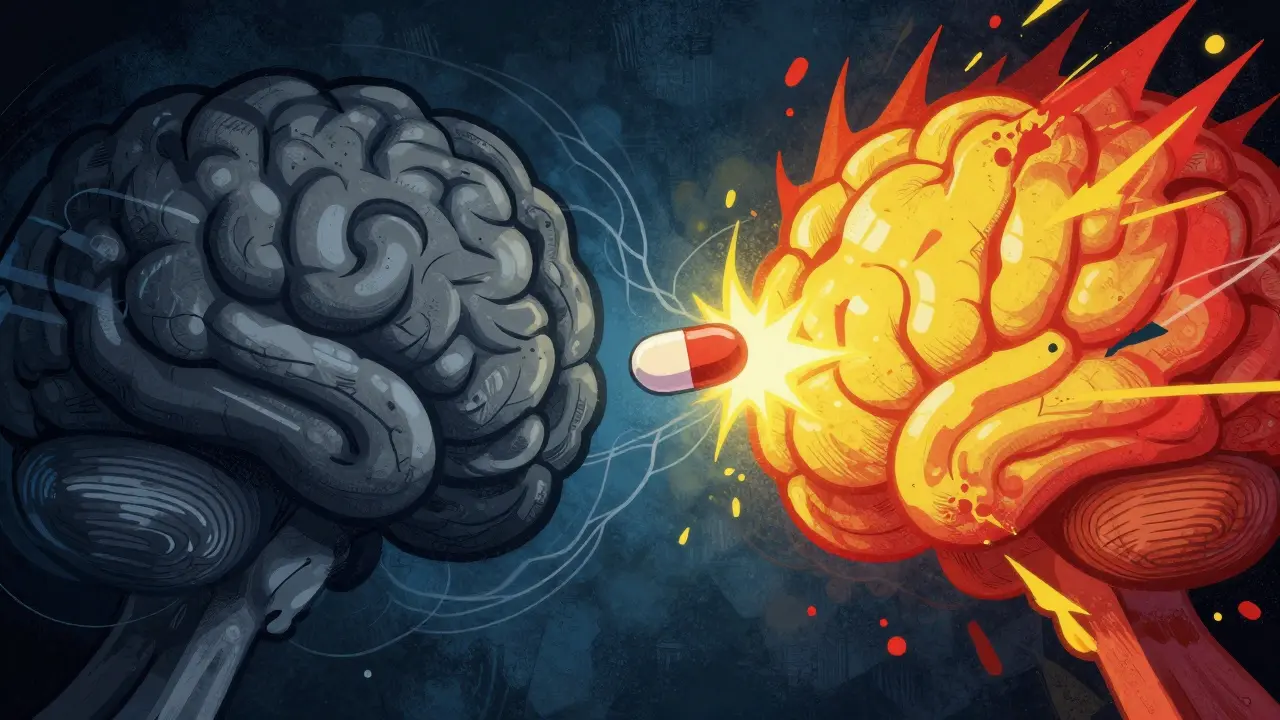
When someone with bipolar disorder feels deep depression, it’s tempting to reach for an antidepressant. After all, these drugs work well for unipolar depression. But in bipolar disorder, the same medications can do more harm than good. The real danger isn’t just side effects-it’s mood destabilization. A single dose of an antidepressant can trigger a manic episode, rapid cycling, or a mixed state where depression and mania crash together. And this isn’t rare. Studies show about 12% of bipolar patients on antidepressants experience a switch to mania or hypomania. In real-world settings, that number climbs to 31%.
Why Antidepressants Are Risky in Bipolar Disorder
Bipolar disorder isn’t just depression with occasional highs. It’s a cycling illness where mood swings are part of the core biology. Antidepressants don’t fix that rhythm-they disrupt it. They push the brain’s chemical balance too far in one direction, and in people with bipolar disorder, that can flip the entire system into overdrive. The biggest risk is a switch: when depression suddenly turns into mania or hypomania. This isn’t just feeling energized. It’s impulsive spending, reckless decisions, sleepless nights, paranoia, or even psychosis. One patient in Dunedin told me her psychiatrist prescribed sertraline for her low mood. Two weeks later, she was in the emergency room after trying to quit her job, buying a car she couldn’t afford, and believing she was being watched by the government. That’s not an isolated case. In clinical trials, antidepressants increase the risk of switching by about 12% compared to placebo. In retrospective studies, where doctors look back at patient records, the risk jumps to over 30%. Another danger is rapid cycling: having four or more mood episodes in a year. Antidepressants can make this worse. A 2006 study found that people taking antidepressants were more than twice as likely to develop rapid cycling. And once it starts, it’s hard to stop. The brain starts to expect the drug’s push, and when it’s taken away, the crash is brutal. Mixed states are another silent killer. These are episodes where depression and mania happen at the same time-feelings of hopelessness mixed with agitation, racing thoughts, and suicidal impulses. About 20% of bipolar depressions have mixed features. Antidepressants make these states more likely and more dangerous. Suicide risk doesn’t go down with antidepressants in these cases-it can go up.Which Antidepressants Are Riskiest?
Not all antidepressants are created equal. Tricyclics like amitriptyline carry the highest risk-up to 25% chance of triggering mania. SNRIs like venlafaxine aren’t much better. SSRIs like fluoxetine or sertraline are slightly safer, but still risky. Even bupropion, often thought of as “mood-stabilizing,” can cause switches in people with a history of mania. The difference isn’t just about strength. It’s about how they work. Tricyclics hit multiple brain chemicals at once-serotonin, norepinephrine, even dopamine. That’s a lot of pressure on a fragile system. SSRIs are more targeted, but they still flood serotonin pathways. In bipolar brains, that can be like pouring gasoline on a smoldering fire. The numbers tell the story:- Tricyclic antidepressants: 15-25% switch risk
- SNRIs: 12-20% switch risk
- SSRIs: 8-10% switch risk
- Bupropion: 5-10% switch risk (but higher in those with prior mania)
What Works Better? FDA-Approved Alternatives
The good news? You don’t need antidepressants to treat bipolar depression. Four medications are specifically approved by the FDA for this purpose-and they come with far lower risks.- Quetiapine (Seroquel): Works in about 50-60% of patients. Switch risk under 5%.
- Lurasidone (Latuda): 50% response rate. Switch risk just 2.5%.
- Cariprazine (Vraylar): 48% response rate. Switch risk 4.5%.
- Olanzapine-fluoxetine combo (Symbyax): Effective, but weight gain and metabolic issues are concerns.
Who Might Still Benefit?
There’s no blanket rule. Some people do better with antidepressants-carefully chosen and tightly monitored. The best candidates:- People with Bipolar II, not Bipolar I
- Those with no history of antidepressant-induced mania
- No rapid cycling (fewer than 4 episodes per year)
- No mixed features in their depression
- Already on a stable mood stabilizer or antipsychotic
What Clinicians Are Doing-And What They Should Be Doing
There’s a huge gap between what guidelines say and what happens in clinics. In academic centers, only 38% of psychiatrists use antidepressants for bipolar depression. In community practices? It’s 62%. Why? Because it’s easier. Patients ask for them. Doctors are pressured to “do something.” Insurance doesn’t cover the newer drugs as easily. And many doctors still think bipolar depression is just “unipolar depression with mood swings.” A 2021 survey found only 30% of community psychiatrists follow ISBD guidelines. In contrast, 65% of specialists in bipolar clinics do. That’s not a small difference-it’s life or death. Dr. Nassir Ghaemi at Tufts Medical Center uses antidepressants in just 19% of his bipolar patients. He’s not against them-he’s against reckless use. He says, “If you’re prescribing an antidepressant without a mood stabilizer, you’re not treating bipolar disorder. You’re treating a misdiagnosis.” And misdiagnosis is common. About 40% of people with bipolar disorder are initially diagnosed with unipolar depression. That’s why it’s critical to ask: Have you ever felt overly energetic, impulsive, or irritable? Did you go days without sleep and still feel fine? Did you spend money you didn’t have? These aren’t “good days.” They’re warning signs.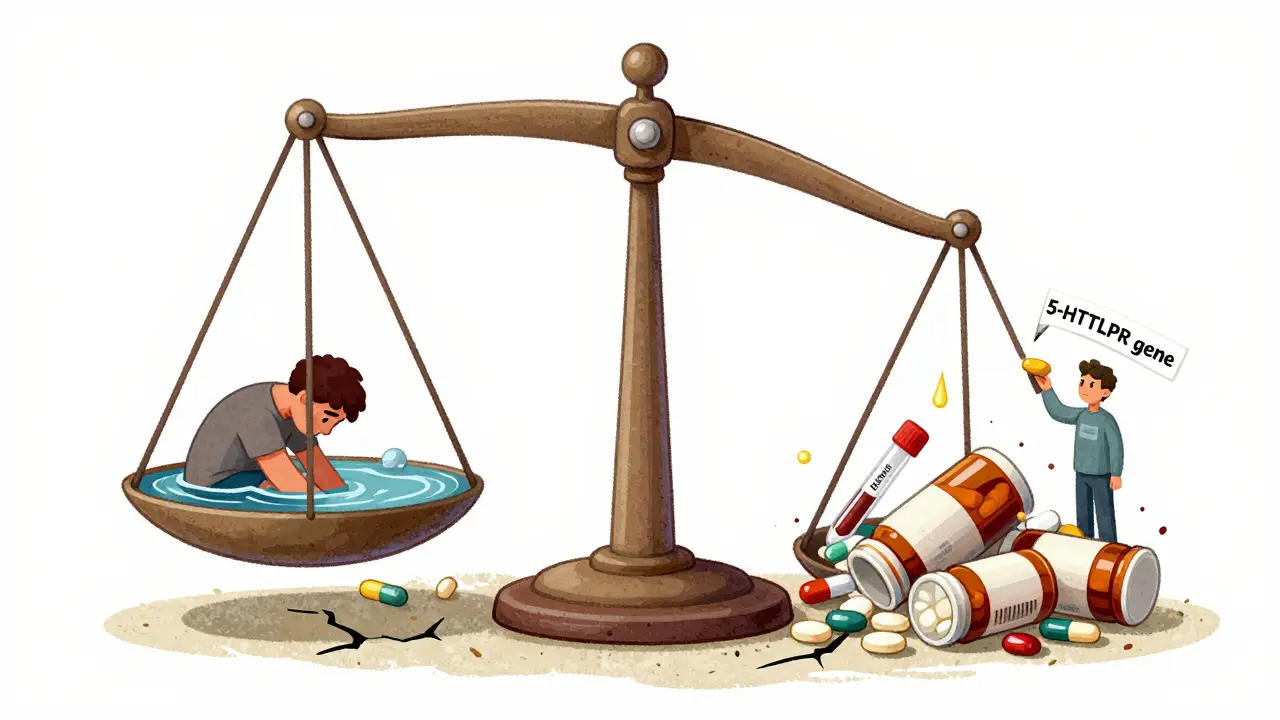
Monitoring and What to Watch For
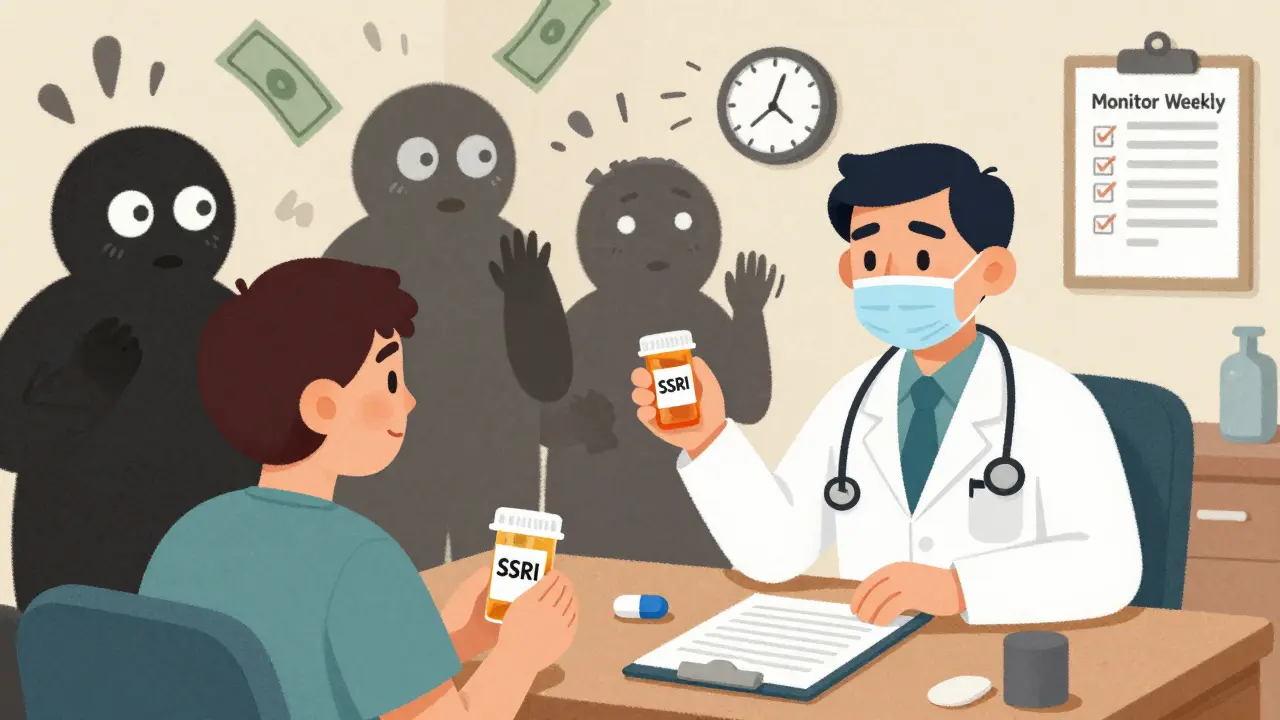
If an antidepressant is used, monitoring isn’t optional. It’s non-negotiable.- Weekly check-ins for the first 4 weeks
- Watch for: reduced need for sleep, increased talkativeness, irritability, impulsivity, racing thoughts
- Stop immediately if any of these appear-even if the person says they “feel better”
- Document the reason for use, the risks discussed, and the plan to discontinue
The Future: Precision Medicine and New Treatments
The field is moving away from trial-and-error. New research is looking at genetic markers. One study found people with a specific version of the serotonin transporter gene (LL genotype of 5-HTTLPR) are over three times more likely to switch on antidepressants. That could one day mean a simple blood test tells you if a drug is safe for you. New treatments are also emerging. Esketamine nasal spray showed a 52% response rate in bipolar depression with just 3.1% switch risk in a 2023 trial. Other drugs are being designed to act as both antidepressants and mood stabilizers-something current medications can’t do. But until those become mainstream, the safest path remains clear: avoid antidepressants unless absolutely necessary. And even then, use them like a fire extinguisher-not a daily vitamin.What Patients Should Ask Their Doctor
If you’re being offered an antidepressant for bipolar depression, ask these questions:- Have you ruled out mixed features or rapid cycling?
- Am I already on a mood stabilizer or antipsychotic?
- What’s the plan if I start feeling too energetic or irritable?
- How long will I be on this? Will you stop it after 8 weeks?
- Are there FDA-approved alternatives I should try first?
Can antidepressants cause mania in people with bipolar disorder?
Yes. Antidepressants can trigger mania or hypomania in people with bipolar disorder, especially if used without a mood stabilizer. Studies show about 12% of patients experience a switch to mania, and this risk jumps to over 30% in real-world settings. The risk is highest with tricyclics and SNRIs, but even SSRIs can cause switches in vulnerable individuals.
Are antidepressants ever safe for bipolar depression?
They can be used cautiously in very specific cases: Bipolar II, no history of mania from antidepressants, no rapid cycling or mixed features, and only while on a stable mood stabilizer or antipsychotic. Even then, they should be used for no more than 8-12 weeks and stopped immediately if any signs of mania appear. Most experts recommend avoiding them entirely in favor of FDA-approved alternatives like quetiapine or lurasidone.
What are the best alternatives to antidepressants for bipolar depression?
Four medications are FDA-approved specifically for bipolar depression: quetiapine (Seroquel), lurasidone (Latuda), cariprazine (Vraylar), and the combination of olanzapine and fluoxetine (Symbyax). These have response rates of 48-60% and switch risks under 5%, making them far safer and often more effective than antidepressants. Mood stabilizers like lithium and valproate are also used long-term to prevent episodes.
How long should someone stay on an antidepressant for bipolar depression?
If used at all, antidepressants should be limited to 8-12 weeks. The International Society for Bipolar Disorders recommends discontinuing them after this period, even if symptoms improve, because long-term use increases the risk of rapid cycling and episode recurrence. There’s no evidence they help prevent future depressions-only that they can make the illness worse over time.
Is it true that antidepressants don’t work well for bipolar depression?
Yes. The number needed to treat (NNT) for antidepressants in bipolar depression is 29.4-meaning nearly 30 people must take them for one person to benefit. Compare that to unipolar depression, where the NNT is 6-8. Meanwhile, the risk of switching to mania is about 12%, which is similar to the natural switch rate when using mood stabilizers alone. This means antidepressants offer little benefit but carry significant risk.
Andy Thompson
January 19, 2026 AT 11:12They're hiding the truth again. Antidepressants? Nah, it's the vaccines + 5G that's messing with our brains. You think the FDA cares about you? They're owned by Big Pharma. I saw a guy on TruthSocial say his cousin went manic after sertraline... and then got disappeared. Coincidence? I think not. 🤔💊👁️
sagar sanadi
January 20, 2026 AT 01:49So... you say drug company lie? But why they make money from pills? Maybe doctor just lazy. Or maybe bipolar is just sad person who need to pray more. I know guy in India-he stop medicine, eat turmeric, now he dance in temple. No pills. No problem. 😎
kumar kc
January 21, 2026 AT 13:37People like you are why America is falling apart. You treat mental illness like a choice. Antidepressants aren't the enemy-weakness is.
Crystal August
January 23, 2026 AT 12:58I've been on SSRIs for 8 years and I'm fine. You're scaring people for no reason. My therapist says if it works, use it. End of story. Also, your numbers are cherry-picked.
Shane McGriff
January 24, 2026 AT 19:17Thank you for writing this. I’ve been Bipolar II for 15 years and was prescribed sertraline in 2016. Two weeks later I was in the ER after maxing out three credit cards buying LED lights for my garage because I "needed to fix the whole world." I didn’t even know I was manic until my mom showed me the receipts. No one asked me about sleep, energy, or impulsivity. This article saved my life. If you’re on an antidepressant and feel "too good"-stop. Call your doctor. You’re not broken. Your brain just needs different tools.
pragya mishra
January 25, 2026 AT 08:44Why do you think doctors keep prescribing these? Because patients beg for them. They don’t want to hear "take lithium"-they want a pill that makes them feel normal NOW. Doctors give in because they’re tired of being yelled at. This isn’t about science-it’s about convenience.
Art Gar
January 25, 2026 AT 18:05It is scientifically documented that the administration of serotonergic agents to individuals with bipolar spectrum disorders constitutes a violation of established neurochemical equilibrium principles. The statistical risk of iatrogenic manic conversion, as cited, exceeds the threshold of acceptable medical risk under the Hippocratic Oath. Therefore, any prescription of antidepressants without concomitant mood stabilization is ethically indefensible.
Paul Barnes
January 26, 2026 AT 19:14"Switch risk jumps to over 30% in real-world settings." The phrase "real-world settings" is vague and unscientific. Please cite the study. Also, "manic episode" is not a clinical term-use "hypomanic episode" or "manic episode per DSM-5 criteria." This article lacks methodological rigor.
clifford hoang
January 28, 2026 AT 07:53They don't want you to know this... but antidepressants are just a distraction from the real problem: the government's mind-control nanotech in the water supply. They want you dependent on pills so you don't notice the satellites tracking your dreams. I took fluoxetine for 3 months and started hearing the hum of the quantum frequency. That's when I knew. The pills aren't the cause-they're the trigger. 🔮🧠📡
Arlene Mathison
January 28, 2026 AT 19:09THIS. I’ve been there. I thought I was "finally fixed" until I was sleeping 2 hours a night, sending 100 texts to my ex, and buying a yacht I didn’t need. My doctor didn’t ask about sleep or spending. He just said, "Great, you’re improving!" I wish I’d read this 10 years ago. You’re not alone. And you’re not weak. You just needed the right help.
Emily Leigh
January 30, 2026 AT 04:54Okay but... what if I just really like how fluoxetine makes me feel? Like, I’m not manic, I’m just... more me? And I’ve been on it for 7 years with no issues? Are you saying I’m lying? Or just unlucky? Why is my experience invalid because your numbers say so? 🤷♀️
Carolyn Rose Meszaros
January 30, 2026 AT 22:22Thank you for sharing this. I’ve been on quetiapine for 4 years and honestly? It’s the first thing that’s ever made me feel stable. I don’t feel numb. I don’t feel high. I just feel... me. I wish I’d known about this sooner. To anyone reading: your brain deserves better than trial and error. 💙
Greg Robertson
January 31, 2026 AT 16:39I appreciate the depth of this post. I’ve been a therapist for 12 years and I’ve seen too many patients get hurt by quick fixes. It’s frustrating when insurance won’t cover lurasidone but covers a 30-day SSRIs script. We’re not fighting the science-we’re fighting the system. Keep pushing for better care.