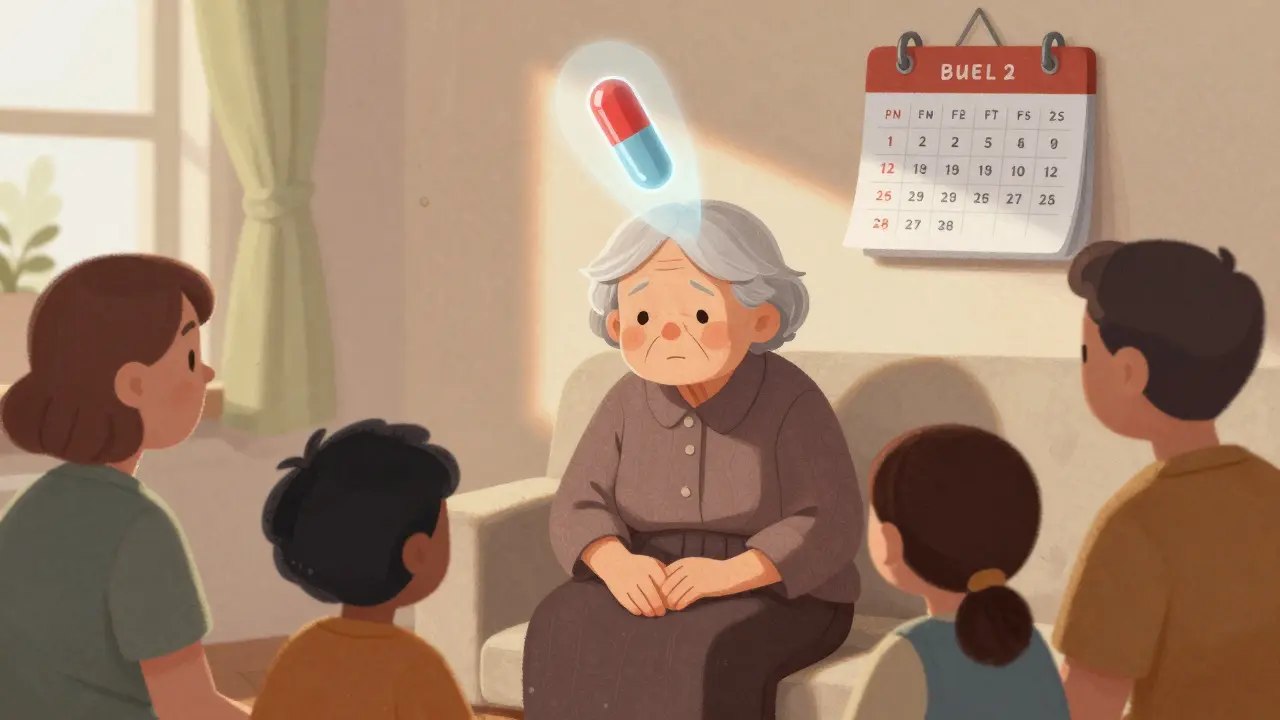
When a loved one with dementia starts pacing at night, shouting for no reason, or becoming aggressive, it’s heartbreaking. Families often feel desperate - and that’s when doctors may suggest antipsychotics. But what they don’t always say is this: antipsychotics can double the risk of stroke in seniors with dementia. And in some cases, the risk starts within days.
Why Antipsychotics Are Still Prescribed
Antipsychotics like risperidone, quetiapine, and haloperidol were never meant for dementia. They were developed to treat schizophrenia and bipolar disorder. But in nursing homes and even in home care settings, they’re used off-label to calm agitation, aggression, or hallucinations in people with Alzheimer’s or other dementias. It’s not because they work well - it’s because there aren’t enough alternatives. Caregivers are stretched thin. Staff in facilities are underpaid and overworked. A quiet patient is easier to manage than one who screams all night. So, a pill gets handed out. But the cost? It’s not just financial. It’s life.The FDA Warning You Probably Never Heard
In 2005, the U.S. Food and Drug Administration put a black box warning on every antipsychotic drug - the strongest kind they have. It says clearly: “Elderly patients with dementia-related psychosis treated with antipsychotic drugs are at an increased risk of death.” The data? Across 17 studies, patients on these drugs had a 60% to 70% higher chance of dying than those on a placebo. That’s not a small risk. That’s not a side effect you can ignore. That’s a death sentence for some. And stroke is one of the main reasons why.How Antipsychotics Cause Strokes
It’s not just one thing. It’s a cascade. These drugs block dopamine and serotonin receptors in the brain. That’s how they calm agitation. But they also mess with blood pressure control. Many seniors on antipsychotics suddenly drop their blood pressure when standing up - a condition called orthostatic hypotension. That’s a direct path to a stroke. The brain doesn’t get enough blood. Tiny vessels in the brain, already weakened by age or vascular disease, can rupture or clot. Then there’s metabolic syndrome. Antipsychotics cause weight gain, high blood sugar, and abnormal cholesterol. These are all known stroke risk factors. And in seniors who already have high blood pressure or diabetes, adding these drugs is like pouring gasoline on a fire. Even worse? The risk isn’t just from long-term use. A 2012 study from the American Heart Association tracked over 100,000 older adults and found that stroke risk jumped 80% even after just a few days of taking antipsychotics. That means the danger isn’t from months of use - it’s from the very first pill.Typical vs. Atypical: Does It Matter?
Doctors often say, “We switched you from haloperidol to risperidone because it’s safer.” But the data doesn’t back that up. First-generation antipsychotics (FGAs) like haloperidol are older, cheaper, and more likely to cause movement problems. Second-generation (SGAs) like olanzapine and quetiapine are newer and marketed as “safer.” But when it comes to stroke risk? The difference is minimal. A 2023 review in Neurology looked at five major studies. Four found that long-term use of FGAs carried a higher stroke risk than SGAs. But one study - focused specifically on dementia patients - found no difference at all. Another study from Johns Hopkins, using Medicare data, showed that stroke actually explained only part of why FGAs killed more people. That means something else - maybe heart failure, infections, or falls - was also at play. Bottom line: Neither class is safe. The idea that SGAs are “gentler” is a myth.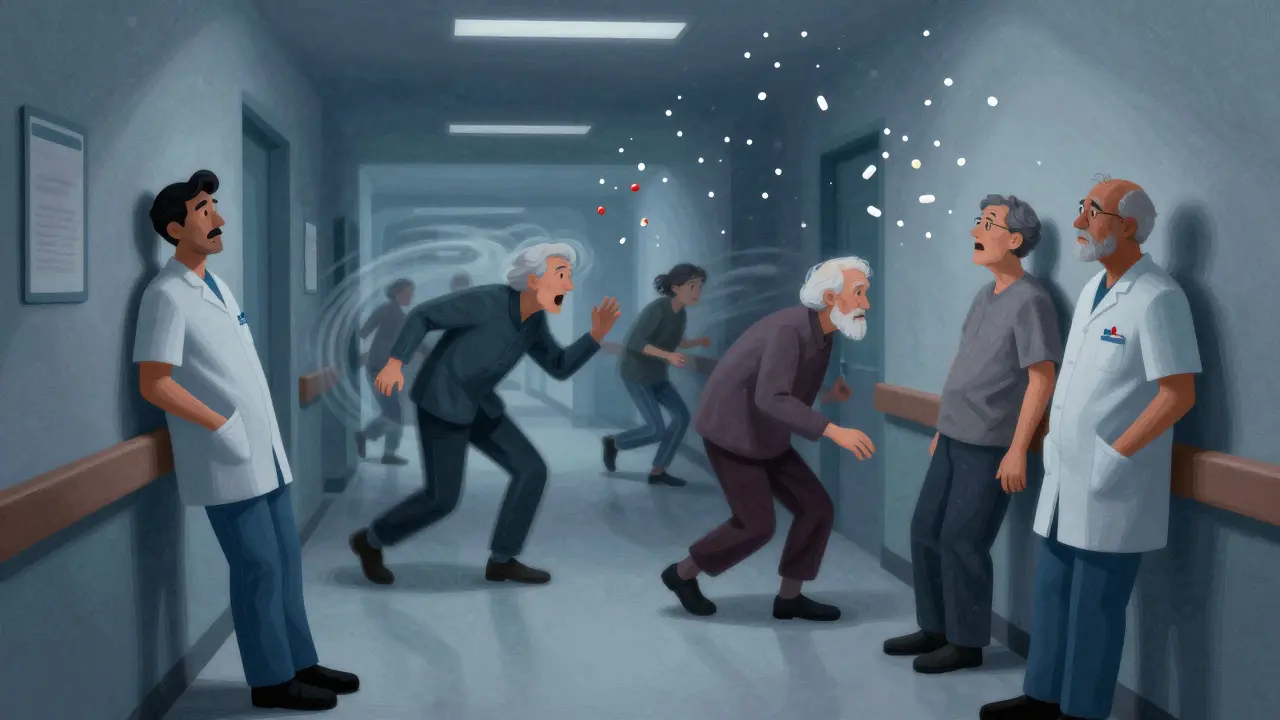
Who’s Most at Risk?
Not every senior with dementia who takes an antipsychotic will have a stroke. But some are far more vulnerable:- Those over 85 years old
- People with existing heart disease or high blood pressure
- Patients with advanced dementia - they’re often the ones prescribed these drugs
- Those already on other medications that lower blood pressure or affect the heart
What Happens When You Stop?
Many families assume that if the drug is working - if the person is calmer - then it’s worth keeping. But stopping isn’t as simple as just quitting cold turkey. Withdrawal can cause rebound agitation, insomnia, or even psychosis. That’s why doctors often keep people on them for months or years. But research shows something surprising: In many cases, symptoms improve on their own over time - even without drugs. Agitation in dementia often peaks in the early stages and then naturally settles. A 2020 study found that nearly half of seniors with dementia who were on antipsychotics showed reduced symptoms within 3 months - even if they were slowly weaned off. That means: sometimes, the drug isn’t helping. The brain is healing itself.What Should You Do Instead?
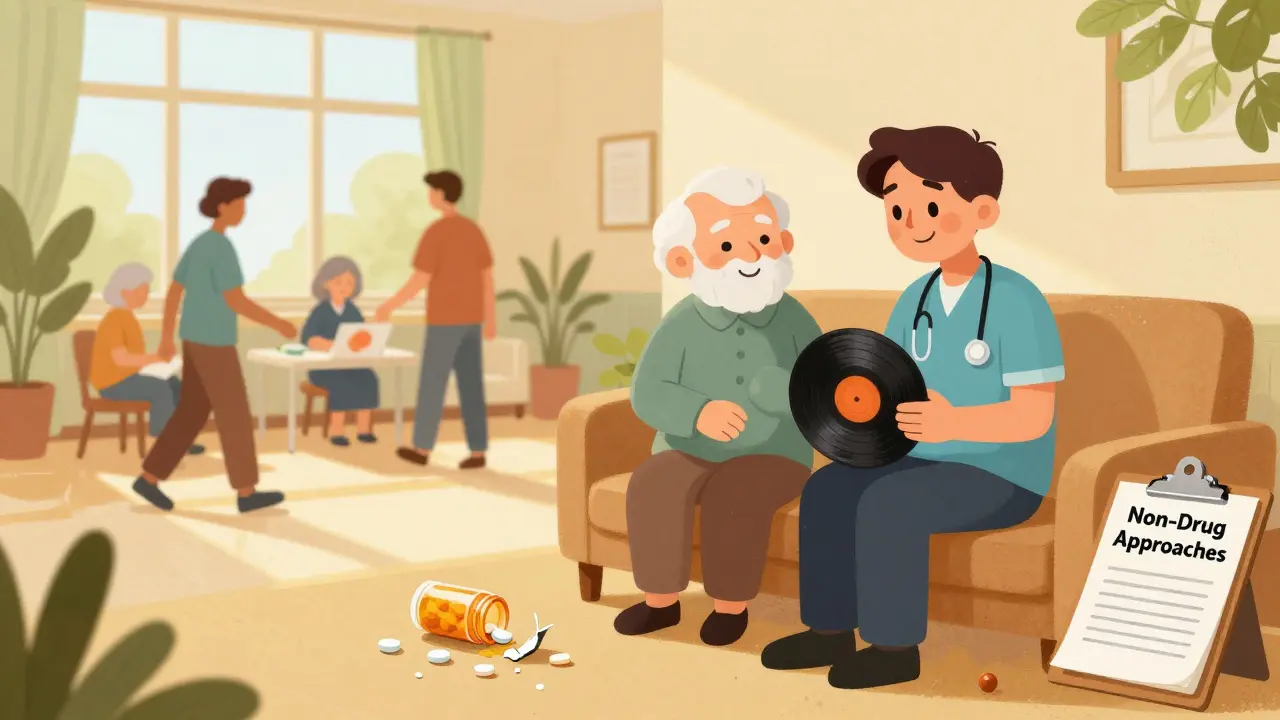
The American Geriatrics Society says it plainly: “Avoid antipsychotics for dementia-related behavioral symptoms.” And they’re not alone. Every major medical group in the U.S., Canada, and Europe agrees. So what works?- Environmental changes: Reduce noise, increase natural light, keep routines consistent. A calm environment cuts agitation by up to 40%.
- Behavioral therapy: Trained dementia specialists work with caregivers to understand triggers - hunger, pain, boredom - and respond with empathy, not force.
- Pain management: Many “aggressive” behaviors are actually signs of untreated pain. Arthritis, urinary infections, or constipation can make dementia worse.
- Music and movement: Studies show personalized music reduces agitation more effectively than antipsychotics in over 60% of cases.
- Staff training: Facilities that train staff in dementia communication see 50% fewer antipsychotic prescriptions.
The Real Problem: Why These Drugs Are Still Used
If the evidence is this clear, why are antipsychotics still prescribed to over 1 in 4 nursing home residents with dementia? Because change is hard. Because staff are overwhelmed. Because families feel guilty and think, “If I don’t do something, I’m failing.” But here’s the truth: You’re not failing by saying no. You’re failing by saying yes to a drug that could kill your loved one. Doctors need better training. Families need better support. And the system needs to stop treating dementia as a problem to be medicated - and start treating it as a human experience to be understood.What to Ask Your Doctor
If your doctor suggests an antipsychotic, ask these questions:- “What specific behavior is this meant to fix?”
- “Have we tried non-drug approaches first?”
- “What’s the risk of stroke or death if we use this?”
- “What’s the plan if it doesn’t work - or if it makes things worse?”
- “How long will my loved one be on this? And how will we know when to stop?”
The Bottom Line
Antipsychotics don’t cure dementia. They don’t even treat the root cause of behavioral symptoms. They just mute the person - at a terrifying cost. The data is clear: These drugs increase stroke risk by up to 80% - even in the first week. They raise the chance of death by 60%. And for every pill that seems to bring calm, there’s a hidden danger no one talks about. There’s another way. It’s slower. It’s harder. It takes more time, more patience, more people. But it’s the only way that doesn’t trade your loved one’s life for a quiet afternoon. Don’t let convenience win. Your parent, your grandparent - they deserve better than a pill that might kill them.Do antipsychotics help with dementia symptoms?
Antipsychotics may temporarily reduce agitation or aggression in some people with dementia, but they don’t treat the underlying cause. Studies show non-drug approaches like music therapy, environmental changes, and pain management work just as well - or better - without the deadly risks. The FDA and American Geriatrics Society warn that these drugs increase the risk of stroke and death, making them unsuitable as first-line treatment.
Are atypical antipsychotics safer than typical ones for dementia patients?
No. While atypical antipsychotics like risperidone and quetiapine are often marketed as safer, research shows both types carry similar risks of stroke and death in seniors with dementia. Some studies suggest long-term use of typical antipsychotics may carry slightly higher stroke risk, but the difference is small and not enough to justify using either. Neither class is safe for dementia-related behavior.
How quickly can antipsychotics cause a stroke in seniors?
Stroke risk rises within days of starting antipsychotics. A major 2012 study found the risk increased by 80% even after brief exposure - sometimes as little as one to two weeks. This contradicts the old belief that only long-term use was dangerous. The brain’s blood vessels react quickly to these drugs, especially in older adults with existing vascular issues.
What are the alternatives to antipsychotics for dementia behavior?
Effective alternatives include personalized music therapy, structured daily routines, reducing noise and clutter, treating undiagnosed pain (like urinary infections or arthritis), and training caregivers in dementia communication techniques. Facilities that use these methods see up to 50% fewer antipsychotic prescriptions. These approaches are safer, more humane, and often more effective than medication.
Can antipsychotics be safely stopped if someone has been on them for months?
Yes - but it must be done slowly and under medical supervision. Abruptly stopping can cause rebound agitation, anxiety, or even hallucinations. A gradual taper over weeks or months, paired with non-drug support, is safest. Many seniors show improved behavior within 3 months of discontinuation, even without drugs. Always work with a geriatrician or dementia specialist to create a safe withdrawal plan.
Kelly Mulder
December 17, 2025 AT 14:39Let me be perfectly clear: the medical-industrial complex has weaponized pharmacological convenience against the most vulnerable among us. Antipsychotics are not treatment-they are chemical sedation masquerading as care. The FDA black box warning? A footnote in a corporate annual report. The 60-70% increased mortality? A line item on a balance sheet. We have turned human suffering into a logistical problem solvable by a pill, and now we’re shocked when the pill kills them? This isn’t negligence-it’s systemic brutality dressed in white coats.
Dominic Suyo
December 18, 2025 AT 20:42Oh wow. So the system’s broken? Groundbreaking. I mean, who knew that profit-driven nursing homes would rather chemically mute grandma than hire another damn aide? The real tragedy here isn’t the antipsychotics-it’s that we’ve normalized this. We’ve turned dementia into a behavioral glitch to be debugged with Haldol instead of a living, screaming, confused human being who just wants to be seen. And now we’re all just scrolling past this like it’s a TikTok trend. Pathetic.
Janelle Moore
December 20, 2025 AT 05:08They’re putting poison in the food to make old people quiet. I read this on a forum where a guy said his mom died after one week on risperidone. The hospital said it was natural causes. But she was fine before the pill. I know what they’re doing. They’re killing them slowly so they don’t have to pay for staff. It’s a genocide of the elderly and no one cares.
Henry Marcus
December 21, 2025 AT 12:11Wait-wait-wait. So you’re telling me that the pharmaceutical companies, the nursing home conglomerates, the FDA, the AMA, and the Medicare system are ALL in on this? A coordinated, decades-long cover-up? That’s not just corruption-that’s a global conspiracy. Who’s funding the studies that say it’s safe? Who owns the journals? Who owns the doctors? And why does every single one of them have a beach house in the Bahamas? I’m not paranoid-I’m informed.
Carolyn Benson
December 22, 2025 AT 01:45There’s an ontological crisis here. We’ve reduced personhood to a set of symptoms to be managed. The dementia patient is no longer a subject-they are an object of behavioral correction. The antipsychotic becomes the instrument of epistemic violence: silencing not just agitation, but identity. We don’t mourn the loss of the person because we never truly saw them in the first place. We saw a problem. And problems, like weeds, are to be eradicated.
Chris porto
December 22, 2025 AT 10:18I’ve been a caregiver for my dad for six years. He had dementia. We tried the meds. They made him worse-sleepy, confused, falling. We switched to music-his old jazz records-and he started tapping his foot again. We stopped the pills. He didn’t die. He didn’t even get more aggressive. He just… remembered who he was. It took time. It took patience. But it was worth it. You don’t need a pill to love someone. You just need to show up.
holly Sinclair
December 23, 2025 AT 16:19It’s fascinating how we’ve constructed an entire medical paradigm around the avoidance of discomfort-both for the patient and, more importantly, for the caregiver. The real fear isn’t the dementia-it’s the responsibility. The noise. The unpredictability. The emotional labor. Antipsychotics aren’t prescribed because they work; they’re prescribed because they absolve us of the moral burden of witnessing suffering. We outsource compassion to chemistry. And in doing so, we’ve turned caregiving into a transactional exchange where the price is measured in lives, not labor.
Monte Pareek
December 24, 2025 AT 15:00Look, I’ve worked in geriatric care for 20 years. I’ve seen it all. And I’m telling you-non-drug approaches work. Not always. But more often than you think. Music therapy? 100% better than haloperidol. Calm lighting? Reduces falls. Consistent routines? Cuts confusion. Staff training? That’s the game-changer. The problem isn’t the tools-it’s the system that doesn’t fund them. We need more nurses, not more pills. We need more time, not more chemical restraints. This isn’t rocket science. It’s common sense. And common sense is the most radical thing left.
Tim Goodfellow
December 25, 2025 AT 15:42My nan was on quetiapine for three weeks. She stopped eating. Stopped talking. Just stared at the wall. We pulled her off it. Within two weeks, she was singing along to Vera Lynn again. She didn’t need a pill. She needed someone to sit with her. To hold her hand. To remember her name. That’s not therapy. That’s love. And love doesn’t come in a bottle. It comes in presence. And presence? That’s free. And that’s why they don’t want you to know it.