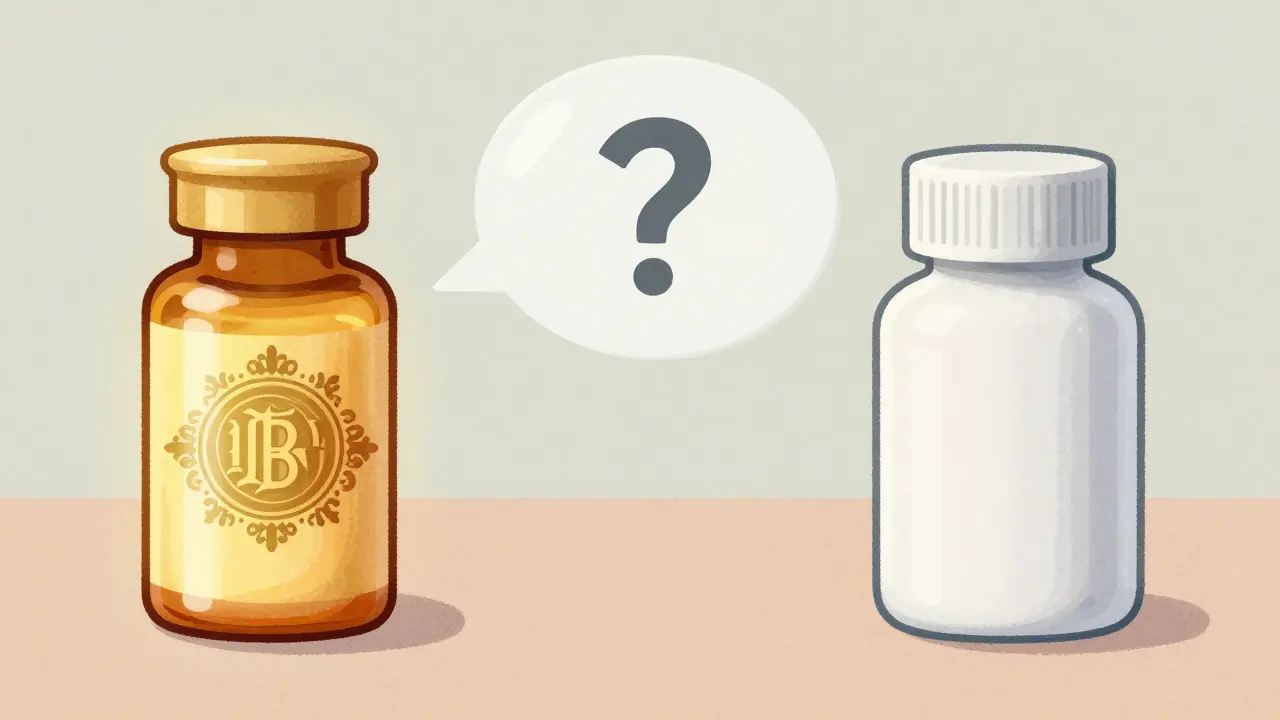
Imagine paying a 500% premium for a product that is chemically identical to a cheaper alternative. In most industries, we'd call that a bad deal. But in healthcare, this is the core of the struggle with generic drugs. Despite the fact that they make up 90% of all prescriptions filled in the US, a strange psychological gap remains. People often associate the lower price tag with lower quality, creating a mental barrier that persists even when the science says there's no difference.
The problem isn't the medicine; it's the branding. We've been conditioned to believe that "brand name" equals "premium." When a patient sees a generic version of a life-saving medication, the lack of a familiar logo or a high price point can trigger a subconscious fear that the drug is somehow "lite" or less effective. This perception gap is the primary hurdle the pharmaceutical industry needs to clear to make healthcare truly sustainable.
The Psychology of the "Price-Quality" Heuristic
In psychology, humans often use shortcuts to make decisions. One of the most common is the price-quality heuristic: the assumption that if something costs more, it must be better. When it comes to Generic Drugs pharmaceutical products containing the same active ingredients as brand-name drugs, demonstrating bioequivalence in dosage form, strength, and quality, this shortcut works against the patient. Even though generics provide the same clinical outcome, the lower cost feels like a warning sign rather than a benefit.
This isn't just a patient issue. A 2025 survey by the Association for Accessible Medicines found that 78% of physicians report patients expressing concerns about generic efficacy. When the person writing the prescription recognizes that the patient is hesitant, it can create a feedback loop of doubt. To change this, we have to move the conversation away from "cheap alternatives" and toward "validated equivalents."
Moving Beyond Simple Pills: The Rise of Complex Generics
For years, the word "generic" conjured images of simple white tablets. But the landscape has changed. We are now seeing the rise of Specialty Generics complex pharmaceutical products, such as injectables, that require more sophisticated manufacturing than traditional small-molecule drugs. These aren't just basic copies; they are high-tech medical products.
A great example of this evolution is the Biosimilars biologic medications that are highly similar to another already approved biological product, with no clinically meaningful differences in safety and effectiveness segment. In late 2025, the FDA approved several denosumab biosimilars, including Bildyos and Bilprevda, which reference the brand-name drugs Prolia and Xgeva. Because these are complex proteins rather than simple chemicals, the manufacturing process is incredibly stringent. When patients realize that a biosimilar undergoes nearly the same rigorous scrutiny as the original, the "cheap" stigma starts to fade.
| Feature | Traditional Generics | Specialty Generics | Biosimilars |
|---|---|---|---|
| Typical Cost Savings | 80-85% | Variable/High | 15-30% |
| Complexity | Low (Small Molecules) | High (Injectables/Complex) | Very High (Large Proteins) |
| Market Volume | Dominant (90% of fills) | Growing in Hospitals | Rapidly expanding |
| Primary Use Case | Chronic care (Diabetes, BP) | Critical care, Oncology | Autoimmune, Rare diseases |
Addressing the Trust Gap through Transparency
If the problem is a lack of trust, the solution must be transparency. We're seeing a shift toward new business models that strip away the mystery of drug pricing. For instance, the CivicaScript model focuses on transparent pricing and direct partnerships with hospital systems. By removing the layers of middlemen, they make the value proposition of generics clear: you aren't paying for a marketing budget; you're paying for the medicine.
Technology is also playing a role. The integration of AI and blockchain is being explored to create a "transparent pricing" future. Imagine a world where a patient can scan a QR code on their medication and see the entire supply chain, the bioequivalence data, and a direct comparison of the active ingredients. This turns a "leap of faith" into a data-driven decision.
The Impact of Supply Chain Stability
One of the biggest hits to the reputation of generics is the "out of stock" notice. In 2025, the FDA list showed about 270 active drug shortages. When a patient is told their generic is unavailable and they have to switch to a brand-name version, it reinforces the idea that the brand is the "reliable" choice. This is a failure of logistics, not chemistry, but the patient perceives it as a failure of the generic product itself.
To fix this, there is a massive push toward increased domestic production. By shortening the supply chain and reducing reliance on a few overseas factories, manufacturers can create a more predictable supply. As Dr. John Eberle of CivicaScript points out, a more predictable supply is one of the fastest ways to help patients trust generics again. Reliability is the ultimate brand builder.
The Future: From "Cost-Saving" to "Value-Driven"
Looking ahead to 2034, the global generic drug market is forecasted to hit USD 728.64 billion. But the growth won't just come from patents expiring; it will come from a shift in perception. We are moving into an era where the value of a drug is measured by its outcome, not its label. With the GLP-1 market alone representing a $200 billion opportunity, the introduction of generic versions for weight loss and sleep apnea will bring generics into the mainstream of "lifestyle" medicine, not just chronic disease management.
The goal is to reach a point where asking for the "brand name" feels as outdated as asking for a specific brand of salt. When we decouple the identity of the drug from the company that first discovered it, we create a healthcare system that is more equitable and efficient.
Are generic drugs actually as effective as brand-name ones?
Yes. By law, generic drugs must be bioequivalent to the brand-name version. This means they have the same active ingredient, strength, dosage form, and route of administration, and they work in the body in the same way to achieve the same clinical result.
Why are generics so much cheaper if they are the same?
The original manufacturer spends billions on research, development, and clinical trials. Once the patent expires, generic manufacturers don't have to repeat those expensive trials; they only need to prove bioequivalence. This massive reduction in R&D costs allows them to sell the drug at a fraction of the price.
What is the difference between a generic and a biosimilar?
Traditional generics are copies of small-molecule drugs (simple chemical structures). Biosimilars are copies of biologic drugs, which are large, complex proteins grown in living cells. Because proteins are more complex, biosimilars aren't identical copies but are "highly similar" with no meaningful clinical difference.
Why do some people feel that generics don't work as well?
This is often due to the "nocebo effect," where a patient's negative expectations lead to a perceived lack of efficacy or actual physical symptoms. It's a psychological response to the lower price or different appearance of the pill, rather than a failure of the medication itself.
How can I be sure my generic medication is high quality?
In the US, the FDA oversees the approval of all generic drugs. They require strict proof of bioequivalence and inspect manufacturing facilities to ensure the drugs meet quality standards. You can also discuss your specific medication with your pharmacist to understand its approval pathway.