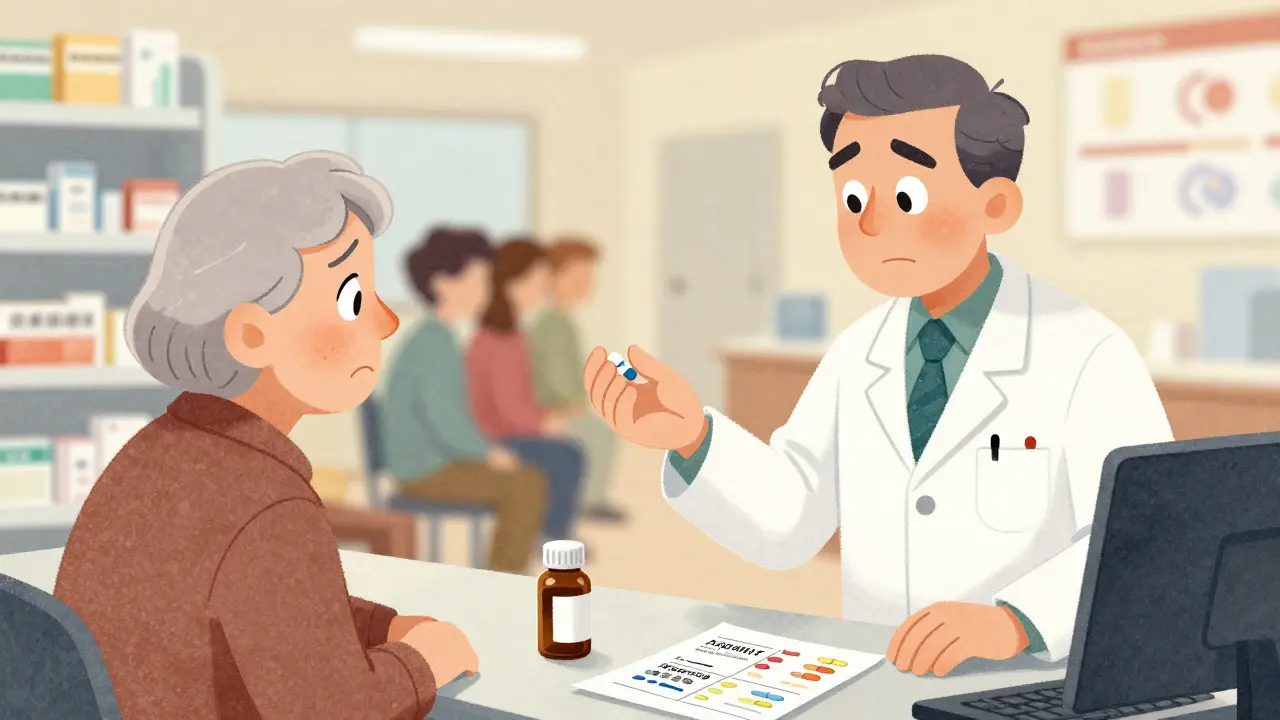
Every day, pharmacists face a quiet but persistent challenge: convincing patients that a small, differently colored pill is just as effective as the brand-name version they’ve been taking for years. Generic substitution isn’t just a cost-saving trick-it’s a core part of modern pharmacy practice. But behind the scenes, pharmacists are wrestling with real, daily hurdles that go far beyond paperwork and prescriptions.
Patients Don’t Trust the Generic
The biggest roadblock isn’t the law, the pharmacy system, or even the drug itself. It’s the patient’s belief that if it’s cheaper, it must be worse. I’ve seen it a hundred times: a patient walks up, looks at the new pill in the bottle, and says, "This isn’t what my doctor gave me before. Is this even real?" It’s not ignorance. It’s experience. Many patients have switched to a generic and felt different-dizzy, nauseous, or just "off." Sometimes, it’s a real pharmacokinetic quirk. Other times, it’s the placebo effect in reverse: they expect to feel worse, so they do. The GABI Journal found that about one-third of patients report negative experiences after switching, and those stories stick. Packaging changes-different shapes, colors, or even the name on the label-trigger suspicion. One elderly woman in Dunedin told me she refused her generic blood pressure pill because "it looked like something you’d get from a discount store." She didn’t care that it had the same active ingredient. She cared that it didn’t look like the one she trusted.When the Doctor Didn’t Say a Word
Here’s the catch: most patients never hear about generic substitution from their prescriber. A U.S. Pharmacist survey found that 64% of patients received no explanation from their doctor before walking into the pharmacy. That puts the entire burden of education on the pharmacist-often during a 90-second interaction between filling one script and starting the next. Pharmacists become the de facto counselors, educators, and mediators. We have to explain bioequivalence without jargon. We say things like: "The FDA requires generics to be absorbed within 3.5% of the brand name on average. That’s less than the difference you’d get from taking your pill with food versus without." But even that doesn’t always land. Patients hear "FDA-approved" and think, "But is it really the same?"Narrow Therapeutic Index Drugs: The Gray Zone
Not all drugs are created equal when it comes to substitution. For medications with a narrow therapeutic index-where the difference between an effective dose and a toxic one is tiny-the stakes are higher. Think anti-seizure drugs like phenytoin, warfarin for blood thinning, or lithium for bipolar disorder. Switching brands here isn’t just about cost. It’s about safety. Pharmacists know this. We’re trained to flag these. But the system doesn’t always support us. Some states in the U.S. allow automatic substitution even for NTI drugs unless the prescriber writes "dispense as written." In New Zealand, we have more control-but we still get pushback. A patient on carbamazepine for epilepsy might refuse a generic because they "felt different" after one switch last year. We don’t have the luxury of saying no. We have to balance legal authority with clinical judgment-and sometimes, we end up calling the prescriber just to confirm.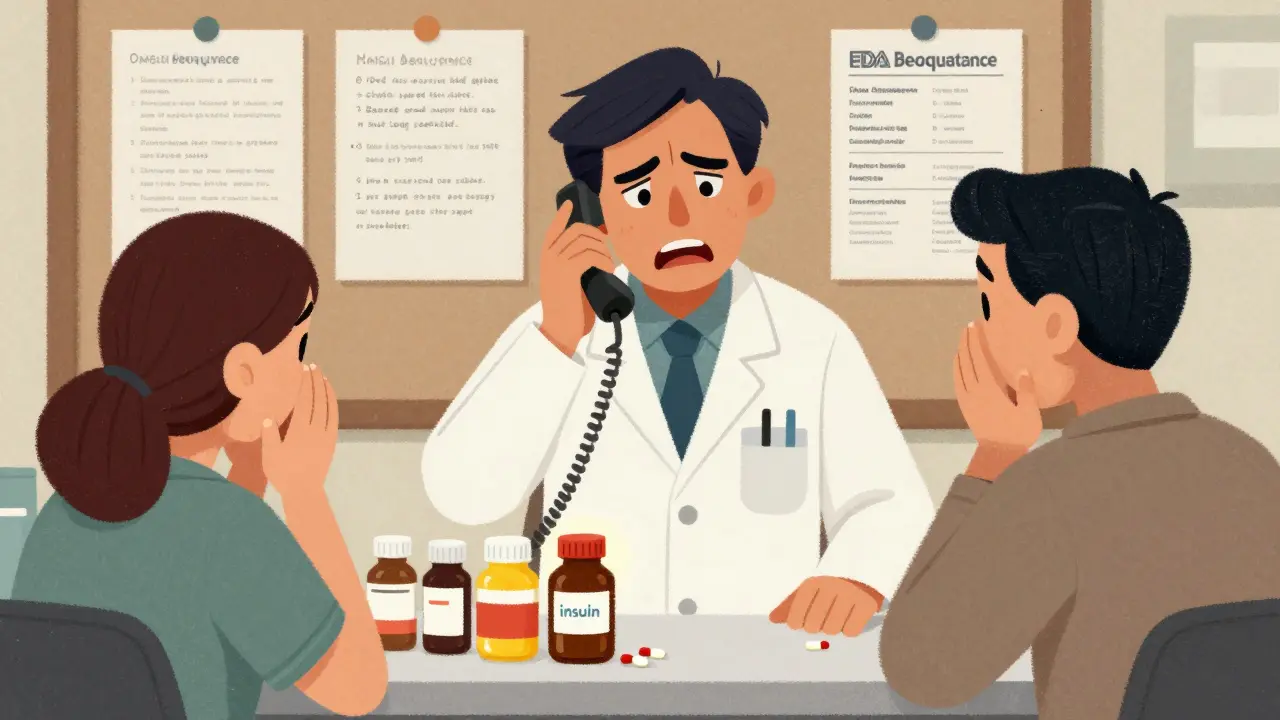
The Time Drain of Patient Education
A 2015 study in the Journal of Managed Care & Specialty Pharmacy found that only 38.5% of patients were told they could refuse a generic substitution. That’s not just a gap-it’s a failure. And it falls on us to fix it. Imagine this: a 72-year-old man on five medications, including a generic statin, a generic antidepressant, and a brand-name insulin. He’s confused. He’s anxious. He’s been told his pills changed again. He doesn’t know which one is which. He doesn’t know if he’s supposed to take them at the same time. And now he’s sitting in the counseling room while the line grows behind him. We spend 15 minutes explaining what each pill does, why the color changed, and that yes, the generic version of his antidepressant is just as effective. He leaves satisfied-but we lost 15 minutes we didn’t have. And that’s just one patient. In rural areas, where pharmacists often serve as the only accessible healthcare provider, this time burden is even heavier. We’re not just dispensing drugs-we’re managing chronic illness, mental health, and medication adherence-all in between cashiers and refill requests.Doctors Are Reluctant, Too
It’s not just patients. A systematic review showed that while 87% of doctors think generic substitution is economically smart, only 70% believe it’s clinically appropriate. That gap is dangerous. If a doctor doesn’t support substitution, they won’t mention it to the patient. And if the patient doesn’t hear it from their doctor, they’ll assume the pharmacist is cutting corners. We’ve had patients come in angry because their doctor didn’t warn them about the switch. We’ve had doctors call us back asking, "Did you really substitute that? I didn’t authorize it." The truth? In most places, we’re legally allowed to substitute unless the script says "do not substitute." But that doesn’t make it easier. We’re caught between policy and perception.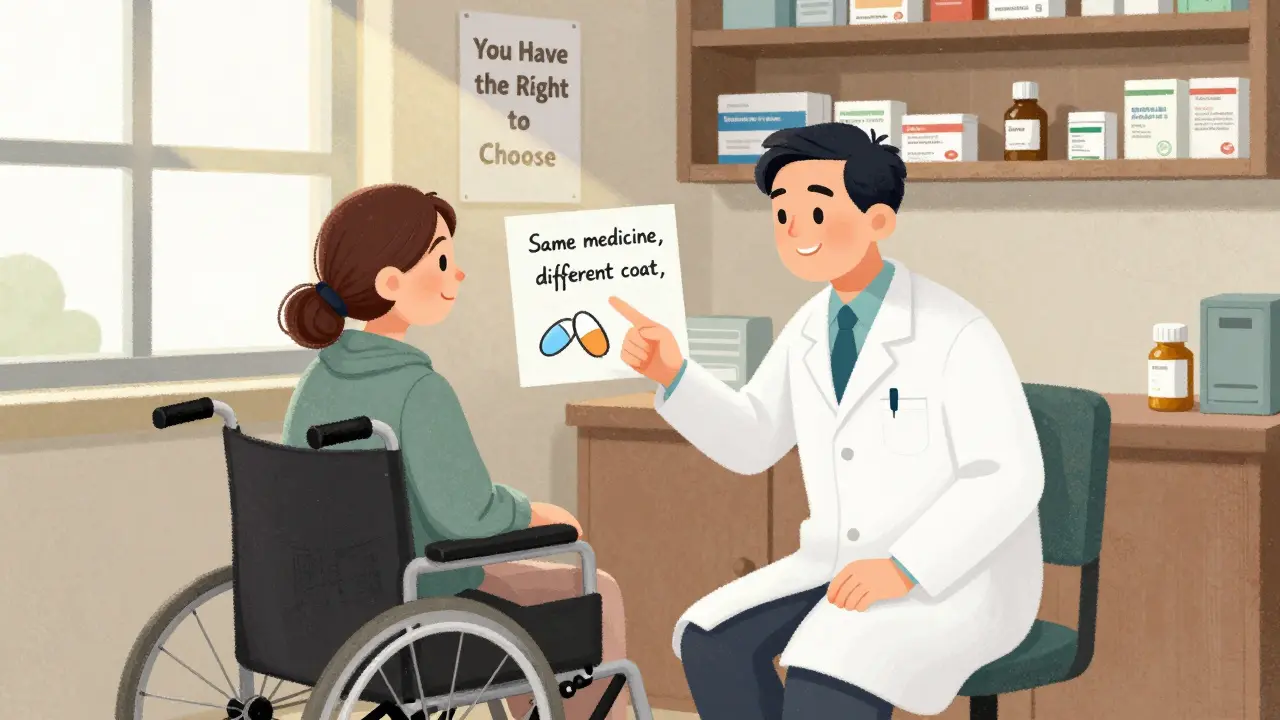
What Actually Works
The best pharmacists don’t just explain-they connect. They use simple analogies: "Think of it like two different brands of aspirin. They both have the same active ingredient, just different fillers and coatings." They keep a printed handout on hand: a side-by-side comparison of brand vs. generic, with the FDA’s bioequivalence standard clearly shown. They also know when to pause. If a patient is on a critical medication, they’ll say: "I’m going to call your doctor to confirm this switch is okay. Your health comes first." That builds trust. It shows we’re not just trying to save money-we’re trying to keep you safe. And they make it easy to say no. We now routinely ask: "Would you like to keep your brand-name medication? It’s your right to choose." That simple question increases acceptance. When patients feel in control, they’re more likely to agree.Where We Go From Here
Generic substitution isn’t going away. Costs are rising. Insurance plans are pushing harder for generics. The system needs it. But the system isn’t built to support pharmacists in doing it well. We need better communication between prescribers and patients-before the prescription even reaches the pharmacy. We need training for pharmacists on how to have these tough conversations quickly and clearly. We need state and national guidelines that protect patients on NTI drugs without over-restricting substitution where it’s safe. Most of all, we need to stop treating patients like numbers on a spreadsheet. A pill is more than a chemical. It’s part of someone’s routine, their identity, their sense of control. If we want generics to work, we have to earn their trust-not just fill their bottle.Can pharmacists substitute any generic drug without asking the doctor?
It depends on local laws and the prescription. In most places, pharmacists can substitute a generic unless the prescriber writes "dispense as written" or "no substitution." However, for drugs with a narrow therapeutic index-like warfarin, lithium, or anti-seizure medications-many jurisdictions require extra caution, and pharmacists often consult the prescriber before switching. Always check your region’s pharmacy regulations.
Why do generic pills look different from brand-name ones?
Generic manufacturers can’t copy the exact appearance of brand-name pills because of trademark laws. So they change the shape, color, or markings. But the active ingredient, strength, and how the body absorbs it must be the same. The FDA requires generics to be bioequivalent-meaning they work the same way in the body, even if they look different.
Are generic drugs less effective than brand-name drugs?
No. The FDA requires generics to meet the same strict standards as brand-name drugs for quality, strength, purity, and performance. Studies show that, on average, generics differ from brand-name drugs by only 3.5% in how quickly they’re absorbed by the body-less than the variation you get from taking the same pill with or without food. For most people, generics work just as well.
Why do some patients feel worse after switching to a generic?
There are a few reasons. Sometimes, differences in inactive ingredients (like fillers or dyes) can cause minor side effects in sensitive individuals. Other times, it’s psychological-patients expect the generic to be weaker, so they notice symptoms more. For drugs with a narrow therapeutic index, even tiny changes in absorption can matter. That’s why pharmacists carefully review these cases and often consult the prescriber before switching.
Can I refuse a generic substitution?
Yes. You always have the right to refuse a generic and ask for the brand-name version-even if it costs more. Pharmacists are required to inform you of this option, though not all do. If you’re unsure, just ask: "Can I keep my original brand?" and they’ll help you decide.
Do pharmacists get paid more for dispensing generics?
Not directly. Pharmacists don’t earn more per generic dispensed. But pharmacies often save money on inventory costs, which can help keep prices lower for patients. The goal of generic substitution is to reduce overall healthcare spending-not to increase pharmacy profits. Most pharmacists support it because it helps patients afford their meds, not because of financial incentive.
Henry Jenkins
January 26, 2026 AT 12:50Look, I get why patients freak out. I had a cousin who switched to generic levothyroxine and swore she felt like a zombie for two weeks. Turned out her thyroid levels were all over the place because the new batch had a different filler that messed with absorption. Not common, but it happens. The real issue isn’t the science-it’s the lack of transparency. No one tells you the pill changed. You just show up one day and your medication looks like it came from a gas station. That’s not trust. That’s a bait and switch.
Pharmacists shouldn’t have to be detectives explaining bioequivalence during a 90-second interaction. We need a system where the prescriber sends a note with the script: "Generic substitution approved. Here’s why it’s safe." Not a checkbox. Not a footnote. A real sentence. Patients need context, not just a pill.
And yeah, the color thing? Totally valid. I used to work in a pharmacy where the generic version of metoprolol was bright orange. One old lady cried because she said it looked like "candy for dogs." She wasn’t being irrational. She was scared. And we didn’t help by just saying, "It’s the same thing."
Dan Nichols
January 28, 2026 AT 03:43Generic drugs are just as effective 99 of 100 times. The other 1 percent? That’s the placebo effect in reverse and people who can’t tell the difference between a 3.5% absorption variance and a full-blown side effect. The FDA doesn’t lie. The science is solid. Stop treating patients like toddlers who need a lollipop to take their medicine.
And stop acting like pharmacists are some kind of martyrs. You’re not educating patients. You’re babysitting neuroses. If someone can’t handle a different shaped pill then maybe they shouldn’t be on meds that require precision in the first place. This whole thing is a glorified panic attack dressed up as public health.
Also the idea that doctors should explain substitution before the script is sent? That’s a logistical nightmare. You think a PCP has time to write a paragraph for every generic? Get real.
Stop romanticizing the problem. Fix the system not the patients.
And for god’s sake stop using the word "trust" like it’s a religious sacrament. It’s a pill. Take it or don’t.
End of story
Renia Pyles
January 29, 2026 AT 11:59Oh please. You think patients are the problem? Try being the pharmacist who has to explain to a 70-year-old widow that her $300 brand-name antidepressant is now $12 and she’s not going to die from it-while her husband’s ghost is still in the room and the pharmacy is playing elevator music and the line is 12 people deep.
And don’t give me that "it’s the same chemical" crap. My aunt took a generic blood thinner and ended up in the ER because the filler reacted with her stomach meds. She didn’t know they were different. No one told her. And now she’s terrified of every pill she’s ever taken.
It’s not about trust. It’s about trauma. And you’re all acting like this is a math problem when it’s a human one.
Also I hate how you say "patients expect to feel worse" like it’s their fault. What if they’ve been lied to before? What if their doctor never told them? What if they’ve been burned by a bad generic before? You think they’re being dramatic? No. They’re being smart.
And don’t even get me started on NTI drugs. You think a pharmacist should be the one deciding if a seizure patient can switch? That’s not healthcare. That’s Russian roulette.
Someone needs to take responsibility. Not the pharmacist. Not the patient. The system.
Karen Droege
January 31, 2026 AT 10:05Let me tell you what I do in my rural clinic pharmacy-we call it the "Pill Story."
Every time a patient gets a generic, I hand them a laminated card with a photo of their brand-name pill on one side and the generic on the other. Same active ingredient. Same dose. Same FDA stamp. Side-by-side. I point to the color difference and say: "See this? That’s like switching from Nike to New Balance. Same arch support. Different laces. You’re still running the same race."
Then I ask: "Do you want to keep your old pill?" Not "Do you want to save money?" Not "Is this okay?" But "Do you want to keep your old pill?" That simple question gives them control. And when they feel in charge? They relax.
I also keep a binder of patient testimonials-real quotes from people who switched and felt better because they could afford their meds. One woman said: "I didn’t take my insulin for three months because it cost my rent. Then I got the generic. I’m alive now."
And yeah, I call the doctor if it’s a narrow therapeutic index drug. No shame in that. I’ve saved lives by doing it. Not because I’m a hero. Because I’m not letting the system fail someone because of a stupid color change.
Trust isn’t built with brochures. It’s built with time. With eye contact. With listening. And sometimes? With a hug.
Stop treating patients like receipts. They’re people.
And if you think generics are just about cost? You’re missing the whole point. It’s about dignity.
End of rant. But I mean it.
Napoleon Huere
February 1, 2026 AT 22:36Here’s the philosophical angle nobody talks about: the pill is a symbol. It’s not just chemistry-it’s identity. We attach meaning to objects. The shape, the color, the logo-it’s all part of the ritual of healing. When you change the pill, you’re changing the ritual.
Think of it like replacing your wedding ring with a knockoff. Same metal. Same size. But you don’t feel the same. Why? Because meaning isn’t in the material. It’s in the story.
Patients aren’t irrational. They’re deeply human. And in a world where everything feels out of control-jobs, politics, healthcare costs-the one thing they can control is whether they take the same pill they’ve always taken.
So when we say "it’s the same drug," we’re speaking a language of science. But they’re speaking a language of memory. And those two languages don’t translate well.
Maybe the real solution isn’t better education. Maybe it’s better symbolism. What if generics came with a little card that said: "This is the same medicine your doctor prescribed. Just dressed differently. Thank you for trusting it."
That’s not marketing. That’s humanity.
And maybe that’s what we’ve forgotten.
Science doesn’t heal. Connection does.
Aishah Bango
February 2, 2026 AT 15:47Anyone who says patients are being irrational about generics is either a pharmaceutical exec or has never had to pay for their own meds. I’ve seen people skip doses because they can’t afford the brand. I’ve seen them cry because they’re choosing between insulin and groceries. And now you want to blame them for being scared when their pill changes color?
Let me be clear: if your insurance forces you to switch to a generic you’ve never taken before-without warning, without explanation, without consent-you’re not being a good pharmacist. You’re being a cog in a profit machine.
And don’t give me that "it’s legal" excuse. Just because something’s allowed doesn’t make it right. We used to be allowed to smoke in hospitals. Doesn’t mean we should have.
Stop pretending this is about science. It’s about power. And the people who lose? They’re the ones who can’t afford to fight.
And if you think patients should just "get over it"? You’ve never been poor. You’ve never been sick. And you’ve never had to trust a system that’s already failed you.
End of story. No debate.
Peter Sharplin
February 3, 2026 AT 19:14Just wanted to add something practical. We started using QR codes on generic labels in our pharmacy. Scan it, and it pulls up a 60-second video from the pharmacist explaining: active ingredient, FDA equivalence, why it looks different, and a link to the FDA’s generic drug database. No jargon. Just us. Talking. Real voice. Real face.
Patients love it. Especially older folks. One guy said: "I didn’t know I could see the pharmacist who gave me the pill. I thought you were just a robot behind the counter."
It takes 30 seconds to make. Costs nothing. And it rebuilds trust without a single word from the patient.
Also-we stopped saying "it’s the same." We started saying: "This is the same medicine, just made by a different company. Like how Coca-Cola and Pepsi are both soda but taste different. Neither is wrong."
Small change. Huge difference.
shivam utkresth
February 4, 2026 AT 04:07Bro in India we got generics since the 90s and no one freaks out. Why? Because we don’t have brand worship. If the pill works, it works. No logo, no color, no hype. We care about the effect not the packaging.
Also our doctors actually tell patients: "This is generic. Cheaper. Same thing." No surprise. No shock. No trauma.
And yeah, NTI drugs? We don’t auto-substitute. We check. We consult. We don’t play roulette.
US pharmacy culture is weird. You treat medicine like a luxury brand. It’s not. It’s a tool. Use it. Don’t idolize it.
Also, I’ve seen Indian generics exported to the US and Europe. They’re better than some brand-name stuff. FDA doesn’t discriminate. It’s all about the science.
Stop making it complicated. It’s a pill. Take it. Move on.
Also why are you all so emotional about a tablet? 😅
John Wippler
February 5, 2026 AT 21:01Let me tell you about the patient who changed my life.
She was 89. On warfarin. Got switched to generic. Said she felt "floaty." I called her doctor. We held off. She came back two weeks later with a handwritten note: "I didn’t know you’d call. I thought you just cared about the money. Thank you for caring about me."
That’s the moment I realized: it’s not about the pill.
It’s about whether someone feels seen.
So now I do something different. I don’t explain bioequivalence. I don’t quote FDA stats. I ask: "What’s the hardest part about this change for you?"
Some say: "I’m scared I’ll have a stroke."
Others say: "My husband died on this brand. I don’t want to forget him."
And then? I listen.
And sometimes? I say: "Let’s keep your brand. Your peace matters more than the cost."
That’s not policy. That’s love.
And if you think that’s inefficient? You’re missing the point.
Medicine isn’t about speed. It’s about soul.
Faisal Mohamed
February 7, 2026 AT 14:31Bro the whole generic debate is just capitalism vs. humanism 🤡
On one side: profit-driven systems that treat patients like line items
On the other: humans who need to feel safe, seen, and not like a cost center
And we act like this is a scientific issue? Nah. It’s a cultural one.
Also the fact that pharmacists are the ones stuck holding the bag? That’s the real tragedy. You’re not a doctor. You’re not a nurse. You’re the emotional support person for a broken system.
And yet you still show up.
Respect. 🙏
But also… fix the system. Not the patient. Not the pharmacist. The SYSTEM.
Also why is everyone so serious? 😅
Josh josh
February 8, 2026 AT 21:31generic is fine. people are just weird. if the pill works why care what it looks like. my grandpa takes 8 meds and he dont even notice the colors. he just swallows em. end of story. stop making it a drama.
bella nash
February 8, 2026 AT 21:34It is imperative to acknowledge that the phenomenon of patient apprehension regarding generic pharmaceutical substitution is not merely a function of ignorance or psychological bias, but rather a systemic failure of interprofessional communication and patient-centered discourse. The absence of prescriber involvement in the substitution protocol constitutes a profound ethical lacuna, wherein the patient’s autonomy is inadvertently subordinated to economic imperatives. Furthermore, the reliance upon pharmacists as de facto educators, under conditions of temporal constraint and institutional neglect, represents a misallocation of professional resources that is both inefficient and morally indefensible. To mitigate this, a mandatory, standardized, and prescriber-initiated disclosure protocol-preferably integrated into electronic prescribing systems-is not merely advisable, but ethically obligatory. The dignity of the patient is not negotiable.