What Is Contact Allergens and Why Does It Matter?
Ever had a rash that just won’t go away, no matter how much lotion you rub on it? You might think it’s dry skin, stress, or even a new detergent. But if it keeps coming back in the same spots - behind your ears, on your wrists, around your neck - it could be something more specific: contact allergens. These are invisible triggers in everyday items that set off a delayed immune reaction in your skin. Unlike a quick sneeze from pollen, this reaction takes days to show up. That’s why people often blame the wrong thing. It’s not the shampoo you used yesterday. It’s the nickel in your watch clasp you’ve worn for years.
Contact dermatitis is the most common skin condition seen by dermatologists. It comes in two main types: irritant and allergic. Irritant contact dermatitis happens when something physically damages your skin - like bleach, strong soap, or even constant handwashing. Allergic contact dermatitis is different. It’s your immune system reacting to a substance it wrongly thinks is dangerous. This is where patch testing becomes essential.
How Patch Testing Works: The Gold Standard for Diagnosis
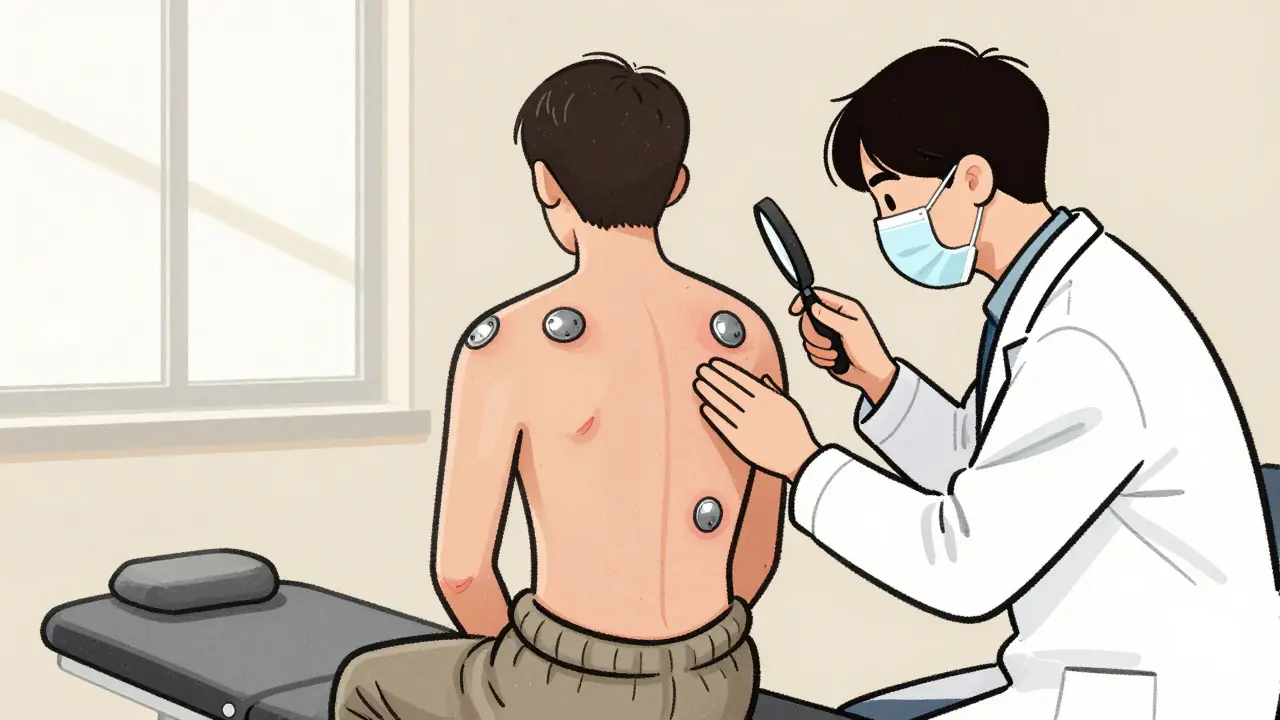
Patch testing is the only reliable way to confirm what’s causing your allergic skin reaction. It’s not a needle, not a scratch, and definitely not a blood test. Instead, tiny amounts of common allergens are taped to your back for two full days. These aren’t random chemicals - they’re standardized haptens, carefully diluted and mixed with white petrolatum to match real-world exposure levels. Each patch holds 10 to 12 allergens, and up to 100 can be tested at once.
The process takes about a week and requires three visits. On Monday, patches are applied. You go home with your back covered in small metal discs, like tiny armor plates. You can’t shower, sweat, or get them wet. No swimming, no hot yoga, no intense workouts. Moisture ruins the test. On Wednesday, you return to have the patches removed. The skin underneath is checked for redness, bumps, or blisters - signs of a reaction. Then, you come back on Friday for a final reading. Some reactions appear late, so the 96-hour mark is critical.
Unlike skin prick tests that detect immediate allergies like hay fever, patch testing finds delayed-type hypersensitivity - a Type IV reaction. That’s why antihistamines won’t interfere. You can keep taking them. This is a key advantage: you don’t have to stop your regular meds to get accurate results.
What’s in the Patch? Common Allergens You’re Likely Exposed To
There are thousands of possible contact allergens. But most reactions come from a short list. The standard baseline series used in New Zealand and the U.S. covers the top 20-30 offenders. Here’s what you’re most likely reacting to:
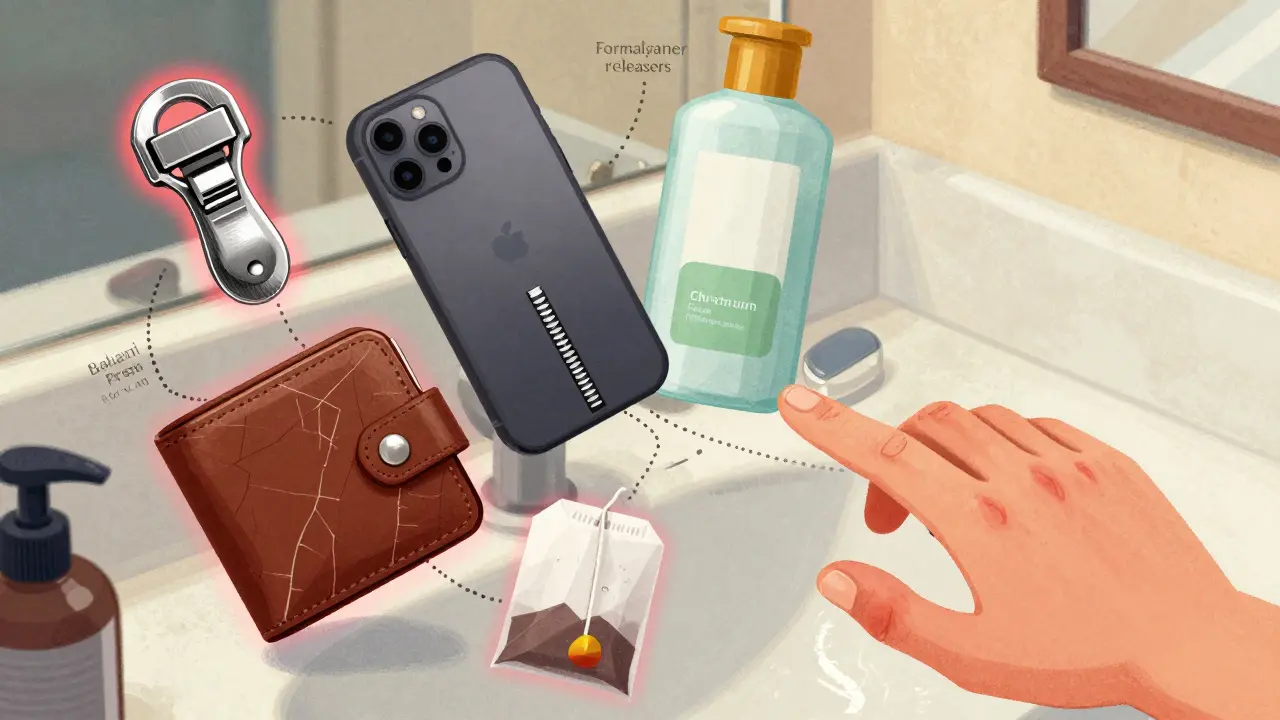
- Nickel - Found in jewelry, belt buckles, zippers, and even smartphone cases. It’s the number one cause of allergic contact dermatitis worldwide.
- Chromium - Used in leather tanning. If your leather wallet or shoes cause a rash on your thigh or fingers, chromium could be the culprit.
- Formaldehyde and formaldehyde-releasers - Hidden in shampoos, lotions, makeup, and even some disinfectants. Look for ingredients like quaternium-15, DMDM hydantoin, or imidazolidinyl urea.
- Paraphenylenediamine (PPD) - The main dye in hair color. If you get a scalp or neck rash after dyeing your hair, this is likely why.
- Neomycin and other antibiotics - Common in over-the-counter antibiotic creams. Ironically, using them to treat a rash can make it worse.
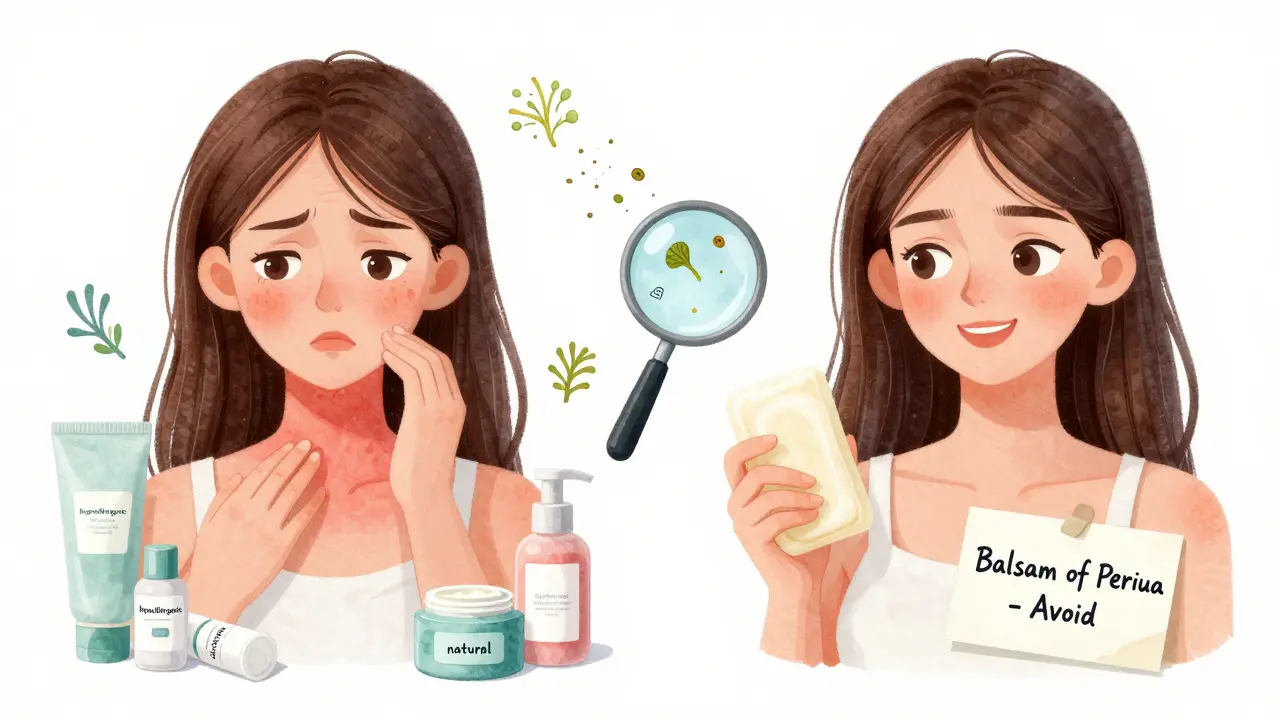
- Myroxylon pereirae (Balsam of Peru) - A fragrance found in perfumes, lotions, cinnamon, citrus, and even some teas. It’s sneaky because it shows up in so many products.
- Coconut diethanolamide - A foaming agent in soaps and shampoos. Often mistaken for coconut oil allergy, but it’s the chemical, not the nut.
These aren’t just random chemicals. They’re in the things you touch every day. A woman in Dunedin developed a chronic hand rash after switching to a new brand of dish soap. Patch testing revealed she was allergic to sodium lauryl sulfate - a common detergent. Once she switched to a sulfate-free version, her skin cleared up in weeks.
Expanded Testing: Going Beyond the Basics
Standard patch testing catches about 70% of cases. But if you work in a specific job - say, a dental technician, florist, mechanic, or hairdresser - you might need expanded testing. That means adding industry-specific panels. A florist might be tested for sesquiterpene lactones from chrysanthemums. A mechanic might get tested for additives in motor oil. A dental technician might be screened for mercury or acrylates from dental materials.
The T.R.U.E. Test is a pre-made system with 35 allergens already loaded into hydrophilic gels. It’s faster and more consistent than manually preparing patches. But it doesn’t cover everything. That’s why many clinics still use custom panels. In New Zealand, allergens like Myroxylon pereirae and nickel are especially common due to local product formulations. What works in the U.S. might not be enough here.
What Patch Testing Can’t Do
Patch testing is powerful, but it’s not magic. It can’t find every allergen. There are over 3,000 known contact allergens, and new ones emerge every year as product ingredients change. If your test comes back negative, it doesn’t mean nothing’s causing your rash. It could be:
- A rare allergen not included in any panel
- An irritant, not an allergen (patch tests don’t detect irritants)
- A reaction triggered by sunlight (photocontact dermatitis)
- A combination of multiple weak triggers adding up
Some dermatologists recommend repeat open application testing if patch testing is inconclusive. That means applying a suspected product - like your favorite hand cream - to a small area of your forearm twice a day for five to ten days. If your skin reacts, you’ve found your trigger. It’s low-tech but surprisingly effective.
What Happens After a Positive Result?
Getting a positive patch test isn’t the end - it’s the beginning. The real work starts now: avoidance. Knowing you’re allergic to nickel means you need to stop wearing cheap jewelry, check your phone case, and even look at the metal buttons on your jeans. It’s not always easy. Nickel is everywhere.
Treatment after diagnosis includes:
- Stopping exposure to the allergen
- Using topical corticosteroids to calm inflammation
- Oral steroids for severe, widespread rashes
- Antihistamines for itching (they don’t cure the reaction, but they help you sleep)
But the most important part? Education. You need to learn how to read labels. You need to know that “fragrance-free” doesn’t mean “safe.” You need to understand that natural doesn’t equal non-allergenic - tea tree oil, lavender, and eucalyptus can all trigger reactions. Many patients are given a personalized avoidance list and a list of safe products. Some clinics even offer product substitution guides.
When to Get Tested - And When Not To
Don’t wait until your skin is raw and bleeding. The best time for patch testing is when your rash is calm - ideally, you haven’t had a flare-up for at least two weeks. Testing on inflamed skin can give false negatives. If your back is too irritated, patches can be placed on your arms or even your abdomen.
But patch testing isn’t for everyone. If you have widespread eczema, severe psoriasis, or are pregnant, your doctor may delay testing. Also, if your rash looks more like hives or swelling that appears within minutes, it’s probably not contact allergy - it’s something else, like a food allergy or urticaria. Patch tests won’t help there.
Real-Life Impact: What Patients Actually Experience
One patient, a 42-year-old teacher in Dunedin, had a chronic rash on her neck for over a year. She tried everything: hypoallergenic soaps, steroid creams, dietary changes. Nothing worked. Patch testing revealed she was allergic to balsam of Peru - hidden in her lip balm and her favorite herbal tea. She stopped using both. Within three weeks, her skin was clear. She didn’t need creams anymore.
Another, a 68-year-old retired carpenter, had cracked, painful hands. He thought it was just dry skin from years of sanding. Patch testing showed he was allergic to chromium in the leather gloves he’d worn for 40 years. He switched to nitrile gloves. His hands healed. He could hold his grandkids again without pain.
These aren’t rare cases. They’re routine. Patch testing doesn’t just diagnose - it restores quality of life.
Looking Ahead: The Future of Contact Allergen Testing
Research is ongoing. Scientists are identifying new allergens in e-cigarettes, 3D-printed materials, and plant-based cosmetics. As products become more complex, so do the triggers. Some clinics are experimenting with digital patch testing systems that track skin changes via smartphone photos. Others are building regional allergen databases to better match local product use.
But the core hasn’t changed. Patch testing remains the gold standard. It’s simple, safe, and accurate. No other test can tell you exactly what’s touching your skin and making you sick. If you’ve struggled with a stubborn rash, it’s not just worth trying - it’s necessary.
Jess Bevis
January 29, 2026 AT 02:04Simple fix. Why didn't I think of it sooner?
Kathy Scaman
January 29, 2026 AT 08:38Anna Lou Chen
January 29, 2026 AT 22:25Formaldehyde-releasers? Balsam of Peru? These aren't ingredients - they're signatures of a system that commodifies purity while poisoning the very vessels it claims to serve. The dermatologist is not a healer but a gatekeeper of corporate-approved ignorance.
And yet, we still submit. We still tape our backs to metal discs like obedient subjects in a clinical panopticon. The real allergen isn't nickel - it's the belief that we can out-test the system.
Mindee Coulter
January 31, 2026 AT 13:37Rhiannon Bosse
January 31, 2026 AT 20:38And patch testing is the solution? Bro. That's like giving someone a Band-Aid after they got hit by a truck and saying 'at least now you know which truck it was.'
Meanwhile, the FDA approves new chemicals faster than my ex texts me 'u up?' - and we're all just sitting here with our backs taped up like lab rats waiting for our turn in the corporate allergy wheel of fortune.
Bryan Fracchia
February 2, 2026 AT 14:16I had a friend who got tested and found out she was allergic to her own 'natural' face oil. Turns out tea tree oil was the culprit. Who knew? Now she’s happier, clearer, and way less confused about her skincare routine.
Colin Pierce
February 4, 2026 AT 00:25Also - don’t ignore the 'fragrance-free' label. That doesn’t mean safe. It just means they didn’t add perfume. They still added 20 other chemicals to make it smell like nothing. Read the INCI list. It’s boring but it saves your skin.
Irebami Soyinka
February 4, 2026 AT 13:49Why do you think our grandmas used shea butter and coconut oil? Because they didn't need a lab to tell them what kills skin.
Western medicine thinks it's smart. But we've been healing for centuries without your metal stickers. 🤷♀️🔥
doug b
February 4, 2026 AT 21:26Do it. Your skin will thank you.
Mel MJPS
February 6, 2026 AT 07:02Katie Mccreary
February 7, 2026 AT 21:14