When you need dialysis, your body doesn’t just stop working-it needs a new way to clean your blood. That’s where dialysis access comes in. It’s not just a tube or a needle site; it’s your lifeline. And not all access types are the same. The choice you make-or that your doctor recommends-can affect how often you get sick, how long you stay healthy, and even how long you live. Three main options exist: arteriovenous (AV) fistulas, AV grafts, and central venous catheters. Each has its own strengths, risks, and daily demands. Understanding them isn’t just helpful-it’s essential.
Why AV Fistulas Are the Gold Standard
If you could pick one type of dialysis access that lasts the longest and causes the fewest problems, it would be the AV fistula. It’s made by surgically connecting an artery directly to a vein, usually in your forearm. This isn’t just a simple stitch job-it changes how your vein behaves. Over time, the vein grows bigger and stronger, thickening its walls to handle the high-pressure flow from the artery. That’s what lets nurses stick needles into it, safely and repeatedly, during each dialysis session. The National Kidney Foundation calls it the gold standard for a reason. Fistulas last for decades when cared for properly. One patient in Dunedin has had his fistula working for 12 years with zero infections. That’s not rare. Many people live with theirs for 10, 15, even 20 years. They rarely clot. They rarely get infected. And they don’t need constant medical fixes. But here’s the catch: it takes time. After surgery, your fistula needs 6 to 8 weeks to mature. That means if you’re already in kidney failure and need dialysis right away, you can’t use it immediately. You’ll need a temporary solution while you wait. That’s where catheters come in-but more on that later.When a Fistula Isn’t Possible: AV Grafts
Not everyone’s veins are strong enough for a fistula. If you’ve had multiple surgeries, have diabetes, or your veins are too small or scarred, a fistula might not work. That’s where an AV graft comes in. Instead of connecting your artery and vein directly, a surgeon inserts a synthetic tube-usually made of PTFE-between them. Think of it like a bridge made of plastic that lets blood flow from the artery to the vein. The big advantage? Healing time is faster. You can start dialysis in just 2 to 3 weeks. That’s a huge help if you need to start treatment quickly. But grafts have downsides. They’re more likely to clot. They’re more likely to get infected. And they don’t last as long. Studies show 30 to 50% of grafts need at least one repair or cleaning procedure within the first year. Some need multiple. Patients often describe grafts as “high-maintenance.” One woman in Christchurch said she had five interventions in three years just to keep her graft open. Each time, she had to go to the hospital for a procedure called a thrombectomy, where doctors remove clots using a catheter or special tools. It’s not life-threatening, but it’s disruptive-and expensive.Catheters: The Temporary Fix That Sometimes Becomes Permanent
Central venous catheters are soft, flexible tubes inserted into large veins in your neck, chest, or groin. They’re the fastest way to start dialysis. You can walk out of surgery and be on dialysis the same day. That’s why they’re common in emergencies or when patients are too sick to wait for a fistula to mature. But here’s the truth no one always tells you: catheters are the riskiest option. They’re the leading cause of bloodstream infections in dialysis patients. The data is clear: using a catheter instead of a fistula raises your risk of death by 53%. That’s not a small number. It’s 106 extra deaths per 100,000 patients every year. And that’s just from infections. Catheters also clot more often, require daily care, and limit your daily life. You can’t shower normally. You have to cover the site with waterproof dressing every time. Swimming? Forget it. Even a simple cold can become dangerous if bacteria get into the catheter. One man in Auckland had to be hospitalized three times in six months because of catheter infections. He eventually switched to a fistula-and hasn’t been back to the hospital for an infection since. Catheters aren’t evil. They’re necessary for some people. But they should never be the first choice. And if you’re stuck with one long-term, you need to treat it like a high-risk device-because it is.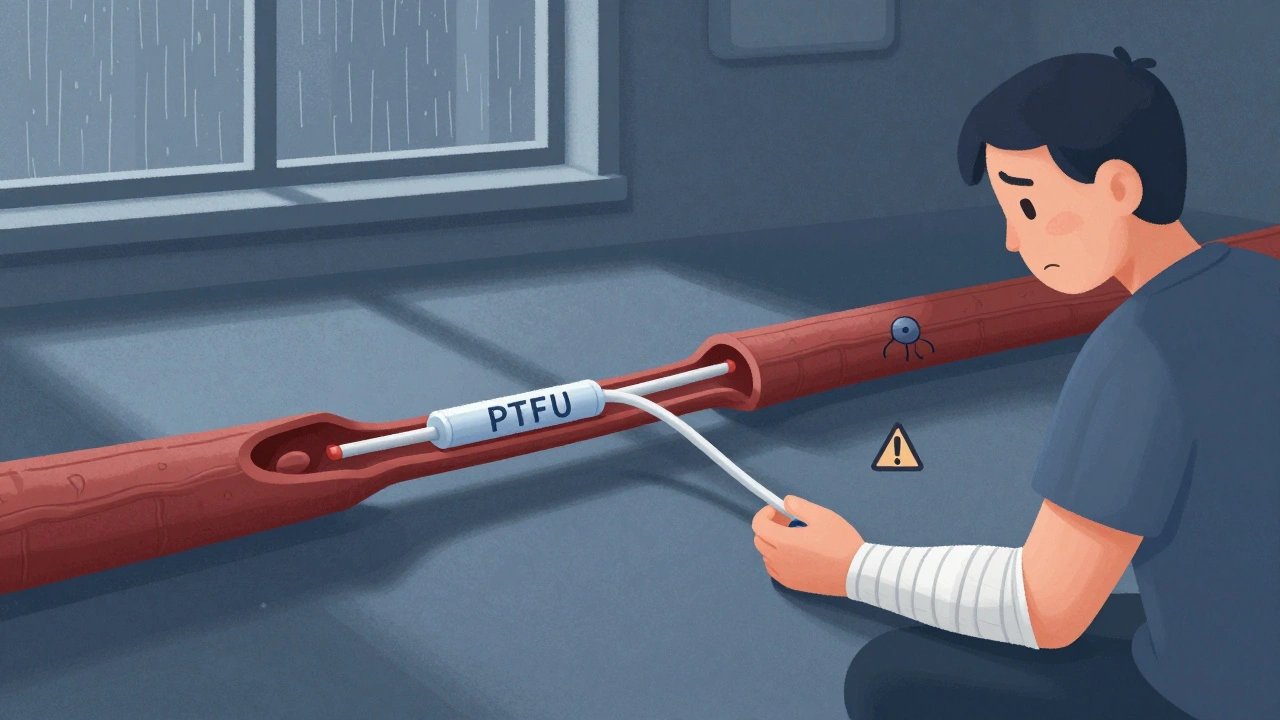
How to Care for Each Type of Access
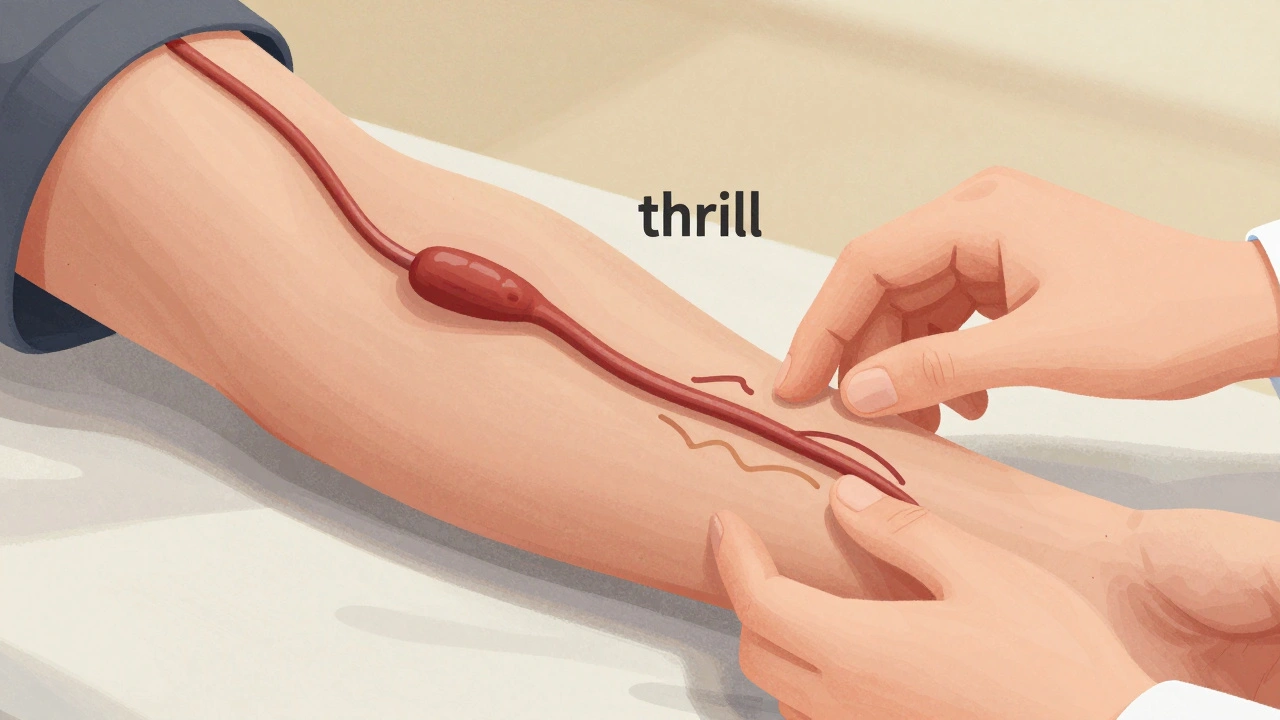
Caring for your dialysis access isn’t optional. It’s your first line of defense against infection, clotting, and failure. For fistulas, you only need to check for the “thrill” every day. That’s the vibration you feel when you place your fingers over the access site. It tells you blood is flowing properly. If it’s gone, or feels different, call your clinic right away. Wash the site with soap and water before each dialysis session. Don’t let anyone take your blood pressure or draw blood from that arm. And never sleep on it. For grafts, daily thrill checks are just as important. But because they clot more easily, you might also need to watch for swelling, pain, or a cool spot near the graft. These can signal a blockage. Grafts also need regular ultrasound checks every few months to catch early signs of narrowing. Some clinics now use wireless sensors that track blood flow automatically-new tech that’s cutting clotting rates by 20%. For catheters, care is intense. You need to clean the exit site daily with antiseptic solution. Change the dressing exactly as your nurse shows you-no shortcuts. Never touch the catheter ends. If you see redness, swelling, pus, or fever, go to the hospital immediately. Catheter-related infections don’t wait. They spread fast.What Happens When Access Fails
Fistulas can develop aneurysms-bulges in the vein wall-especially if needles are placed in the same spot too often. This happens in 15-20% of long-term users. It’s not dangerous by itself, but it makes future needle placements harder. Your team can fix it with a simple procedure called aneurysm repair. Grafts fail mostly because of clotting. When that happens, you need a thrombectomy. It’s usually done under local anesthesia. A catheter is threaded in, and either a balloon or a machine breaks up the clot. It’s not fun, but it’s routine. Catheters fail from infection or blockage. When they do, they usually have to be removed. That means you’re back to square one-waiting for a new access to be made, or using a temporary one again. That’s why many patients who start with catheters end up with fistulas later. It’s not a failure-it’s progress.
Why Some People Don’t Get Fistulas
You might wonder: if fistulas are so much better, why don’t everyone get one? The answer is complex. Some people’s veins are too weak. Others have diabetes or high blood pressure that damages their vessels. But there’s also a gap in care. Studies show Black patients are 30% less likely to get fistulas than white patients-even when their health is the same. That’s not about biology. It’s about access to specialists, timing of referrals, and even unconscious bias in care. Another issue: fistula maturation failure. Even when surgery is done right, 30-60% of fistulas don’t mature enough to be used. That’s why preoperative exercise is now recommended. Simple hand squeezes or wrist curls for 10 minutes, three times a day, for two weeks before surgery can boost maturation rates by 15-20%. It’s free. It’s easy. And it works.What’s Next for Dialysis Access?
The field is changing fast. In 2022, the FDA approved the first wireless sensor for fistulas-called Vasc-Alert. It sits under the skin and sends real-time data about blood flow to your doctor’s phone. If it detects a drop, you get an alert before the fistula clots. Early results show it cuts emergency interventions by nearly a quarter. There’s also new graft material in development. Humacyte’s bioengineered vessel-grown from human cells, not plastic-is in final clinical trials. It’s designed to resist clotting and infection. If approved, it could be a game-changer for people who can’t get fistulas. The goal? By 2030, fistulas will make up 65-70% of all permanent dialysis access. Catheters will drop below 15%. That’s the target. And it’s achievable-if patients get educated early, if care is equitable, and if we stop accepting catheters as normal.What You Can Do Today
If you’re on dialysis or about to start:- Ask your nephrologist: “Can I get a fistula?” Don’t accept “maybe” or “we’ll see.” Push for vein mapping-a simple ultrasound that shows if your veins are suitable.
- If you’re using a catheter, ask: “What’s my plan to switch to a fistula or graft?” Don’t wait until you get sick.
- Learn how to check your thrill. Do it every day. Write it down. Show your nurse.
- Exercise your arm. Squeeze a stress ball. It helps your fistula mature.
- Never let anyone take blood pressure or IVs on your access arm.
Start the conversation today. Your body is counting on it.
What is the best type of dialysis access?
The best type is an arteriovenous (AV) fistula. It’s made by connecting your own artery and vein, which lets the vein strengthen over time. Fistulas last longer, have fewer infections, and lower your risk of death compared to grafts or catheters. They’re the gold standard recommended by the National Kidney Foundation and global health guidelines.
How long does it take for a fistula to be ready for dialysis?
It usually takes 6 to 8 weeks for a fistula to mature. During this time, the vein grows larger and thicker from the increased blood flow. You can’t use it for dialysis until it’s fully matured. If you need dialysis sooner, a temporary catheter will be used.
Can I shower with a dialysis catheter?
You can shower, but only if you cover the catheter site with a waterproof dressing exactly as your nurse taught you. Never let the catheter get wet. Water can carry bacteria into your bloodstream, leading to life-threatening infections. Many patients switch to a fistula or graft specifically to regain normal bathing habits.
Why do grafts need so many procedures?
Grafts are made of synthetic material, not your own tissue, so they’re more prone to clotting and narrowing. About 30-50% of grafts need at least one intervention in the first year to clear clots or widen narrowed areas. This is why they’re considered higher maintenance than fistulas, even though they heal faster.
What are the signs my dialysis access is failing?
Look for: no thrill or vibration when you touch the site, swelling, pain, redness, warmth, or a cold spot near the access. For catheters, watch for fever, chills, or pus around the exit site. Any of these mean you need to contact your dialysis center immediately. Early action can save your access.
Can I prevent fistula failure?
Yes. Do daily thrill checks. Avoid pressure on the access arm. Don’t let anyone draw blood or take blood pressure there. Exercise your hand with a stress ball before surgery to improve maturation. Keep the site clean. Attend all follow-up ultrasounds. These simple steps cut complications by up to 25%.
sagar bhute
December 1, 2025 AT 23:20The whole fistula thing is just another way the medical industry profits off the poor. Grafts and catheters are used because they bring in more revenue. They don't care if you live or die as long as you keep coming back for monthly procedures. This article is just PR dressed up as education.
Kidar Saleh
December 2, 2025 AT 04:28Let me tell you something from the UK NHS - we've seen this play out for years. Fistulas are the gold standard, yes, but too many patients are left waiting months because of staffing shortages. I've had patients cry because they couldn't shower for six months straight. This isn't just medical - it's a social justice issue. We need better access to vascular surgeons, not just better pamphlets.
Chloe Madison
December 2, 2025 AT 21:44THIS. IS. LIFE-CHANGING. I've been on dialysis for 11 years and my fistula is still going strong - I check the thrill every morning like clockwork. I used to use a catheter for six months and I swear I aged 10 years during that time. The infections, the fear, the constant worry - it's not worth it. Do the exercises. Ask for vein mapping. Don't settle for 'temporary.' You deserve better than that. Your body is fighting for you - fight back.
Vincent Soldja
December 4, 2025 AT 20:34Makenzie Keely
December 6, 2025 AT 19:57Thank you for this comprehensive, meticulously researched, and emotionally intelligent breakdown. I especially appreciate how you highlighted the systemic disparities in access to fistula placement - this is not a biological issue, it's a structural one. The data on infection-related mortality is staggering, and the fact that 30–60% of fistulas fail to mature due to lack of preoperative exercise is criminal negligence. I’ve shared this with my nephrology team and our patient advocacy group. We need policy change, not just pamphlets.
Francine Phillips
December 8, 2025 AT 14:20Katherine Gianelli
December 9, 2025 AT 14:23My mom’s been on dialysis for 8 years. She used to be terrified of her catheter - thought every cough could kill her. Then she got her fistula. Now she makes her own tea, walks the dog, and even knits while she’s hooked up. She says the thrill feels like a heartbeat in her arm. That’s not just medicine - that’s freedom. If you’re reading this and you’re scared to ask for a fistula? Please, just ask. Say it out loud. ‘I want a fistula.’ Say it again tomorrow. And the day after. You’re worth the fight.
Joykrishna Banerjee
December 11, 2025 AT 07:50Let's be brutally honest: the 'gold standard' narrative is a corporate construct. AV fistulas are promoted because they reduce long-term hospital costs - not because they're inherently superior. The bioengineered grafts from Humacyte? That's the real innovation. Synthetic PTFE is a 1970s relic. Why are we still glorifying native vessels when we have lab-grown alternatives? This article is nostalgic, not progressive. And yes - I've read the NKF guidelines. They're outdated.
parth pandya
December 12, 2025 AT 22:48Albert Essel
December 14, 2025 AT 07:31There’s value in every perspective here. The fistula is ideal, yes - but we must acknowledge that not everyone has the time, health, or access to make it happen. The real win isn’t just pushing fistulas - it’s ensuring every patient gets timely vascular mapping, pre-op counseling, and follow-up support. Equity isn’t a buzzword. It’s a clinical imperative.
Charles Moore
December 16, 2025 AT 03:49I work with dialysis patients in Dublin. One thing I’ve learned: the most powerful tool isn’t a sensor or a graft - it’s a nurse who remembers your name. When someone checks in on your thrill, asks how you slept, or brings you a blanket during treatment - that’s the real lifeline. Medical tech saves lives. Human kindness keeps people coming back. Let’s not forget both.