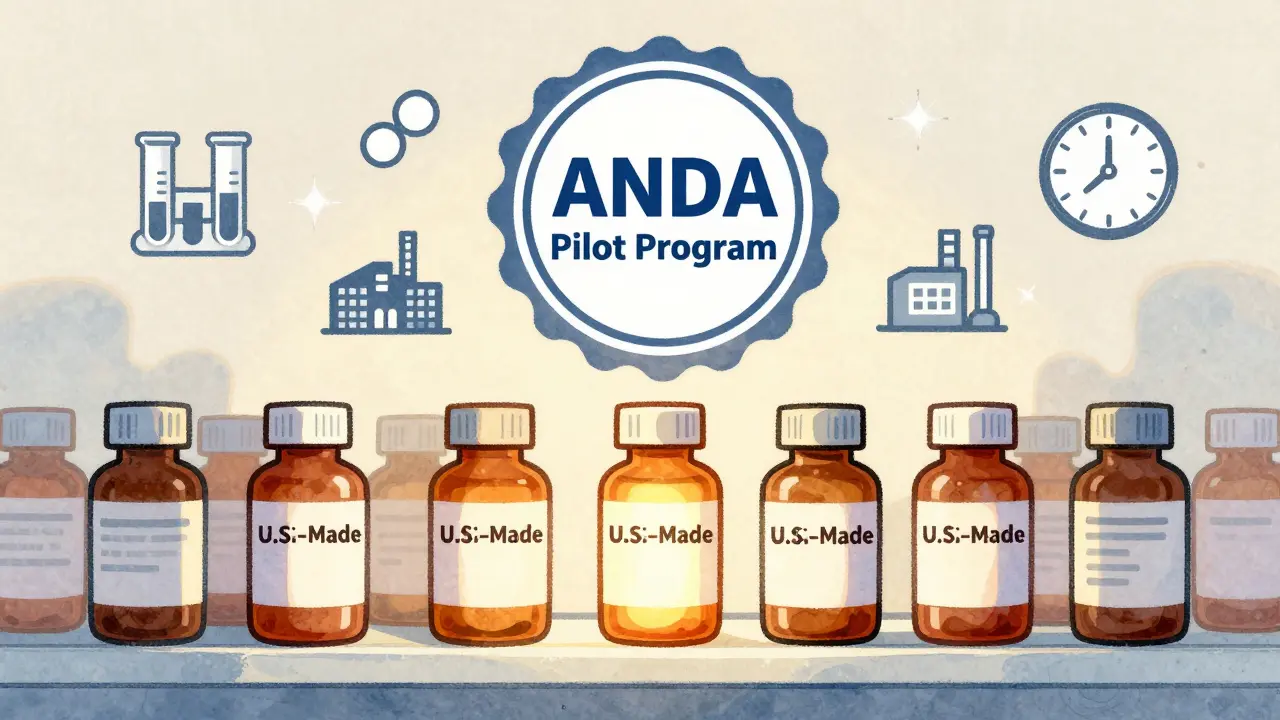
The U.S. generic drug market is changing faster than most people realize. If you’ve noticed fewer drug shortages lately-or seen prices drop sharply on a medication you take-that’s not a coincidence. It’s the result of major updates to how the FDA approves generic drugs between 2023 and 2025. These aren’t minor tweaks. They’re a full-scale rewrite of the rules that have governed generic drug approvals since 2012. And they’re already making a real difference in what’s available on pharmacy shelves.
Why the FDA Changed the Rules
During the pandemic, the world saw what happens when a country depends too much on foreign suppliers for life-saving medicines. Critical drugs like antibiotics, anesthetics, and heart medications vanished from U.S. pharmacies. The problem wasn’t lack of demand-it was lack of reliable production. Over half of all pharmaceuticals sold in the U.S. are made overseas, with most active ingredients coming from India and China. In 2025, only 9% of active pharmaceutical ingredient (API) manufacturers were based in the U.S.
The FDA didn’t wait for another crisis. In response to the 2023 National Defense Authorization Act and Executive Order 14080, the agency launched the ANDA Prioritization Pilot Program on October 3, 2025. This program gives faster approval to generic drug makers who do their testing and manufacturing in the United States. It’s not just about speed-it’s about security. If a drug is made here, inspected here, and tested here, the supply chain is more stable.
How the Prioritization Pilot Works
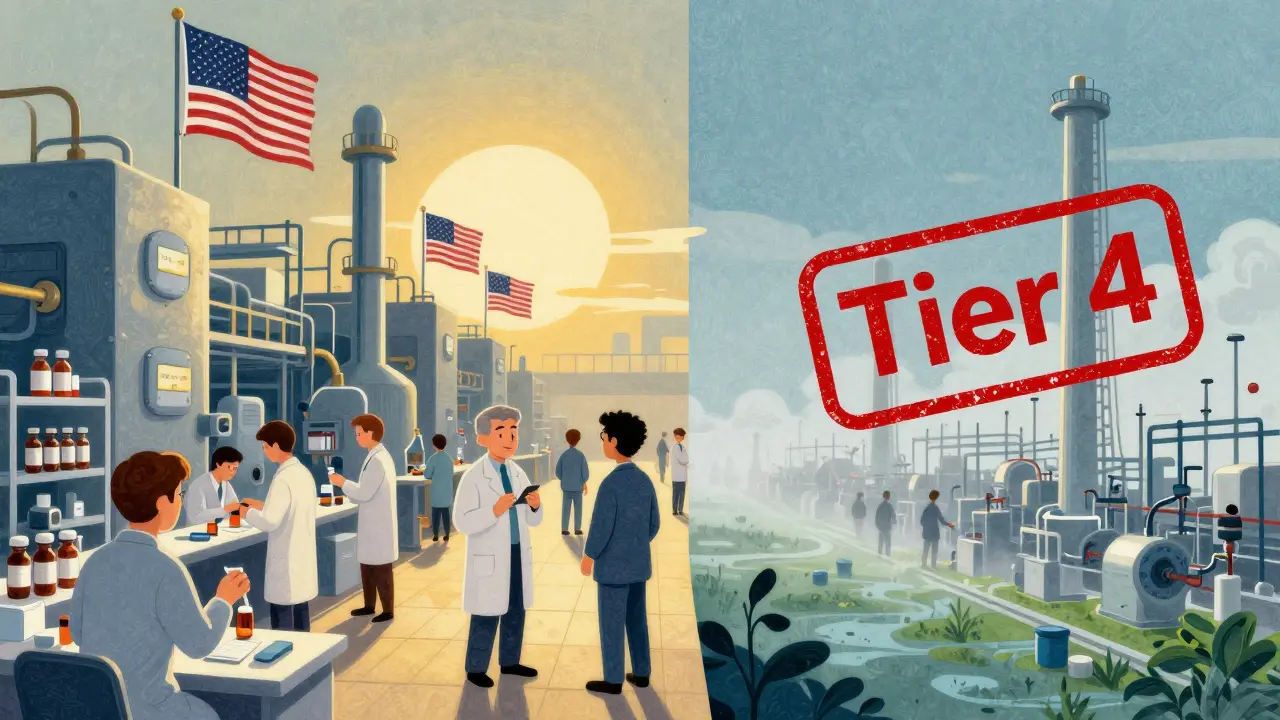
The pilot program doesn’t treat all generic applications the same. It sorts them into four tiers based on how much of the production happens in the U.S.:
- Tier 1: 100% U.S. manufacturing and testing → fastest review (target: 8 months)
- Tier 2: Major U.S. components (75-99%) → 10-month review
- Tier 3: Some U.S. elements (50-74%) → 12-month review
- Tier 4: Mostly foreign → standard 12-15 months
Applications for drugs on the FDA’s Drug Shortage List-147 medications as of September 2025-get top priority. This includes common drugs like Ivermectin, Nimodipine, and Azilsartan/Chlorthalidone, which were among the first generics approved under the new system in 2025.
Here’s what you need to qualify:
- APIs sourced from U.S. facilities or verified equivalent foreign sources
- Bioequivalence testing done at FDA-registered U.S. labs
- Manufacturing sites certified under U.S. Current Good Manufacturing Practices (CGMP)
The FDA now has a live database showing real-time status of domestic manufacturing sites. Facility inspections that used to take 120 days now take 45 days. Initial reviews happen in 30 days instead of 60-90. Complete response letters come in 45 days instead of 120.
Results So Far: Faster Approvals, More Drugs
The numbers speak for themselves. Through mid-2025, the FDA approved 9 first generic drugs under the pilot program. GoodRx data shows first generic approvals are up 18.7% compared to 2024. Meanwhile, novel drug approvals have dipped slightly-meaning the FDA is shifting focus from new drugs to making existing ones more accessible.
Pilot applications are getting approved 28% faster than traditional ones. The first-cycle approval rate jumped from 55% to 88% for manufacturers using U.S. facilities. Deficiency letters-those frustrating requests for more data-dropped by 41%. Companies with fully domestic supply chains now have a 92% approval success rate.
And patients are feeling it. When a first generic hits the market, prices typically drop by 78.3% within six months. In 2024, the U.S. generic drug market hit $117.3 billion. First generics alone made up $21.9 billion of that. That’s billions saved by Medicare, Medicaid, and out-of-pocket patients.
Who’s Winning-and Who’s Struggling
Not everyone benefits equally. Large companies like Teva, Mylan, and Sandoz have the resources to shift production to the U.S. Teva’s regulatory team said the 30-day initial review window alone saved them 8 months on bringing Nimodipine solution to market.
But smaller manufacturers are feeling the squeeze. Setting up a U.S. manufacturing facility costs $120-180 million. Adding domestic verification to each application adds $1.2-1.8 million in upfront costs. A survey of 127 generic makers found 31% delayed product launches because of these expenses. Only 28% of small companies joined the pilot, compared to 63% of mid-sized firms.
There’s also a hidden bottleneck: API sourcing. Even if you build a U.S. factory, finding a reliable U.S. supplier for complex molecules is hard. The FDA’s technical team got 78% of its 1,243 inquiries about API verification. Many manufacturers are stuck waiting for suppliers to meet U.S. standards.
The Hidden Costs and Trade-Offs
Yes, the program is speeding up approvals. But it’s not free. The Congressional Budget Office estimates the program will cost $1.8 billion through 2026. Some experts warn this could raise generic drug prices by 12-18% in the short term.
Dr. Rachel Sherman, former FDA deputy commissioner, called the program a “necessary recalibration,” but warned it could fragment the global supply chain that kept prices low for decades. The European Generic Medicines Association even filed a formal complaint in July 2025, arguing the rules might violate international trade agreements.
Still, the data on patient outcomes is reassuring. A March 2025 study in JAMA Internal Medicine found that generics approved under the pilot performed just as well as older ones-therapeutic outcomes were within 0.97-1.03 of the branded version. No drop in safety. No drop in effectiveness.
What’s Coming Next
The pilot is expanding. Starting January 2026, it will include complex generics like nasal sprays, eye drops, and transdermal patches-drugs that were previously too hard to replicate. The FDA is also rolling out AI tools to help review applications faster. They expect to cut review times another 25%.
By 2028, the FDA projects U.S.-based API manufacturing will rise from 9% to 23%. That’s a huge shift. And by 2030, the program is expected to save $4.2 billion a year by preventing drug shortages and reducing emergency imports.
But the biggest change might be cultural. Generic manufacturers are no longer just chasing the cheapest production. They’re now competing on speed, reliability, and domestic compliance. The race isn’t just to make a generic-it’s to make it the fastest, safest, and most secure version possible.
What This Means for You
If you’re a patient: expect more generic options, faster price drops, and fewer shortages. If you take a drug that’s been hard to find, there’s a good chance a U.S.-made generic is on the way.
If you work in pharmacy or healthcare: start tracking which generics are approved under the pilot. These are the ones with the most stable supply. Ask your distributor if the product is part of the ANDA Prioritization Program.
If you’re a manufacturer: the clock is ticking. The window to qualify for faster review is open now. But if you wait, you’ll be stuck in the slower lane. Start mapping your supply chain. Find your API sources. Get your U.S. lab certifications lined up. The FDA isn’t just changing rules-they’re changing the game.
What is the ANDA Prioritization Pilot Program?
The ANDA Prioritization Pilot Program is an FDA initiative launched in October 2025 that gives faster approval to generic drug applications where active ingredients are manufactured and tested in the United States. It prioritizes drugs on the FDA’s Drug Shortage List and reduces review times by up to 40% for qualifying applications.
Do these changes affect all generic drugs?
No. The pilot initially excludes complex generics like narrow therapeutic index drugs, transdermal patches, and some injectables. Starting in January 2026, it will expand to include nasal sprays, ophthalmic suspensions, and transdermal patches. Standard ANDA applications without U.S. manufacturing continue under the old process.
How much faster are approvals under the pilot?
Pilot applications get an initial review in 30 days (vs. 60-90 days normally) and a complete response in 45 days (vs. 120 days). The full approval timeline drops from 12-15 months to 8-11 months for Tier 1 applicants.
Are U.S.-made generics safer or more effective?
Yes, in terms of supply reliability. Therapeutically, FDA and independent studies show no difference in effectiveness or safety between pilot-approved generics and traditionally approved ones. Bioequivalence standards remain strict. The benefit is consistency of supply, not improved performance.
Will these changes make generic drugs more expensive?
Initially, yes-manufacturing costs in the U.S. are higher. MedPAC estimates a 12-18% price increase in the short term. But as domestic capacity grows, prices are expected to stabilize. The long-term savings from preventing drug shortages and emergency imports are projected at $4.2 billion annually by 2030.
How can I tell if a generic drug is made in the U.S.?
Currently, labels don’t specify manufacturing location. But drugs approved under the ANDA Prioritization Pilot are listed in the FDA’s First Generic Drug Approvals database. Ask your pharmacist or check the FDA’s website for approval details. Over time, manufacturers may start labeling U.S.-made products to highlight supply chain reliability.
Samar Khan
December 31, 2025 AT 01:28Russell Thomas
January 1, 2026 AT 21:53Joe Kwon
January 2, 2026 AT 20:37Nicole K.
January 3, 2026 AT 00:29Fabian Riewe
January 4, 2026 AT 04:34Amy Cannon
January 4, 2026 AT 18:39Himanshu Singh
January 4, 2026 AT 22:29Jasmine Yule
January 6, 2026 AT 09:22Greg Quinn
January 6, 2026 AT 12:12Lisa Dore
January 6, 2026 AT 14:32Sharleen Luciano
January 6, 2026 AT 23:13Jim Rice
January 7, 2026 AT 11:37