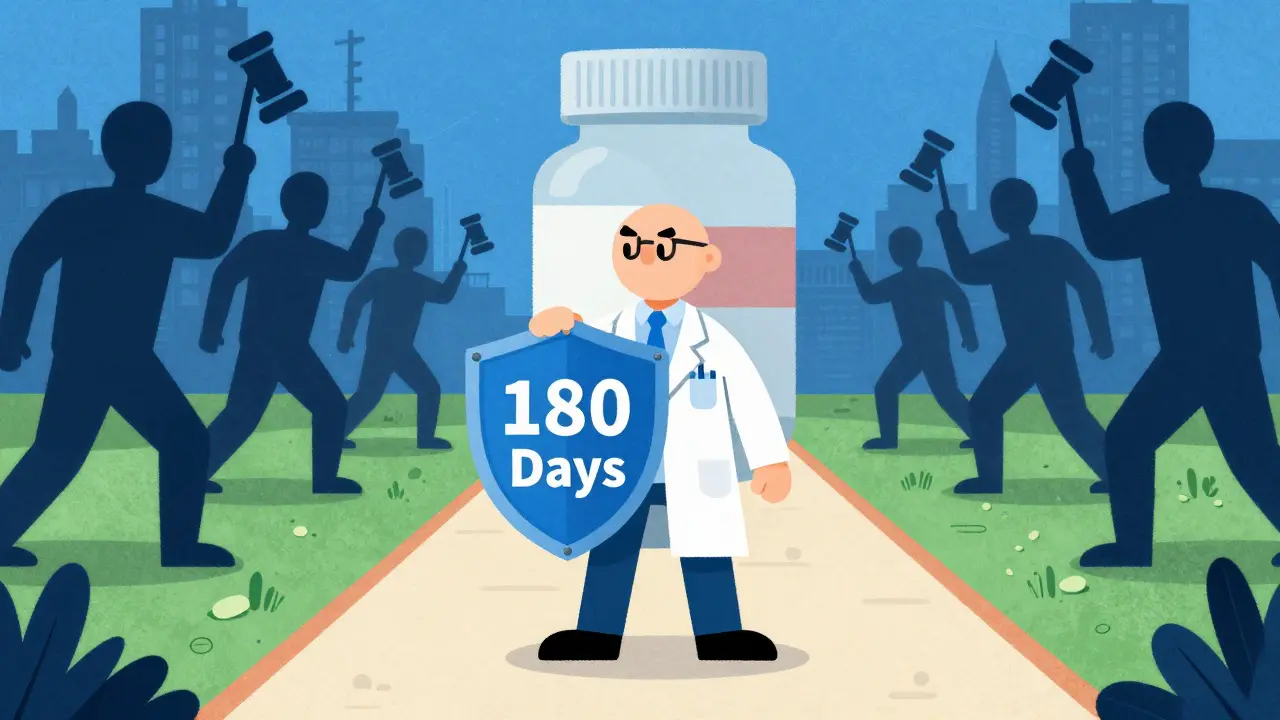
Imagine you have spent years developing a cheaper version of a blockbuster drug. You are ready to launch, but there is one massive hurdle standing in your way: patent litigation. This is where the FDA’s 180-day exclusivity comes into play. It is a regulatory shield designed to protect the first generic applicant who dares to challenge a brand-name drug’s patents. But does it actually work as intended? For many manufacturers, the answer is complicated.
This provision, rooted in the Hatch-Waxman Act of 1984, was created to balance innovation with access. The goal was simple: reward companies that take the risk of challenging patents so patients can get affordable drugs sooner. However, the reality on the ground often looks very different. Today, this mechanism is both a powerful financial incentive and a source of strategic frustration for generic drug makers.
How the 180-Day Exclusivity Works
To understand the benefits, you first need to know how the clock starts ticking. Under Section 505(j)(5)(B)(iv) of the Federal Food, Drug, and Cosmetic Act (FD&C Act), the exclusivity period begins on the earliest of two events:
- The date the first applicant begins commercial marketing of the generic drug product.
- The date of a court decision finding the listed patent invalid, unenforceable, or not infringed.
During these 180 days, the FDA cannot approve subsequent Abbreviated New Drug Applications (ANDAs) for the same drug product. This gives the first mover a temporary monopoly on the generic market. In theory, this window allows the company to recoup its development costs and make a profit before other competitors flood the market.
However, the trigger mechanism has become a point of contention. If a court rules against the brand-name company while appeals are still pending, the clock may start running even if no generic drug is available on shelves yet. This means the exclusivity period can expire without any actual sales taking place, leaving the generic manufacturer with zero revenue despite winning the legal battle.
Financial Incentives for First Movers
Why would a generic company spend millions on litigation? The primary driver is the potential for significant profit during the exclusivity window. According to data from the Rand Corporation, generic drugs launched during the 180-day exclusivity period typically sell at 15-20% of the brand-name price. While this is much lower than the original cost, it is significantly higher than the 9-12% prices seen after multiple generics enter the market.
For small and mid-sized generic manufacturers, this window is critical. The FDA’s Small Business Assistance division reported in October 2024 that 63% of small generic manufacturers cite the 180-day exclusivity as their primary incentive for pursuing Paragraph IV challenges. Without this protection, the risk of litigation might outweigh the potential rewards, leading to fewer patent challenges and delayed generic entry.
The benefit extends beyond just one company. By encouraging early challenges, the system helps break monopolies faster. The Federal Trade Commission found that the presence of 180-day exclusivity accelerates generic entry by an average of 11.3 months compared to drugs without patent challenges. This speed is vital for patients who rely on these medications.
The Risk of Forfeiture
Winning the right to exclusivity is only half the battle. Keeping it requires strict adherence to timelines. The Medicare Modernization Act of 2003 introduced forfeiture provisions that have reshaped the landscape. A company can lose its exclusivity rights if it fails to market the drug within 75 days of receiving a Notice of Commercial Marketing (NOCM) from another first applicant, or if it fails to obtain tentative approval within 30 months of filing the patent challenge.
These rules create high-stakes pressure. Industry data shows that approximately 35% of first applicants forfeit their exclusivity rights due to failure to market within the required timeframe. The average forfeiture occurs 147 days after receiving tentative approval. When exclusivity is forfeited, it becomes available to other qualified applicants, turning a solo race into a crowded field almost overnight.
Consider the case of apixaban generics in 2020. Six manufacturers qualified as first applicants, but only three launched within the forfeiture window. This resulted in shared exclusivity among the launching entities, diluting the profits for each. For companies planning their market entry, understanding these forfeiture triggers is as important as winning the patent lawsuit itself.
Strategic Delays and Systemic Issues
While the intent of the law is noble, the execution has flaws. Critics argue that the current system creates perverse incentives. Some generic manufacturers may deliberately delay commercial launch to extend the effective exclusivity period while the 180-day clock runs during patent litigation appeals. This strategy blocks all generic competition while maintaining the brand-name drug’s market position.
Dr. Aaron S. Kesselheim, Professor of Medicine at Harvard Medical School, testified before the Senate Judiciary Committee in June 2022, stating that the current exclusivity system has been "gamed by both brand and generic manufacturers to delay competition." He estimated that patients pay $13 billion annually in excess costs due to these delays. The Federal Trade Commission identified 147 instances between 2015 and 2020 where the 180-day exclusivity period was strategically manipulated to slow down generic entry.
Furthermore, industry consolidation has concentrated the benefits. The top five generic manufacturers-Teva, Viatris, Sandoz, Amneal, and Hikma-captured 58% of all 180-day exclusivity periods awarded between 2018 and 2023. This concentration limits the competitive advantage for smaller players, making it harder for new entrants to gain a foothold in the market.
Proposed Reforms: The CGT Model
In response to these issues, regulators are looking toward reform. The FDA’s March 2022 legislative proposal suggests modeling the system after the Competitive Generic Therapy (CGT) exclusivity regime established by the FDA Reauthorization Act of 2017. Under the CGT model, the 180-day exclusivity period is triggered only by the first commercial marketing of the therapy by any first approved applicant.
This change ensures the exclusivity period lasts exactly 180 days from commercial launch, rather than potentially running for multiple years under current law. The Congressional Budget Office estimated in January 2025 that implementing the CGT model for all Paragraph IV challenges would accelerate generic competition by an average of 8.2 months per drug, generating $5.3 billion in annual savings.
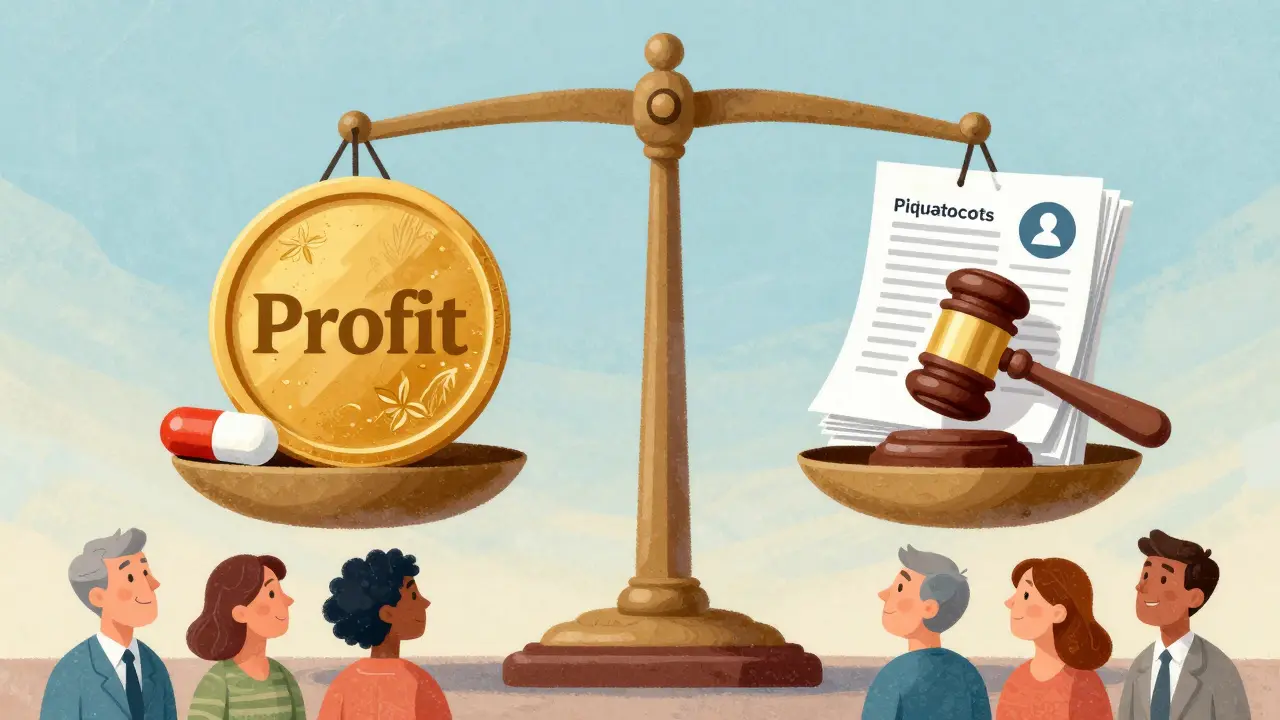
Senator Chuck Grassley introduced the Preserve Access to Affordable Generics and Biosimilars Act (S. 202) in February 2023, which includes provisions to prevent "sham" Paragraph IV certifications designed solely to block competition. These reforms aim to close loopholes and ensure that exclusivity serves its original purpose: getting affordable drugs to patients quickly.
| Feature | Current 180-Day Exclusivity | Proposed CGT Model |
|---|---|---|
| Trigger Event | Commercial marketing OR court decision | First commercial marketing only |
| Duration | Can extend for years if delayed | Exactly 180 days from launch |
| Forfeiture Risk | High (35% forfeiture rate) | Reduced uncertainty |
| Market Impact | Often delayed entry | Faster generic competition |
Strategic Advice for Generic Manufacturers
If you are considering filing a Paragraph IV certification, here are key steps to maximize your chances of success:
- Assess Litigation Risks Early: Understand the strength of the brand-name company’s patents. Engage legal experts who specialize in pharmaceutical IP law.
- Plan for Speed: Have your manufacturing and distribution channels ready before filing. The ability to launch immediately upon approval is crucial to avoiding forfeiture.
- Monitor Competitors: Keep track of other ANDA filings. If multiple companies file on the same day, you will share the exclusivity, which affects your revenue projections.
- Prepare for Appeals: Court decisions can be appealed. Ensure your business plan accounts for the possibility that the exclusivity clock starts before you can sell a single unit.
- Stay Updated on Legislation: Regulatory changes are frequent. Follow updates from the FDA and Congress regarding proposed reforms like the CGT model.
The 180-day exclusivity remains a vital tool for generic drug developers, but it requires careful navigation. By understanding the rules, risks, and potential reforms, companies can better position themselves to succeed in a competitive market.
What is the main benefit of FDA's 180-day exclusivity?
The main benefit is that it grants the first generic applicant a temporary monopoly on the market for a specific drug. During this 180-day period, the FDA cannot approve other generic versions, allowing the first mover to capture higher profits and recoup development costs.
When does the 180-day exclusivity clock start?
Under current law, the clock starts on the earliest of two dates: when the first applicant begins commercial marketing of the drug, or when a court finds the patent invalid or not infringed. This can lead to delays if court decisions occur before the drug is actually sold.
Can a company lose its 180-day exclusivity?
Yes, exclusivity can be forfeited. Common reasons include failing to market the drug within 75 days of another first applicant launching, or failing to receive tentative approval within 30 months of filing the patent challenge. About 35% of first applicants currently forfeit their rights.
How does the proposed CGT model differ from the current system?
The CGT model triggers the 180-day exclusivity only upon the first commercial marketing of the drug. This prevents the clock from starting prematurely due to court decisions, ensuring the exclusivity period lasts exactly 180 days of actual market presence.
Who benefits most from 180-day exclusivity?
Small and mid-sized generic manufacturers benefit most, as it provides a critical financial incentive to take on the risks of patent litigation. However, large companies like Teva and Viatris currently capture the majority of exclusivity awards due to their resources and scale.