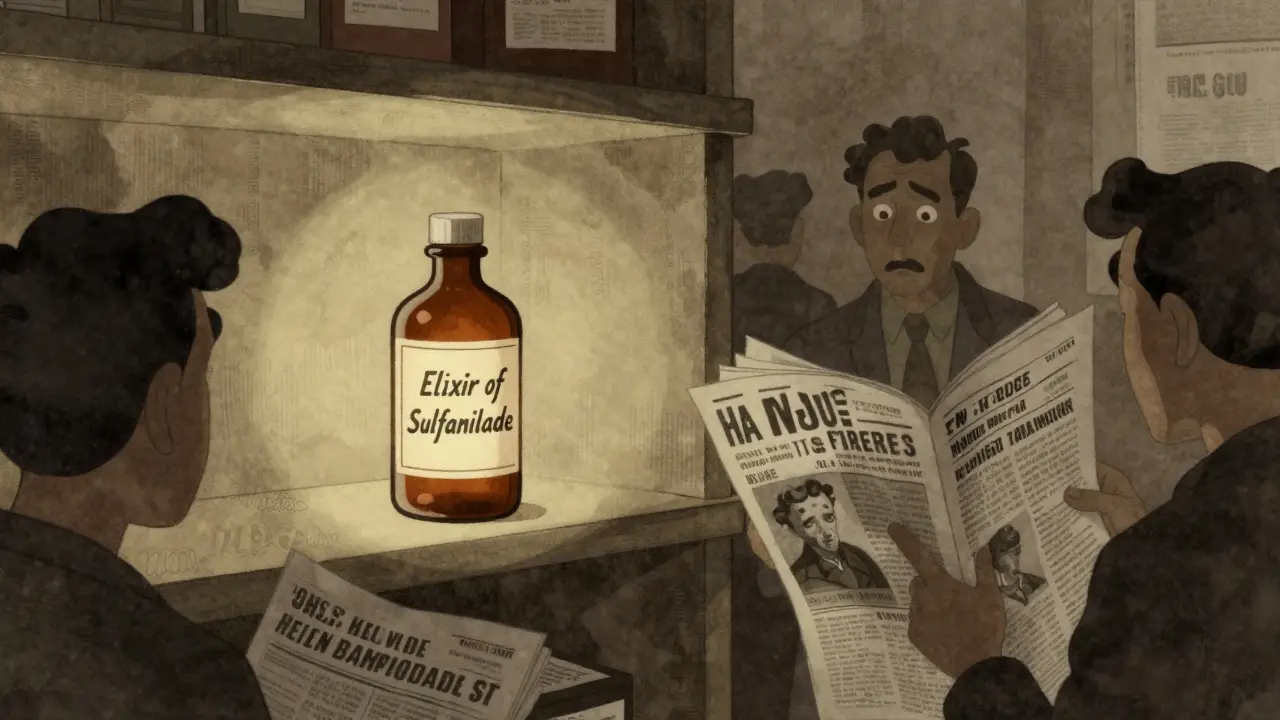
The Federal Food, Drug, and Cosmetic Act didn’t start out as a law for generic drugs. In fact, when it was signed in 1938, the idea of cheap, copycat medicines hitting pharmacy shelves barely existed. Back then, drugmakers could sell anything-no safety data, no proof it worked. All that changed after 100 people died from a poisonous antibiotic elixir. The public outcry forced Congress to act. The FD&C Act gave the FDA real power: no drug could legally hit the market without proving it was safe. But safety alone wasn’t enough. For decades, if you wanted to make a copy of a brand-name drug, you had to run the same expensive clinical trials all over again. That made generics nearly impossible to produce. Until 1984.
How Generic Drugs Got Their Legal Footing
The real turning point came with the Hatch-Waxman Amendments. Named after the two lawmakers who pushed it through-Senator Orrin Hatch and Representative Henry Waxman-this 1984 law didn’t rewrite the FD&C Act. It gave it a new purpose. Section 505(j) of the Act was added to create the Abbreviated New Drug Application, or ANDA. Suddenly, generic manufacturers didn’t need to prove their drug worked from scratch. They just had to show it was the same as the original.
That’s not as simple as it sounds. "Same" means identical active ingredient, same strength, same pill form, same way it’s taken. But the real magic is in bioequivalence. The FDA requires generics to deliver the same amount of medicine into the bloodstream at the same rate as the brand. How? Through blood tests. If the generic’s peak concentration (Cmax) and total exposure (AUC) fall within 80% to 125% of the brand’s, it’s approved. No patient studies needed. No animal trials repeated. Just science-based proof it behaves the same way in the body.
The Balancing Act: Innovation vs. Access
Hatch-Waxman wasn’t just about letting generics in. It was designed to keep innovators motivated. Brand-name companies spend years and billions developing new drugs. Their patents give them a monopoly-usually 20 years. But the FDA approval process eats up years of that time. So Hatch-Waxman gave them back some of it. Patent term restoration lets them extend protection by up to five years, capped at 14 years from when the drug hits the market.
And for generics? The law offered a powerful incentive. The first company to challenge a brand’s patent and win gets 180 days of exclusive market access. No other generic can enter during that time. That’s a huge financial prize. It’s why companies like Teva, Sandoz, and Mylan spend millions on legal battles over patents. In 2023, over 40% of generic approvals were tied to patent challenges. That’s not just competition-it’s a strategic race.
What the Orange Book Really Does
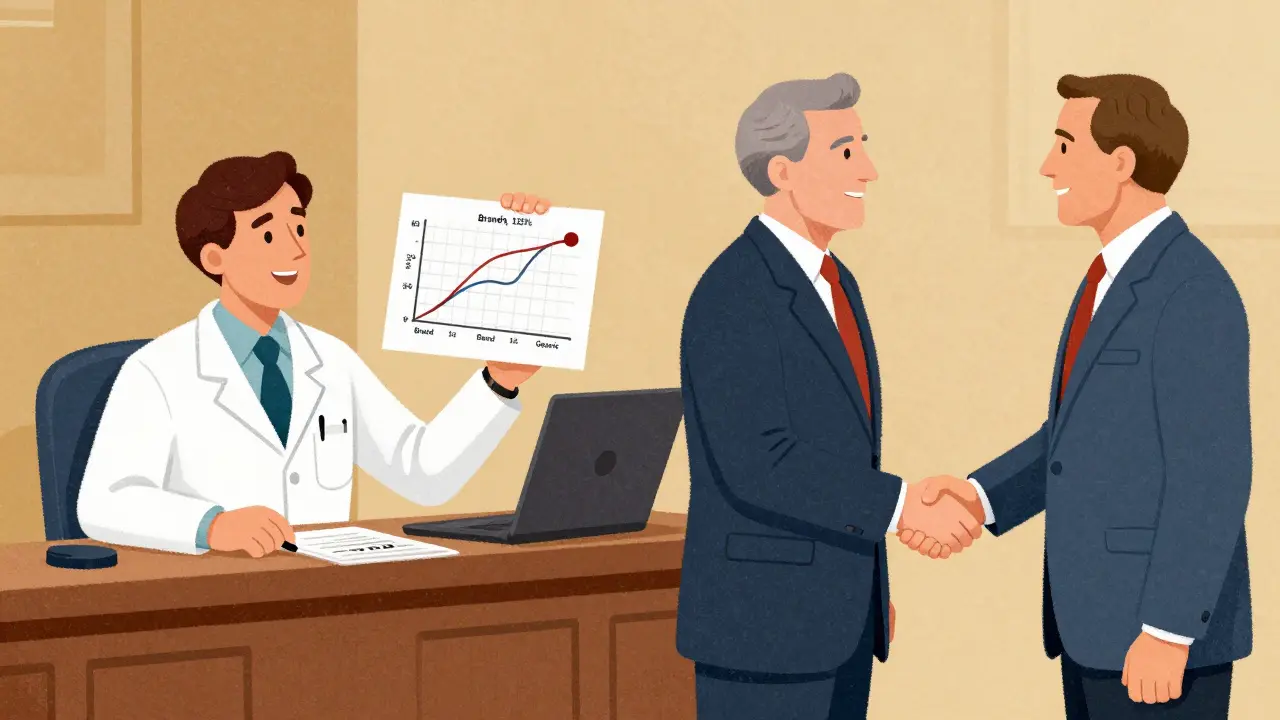
Behind every generic drug is a single document: the FDA’s Approved Drug Products with Therapeutic Equivalence Evaluations. Everyone calls it the Orange Book. It’s not flashy. No color photos. Just lists of brand drugs, their patents, and whether a generic has been approved as equivalent. It’s the map generic companies follow. If a patent isn’t listed, a generic can skip challenging it. If it is listed, the generic must certify one of four things: the patent is invalid, won’t be infringed, will expire soon, or the company will wait until it does.
As of September 2023, the Orange Book listed over 20,000 approved products. That’s not just numbers-it’s access. In 1984, only 19% of prescriptions were filled with generics. Today, it’s 90%. And yet, generics make up only 17% of total drug spending. That’s a $2.2 trillion savings for U.S. consumers over the last decade, according to the Federal Trade Commission. The FD&C Act, through Hatch-Waxman, didn’t just change the law. It changed healthcare economics.
Where the System Still Stumbles
But it’s not perfect. Brand companies have learned how to game the system. One trick? "Evergreening." That’s when a company files new patents on minor changes-like a different coating or a new pill shape-to delay generics. Sometimes, they file dozens of patents on one drug. A single asthma inhaler might have 15 patents listed. That’s a patent thicket. Generic makers get stuck in legal limbo for years.
Another tactic? Citizen petitions. A brand company files a complaint with the FDA, claiming a generic isn’t safe or equivalent. The FDA has to respond. That delays approval by months-even years. In 2020, Harvard’s Dr. Aaron Kesselheim found that 60% of citizen petitions filed between 2010 and 2018 came from brand companies trying to block generics. The FDA approved 95% of ANDAs within 10 months in 2022, but those delays still happen.
And then there’s product hopping. A brand pulls its old drug off the market and replaces it with a slightly different version-say, a pill that dissolves under the tongue instead of swallowing. The generic can’t copy it until the new version is approved. The CREATES Act of 2019 tried to fix that by forcing brand companies to sell samples to generic makers. But enforcement is patchy.
Compliance and Consequences
Manufacturing a generic isn’t just about science. It’s about rules. Every pill, capsule, or injection must be made under current Good Manufacturing Practices (cGMP). The FDA inspects facilities regularly. In 2022, 47 warning letters went out to generic drug makers. The top two issues? Poor quality control and data integrity. One company falsified test results. Another didn’t clean equipment between batches. Both are violations of the FD&C Act. Penalties? Up to $1.1 million per violation. Criminal charges are possible if fraud is proven.
That’s why big generic companies invest millions in compliance. Small ones? They struggle. Some shut down. Others get bought by bigger players. The market is consolidating. In 2022, the global generic drug market hit $259 billion. The U.S. took 38% of that. But the number of independent generic manufacturers has dropped 30% since 2010.
The Future of Generics
The FDA is trying to catch up. Complex drugs-like inhalers, injectables, and eye drops-are harder to copy. Bioequivalence studies aren’t as clear-cut. That’s why the agency released 147 guidance documents in 2023 just for generics. Draft guidance for nasal sprays and eye suspensions is coming in 2024. The Generic Drug User Fee Amendments (GDUFA) have sped up reviews. Priority applications are approved in under 10 months 98% of the time.
The 21st Century Cures Act and CREATES Act were steps forward. But the real challenge is complexity. As more drugs become biologics or targeted therapies, the old ANDA model might not fit. The FDA’s 2023-2027 plan calls for modernizing the pathway for these products. That could mean new types of applications, new testing methods, new rules.
One thing’s certain: without the FD&C Act, none of this exists. No safety standards. No generic pathway. No savings. No access. The law that started because of a deadly elixir now keeps millions of Americans alive with affordable medicine. It’s not glamorous. It’s not flashy. But it works.
What is the difference between a brand-name drug and a generic drug?
The active ingredient is identical. So is the strength, dosage form, and how it’s taken. The only differences are the inactive ingredients-like fillers or dyes-and the brand name on the package. Generics cost less because they don’t repeat expensive clinical trials. They prove they work the same way through bioequivalence studies.
How does the FDA approve generic drugs?
Through the Abbreviated New Drug Application (ANDA) under Section 505(j) of the FD&C Act. Generic manufacturers must show their product is pharmaceutically equivalent and bioequivalent to the brand-name drug. This means matching the active ingredient, strength, form, and route of administration. Bioequivalence is proven by blood tests showing the generic delivers the same amount of medicine at the same rate-within 80-125% of the brand’s levels.
Why do some generics take longer to reach the market?
Patent challenges and legal delays are the main reasons. Brand companies often list multiple patents in the FDA’s Orange Book. Generic makers must certify against each one, which can trigger lawsuits. The first generic to challenge a patent gets 180 days of exclusivity, so companies wait to file until they’re ready to fight. Also, citizen petitions and product hopping tactics can delay approvals by months or even years.
Are generic drugs as safe as brand-name drugs?
Yes. The FDA requires generics to meet the same strict quality, safety, and effectiveness standards as brand-name drugs. They’re made in the same type of facilities, under the same rules. In fact, many brand companies make their own generics. The FDA inspects both brand and generic factories equally. Over 90% of prescriptions in the U.S. are filled with generics-and they’ve been used safely for decades.
What role does the Orange Book play in generic drug approval?
The Orange Book lists all FDA-approved drugs with their therapeutic equivalence ratings and associated patents. Generic manufacturers use it to identify which patents they need to challenge before launching their product. If a patent isn’t listed, they don’t need to address it. If it is, they must certify their intent-either to wait until expiration, argue the patent is invalid, or claim they won’t infringe it. It’s the legal roadmap for bringing generics to market.
How has the Hatch-Waxman Act impacted drug prices?
It dramatically lowered drug costs. Before Hatch-Waxman, generics made up only 19% of prescriptions and 3% of spending. Today, generics fill 90% of prescriptions but cost only 17% of total drug spending. Over the past decade, the system has saved consumers an estimated $2.2 trillion. Without it, many people wouldn’t be able to afford their medications.
Akshaya Gandra _ Student - EastCaryMS
January 4, 2026 AT 01:49so like... i just took my generic blood pressure pill and it worked? no joke, same as the brand but cost me $4? like how is that even legal??
en Max
January 5, 2026 AT 17:17The Federal Food, Drug, and Cosmetic Act, as amended by the Hatch-Waxman Act of 1984, established a rigorous, science-based framework for therapeutic equivalence determinations-specifically, the Abbreviated New Drug Application (ANDA) pathway-which mandates bioequivalence via pharmacokinetic parameters (Cmax, AUC) within the 80–125% confidence interval, thereby ensuring clinical interchangeability without redundant clinical trials.
Enrique González
January 5, 2026 AT 19:02Man, I used to think generics were sketchy-until my mom got her diabetes meds switched. She’s been stable for 5 years now. Same pills. Same results. Just way less stress on the wallet. This law? It’s quiet magic.
Aaron Mercado
January 6, 2026 AT 02:38THEY’RE ALL THE SAME?!?! WAIT-BUT WHAT ABOUT THE FILLERS?!?! THE DYES?!?! THE MOLDING AGENTS?!?! THEY’RE PUTTING TOXINS IN MY BODY UNDER THE NAME OF "SAFETY"-AND THE FDA IS IN ON IT!!!
saurabh singh
January 7, 2026 AT 09:18bro in india we call these "copy pills"-but honestly? they save lives. My uncle got his heart meds for $2 instead of $200. That’s not a loophole-that’s justice. And yeah, the orange book? We use it like a bible here. No drama. Just results.
Dee Humprey
January 7, 2026 AT 18:31Just wanted to say-I work in a pharmacy. People still ask if generics are "real." I show them the FDA inspection reports. Same factory, same inspector. Sometimes the brand’s own plant makes the generic. 🤷♀️
John Wilmerding
January 7, 2026 AT 20:18It's worth noting that the 180-day exclusivity window granted to the first generic applicant under Section 505(j)(5)(B)(iv) creates a powerful economic incentive for patent litigation-but it also introduces market distortion. The strategic timing of Paragraph IV certifications often leads to delayed market entry, despite the statutory intent of expediting access.
Charlotte N
January 9, 2026 AT 17:01I read somewhere that some companies file 15 patents on one inhaler just to block generics... it’s wild. Like, how is that not abuse? I just want my asthma meds to be cheap. Why does it have to be so complicated?
Jacob Milano
January 11, 2026 AT 10:44Imagine if the whole system was built on trust instead of lawsuits. The FD&C Act was supposed to protect us-not turn drug pricing into a chess match where the board is made of patents and the pieces are people’s prescriptions. This isn’t just policy-it’s people’s lives. And we’re letting corporations play god with it.
That’s not innovation. That’s extortion dressed up in lab coats.
Catherine HARDY
January 13, 2026 AT 08:37Wait… so the FDA approves generics based on blood tests… but what if they’re lying? What if the labs are bribed? What if the whole system is just a front for Big Pharma to control prices from both sides? I’ve seen documentaries… they’re not just hiding stuff… they’re rewriting science.