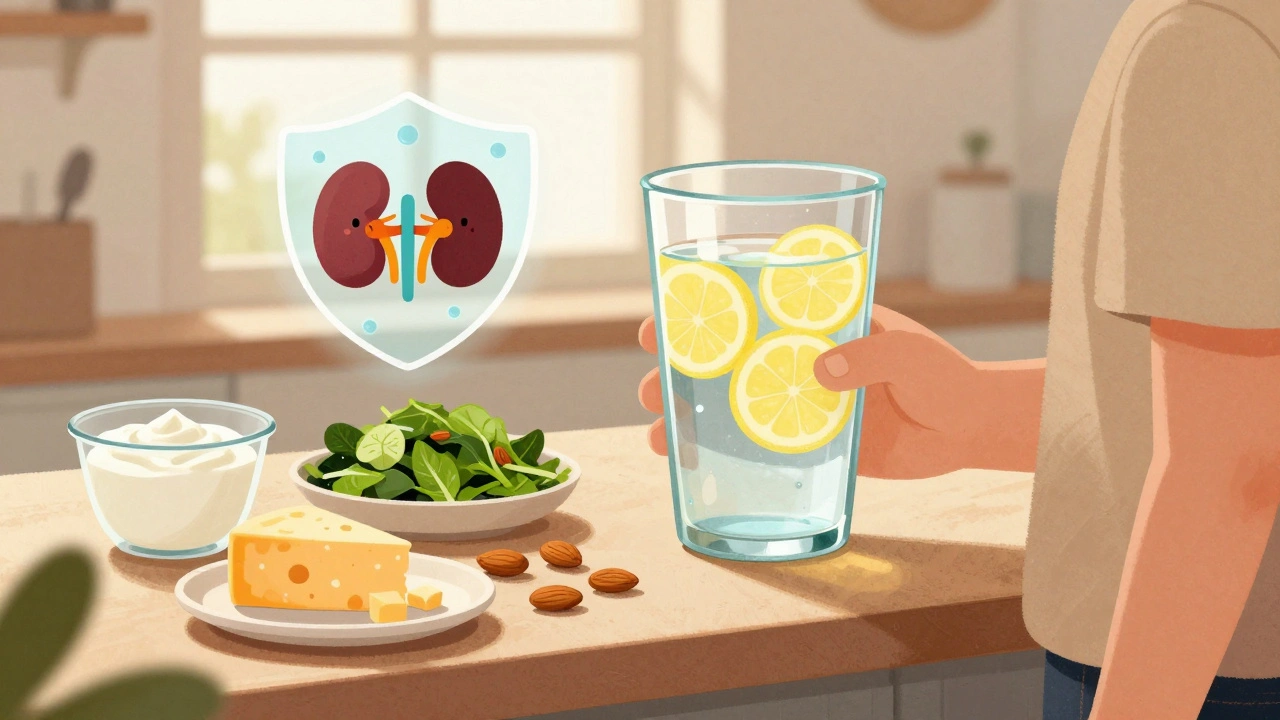
More than 1 in 10 Americans will develop a kidney stone in their lifetime. If you’ve had one before, your odds of getting another are 40% to 50% within five years. The most common type? Calcium oxalate stones. They make up 70% to 80% of all cases. But here’s the good news: you can drastically lower your risk - not with magic pills, but with simple, science-backed habits around water, food, and timing.
Drink Enough Water - But Not Just Any Water
The number one thing you can do to stop kidney stones from forming? Drink enough fluid to make at least 2.5 liters of urine a day. That’s about 10 to 12 cups. Most people only make 1 to 1.5 liters - way too little. When your urine is too concentrated, calcium and oxalate crystals stick together and grow into stones.Water is your best bet. But it’s not the only option. Coffee and beer, surprisingly, have been shown to lower risk. A 2014 Harvard study found people who drank coffee had a 10% lower chance of stones. Beer? A 2013 study linked moderate intake to a 30% drop in risk. Why? Both increase urine output. But don’t go overboard. Too much alcohol can dehydrate you. Stick to one or two drinks a day.
Avoid grapefruit juice. It increases oxalate levels in your urine. Same with soda - especially colas. The phosphoric acid in them makes urine more acidic, which helps stones form. The NHS and Mayo Clinic both warn against daily fizzy drinks. If you crave something flavored, try lemon water. Half a cup of lemon juice concentrate diluted in water each day boosts citrate - a natural stone blocker - by up to 120 mg per day.
Don’t Cut Out Calcium - Eat More of It
You’ve probably heard to avoid calcium if you have kidney stones. That’s wrong. In fact, not eating enough calcium makes stones worse.Here’s why: calcium binds to oxalate in your gut. If you don’t have enough calcium at mealtime, oxalate gets absorbed into your blood and ends up in your urine - where it teams up with calcium to form stones. So eating calcium-rich foods with oxalate-rich foods is the key.
Shoot for 1,000 to 1,200 mg of calcium daily from food, not supplements. That’s about 2 to 3 servings of dairy: one cup of milk, one ounce of cheese, three-quarters cup of yogurt, or a cup of kefir. If you’re lactose intolerant, try fortified plant milks or leafy greens like kale and bok choy (they’re lower in oxalate than spinach).
And here’s the catch: timing matters. Eat your calcium and oxalate foods together. A 2019 study found that if you eat cheese after a spinach salad, instead of with it, oxalate absorption jumps by 40% to 50%. Have your yogurt with your almonds. Have your milk with your oatmeal. Don’t snack on spinach at lunch and then take a calcium pill at dinner. It won’t help.
Watch Your Salt - It’s Sneaky
Salt doesn’t cause stones directly. But it makes your kidneys dump more calcium into your urine. Every extra 1,000 mg of sodium you eat? That’s 25 to 30 mg more calcium in your urine. That’s a big deal.The American Heart Association says keep sodium under 2,300 mg a day. That’s about one teaspoon. But most people eat way more. Processed foods - bread, canned soup, deli meats, frozen meals - are the real culprits. Read labels. Choose low-sodium versions. Cook at home more often. Skip the salt shaker. Your urine will thank you.

Know Your High-Oxalate Foods - But Don’t Fear Them
Oxalate is a compound in plants. It’s not evil. But too much in your urine = stone fuel. Foods like spinach (755 mg per half cup cooked), rhubarb (541 mg), almonds (122 mg per ounce), and navy beans (89 mg) are high. But cutting them out completely doesn’t work for most people.The National Institute of Diabetes and Digestive and Kidney Diseases says strict oxalate diets only help a small group - people with rare genetic conditions. For the rest of us, balance is better. Eat five or more servings of fruits and vegetables daily. Just pair high-oxalate ones with calcium-rich foods. Have your almonds with yogurt. Have your spinach in a smoothie with kefir. Don’t eat them alone.
Also, avoid vitamin C supplements over 500 mg a day. Your body turns excess vitamin C into oxalate. A 2020 meta-analysis found no link between dietary vitamin C (from food) and stones - only supplements. So eat oranges, not pills.
When Medication Might Help
If you’ve had multiple stones or your urine tests show high calcium, low citrate, or high uric acid, your doctor might suggest medication.Thiazide diuretics - like hydrochlorothiazide - reduce calcium in urine. They’ve cut stone recurrence by 30% to 50% in trials. But they need to be paired with low sodium. Otherwise, they don’t work as well.
Potassium citrate is used if your citrate is low (under 320 mg per day). Citrate stops crystals from forming. It’s usually taken as a pill twice a day. Avoid sodium citrate - it adds salt to your system, which increases calcium.
Allopurinol helps if you have too much uric acid in your urine (over 550 mg per day). It’s common in people who also get gout. Studies show it cuts stone recurrence by 35%.
Supplements like Oxalobacter formigenes - a gut bacteria that eats oxalate - are being studied. Early results show a 30% drop in urine oxalate after 12 weeks. It’s not widely available yet, but it’s a promising direction.
Track Your Progress
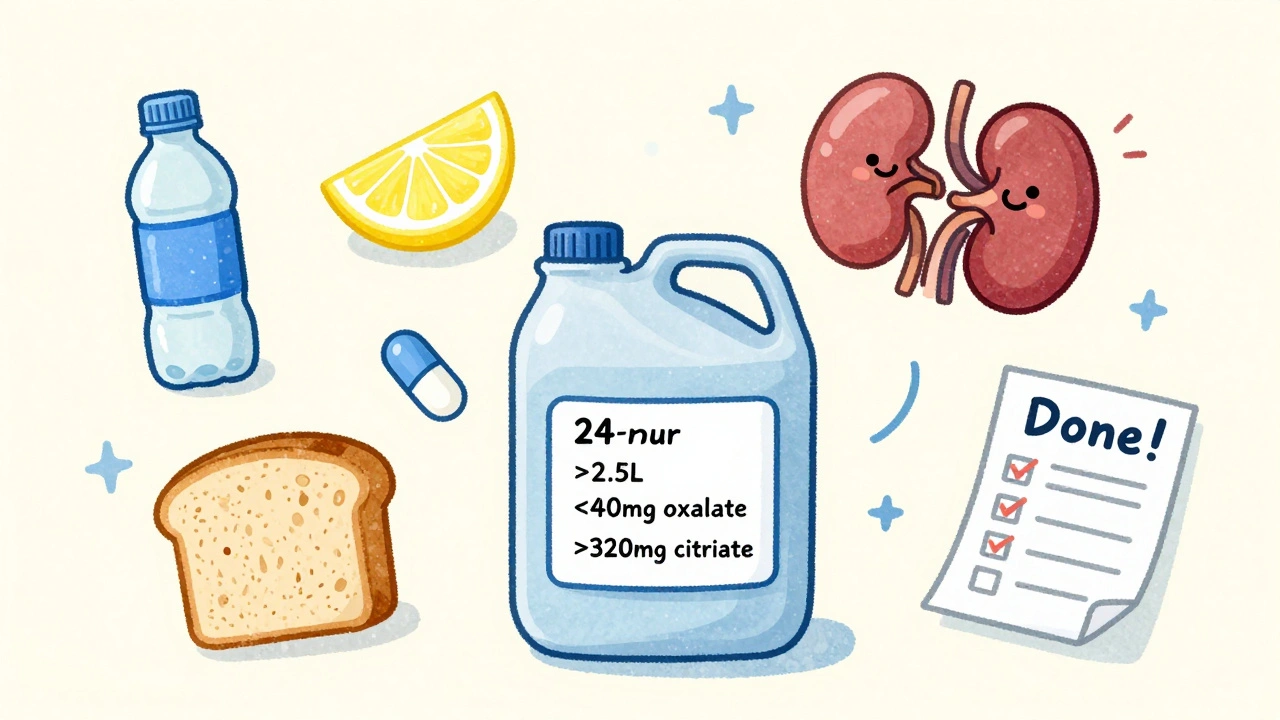
The best way to know if your plan is working? A 24-hour urine test. It tells you exactly what’s in your urine: calcium, oxalate, citrate, sodium, and volume. Your doctor should order this after your first stone.Targets to aim for:
- Urine volume: >2.5 liters per day
- Calcium: <250 mg per day
- Oxalate: <40 mg per day
- Citrate: >320 mg per day
- Sodium: <200 mEq per day
Most people don’t stick with these changes. One study found only 35% kept up their fluid intake after a year. But those who used a hydration app - logging every glass of water - improved adherence to 68%. Download one. Set reminders. Make it part of your routine.
What Doesn’t Work - And Why
Some advice you hear is misleading. Here’s what to ignore:- “Avoid all dairy.” Calcium from food protects you. Avoiding it increases risk.
- “Take calcium supplements to prevent stones.” They can raise your risk by 20%. Only use calcium citrate if you’re deficient - and take it with meals.
- “Drink cranberry juice.” It’s good for UTIs, but it’s high in oxalate. Skip it.
- “Cut protein to zero.” Moderate protein (0.8-1.0 g per kg of body weight) is fine. You don’t need to go vegan.
Stone prevention isn’t about perfection. It’s about consistency. Drink water. Eat calcium with your veggies. Cut the salt. Avoid grapefruit juice and soda. Track your habits. Do those five things, and you’re already ahead of 80% of people who’ve had stones.
Can I still eat spinach if I have calcium oxalate stones?
Yes - but not alone. Spinach is high in oxalate, but eating it with calcium-rich foods like yogurt, cheese, or milk helps bind the oxalate in your gut so it doesn’t reach your kidneys. Have spinach in a smoothie with kefir, or add it to an omelet with cheese. Avoid eating large amounts of spinach on its own or with foods low in calcium.
How much water should I drink each day to prevent kidney stones?
Aim for enough fluid to produce at least 2.5 liters of urine daily. That usually means drinking 2.5 to 3.0 liters of fluid total - including water, coffee, tea, and broth. Don’t rely on thirst. Check your urine color: it should be pale yellow or clear. Dark yellow means you need more fluid.
Is it safe to take calcium supplements for bone health if I’ve had kidney stones?
Only if necessary, and only calcium citrate - never calcium carbonate. Calcium supplements taken without food can increase stone risk by 20%. If you need a supplement, take calcium citrate with meals, and make sure you’re also getting enough citrate in your urine. Talk to your doctor first. Food sources of calcium are safer and more effective.
Does lemon water really help prevent kidney stones?
Yes. Lemon juice is rich in citrate, which blocks calcium from forming crystals. A 2017 study showed that drinking half a cup of lemon juice concentrate diluted in water daily increased urine citrate by 120 mg - enough to significantly lower stone risk. It’s a simple, natural way to boost protection without medication.
Why is sodium so bad for kidney stones?
Sodium makes your kidneys release more calcium into your urine. Every extra 1,000 mg of sodium you eat adds 25-30 mg of calcium to your urine - the exact ingredient that teams up with oxalate to form stones. Processed foods are the main source. Cutting salt is one of the most effective, yet overlooked, ways to prevent recurrence.
If you’ve had a stone before, you’re not stuck with them forever. The tools to stop them are simple, proven, and free - or nearly so. Start with water. Add lemon. Eat dairy with your greens. Skip the salt. Track your progress. You don’t need a perfect diet. You just need to be consistent. Your kidneys will thank you.
Doug Hawk
December 3, 2025 AT 06:49So water is the real MVP here. I used to chug soda all day and wonder why I kept getting stones. Switched to lemon water and my last stone was 18 months ago. No magic, just dumb simple math. Urine volume >2.5L = no more ER trips.
John Morrow
December 4, 2025 AT 15:19While the general advice is sound, the underlying assumption that calcium oxalate stones are uniformly managed by hydration and dietary modulation ignores the heterogeneity of stone formers. The 2019 study referenced on calcium-oxalate co-ingestion is methodologically sound but lacks stratification by enteric hyperoxaluria, which is present in up to 22% of recurrent stone formers with normal BMI. Without addressing gut permeability or bile acid malabsorption, dietary calcium recommendations may be ineffective or even counterproductive in subpopulations.
Kristen Yates
December 4, 2025 AT 21:52I never knew eating cheese with spinach made a difference. I always ate them separately because I thought calcium was bad. This actually makes sense now. I’ll try it tomorrow with my salad.
Saurabh Tiwari
December 6, 2025 AT 04:20Bro this is gold 🙌 I’m from India and we drink chai all day but never thought about how it helps. Also lemon water with salt and honey = life hack. No more kidney pain after this 🤞
Michael Campbell
December 7, 2025 AT 18:20They don’t want you to know this but the FDA is pushing this to sell more meds. Water is free. Lemons are cheap. Why are they pushing pills?
Victoria Graci
December 9, 2025 AT 10:39It’s wild how our bodies are these little alchemical labs. Calcium binds oxalate like a peace treaty between two warring factions in your gut. And citrate? That’s the diplomat whispering to the crystals, ‘not today, not ever.’ We’re not just eating food-we’re negotiating with our own biochemistry.
Saravanan Sathyanandha
December 9, 2025 AT 20:05In India, we have a traditional drink called nimbu pani with rock salt and black pepper. It’s essentially natural citrate therapy. I’ve never had a stone, and I eat spinach daily. Pairing it with yogurt or buttermilk is common here. Maybe ancient wisdom had it right all along.
alaa ismail
December 10, 2025 AT 02:13My dad had stones for 20 years. He started drinking 3L of water a day and eating yogurt with his almonds. No more stones. Simple stuff works if you actually do it.
ruiqing Jane
December 10, 2025 AT 18:26For anyone reading this: if you’ve had a stone, get the 24-hour urine test. It’s not optional. It’s the difference between guessing and knowing. Your doctor should have ordered it after your first episode. If they didn’t, ask again. You deserve to understand what’s happening in your body.
Fern Marder
December 11, 2025 AT 20:14Don’t fall for the lemon water hype. It’s just a trend. I tried it. Still got stones. The real fix? Avoid all plants. Just eat meat and cheese. That’s what my nephrologist said. 🍗🧀
Carolyn Woodard
December 12, 2025 AT 12:21Thiazide diuretics reduce calcium excretion by enhancing distal tubular reabsorption, but their efficacy is contingent on sodium restriction. The 2017 meta-analysis by Curhan et al. demonstrated a 42% reduction in recurrence only when sodium intake was below 2g/day. Without concurrent sodium management, the pharmacologic effect is attenuated, suggesting that dietary compliance is the primary variable in therapeutic success.
Allan maniero
December 13, 2025 AT 16:08I’ve been on a low-oxalate diet for years and still had stones. Then I found out my urine citrate was low. Took potassium citrate for six months. Zero stones since. The real lesson? Don’t assume you know what’s in your urine. Get tested. The numbers don’t lie. And yes, lemon water helps-but it’s not a substitute for real data.