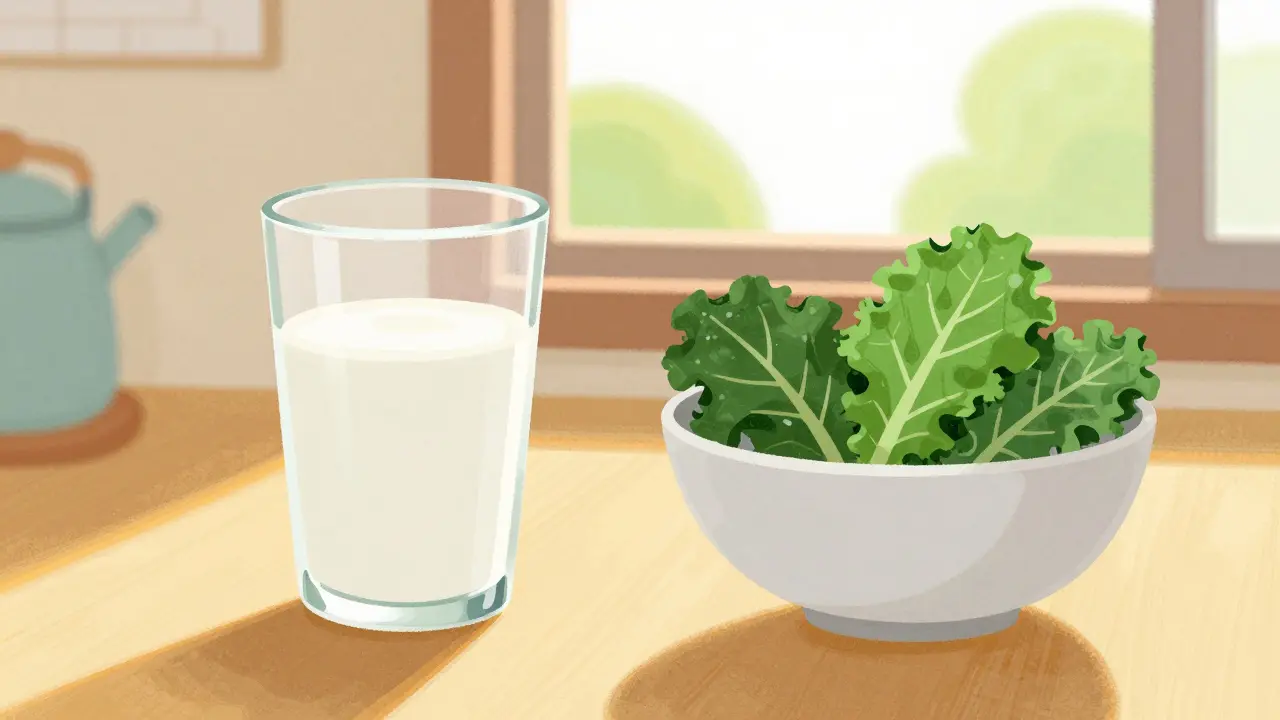
Imagine the sudden shock of a hip fracture. For many older adults, it's not just a broken bone-it's a loss of independence. With about 2 million osteoporosis-related fractures happening every year in the US alone, the stakes are incredibly high. The good news? You don't have to just "hope for the best." Between nutritional tweaks and modern medicine, there are proven ways to keep your skeleton strong. But here's the catch: taking a random vitamin pill isn't always enough, and doing too much can actually be risky. Let's look at what actually works to stop a break before it happens.
The Truth About Vitamin D and Calcium
Most people think taking a Vitamin D is a magic shield against fractures. Unfortunately, the data tells a different story. A massive review of over 34,000 people found that taking Vitamin D by itself-even at 800 IU a day-doesn't actually lower your risk of breaking a bone. It's a common mistake to think of it as a standalone cure.
The real magic happens when you pair it with Calcium. When you take 800-1,000 IU of Vitamin D3 alongside 1,000-1,200 mg of calcium, the results change. This combination has been shown to reduce hip fractures by about 16%. However, the dose matters. If you're taking 400 IU or less of Vitamin D and 1,000 mg or less of calcium, evidence suggests you're likely seeing zero benefit for fracture prevention.
But be careful-more isn't always better. Pumping yourself full of calcium supplements can lead to a 17% increase in kidney stones. There's also a warning from the FDA about potential cardiovascular risks if you exceed 1,000 mg of supplemental calcium daily. The goal is balance, not overload.
When Supplements Aren't Enough: Bone-Building Meds
While vitamins are a great foundation, they are like a primer for a wall; bone-building medications are the actual structure. If you have Osteoporosis (bones that are porous and brittle) or Osteopenia (bone density that's lower than normal but not yet osteoporosis), you might need pharmacological help.
The most common tools in the kit are Bisphosphonates. These drugs, like alendronate, essentially slow down the breakdown of bone. They can slash the risk of vertebral fractures by 40-70%. However, they aren't a walk in the park for everyone. A huge number of patients report stomach issues, and some even stop treatment within a year because of gastrointestinal side effects.
For those who need something stronger, there are anabolic agents. These don't just stop bone loss; they actually build new bone. Teriparatide and the newer Romosozumab are heavy hitters in this category. In fact, some experts now suggest a "sequential therapy" approach: start with a bone-builder like teriparatide to get your density up, then switch to an antiresorptive like a bisphosphonate to lock those gains in. This strategy has shown a 73% greater reduction in new vertebral fractures compared to using bisphosphonates alone.
| Intervention | Primary Goal | Typical Efficacy | Main Trade-off/Risk |
|---|---|---|---|
| Vitamin D alone | Nutrient Repletion | Low/None for fractures | Ineffective as standalone |
| Calcium + Vit D | Bone Mineralization | ~16% reduction in hip fx | Kidney stones, Heart risks |
| Bisphosphonates | Stop Bone Loss | 40-70% reduction (vertebral) | GI distress, Rare jaw issues |
| Anabolic Agents | Build New Bone | High (e.g., 86% for some meds) | Higher cost, injection-based |
The Strategy: How to Actually Implement This
You can't just guess your way through bone health. The first step is knowing where you stand. A FRAX score is the gold standard here-it's a tool that calculates your 10-year probability of a major fracture. If your risk is over 20% (in the US), it's usually time to talk about prescription meds, not just vitamins.
If you're going the supplement route, don't fly blind. Get a 25-hydroxyvitamin D blood test. If you're severely deficient (below 20 ng/mL), you might need a "loading dose"-like 50,000 IU once a week for a few months-before moving to a daily maintenance dose of 800-2,000 IU. Aiming for a serum level between 30-50 ng/mL is typically where the benefit for fracture prevention sits.
If your doctor suggests a medication like zoledronic acid, make sure you have a dental check-up first. While incredibly rare (about 0.001% to 0.01% of cases), some bone-building drugs can cause osteonecrosis of the jaw. It's a small risk, but one that's easily managed with a quick trip to the dentist.
Common Pitfalls and Practical Tips
One of the biggest hurdles is consistency. Many people start a regimen with enthusiasm, but compliance often drops after three months. If you're struggling with the "pill fatigue" or the stomach upset associated with oral bisphosphonates, ask your doctor about intravenous options. A single infusion of zoledronic acid once a year is often much easier to manage than a daily or weekly pill that makes you feel sick.
Also, watch out for the "miracle cure" mentality. No single supplement will fix a lifestyle of inactivity. Bone is living tissue; it needs the stress of weight-bearing exercise to stay strong. Supplements provide the raw materials, but movement tells the body to actually use those materials to build bone.
Can I just eat more yogurt and greens instead of taking calcium pills?
Absolutely. In fact, getting calcium from food is generally preferred because it doesn't carry the same risk of kidney stones or cardiovascular issues that high-dose supplements do. If you can hit 1,000-1,200 mg through diet, you only need to worry about your Vitamin D levels.
Is Vitamin D3 better than Vitamin D2?
Generally, yes. Vitamin D3 (cholecalciferol) is more effective at raising and maintaining the levels of vitamin D in your blood than Vitamin D2 (ergocalciferol). Most doctors recommend D3 for long-term bone maintenance.
How long do I have to take bone-building medications?
It depends on the drug. Some bisphosphonates are taken for several years before a "drug holiday" is considered. Anabolic agents like Teriparatide are usually limited to a 2-year window because of how they affect bone turnover. Your doctor will use bone density scans (DEXA) to decide when to switch or stop.
Why is my doctor insisting on a blood test before giving me Vitamin D?
Because too much of a good thing can be bad. Hypercalcemia (too much calcium in the blood) can occur in 2-5% of people who supplement aggressively. Testing ensures you're actually deficient and helps your doctor pick a dose that is safe and effective for your specific body chemistry.
Do I need to stop taking calcium if I start a bone-building med?
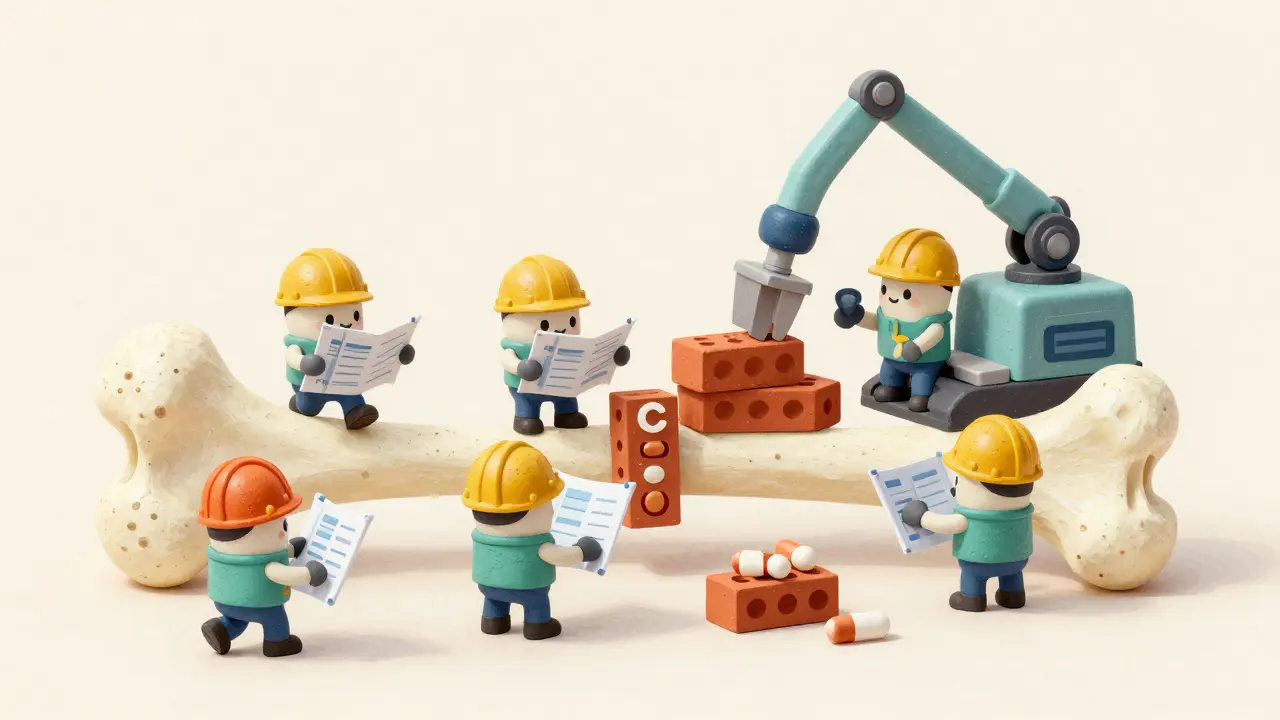
Usually, no. Medications like alendronate or denosumab work better when the body has enough calcium and Vitamin D to actually build the bone. Think of the meds as the construction crew and the nutrients as the bricks; you need both for the job to get done.
Next Steps for Your Bone Health
If you're feeling overwhelmed, start with these three concrete actions. First, schedule a DEXA scan if you're postmenopausal or an older adult-this is the only way to know your actual bone density. Second, ask for a 25-hydroxyvitamin D test during your next blood draw to see if you're actually deficient. Third, if you're already on a medication and hate the side effects, don't just quit. Talk to your provider about switching from an oral pill to an injectable or infusion; it could be the difference between staying on track and risking a fracture.
RAJESH MARAVI
April 22, 2026 AT 09:31Typical medical advice... just push more pills!! they never tell u about the side effects of the meds themselvs until you're already sick. totaly fake science to make pharma rich
Amy Fredericks
April 23, 2026 AT 08:21It is so heartening to see a clear breakdown like this. Many of our elderly friends just assume they are fine until it's too late, so having a guide on the FRAX score is really helpful for anyone wanting to be proactive about their health!
Ajinkya Joshi
April 23, 2026 AT 10:15Oh wow, a table! How incredibly revolutionary. I'm sure the 16% reduction is just a magical number pulled from a hat to make you feel better while you're spending a fortune on D3 supplements that do nothing on their own. Pure genius.
Divyanshu Giri
April 24, 2026 AT 02:42Get moving people!! weight bearing is the secret sauce!! dont just swallow pills go lift some heavy stuff and feel the burn in your bones!! lets get strong together
Sarah Watters
April 25, 2026 AT 04:06The FDA warnings are just the tip of the iceberg. They want us dependent on these 'bone builders' because the natural alternatives are being suppressed by the same people who push the infusions. It is all a system of control designed to keep us frail and compliant.
Dan Wizard
April 26, 2026 AT 23:09I have always wondered if the intersection of dietary calcium and pharmacological intervention creates a synergistic effect that outweighs the potential risk of renal calculi, especially when considering that different ethnic populations might metabolize these nutrients at varying rates depending on their baseline genetic predisposition and environmental factors, which makes the individualized approach mentioned with the blood tests seem absolutely vital for a safe outcome.
Caroline Duvoe
April 27, 2026 AT 05:50everyone knows about dexa scans 🙄 just basic medical knowledge lol
Dave Edwards
April 27, 2026 AT 20:03The sheer audacity to suggest we should just "trust the process" with these anabolic agents! Who knows what they're actually putting in those injections? It's a moral failing that we've replaced natural aging with a pharmacy-led existence. Truly tragic! :-(
Mike Arrant
April 29, 2026 AT 00:48Listen, if you're not doing high-impact training, these pills are just a band-aid. You're basically admitting you've given up on your body. Get in the gym or don't complain when you're brittle.
Ally Warren
April 29, 2026 AT 04:40There is a strange poetry in the idea that we must stress our bones to save them. It is a metaphor for life itself; without a certain amount of pressure and resistance, we simply lose our structure and crumble under the weight of time.
Chidi Prosper
April 30, 2026 AT 04:25Spot on. The sequential therapy approach is the most logical way to handle severe bone loss. We need to be aggressive with the building phase before we shift to maintenance. No point in locking in a low density.
Olayinka Ibukunoluwa Mercy
May 1, 2026 AT 17:20This is such a wonderful guide for our elders!!! 🌟 Please make sure to talk to your doctors kindly and keep a record of all your tests!! Your health is a journey, not a race!! ❤️🙏✨
Mayur Pankhi Saikia
May 2, 2026 AT 04:39The simplisticly of this layout is almost insulting...!! Clearly, the author lacks a deep understanding of the molecular pathways involved in osteoblast activation, though I suppose it serves as a rudimentary guide for the uneducated masses who cannot grasp complex biochemistry...!!
Anastasios Kyriacou
May 2, 2026 AT 23:01too long didnt read but calcium is probably just a scam lol
Odicha ude Somtochukwu
May 2, 2026 AT 23:07It is truly commendable that the importance of dental health is highlighted here...!! Many individuals in our community may not realize the link between jaw health and these medications...!! We must ensure that our elders are fully informed before beginning such treatments...!!