
Why Medication Errors Happen During Transitions
Every year, hundreds of thousands of patients in the U.S. are harmed because their medication list gets lost or mixed up when they move from one care setting to another. This isn’t rare. It’s routine. Around 60% of all medication errors occur during transitions - whether it’s from hospital to home, from ER to skilled nursing, or from one doctor to another. The problem isn’t always a pharmacist’s mistake or a doctor’s typo. It’s a breakdown in communication. A patient gets discharged with a new prescription, but the community pharmacy never gets the update. Or the nursing staff doesn’t know about the blood thinner the patient was taking at home. By the time someone notices, it’s too late.
The stakes are high. A missed dose of warfarin can lead to a stroke. A double dose of insulin can send someone into a coma. A forgotten anticoagulant can cause internal bleeding. And these aren’t theoretical risks. In 2023, a study in the Journal of the American Pharmacists Association found that pharmacist-led medication reconciliation reduced post-discharge errors by 57%. That’s not a small win. That’s life-saving.
What Medication Reconciliation Actually Means
Medication reconciliation isn’t just copying a list from one form to another. It’s a formal, four-step process:
- Get the most accurate list possible of what the patient is actually taking - at home, in the hospital, anywhere.
- Create a list of what the patient should be taking after the transition - new prescriptions, changes, stops.
- Compare the two lists side by side.
- Make clinical decisions: Which meds stay? Which go? Which need adjusting?
This isn’t optional. The Joint Commission has required it since 2005. Medicare and Medicaid enforce it through payment penalties. If your hospital doesn’t do it right, you could lose up to 1.5% of your reimbursement.
But here’s the catch: many places treat it like paperwork. They pull a list from the EHR, print it, and hand it to the patient. That’s not reconciliation. That’s a checklist. Real reconciliation means talking to the patient. Asking, “What pills do you take every day? Do you skip any? Have you stopped anything lately?” It means calling the community pharmacy. It means checking with family members who help manage meds.
How Technology Helps - and Hurts
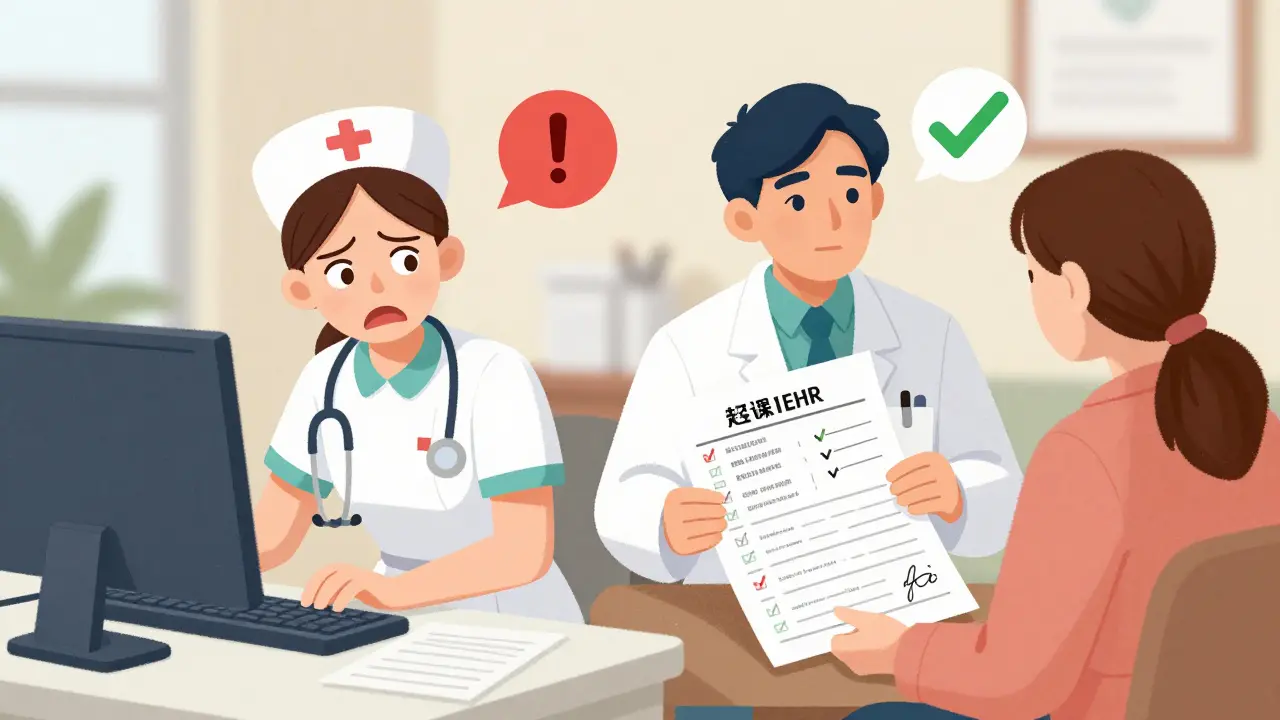
Electronic health records (EHRs) were supposed to fix this. They didn’t. Not completely.
Computerized Physician Order Entry (CPOE), barcode scanning, and clinical decision support tools have cut medication errors by nearly half in hospitals, according to a 2022 Cochrane review. That’s huge. But when new EHR systems go live, errors often spike. The MARQUIS study found that during the first six months after implementation, medication discrepancies increased by 18%. Why? Because staff are learning a new system. They’re rushing. They’re using workarounds.
One resident at Massachusetts General Hospital told the American College of Physicians forum that her EHR’s reconciliation module adds 12 to 15 minutes per patient. So she skips steps. She clicks through. She assumes the system got it right. That’s exactly what the system was designed to prevent.
And interoperability? Still broken. Only 37% of U.S. hospitals can electronically share medication data with community pharmacies. That means pharmacists are still calling offices, leaving voicemails, waiting days for answers. One pharmacist on Reddit said: “I spent three hours yesterday trying to verify a patient’s home meds. Six calls. No one returned my messages.”
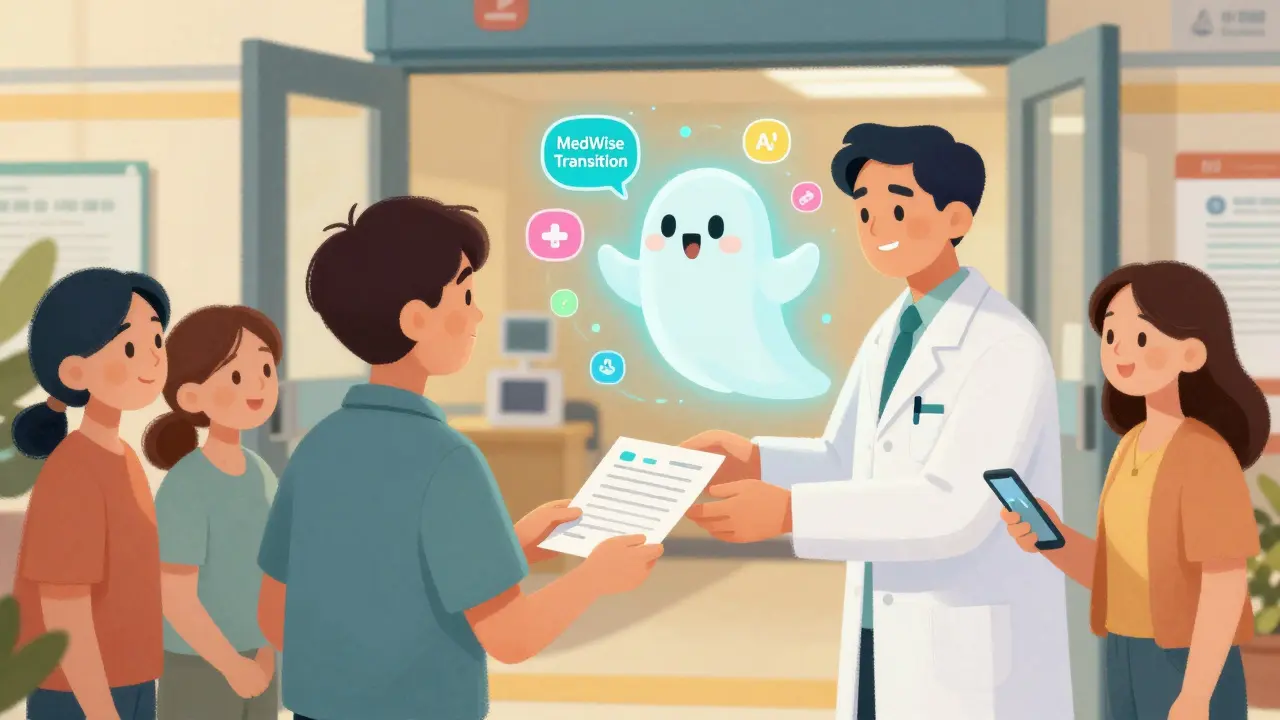
But there’s progress. In August 2024, the FDA cleared MedWise Transition - an AI tool that analyzes medication lists, flags interactions, and suggests corrections. In a 12-hospital pilot, it cut discrepancies by 41%. It doesn’t replace people - it makes them faster and more accurate.
The Role of Pharmacists - Not Just Technicians
The most effective programs don’t rely on nurses or doctors alone. They put pharmacists at the center of transitions.
When a hospital hires dedicated transition pharmacists - people whose only job is to review meds at discharge - they see 53% fewer adverse drug events. Why? Because pharmacists are trained to spot hidden risks: a new beta-blocker clashing with an old antidepressant. A statin that’s too strong after kidney surgery. A painkiller that shouldn’t be taken with blood thinners.
And they’re not just checking lists. They’re counseling patients. One pharmacist shared: “I caught a duplicate anticoagulant order during discharge. The patient was going home on both Eliquis and warfarin. If we hadn’t caught it, he could’ve bled out in his sleep.” That’s not admin work. That’s clinical expertise.
Yet only 28% of facilities consistently involve patients in the reconciliation process. That’s a massive gap. Patients know their own routines better than anyone. They know they stopped the blood pressure pill because it made them dizzy. They know they take their insulin after breakfast, not before. If you don’t ask them, you’re flying blind.
Why Patients Don’t Speak Up
Even when you ask, patients often don’t answer - or they answer wrong.
A 2024 Kaiser Family Foundation survey found that 72% of patients don’t understand why medication lists matter during transitions. They think it’s just paperwork. They don’t realize that a mistake here could send them back to the hospital. They’re overwhelmed. They’re tired. They’re worried about costs. They’re not thinking about drug interactions.
But here’s the hopeful part: 85% of patients who actually participated in a detailed reconciliation conversation said they felt more confident about their meds afterward. That’s the key. Don’t hand them a paper. Sit down. Show them the list. Ask: “Does this look right to you? Did you take all of these yesterday?” Use pictures if you have to. Say it like you’re explaining to a friend, not a chart.
What Works in Real Life
Organizations that get this right don’t just follow guidelines - they redesign workflows.
The AHRQ’s MATCH toolkit isn’t just a document. It’s a playbook. It breaks reconciliation into 11 phases - from pre-admission calls to post-discharge follow-ups. The most successful hospitals use it fully. They assign clear roles: who gets the home med list? Who calls the pharmacy? Who educates the patient? Who follows up in 72 hours?
They also give staff time. The ideal reconciliation takes 15 to 20 minutes per patient. In practice, most get 8 to 10. That’s not enough. You can’t catch a hidden interaction in five minutes. So top performers build it into their schedule. They block time. They hire extra staff. They pay pharmacists to do what they’re trained for.
And they measure results. Not just compliance - actual outcomes. How many readmissions? How many ER visits? How many preventable adverse events? One hospital reduced 30-day readmissions by 38% after launching a pharmacist-led transition program. That’s not luck. That’s process.
Common Mistakes and How to Avoid Them
Here’s what goes wrong - and how to fix it:
- Mistake: Assuming the EHR has the right list. Solution: Always verify with the patient and pharmacy - even if the system says it’s correct.
- Mistake: Letting nurses or residents do reconciliation without training. Solution: Train everyone. But assign the job to those with medication expertise - usually pharmacists.
- Mistake: Not following up after discharge. Solution: Call patients within 72 hours. Ask: “Did you fill your new prescriptions? Are you having side effects?”
- Mistake: Ignoring high-risk meds. Solution: Focus extra attention on anticoagulants, insulin, opioids, and sedatives. These cause 80% of serious transition errors.
- Mistake: Thinking tech alone will fix it. Solution: Tech helps - but people save lives.
What’s Next in Medication Safety
The WHO’s Medication Without Harm initiative just launched Phase 2 in October 2024. It’s laser-focused on transitions. By 2027, it wants to cut harm in high-risk transitions by 30%. The U.S. is responding. The 2025 National Patient Safety Goals, released in December 2024, will require verification of high-risk meds against at least two sources - not just one.
And the market is moving. The global medication safety tech market hit $3.27 billion in 2023 and is growing at 14.3% a year. AI tools, better EHR integrations, and automated pharmacy alerts are coming fast. But none of it matters if staff aren’t trained, patients aren’t engaged, and roles aren’t clear.
The truth is simple: preventing medication errors during transitions isn’t about buying new software. It’s about building habits. Asking better questions. Listening more. Protecting patients like they’re your own family.
Frequently Asked Questions
What is the most common cause of medication errors during discharge?
The most common cause is communication breakdown between providers. A patient’s home medication list isn’t shared with the discharge team, or the new prescriptions aren’t sent to the pharmacy. Studies show 78% of transition errors stem from missing or unclear information between care settings.
Who should be responsible for medication reconciliation at discharge?
Pharmacists are the most effective team members for this task. They’re trained in drug interactions, dosing, and patient counseling. Facilities with dedicated transition pharmacists see 53% fewer adverse drug events. Nurses and physicians can help, but without specialized training, they’re more likely to miss subtle risks.
How long should medication reconciliation take per patient?
The ideal time is 15 to 20 minutes per patient to thoroughly review all medications, confirm with the patient, verify with the pharmacy, and document changes. In practice, many facilities only allocate 8 to 10 minutes, which leads to errors. Prioritizing this step saves money in the long run - a single preventable readmission costs over $10,000.
Do electronic health records reduce medication errors?
Yes - but only when used correctly. EHRs can reduce errors by 32% overall, but during initial implementation, they can increase discrepancies by 18% due to workflow disruptions. The key is combining technology with trained staff and clear processes. Tools like barcode scanning and clinical decision support are powerful, but they’re not magic.
How can patients help prevent medication errors?
Patients can bring a complete, up-to-date list of all medications - including over-the-counter drugs, supplements, and creams - to every appointment. They should ask: “Is this new medicine replacing something I was already taking?” and “What side effects should I watch for?” Those who participate in reconciliation conversations report 85% higher confidence in managing their meds after discharge.
What are high-risk medications that need extra attention during transitions?
Anticoagulants (like warfarin and Eliquis), insulin, opioids, benzodiazepines, and renal-toxic drugs (like NSAIDs and certain antibiotics) are the most dangerous when mismanaged. These account for 80% of serious transition-related adverse events. Always verify dosing, indication, and contraindications for these drugs during every handoff.
Ian Ring
January 3, 2026 AT 04:20Pro tip: Always call the pharmacy. No exceptions.
Tiffany Channell
January 4, 2026 AT 15:59Lori Jackson
January 5, 2026 AT 12:29Michael Burgess
January 5, 2026 AT 15:05It’s not magic. It’s just… doing the damn thing. 🙏
Kerry Howarth
January 6, 2026 AT 08:13Joy F
January 7, 2026 AT 23:20Reconciliation isn’t paperwork. It’s a sacred act of witnessing someone’s life. And we’ve forgotten how to do that.
Palesa Makuru
January 9, 2026 AT 20:08Brittany Wallace
January 10, 2026 AT 16:46When my grandma almost died from a drug interaction after discharge, no one asked her what she was taking. They just printed a list.
That’s not care. That’s negligence dressed up as procedure.
Shruti Badhwar
January 12, 2026 AT 02:27Haley Parizo
January 12, 2026 AT 02:40Hank Pannell
January 13, 2026 AT 12:34Liam Tanner
January 15, 2026 AT 02:14Listen. Just listen.
Wren Hamley
January 17, 2026 AT 01:51That’s not healthcare. That’s gambling.
Shanahan Crowell
January 18, 2026 AT 23:56Start paying pharmacists like the clinical experts they are. Give them time. Trust them. And for god’s sake-ask the patient.
Sarah Little
January 19, 2026 AT 08:54