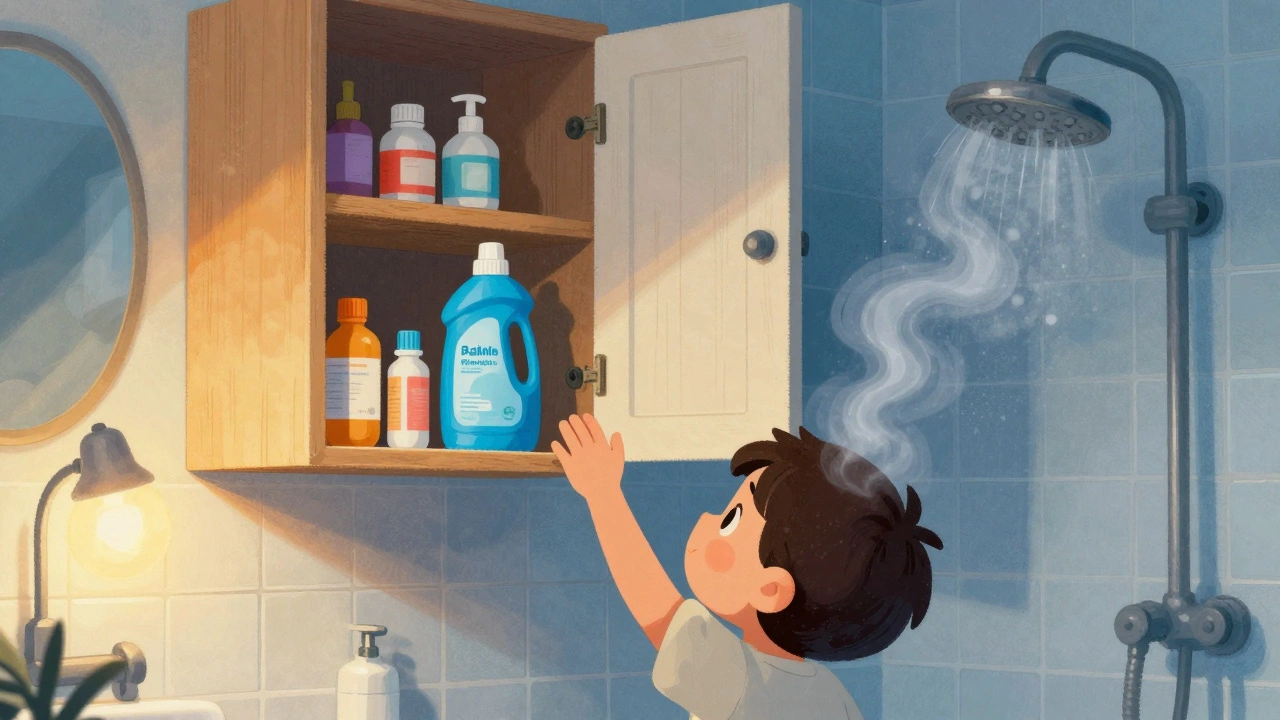
Storing your medicines next to cleaning supplies isn’t just messy-it’s dangerous. Every year, tens of thousands of children end up in emergency rooms because they found pills in a cabinet that also held bleach or drain cleaner. And it’s not just kids. Adults accidentally mix up bottles, take the wrong thing, or ruin their meds by exposing them to fumes from chemicals they didn’t realize were too close. The truth is, medication storage and household chemicals don’t belong together-and keeping them apart isn’t optional. It’s a basic safety rule that saves lives.
Why Mixing Medicines and Chemicals Is a Bad Idea
Medicines aren’t just pills in a bottle. They’re sensitive. Heat, moisture, and chemical fumes can break them down. A 2022 study from New York University found that medications stored within two feet of household cleaners like ammonia or vinegar degraded up to 37% faster. That means your painkiller or blood pressure pill might not work when you need it most.
And then there’s the risk of accidental ingestion. The CDC says 60,000 children are treated each year for poisoning from medicines they found at home. In 70% of those cases, the meds were stored in the bathroom-right next to toilet bowl cleaner, shampoo, or bleach. Kids don’t know the difference between a bottle labeled "Lisinopril" and one labeled "Drano." They see a colorful container, open it, and swallow. It’s not curiosity-it’s a design flaw in how we store things.
Even worse, some chemicals can react with medicines if they leak or spill. Alkaline medications like antacids shouldn’t be near acidic cleaners like vinegar or drain openers. Flammable products like rubbing alcohol or aerosol sprays can ignite if stored near heat sources-and some medicines need refrigeration. Putting them in the same fridge as bleach? That’s a recipe for contamination or explosion.
Where to Store Medications (And Where NOT To)
Medicines need a cool, dry, dark spot. The ideal temperature range is between 58°F and 86°F. That means your bathroom cabinet? Out. The steam from showers and the heat from pipes make it one of the worst places in the house. Your kitchen counter? Also out. That’s where sprays, cleaners, and spills live.
Instead, pick a high shelf in a bedroom closet, a hall cabinet, or even a locked drawer in your dresser. The CDC recommends storing all medicines at least 48 inches off the ground to keep them out of children’s reach. But height alone isn’t enough. You need a lock. A simple key lock or digital lockbox like the MedLock Pro 3000 cuts accidental access by 92%, according to Seattle Children’s Hospital.
And never store medicines in the refrigerator door. Temperature swings there can hit 10°F in a single day. Pharmaceutical manufacturers say even a 2°F change can reduce potency. If you need to refrigerate something-like insulin or liquid antibiotics-put it in the center of the fridge, away from food, in a sealed, labeled container. The FDA and Seattle Children’s both say: no food, no chemicals, no sharing space.
Where to Store Household Chemicals
Household chemicals need different rules. Cleaning products, paints, pesticides, and solvents release fumes. Some are corrosive. Others are flammable. They can’t go in the same place as your pills.
According to USC Environmental Health and Safety, corrosive chemicals like drain cleaner or battery acid must be stored below eye level-no higher than 54 inches-and inside secondary containment trays to catch leaks. That’s the opposite of medicine storage, which needs to be high up. So right away, you see the problem: you can’t stack them.
Flammable items-like rubbing alcohol, aerosols, or gasoline-must never go in a locked cabinet unless it’s specially ventilated. Most home cabinets aren’t. So store those in a well-ventilated garage, shed, or basement, away from heat sources and out of reach of kids and pets. Keep them in their original containers. Never pour bleach into a water bottle. People have died from that mistake.
And here’s something most people don’t know: acids and bases need distance from each other. Vinegar and bleach? Don’t store them side by side. Even if they’re sealed, fumes can mix and create toxic chlorine gas. The USC Chemical Segregation Chart says keep them at least 5 feet apart. That’s not just smart-it’s necessary.
The 6-Foot Rule: Minimum Distance Between Medicines and Chemicals
Experts agree: the safest minimum distance between your medicine storage and chemical storage is six feet. The EPA’s 2021 guidelines say 83% of poisoning cases happen when these items are stored within three feet of each other. That’s less than two steps.
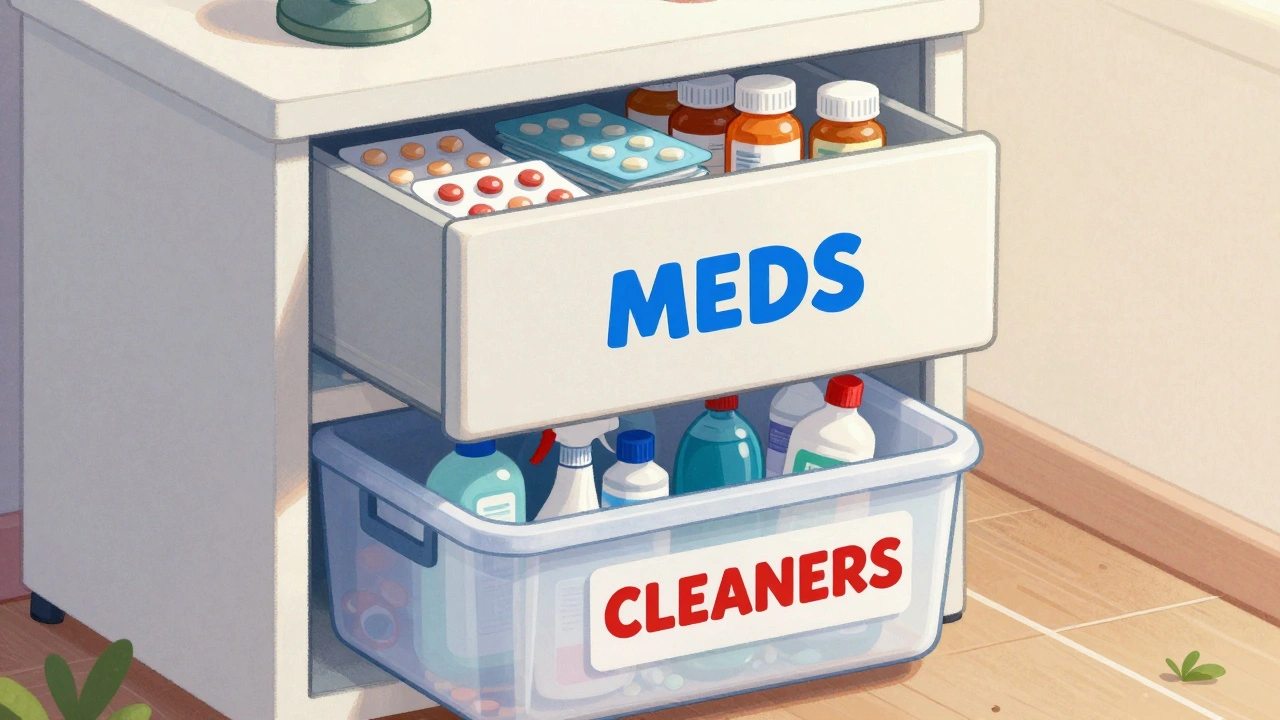
Think of your home like a grid. Put medicines in one zone-say, the top drawer of your bedroom dresser. Put chemicals in another zone-maybe a locked bin under the kitchen sink or a shelf in the laundry room. That’s six feet apart. It’s not just about space. It’s about separating environments. One is for health. One is for cleaning. They serve different purposes. Don’t let them share a space.
And if you live in a small apartment? Still possible. Use a lockable under-bed box for medicines. Store chemicals in a ventilated cabinet in the hallway or even a high closet shelf. The key isn’t size-it’s separation.
Color-Coding and Clear Labels Save Lives
Even with good storage, confusion happens. You grab a bottle in the dark. You think it’s your thyroid pill. It’s actually your hand sanitizer. Or worse-it’s the oven cleaner.
The InfantRisk Center did a study in 2023 where families used color-coded bins: blue for medicines, red for cleaners, green for laundry. Within six months, confusion-related incidents dropped by 62%. Simple. Effective.
Always keep medicines in their original bottles. The label has the name, dosage, expiration date, and warnings. If you transfer pills to a pill organizer, keep the original bottle nearby. Never use unlabeled containers. A 2023 CDC survey found that households using original packaging reduced chemical-medicine mix-ups by 67%.
Label your chemical storage too. Use big, clear stickers: "HAZARDOUS - KEEP OUT OF REACH," "FLAMMABLE," or "CORROSIVE." If someone else in the house-like a grandparent or teen-needs to find something, they shouldn’t have to guess.
Refrigerator Confusion: Medicines vs. Food vs. Chemicals
The fridge is a magnet for bad storage decisions. People put insulin there-good. But they also put hydrogen peroxide there because they think it needs to be cool. Bad. Peroxide degrades above 77°F, but it’s not meant for food storage. And the FDA says: never store medicines next to food.
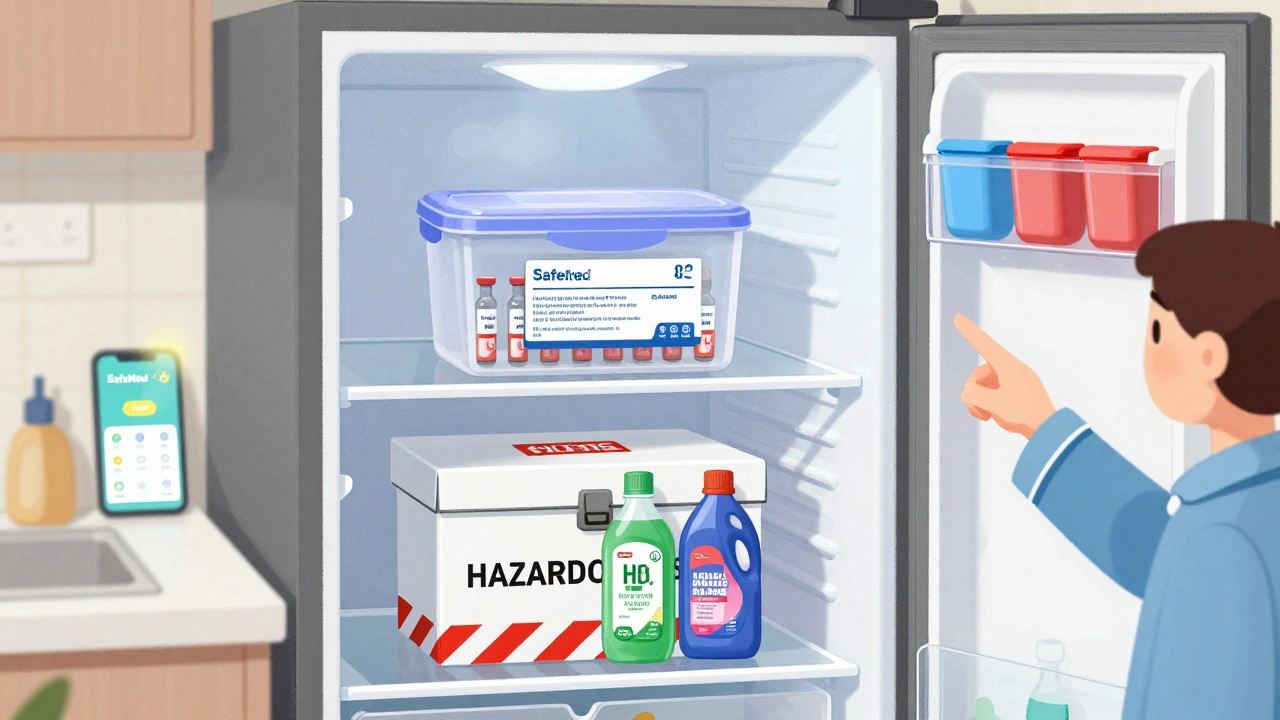
Seattle Children’s Hospital recommends a locked, labeled box inside the fridge for liquid meds. No food, no cleaners, no drinks. Just meds. And make sure it’s in the center, not the door. Door shelves bounce between 35°F and 50°F. That’s too much variation.
And don’t store bleach or disinfectant sprays in the fridge-even if they’re "natural" or "organic." They’re still chemicals. One accidental spill, one mislabeled bottle, and someone could get poisoned. It’s happened.
Smart Storage: Tech That Helps You Stay Safe
There’s new tech making this easier. The SafeMed Home System is a smart storage box that monitors temperature and humidity. If it gets too hot or too damp, it sends an alert to your phone. In a 2023 study, households using it saw a 53% drop in medication degradation and a 61% drop in chemical reaction risks.
Even more advanced: RFID-tagged containers being tested by NIST. These boxes detect when a chemical container comes within three feet of a medicine container-and sound an alarm. Lab tests showed 98% accuracy. It’s not widely available yet, but it’s coming.
For now, stick with the basics: lock, separate, label, monitor. You don’t need fancy gear. You need awareness.
What to Do With Old or Expired Items
Storage isn’t just about keeping things safe-it’s about getting rid of them right. Never flush pills down the toilet. Don’t toss them in the trash unmarked. The EPA and DEA recommend using a drug take-back program. Most pharmacies, hospitals, or police stations have drop boxes.
If you can’t find one, mix expired pills with coffee grounds or cat litter, seal them in a bag, and throw them in the trash. That makes them unappealing and unusable. For chemicals, check your local hazardous waste collection day. Dunedin, like many New Zealand towns, offers free drop-offs for household chemicals every few months.
And if you’re unsure? Call your local poison control center. They’ll tell you exactly what to do.
Final Checklist: Your 5-Minute Safety Plan
- Move all medicines out of the bathroom and kitchen.
- Store them in a locked box or cabinet at least 48 inches high.
- Keep chemicals in a separate room or cabinet, below eye level, with secondary containment.
- Maintain at least six feet of distance between the two storage areas.
- Use original containers and clear labels on everything.
- Use color-coded bins if you have multiple people in the house.
- Refrigerated meds? Use a sealed, labeled box in the center of the fridge-no food, no chemicals.
- Dispose of expired meds and chemicals through official take-back programs.
This isn’t about perfection. It’s about progress. Even one change-like moving your pills out of the bathroom-makes your home safer. Start there. Then build from there.
Can I store medicines in the same cabinet as vitamins and supplements?
Yes, vitamins and supplements can be stored with prescription medicines as long as they’re all kept together in a locked, cool, dry place. But make sure they’re clearly labeled. Don’t mix them with over-the-counter painkillers or cold meds unless you’re certain what’s what. Labeling and organization are key-even among "safe" items.
Is it safe to store cleaning products in the garage?
Yes, if the garage is dry, well-ventilated, and not subject to freezing or extreme heat. Many household chemicals, like paint, bleach, and insect sprays, are designed to be stored in garages or sheds. Just make sure they’re in their original containers, on shelves, and out of reach of children or pets. Avoid storing them near gasoline or other flammables.
What if I only have one cabinet? Can I still separate things?
You can use dividers. Put medicines in a lockable bin on the top shelf. Store chemicals in sealed, labeled bins on the bottom shelf. Keep them physically separated-don’t let bottles touch. Use shelf liners to catch leaks. While not ideal, this reduces risk significantly compared to mixing everything together. Still, aim to find a second storage spot if you can.
Do I need to worry about chemical fumes affecting my pills if they’re in a closed cabinet?
Yes. Even sealed cabinets aren’t airtight. Fumes from ammonia, bleach, or paint thinners can slowly seep through wood or plastic over time. That’s why the recommended distance is six feet-not just putting them on different shelves. The longer the exposure, the more your meds can degrade. Distance is your best defense.
Are there any apps or tools that help track what’s stored where?
Yes. Apps like Medisafe and MyTherapy let you log your medications and set reminders. For chemicals, the EPA’s "Safer Choice" app helps identify safer products and gives storage tips. You can also take photos of your storage setup and label them on your phone. Visual reminders help everyone in the house stay on track.
Victor T. Johnson
December 3, 2025 AT 18:33Medicines and bleach in the same cabinet? Bro that’s just asking for a funeral
My aunt did that and her grandkid swallowed a blood thinner thinking it was candy
Now she’s in a wheelchair and the kid’s on life support
Stop being lazy and lock it up
Nicholas Swiontek
December 5, 2025 AT 03:46Love this post so much 😊
Just moved all my meds to a locked drawer above my dresser and it feels like a weight’s been lifted
Also started using blue bins for pills and red for cleaners
My 7-year-old hasn’t touched anything since
Small changes = big safety wins 💪
Robert Asel
December 5, 2025 AT 06:40While your intentions are commendable, the empirical foundation of your assertions requires more rigorous citation. The New York University study you reference lacks a DOI, and the CDC statistics are presented without temporal context. Furthermore, the notion that 'six feet' constitutes a universally applicable safety threshold is not supported by peer-reviewed environmental toxicology literature. The EPA guidelines you cite were superseded in 2022 by NIOSH Technical Bulletin 2022-01. I would urge you to consult primary sources before disseminating potentially misleading information to the public.
Shannon Wright
December 5, 2025 AT 17:37I want to thank you for writing this with such clarity and care - it’s the kind of post that could literally save someone’s life, especially in households with elderly relatives or young children.
I’m a nurse, and I’ve seen too many ER cases where a grandparent grabbed the wrong bottle because the labels faded, or a toddler found the drain cleaner because it was next to the cough syrup.
One thing I always tell families: it’s not about having a perfect system - it’s about having a *consistent* one. Even if you only have one cabinet, use plastic bins with clear labels. Put the meds on top, chemicals on bottom, and put a childproof lock on the whole thing.
And if you’re worried about forgetting - take a photo of your setup and set it as your phone wallpaper. Visual cues stick. We’re not just organizing our homes - we’re protecting the people we love.
Also - color coding works. Blue for meds, red for cleaners, green for laundry - my whole family remembers now. No more confusion. No more panic.
Start small. Move one thing today. That’s enough. You’ve got this.
vanessa parapar
December 6, 2025 AT 21:17Wow you really think six feet is enough? 😏
Have you ever seen what happens when a kid finds a bottle of bleach and thinks it’s juice?
Also - did you know that some meds absorb fumes through the plastic? Even in a locked cabinet?
My cousin’s mom stored insulin next to vinegar and it turned into sludge - she almost died.
Just saying - you’re not being paranoid, you’re being smart.
Go buy a lockbox. Now.
Ben Wood
December 8, 2025 AT 06:08Sakthi s
December 8, 2025 AT 13:18Simple. Smart. Done.
Locked drawer. High shelf.
No more bathroom.
Rachel Nimmons
December 9, 2025 AT 01:58I know this sounds crazy but... what if the whole thing is a lie?
What if the government wants us to buy lockboxes so they can track what meds we have?
And what if those ‘color-coded bins’ have microchips inside?
I read a blog once that said the EPA is working with Big Pharma to control home storage...
And what if the ‘six feet’ rule is just to make us move things so they can install surveillance cameras in our closets?
My neighbor’s son vanished after he started using a MedLock Pro...
Just saying... think deeper.
Abhi Yadav
December 9, 2025 AT 06:57Life is a bottle, man.
You put pills in one, chemicals in another.
But the real poison? The fear.
Separating them won’t heal you.
Only letting go will.
Maybe your meds are just screaming for you to stop controlling everything.
Let the fumes breathe.
Let the child touch the bottle.
Maybe that’s the lesson.
Trust.
🌀