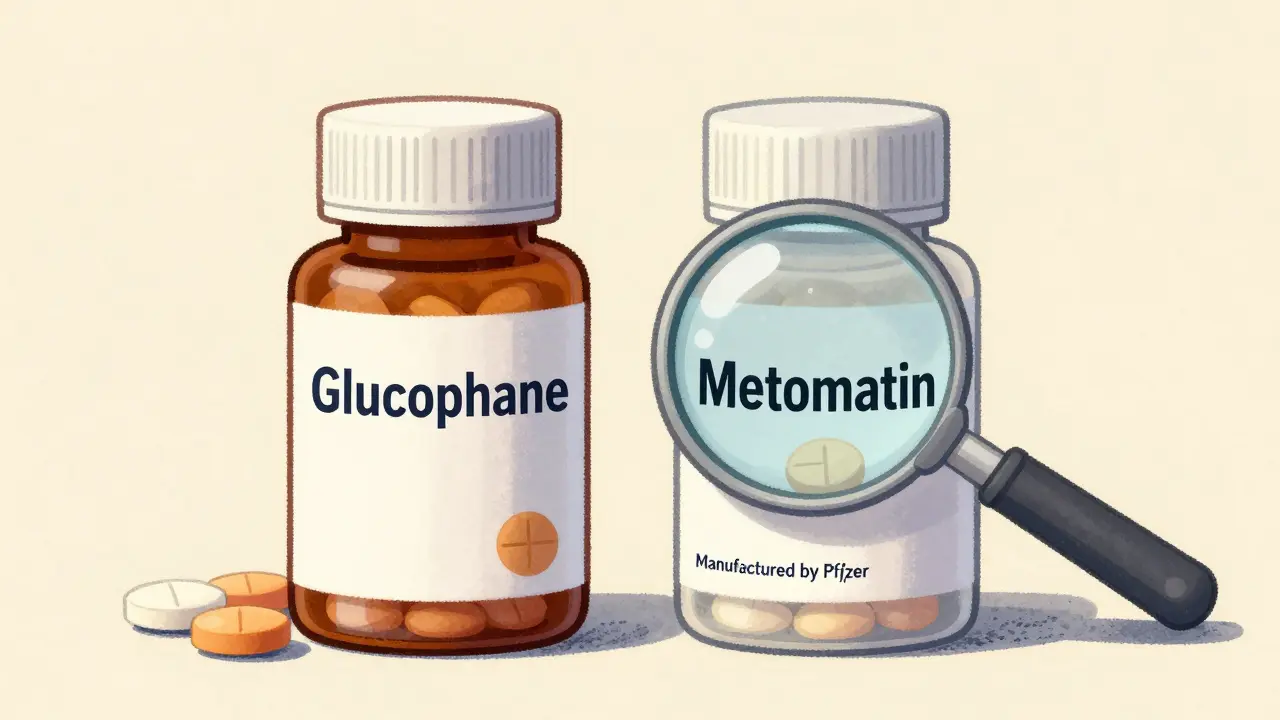
When you pick up a prescription, you might see two different bottles with the same drug name but different labels. One says Metformin and the other says Glucophage. You might assume they’re the same - and you’d be right. But here’s the catch: one is a traditional generic. The other? It’s an authorized generic. And understanding the difference can save you money - and maybe even prevent side effects.
What Exactly Is an Authorized Generic?
An authorized generic isn’t a copy. It’s the exact same drug as the brand-name version, just sold under a different label. The U.S. Food and Drug Administration (FDA) defines it clearly: it’s a brand-name drug that’s been marketed without the brand name on the packaging. No changes to the ingredients. No different manufacturing process. No altered dosage form. The pill you get from an authorized generic is chemically and physically identical to the one you’d get from the original brand.
For example, if you take Lipitor (atorvastatin), the authorized generic version is made by Pfizer - the same company that makes Lipitor - but it’s sold under a different name like Atorvastatin Calcium Tablets with a different color or imprint. The FDA says this is allowed because the authorized generic uses the original brand’s New Drug Application (NDA). That means it doesn’t need to go through the full approval process again. It’s already been approved. All that changes is the label.
How Authorized Generics Differ from Traditional Generics
This is where things get confusing - and why so many patients don’t know what they’re really getting.
Traditional generics are copies. They have to prove they work the same way as the brand. To do that, they must pass bioequivalence tests: they need to deliver the same amount of active ingredient into your bloodstream at the same rate. But here’s the catch - they can have different inactive ingredients. That means fillers, dyes, preservatives, or coatings might be different. For most people, this doesn’t matter. But for some? It does.
Let’s say you’ve been on a brand-name drug for years and suddenly switch to a traditional generic. You start feeling dizzy, nauseous, or your blood pressure fluctuates. Why? Maybe it’s the dye in the pill. Or the coating that doesn’t dissolve the same way. These aren’t rare issues. A 2022 survey by the National Community Pharmacists Association found that 67% of pharmacists had patients specifically ask for authorized generics because they’d had bad reactions to traditional ones.
Authorized generics skip all of that. They don’t need to prove bioequivalence because they’re not copies - they’re the original product. No different fillers. No new coatings. Same manufacturing line. Same quality control. Same everything. The only difference? The label.
Why Authorized Generics Don’t Show Up in the Orange Book
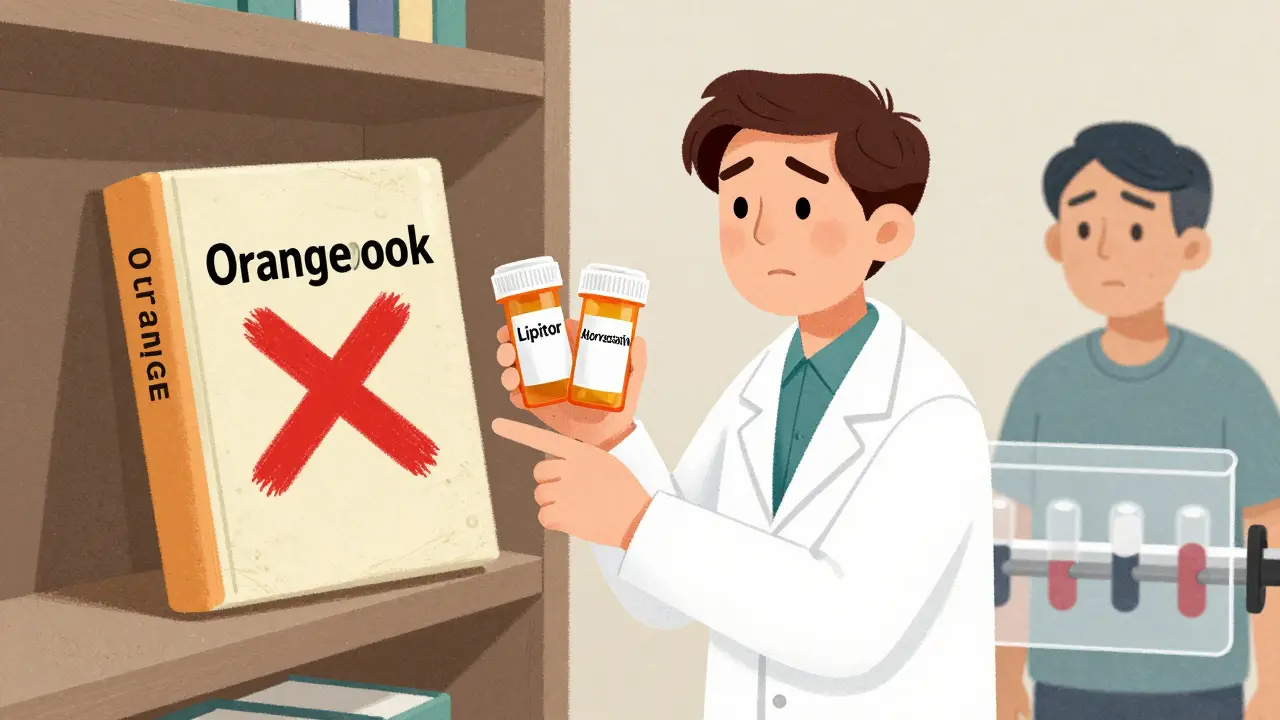
You’ve probably heard of the FDA’s Orange Book - the official list of all approved drug products and their therapeutic equivalence ratings. If you’re a pharmacist or a patient trying to figure out if a generic is safe to swap, you check the Orange Book.
But here’s the twist: authorized generics are not listed there. Why? Because they’re not approved under the Abbreviated New Drug Application (ANDA) process. They’re approved under the brand’s original NDA. So if you look up Lipitor in the Orange Book, you’ll see traditional generics listed as “A” rated - meaning they’re considered therapeutically equivalent. But you won’t see the Pfizer-made authorized generic. It’s not there. It doesn’t need to be.
This creates real confusion. Pharmacists sometimes think an authorized generic isn’t “real” because it’s not in the Orange Book. Patients might be told, “This isn’t a generic,” when in fact, it’s the closest thing to the brand you can get.
Who Makes Authorized Generics?
You might assume that only small generic companies make these. But no - the biggest players are often the brand-name companies themselves.
Companies like Pfizer, Novartis, and Merck often create subsidiaries to sell authorized generics. Greenstone LLC (a Pfizer subsidiary), Prasco Laboratories, and Patriot Pharmaceuticals are the top three makers of authorized generics in the U.S. Together, they handle nearly 80% of all authorized generic products.
Why would a brand company sell its own drug cheaper? It’s a business move. When a drug’s patent expires, the brand manufacturer faces a flood of cheaper generics. By launching their own authorized generic, they can capture market share before competitors even get started. It’s not charity - it’s strategy.
But here’s the downside: some brand companies use authorized generics to undercut the 180-day exclusivity period granted to the first traditional generic company that challenges a patent. If the brand launches its own generic right when the patent expires, the first generic company might not get the financial boost it needs to stay in business. That’s why the Congressional Research Service reported in 2021 that this practice could reduce incentives for patent challenges - and delay broader generic competition.
Cost Differences: What You’ll Actually Pay
Both authorized and traditional generics cost less than brand-name drugs. But how much less?
Authorized generics typically cost 15% to 30% less than the brand-name version. That’s similar to traditional generics. But here’s the thing: insurance companies sometimes treat authorized generics like brand-name drugs. Why? Because they’re not listed in the Orange Book. So even though the pill is identical, your copay might be higher than expected.
A 2022 Kaiser Health News investigation found patients were being charged brand-name prices for authorized generics because their pharmacy benefit managers didn’t recognize them as true generics. That’s a problem. You’re paying more for the exact same medicine.
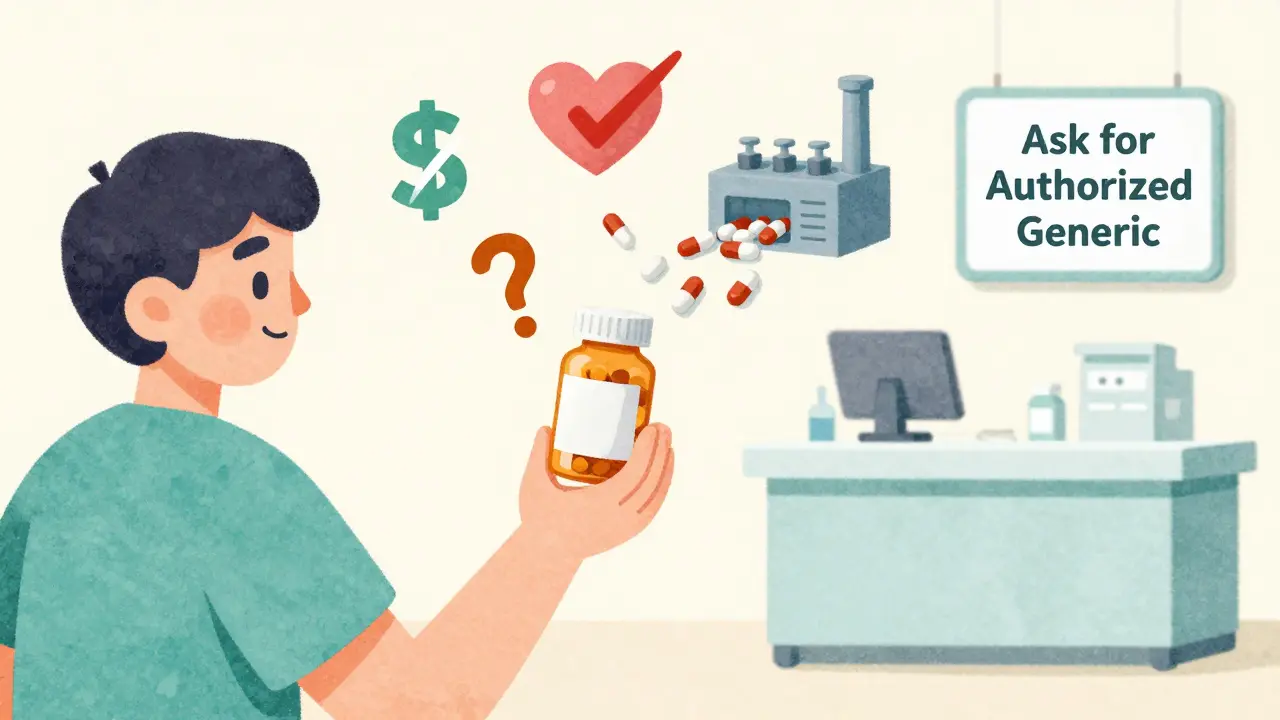
Pro tip: Always ask your pharmacist - “Is this an authorized generic?” If it is, you might be able to ask your insurer to reclassify it. Some plans now have specific codes for authorized generics. Others don’t. It’s a mess - but knowing the difference gives you leverage.
Real-World Impact: Who Benefits the Most?
Patients with chronic conditions - diabetes, high blood pressure, epilepsy, depression - benefit the most from authorized generics. Why? Because even tiny changes in formulation can throw off their treatment.
Take someone on an anti-seizure drug. If the inactive ingredients change, the absorption rate might shift. That’s dangerous. A 2023 study in US Pharmacist found that patients who switched from brand to traditional generic had a 12% higher chance of hospitalization due to seizure recurrence. Those who switched to an authorized generic? No change in outcomes.
That’s not theory. That’s data.
And it’s why 78% of patients can’t tell the difference between authorized and traditional generics when shown the bottles - but 67% of pharmacists say patients ask for authorized generics when they know they exist.
How to Spot an Authorized Generic
Here’s how to tell if you’re getting one:
- Check the label. If it says “Manufactured for [Brand Name]” or “Distributed by [Brand Name]” - it’s likely an authorized generic.
- Look for the same manufacturer name as the brand. If your brand is made by Pfizer, and the generic says “Manufactured by Pfizer,” it’s authorized.
- Ask your pharmacist. They can check the FDA’s List of Authorized Generic Drugs, updated monthly.
- Don’t rely on the Orange Book. If it’s not there, that doesn’t mean it’s not real - it might mean it’s authorized.
What’s Changing in 2026?
The FDA updated its guidance in January 2023, requiring brand companies to notify them within 30 days of launching an authorized generic. That’s a small step toward transparency.
Also, the 2022 Consolidated Appropriations Act requires the FDA to report to Congress by December 2024 on how authorized generics affect competition. That means changes could be coming.
Industry analysts predict authorized generics will grow from 12.7% of the U.S. generic market in 2022 to 15.3% by 2027 - mostly because more specialty drugs (like those for cancer or rare diseases) are entering the market. These drugs are complex. Patients need consistency. Authorized generics offer that.
Bottom Line: What You Need to Remember
- Authorized generics are not copies. They’re the brand-name drug with a different label.
- They contain the exact same ingredients, in the exact same way, made on the exact same line.
- Traditional generics can have different fillers, coatings, or dyes - and that matters for some people.
- Authorized generics aren’t listed in the Orange Book - but that doesn’t make them less safe.
- Ask your pharmacist. Ask your insurer. Know what you’re getting.
If you’ve ever had a bad reaction to a generic - or worried about switching - ask for the authorized version. It’s not just cheaper. It’s the same drug you were prescribed. No compromises. No surprises.
Are authorized generics as safe as brand-name drugs?
Yes. Authorized generics are identical to the brand-name drug in every way - active ingredients, strength, dosage form, manufacturing process, and quality. The only difference is the label. The FDA confirms they are therapeutically equivalent and pose no additional safety risks.
Why aren’t authorized generics listed in the FDA’s Orange Book?
Because they’re not approved under the Abbreviated New Drug Application (ANDA) process. Instead, they’re marketed under the original brand’s New Drug Application (NDA). The Orange Book only lists drugs approved through ANDA, so authorized generics - while fully approved - don’t appear there. This doesn’t mean they’re not legitimate.
Can I ask my pharmacist for an authorized generic instead of a traditional generic?
Yes. You have the right to request a specific medication, including an authorized generic. If your prescription doesn’t specify “dispense as written,” your pharmacist can substitute - but you can override that choice. Tell them you want the authorized version. Many pharmacists will have it on hand or can order it.
Do insurance plans cover authorized generics the same as traditional generics?
Not always. Some pharmacy benefit managers classify authorized generics as brand-name drugs because they’re not listed in the Orange Book. This can lead to higher copays. Always check your plan’s formulary and ask your insurer to reclassify it if needed. Many plans now have specific codes for authorized generics - but you may need to push for it.
Are authorized generics available for all brand-name drugs?
No. Only brand manufacturers can launch authorized generics, and they don’t always do it. Many choose to wait or avoid it to protect their brand. As of September 2023, there were 1,872 authorized generic products available in the U.S. - covering 467 unique active ingredients. That’s a lot, but not all drugs have them.
What to Do Next
If you’re on a long-term medication and have had issues with generics, ask your pharmacist if an authorized generic is available. If you’re switching from a brand to a generic, request the authorized version. If your insurance is charging you brand prices for what’s essentially the same pill, call them. Ask for a formulary exception.
You don’t need to accept confusion. You have the right to know what’s in your medicine - and to ask for the version that matches exactly what you were prescribed.
Mike Hammer
February 14, 2026 AT 17:49Been using authorized generics for my blood pressure med for years. Never had a single issue. Honestly, I can’t tell the difference between the brand and the generic label - same pill, same effects. Why pay more when it’s literally the same thing?
Betty Kirby
February 15, 2026 AT 17:14Let me get this straight - you’re telling me big pharma makes a cheaper version of their own drug and calls it an 'authorized generic' so they can undercut the real generics? That’s not innovation. That’s a corporate power play wrapped in a patient-friendly bow. Classic.
Josiah Demara
February 17, 2026 AT 06:37You people are clueless. The FDA doesn’t list authorized generics in the Orange Book because they’re not generics at all - they’re branded drugs in disguise. If your pharmacist can’t even tell you what you’re getting, how can you trust it? This whole system is a regulatory loophole designed to confuse patients and protect Big Pharma’s profits. Stop being fooled.
Charlotte Dacre
February 17, 2026 AT 21:00So let me get this straight - the drug company that made Lipitor also makes the 'generic' version… but you’re supposed to believe this is about saving money? Not about locking out competition? I’ve seen corporate 'solutions' like this before. It’s not altruism. It’s strategy. And it’s sneaky.
Esha Pathak
February 17, 2026 AT 23:06Life is a cycle, man. The brand creates the drug, the generics try to break in, then the brand creates a fake generic to crush the real ones. It’s like karma, but with pills. We’re all just trying to survive the system - and somehow, the authorized generic is the only one that doesn’t make me feel like I’m taking a different medicine. Maybe that’s the real truth.
Joe Grushkin
February 18, 2026 AT 23:55Anyone who thinks authorized generics are 'the same' is living in a fantasy. The label changes. The packaging changes. The distribution chain changes. That’s not identity - that’s branding. You’re not getting the same thing. You’re getting what the corporation lets you think is the same.
Virginia Kimball
February 19, 2026 AT 16:20If you’ve ever had a bad reaction to a generic, this is your lifeline. Seriously. I switched my mom to an authorized generic after her rash from the regular one, and she’s been stable for over a year. No drama. No side effects. Just the same pill she’s always trusted. Don’t let the system scare you - ask for it. You deserve consistency.
Kapil Verma
February 21, 2026 AT 00:20Why are Americans so obsessed with 'same drug, different label'? In India, we know generics work. We don’t need a fancy label to trust the medicine. If it’s FDA-approved, it’s fine. Stop overcomplicating everything. Your health is not a marketing campaign.
Michael Page
February 21, 2026 AT 09:23There’s something quietly beautiful about the idea that the exact same molecule, manufactured on the same line, with the same quality control, can be sold under two different names. One for profit. One for survival. The drug doesn’t care. But we do. And maybe that’s the real tragedy.
Mandeep Singh
February 22, 2026 AT 16:33Let me break this down for you because clearly, you’ve been misled. Authorized generics are not cheaper because they’re better - they’re cheaper because the brand company is trying to monopolize the market before the real generics even get a shot. This isn’t patient care. This is economic warfare disguised as healthcare. And the FDA? They’re letting it happen. Wake up. The system is rigged. The Orange Book isn’t missing info - it’s hiding the truth.
Daniel Dover
February 24, 2026 AT 06:12Just ask for it. Pharmacies have them. Insurers sometimes don’t recognize them. But if you say 'I want the authorized version,' they’ll usually get it. Simple.
Chiruvella Pardha Krishna
February 26, 2026 AT 04:58When you strip away the marketing, the regulatory jargon, and the corporate strategy - all that’s left is a pill. And if that pill is identical in every way to the one you’ve been taking for years… isn’t that all that matters? The label is just ink. The medicine is the truth.
Kaye Alcaraz
February 26, 2026 AT 18:24As a healthcare professional, I urge all patients to request authorized generics when available. They are therapeutically equivalent, manufactured under the same conditions, and often provide greater stability for patients with chronic conditions. Do not assume all generics are the same. Advocate for yourself. Your health is worth the effort.