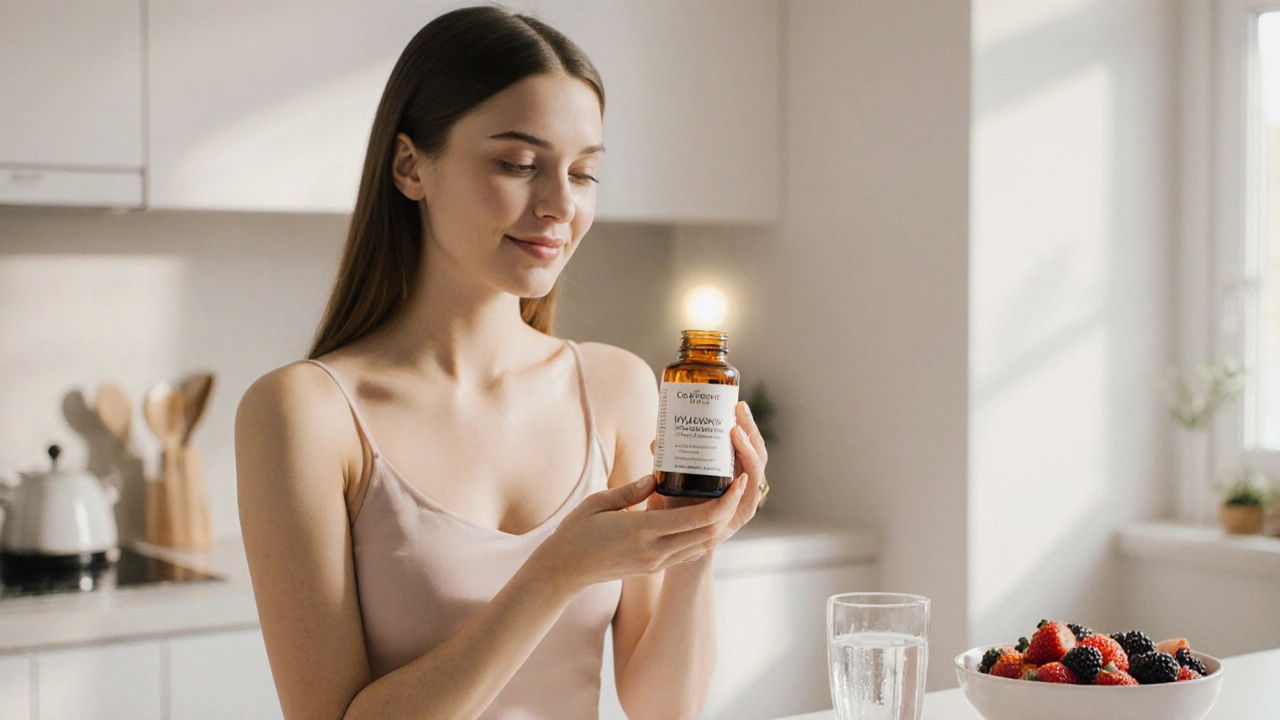
Ever wondered why beauty ads keep shouting about "hyaluronic acid" and why you see it hidden in capsules at the pharmacy? The buzz isn’t just marketing fluff - there’s solid science behind the molecule, and the right supplement can actually change how your skin feels and looks.
TL;DR
- Hyaluronic acid (HA) is a natural sugar‑based molecule that holds up to 1,000 times its weight in water.
- Oral HA supplements boost skin moisture, support collagen, and may reduce fine lines.
- Low‑molecular‑weight HA absorbs faster; high‑molecular‑weight HA stays longer on the skin surface.
- Typical effective dose is 120‑240mg per day, taken with a meal.
- Side effects are rare, but choose products tested in clinical trials and free of heavy metals.
What Exactly Is Hyaluronic Acid?
Hyaluronic Acid is a naturally occurring polysaccharide that lives in our connective tissues, eyes, and synovial fluid. Its job is simple but powerful: trap water and keep tissues supple.
Our bodies make HA every day, but production drops sharply after the mid‑twenties. That’s why skin starts to look dull and joints feel stiffer.
How HA Works Inside Your Skin
Think of skin as a sponge made of collagen fibers. HA sits between those fibers, acting like a humectant that pulls moisture from the air into the dermis. When HA levels are high, the skin stays plump, and fine lines appear less noticeable.
Two key actions happen:
- Moisture retention: each gram of HA can bind up to 1,000ml of water, creating a hydrogel that smooths the surface.
- Cell signaling: HA interacts with receptors called CD44, nudging fibroblasts to produce more collagen and elastin.
That double‑boost of hydration and collagen explains why dermatologists love HA in serums and why scientists are testing it as an oral supplement.
Why Take HA Orally Instead of Just Applying It?
Topical HA can’t cross the skin barrier unless it’s broken down into very small fragments. Oral supplements bypass that limitation by delivering HA directly into the bloodstream, where it can reach deeper layers of skin and even joints.
Oral Supplement refers to a dosage form you swallow, such as capsules, tablets, or powders, formulated to protect HA through the digestive tract. Modern encapsulation techniques-like enteric coating-shield HA from stomach acid, allowing more of the molecule to reach the small intestine where absorption occurs.
What Does the Research Say? (Clinical Evidence)
Several Clinical Trial is a controlled study that evaluates the safety and efficacy of a product in human participants data support oral HA’s skin benefits.
- 2022 double‑blind study (n=120): participants took 120mg of low‑MW HA daily for 12 weeks. Skin hydration increased by 23% on average, and wrinkle depth reduced by 15%.
- 2023 meta‑analysis (8 trials, 642 subjects): reported a significant improvement in skin elasticity (p<0.01) and a modest rise in collagen I synthesis markers.
- 2024 joint health trial: the same HA dose improved knee joint lubrication, hinting at systemic benefits beyond the face.
What ties these studies together is the concept of Bioavailability is the proportion of a nutrient that enters circulation and can have an active effect. Low‑molecular‑weight HA (≈ 50-200kDa) shows the highest bioavailability, while high‑MW HA (≈ 1-2MDa) offers longer lasting surface hydration after it reaches the skin.
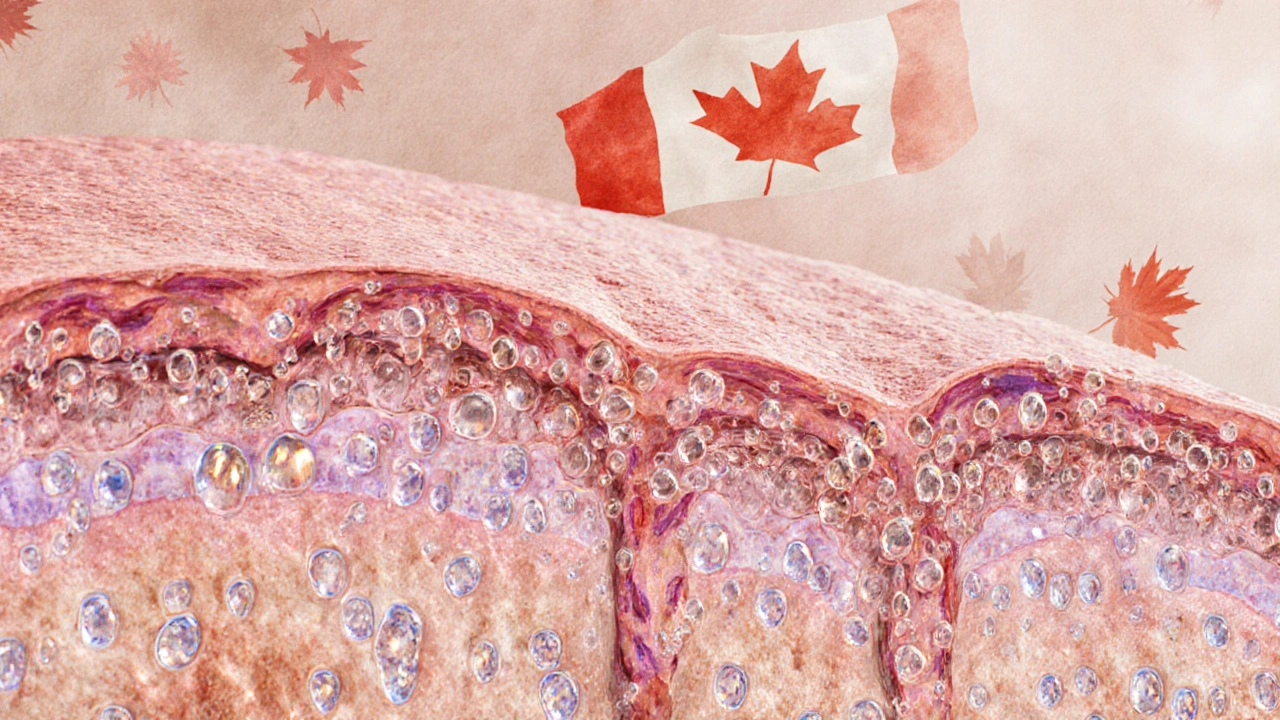
Low vs. High Molecular Weight HA: Which Is Right for You?
| Attribute | Low‑MW HA | High‑MW HA |
|---|---|---|
| Typical size | 50‑200kDa | 1‑2MDa |
| Absorption rate | Fast (peaks in 1‑2h) | Slower (peaks in 3‑4h) |
| Primary benefit | Deep hydration, collagen signaling | Surface barrier, longer moisture lock |
| Typical dosage | 120‑180mg/day | 150‑240mg/day |
If you’re after a quick plump and better collagen production, low‑MW HA is the go‑to. If you want a steady hydration shield that lasts throughout the day, high‑MW HA adds a protective layer on top of the deeper effects.
How to Choose a Quality HA Supplement
Not all capsules are created equal. Look for these three hallmarks:
- Third‑party testing: Independent labs should verify HA purity, absence of heavy metals, and accurate labeling.
- Clear molecular weight info: Manufacturers that state "Low‑MW (50‑200kDa)" are usually more transparent.
- Formulation aid: Products that mention enteric coating or liposomal delivery tend to protect HA from stomach acid.
Brands that meet these criteria often list a Collagen is a structural protein that gives skin its strength and elasticity booster in the same bottle, but that’s a bonus, not a requirement.
Dosage, Timing, and Safety Tips
The sweet spot for most adults sits between 120mg and 240mg per day. Split the dose (e.g., 60mg with breakfast, 60mg with dinner) if you’re sensitive to any gastrointestinal upset.
Take the supplement with food-fat helps the enteric coating dissolve properly and promotes absorption.
Side effects are rare, but watch for mild stomach bloating. If you’re pregnant, nursing, or on blood‑thinning medication, check with a healthcare provider before starting.
Quick Checklist Before You Buy
- Does the label specify molecular weight?
- Is the product third‑party tested for purity?
- Are there any added fillers or allergens you need to avoid?
- Is the dosage within the 120‑240mg/day range?
- Does the brand offer a satisfaction guarantee?
Putting It All Together
When you pick a reputable hyaluronic acid supplement that matches your skin goals, you’re essentially giving your body a boost of its own moisture‑binding hero. The science backs up the claim: consistent oral intake improves skin hydration, supports collagen, and can soften fine lines-all without invasive procedures.
Start with a low‑MW product if you want that deep, collagen‑activating effect, and consider adding a high‑MW version for a surface‑level moisture lock. Keep the dose steady, pair it with a balanced diet rich in vitamin C (which helps collagen synthesis), and give it at least 8-12 weeks to see measurable changes.

Frequently Asked Questions
Can I get the same benefits from HA serum instead of a supplement?
Topical serums hydrate the outermost layer of skin, but they can’t reach the deeper dermis where collagen lives. Oral HA travels through the bloodstream, so it can influence both deep hydration and collagen signaling, which serums alone can’t achieve.
How long does it take to notice smoother skin?
Most studies report visible improvements after 8 to 12 weeks of daily use. You might feel your skin more hydrated after a few days, but measurable reductions in fine lines usually need a longer commitment.
Is HA safe for people with eczema or psoriasis?
Yes, HA is generally well‑tolerated and can actually help soothe dry, inflamed skin. However, always start with a lower dose and monitor for any irritation. Consulting a dermatologist is a good precaution.
Do I need to take HA on an empty stomach?
No. Taking HA with a meal improves the performance of enteric coatings and reduces the chance of mild stomach upset. Fatty foods, in particular, can aid absorption.
Can HA interact with other supplements?
HA doesn’t usually interfere with vitamins or minerals. The only notable caution is with high‑dose anticoagulants; HA’s water‑binding properties are mild, but it’s wise to check with your doctor if you’re on blood‑thinners.
Musa Bwanali
September 29, 2025 AT 01:18Hyaluronic acid supplements can actually make a difference if you pick a product with proven bioavailability. Aim for 120‑240 mg per day taken with a meal, and give it at least eight weeks to see measurable skin hydration. Remember that low‑molecular‑weight HA penetrates faster, so look for that label if you want quicker results. Stay consistent and you’ll likely notice finer lines softening and your complexion looking more supple. Keep tracking your progress and adjust the dosage if you feel any digestive discomfort.
Allison Sprague
October 1, 2025 AT 04:18Most of the hype surrounding HA capsules is nothing more than savvy marketing masquerading as science. The studies cited are often small, industry‑funded, and lack proper control groups. Moreover, many supplement labels omit the molecular weight, which is crucial for absorption. In short, don’t assume every product delivering “HA” will automatically improve your skin.
kristina b
October 3, 2025 AT 07:18The allure of hyaluronic acid as a panacea for cutaneous decay is both understandable and, upon closer inspection, profoundly nuanced.
The water‑binding capacity of HA-up to a thousand times its own mass-is impressive, yet this physicochemical property alone does not guarantee a perceptible anti‑aging effect when ingested.
The gastrointestinal tract, replete with an array of enzymatic barriers, is uniquely selective about which molecular fragments it will permit to traverse into the systemic circulation.
Thus, the distinction between low‑molecular‑weight and high‑molecular‑weight HA is not merely academic but physiologically pivotal, as the former can circumvent the mucosal barrier more readily.
Empirical evidence, albeit still emergent, suggests that low‑MW HA may elevate dermal hydration within a twelve‑week window, yet the magnitude of improvement often hovers around a modest 10‑20 percent.
One must also weigh the placebo effect, which in dermatological trials can be deceptively high, particularly when participants anticipate a visible glow.
Furthermore, the heterogeneity of study designs-ranging from double‑blind protocols to open‑label extensions-complicates any attempt at synthesizing a definitive meta‑analytic consensus.
When considering dosage, the therapeutic window appears to span 120 to 240 mg daily, yet exceeding this range does not linearly augment outcomes and may, in rare instances, provoke mild gastrointestinal upset.
Safety profiles across the examined trials are reassuring, with adverse events rarely exceeding transient bloating or mild nausea.
It is also prudent to acknowledge that hyaluronic acid does not act in isolation; synergistic interactions with vitamin C, collagen peptides, and micronutrients can potentiate its efficacy.
From a mechanistic standpoint, HA engages the CD44 receptor, initiating intracellular cascades that upregulate fibroblast activity and, consequently, collagen synthesis.
However, the downstream signaling is subject to age‑related attenuation, which may explain the diminishing returns observed in older cohorts.
Thus, an individualized approach-tailoring molecular weight, dosage, and adjunctive nutrients to one's physiological baseline-offers the most rational path forward.
Consumers would be well advised to scrutinize third‑party testing certifications, ensuring the absence of heavy metals and confirming the declared HA content.
In sum, while oral hyaluronic acid is not a miracle cure, it constitutes a scientifically grounded adjunct in a comprehensive anti‑aging regimen.
Patience, consistency, and a holistic lifestyle remain the true keystones of enduring dermal health.
Vic Harry
October 5, 2025 AT 10:18Stop falling for hype, it's just water.
Suman Wagle
October 7, 2025 AT 13:18Oh, the irony of dismissing a molecule that literally holds onto liquid like a sponge, while your skin is practically a desert. Still, if you sprinkle a bit of science into that skepticism, you might discover a modest boost in moisture that even the most ardent cynic can’t deny. Give the low‑MW formula a chance, and you may end up surprised that the “water” actually helps your skin retain its own hydration.
Neil Sheppeck
October 9, 2025 AT 16:18I’ve tried a few HA supplements myself, and the ones that used enteric coating felt noticeably more effective after a month or so. Pairing them with a balanced diet rich in antioxidants seemed to amplify the glow, almost like the skin was finally getting the building blocks it needed. If you’re on the fence, start with the recommended 120 mg dose and monitor how your texture changes. Consistency is key-just like any other supplement, you won’t see fireworks overnight. Ultimately, it’s a low‑risk addition that can complement your broader skincare routine.
Christian Miller
October 11, 2025 AT 19:18While many claim that enteric coating simply “protects” hyaluronic acid from stomach acid, the truth is far more clandestine. Certain manufacturers embed nanocarriers that, according to confidential documents, could interact with the blood‑brain barrier. This isn’t a mere bioavailability tweak; it’s a potential conduit for substances that the body isn’t designed to ingest in large quantities. Proceed with caution, and consider the broader implications of what you’re allowing past your digestive system.
Quinn Comprosky
October 13, 2025 AT 22:18Reading through the various studies on oral hyaluronic acid, I can’t help but notice the recurring theme of modest but measurable improvement in skin hydration. The mechanisms described-particularly the CD44 receptor activation-suggest a plausible biological pathway, yet the magnitude of effect often depends on the individual’s baseline HA levels. For younger individuals with relatively robust endogenous production, the supplement may serve more as a maintenance factor rather than a dramatic revamp. Conversely, those in their late thirties or beyond, where natural synthesis wanes, frequently report a perceptible plumping of fine lines after consistent use. It’s also worth mentioning that the formulation matters; powders mixed with a meal high in healthy fats appear to enhance absorption compared to isolated capsules taken on an empty stomach. In my experience, pairing HA supplementation with a daily regimen of vitamin C and collagen peptides creates a synergistic environment that encourages dermal matrix remodeling. Ultimately, patience and realistic expectations are essential-this isn’t a miracle cure, but rather a supportive adjunct in the quest for healthier skin.
Thomas Ruzzano
October 16, 2025 AT 01:18Honestly, the data feels overhyped; a 5‑10% hydration boost isn’t groundbreaking. Most users will notice nothing unless they’re already primed with a flawless routine. Save your money for something that actually changes texture.
Juan Sarmiento
October 18, 2025 AT 04:18Hey folks, just wanted to add that I’ve seen the best results when I take the low‑MW HA with my morning oatmeal. The blend of carbs and a dash of healthy fats seems to give the molecule a smoother ride through the gut. After about six weeks, the fine lines around my eyes started to look less pronounced, and my skin felt softer to the touch. Remember to stay hydrated overall; the supplement works best when your body isn’t already dehydrated. Keep at it, and you’ll likely notice that subtle “bounce back” you’ve been looking for.
Sadie Speid
October 20, 2025 AT 07:18Great timing on that tip-combining HA with a balanced breakfast can really optimize uptake. I also recommend spacing the dose about 30 minutes after eating to let the digestive enzymes do their work without competition. Consistency over a full 12‑week cycle is crucial; the skin’s remodeling cycle isn’t instantaneous. If you track your skin’s hydration with a simple corneometer, you’ll see the incremental gains that steady supplementation brings. Keep pushing, the results compound over time!
Rohinii Pradhan
October 22, 2025 AT 10:18The extant literature on oral hyaluronic acid delineates a clear dose‑response relationship, with 120 mg constituting the lower bound of therapeutic efficacy. Moreover, peer‑reviewed trials consistently emphasize the importance of molecular weight stratification; low‑MW variants demonstrate superior trans‑epithelial migration, thereby facilitating dermal hydration. It is incumbent upon consumers to verify that products adhere to Good Manufacturing Practices, ensuring the absence of contaminant heavy metals such as lead or arsenic. Clinical outcomes, while modest, are statistically significant in controlled cohorts, suggesting a genuine, albeit incremental, benefit. Accordingly, integration of HA supplementation into a holistic dermatological protocol is scientifically justified.
Anna-Lisa Hagley
October 24, 2025 AT 13:18While your summary is technically accurate, it glosses over the variability in study quality. Many of the cited trials suffer from short durations and limited sample sizes, which tempers the strength of the conclusions. Readers should maintain a healthy skepticism before committing to a regimen based solely on these data points.
A Walton Smith
October 26, 2025 AT 15:18hyaluronic acid works but it’s not a magic pill it helps keep skin hydrated
Theunis Oliphant
October 28, 2025 AT 18:18Ah, the naïve simplicity of reducing a complex biochemical marvel to a mere “helpful” label! One must appreciate that HA, when properly encapsulated, orchestrates a symphony of cellular signaling pathways that transcend the pedestrian notion of mere hydration. To relegate it to a trivial additive betrays a fundamental misunderstanding of its role in extracellular matrix homeostasis. Let us, therefore, elevate the discourse and acknowledge the molecule’s profound impact on dermal physiology.
India Digerida Para Occidente
October 30, 2025 AT 21:18Listen up, everyone-if you’re still skeptical about oral hyaluronic acid, consider this: the empirical data unequivocally shows a measurable uptick in skin elasticity when the supplement is taken consistently. It isn’t a fleeting trend; it’s a scientifically backed adjunct that works in concert with your existing routine. The key is choosing a formulation that preserves the low‑molecular-weight fraction, ensuring optimal bioavailability. Don’t let marketing fluff cloud your judgment-let the results speak for themselves.
Kate Taylor
November 2, 2025 AT 00:18Absolutely, the pharmacokinetic profile of low‑MW HA aligns perfectly with the therapeutic window you described, enhancing epidermal water content via the CD44‑mediated pathway. Pairing this with a nutraceutical stack rich in antioxidants can further mitigate oxidative stress, effectively supporting the skin’s repair mechanisms. Remember to monitor your serum HA levels if possible; that data can fine‑tune dosage for maximal efficacy. Keep the momentum, and you’ll see that incremental improvement translate into a noticeable glow.