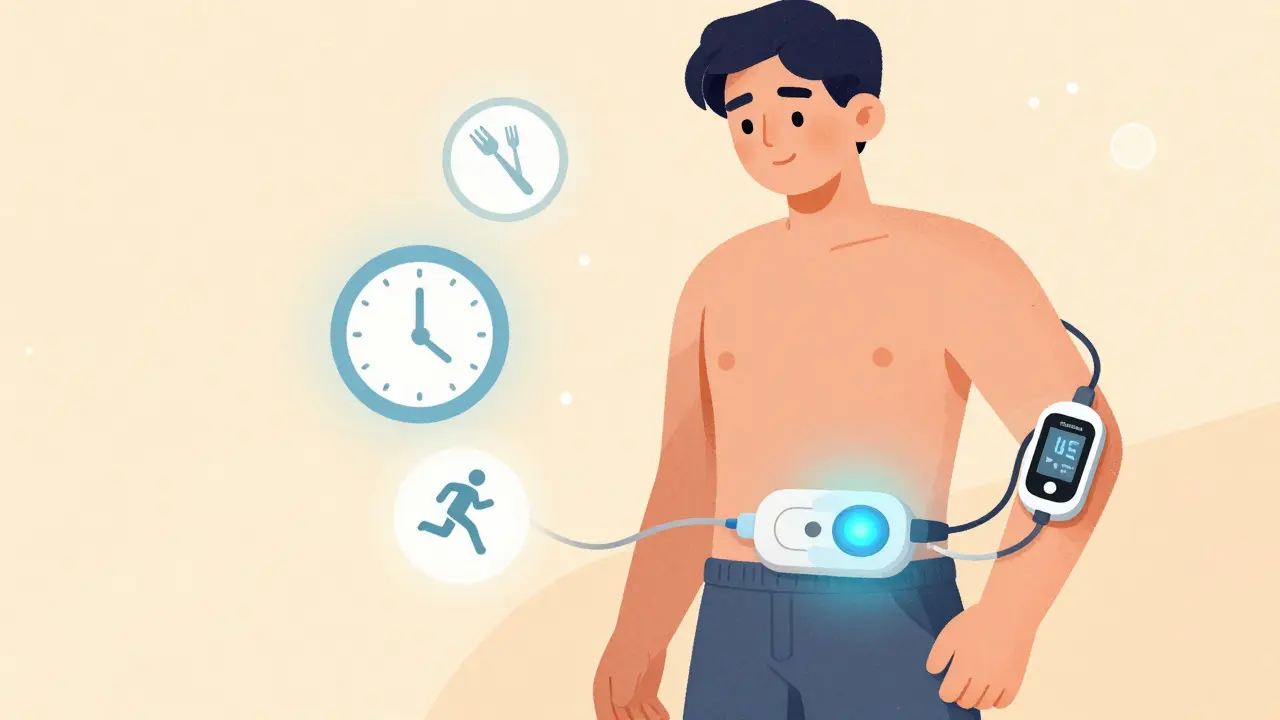
For someone with type 1 diabetes, managing blood sugar every day can feel like a full-time job. Injections multiple times a day? Counting carbs? Constant finger pricks? It’s exhausting. That’s why so many people are turning to insulin pump therapy - a device that delivers insulin continuously, without the need for daily shots. But is it right for you? Let’s cut through the noise and lay out what really matters: the real pros, the real cons, and exactly how to get started if you’re considering it.
What Is Insulin Pump Therapy?
Insulin pump therapy, also called continuous subcutaneous insulin infusion (CSII), is a small wearable device that delivers rapid-acting insulin through a tiny tube or patch stuck under your skin. It doesn’t replace insulin - it just delivers it differently. Instead of injecting several times a day, the pump gives you a steady trickle of insulin (called basal insulin) 24/7, and you can give yourself extra doses (boluses) when you eat or need to correct high blood sugar.
Modern pumps aren’t the bulky machines from the 1980s. Today’s models are about the size of a smartphone, weigh under 100 grams, and can be worn on a belt, in a pocket, or stuck directly to your skin like a patch. The most popular ones - like the Medtronic MiniMed 780G, Tandem t:slim X2, and Insulet Omnipod 5 - connect to continuous glucose monitors (CGMs) and can automatically adjust insulin based on your blood sugar levels. This is called automated insulin delivery (AID), or a hybrid closed-loop system.
The Real Pros: Why People Switch
People don’t switch to pumps just because they’re tired of needles. They switch because their lives change.
- Lower HbA1c levels: A 2022 study of over 25 clinical trials found that pump users had HbA1c levels 0.37% lower on average than those using multiple daily injections. That’s not just a number - it’s a real drop in long-term complication risk.
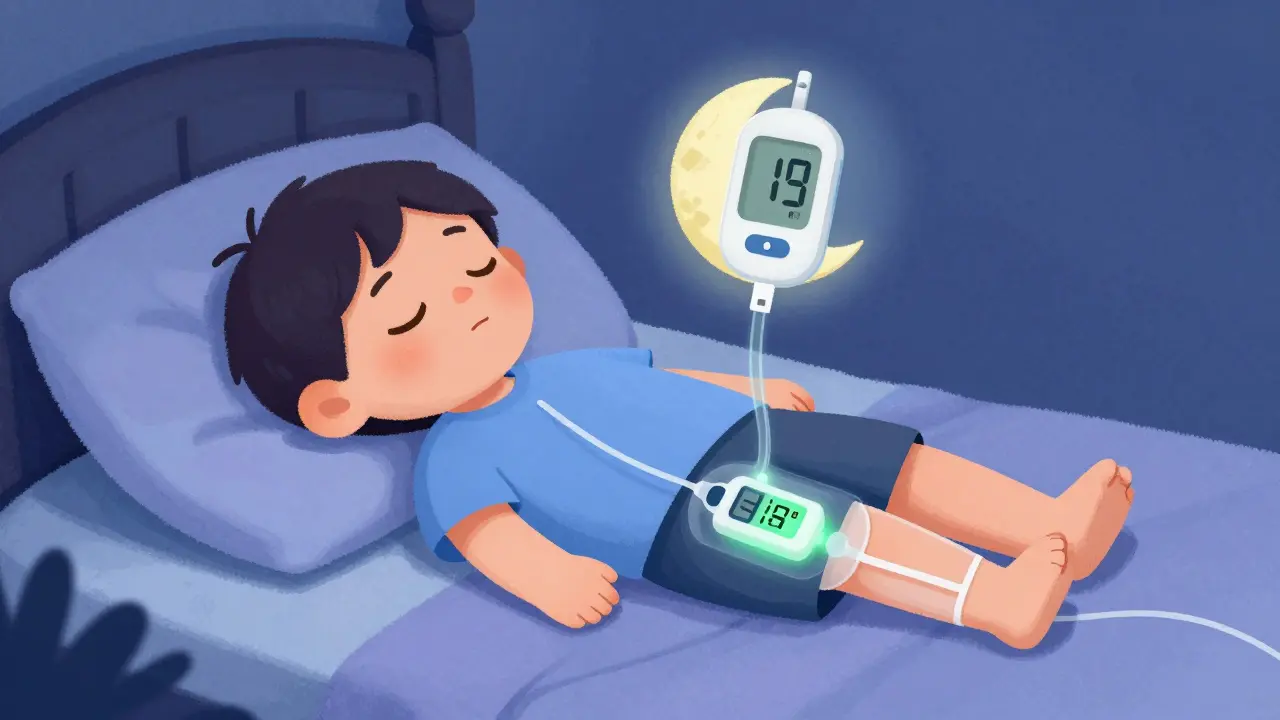
- Fewer nighttime lows: Nocturnal hypoglycemia drops by about 32% with pump therapy. That means fewer scary awakenings, less fear of sleeping, and better rest.
- More flexibility: Want to eat dinner at 9 p.m.? Skip a meal? Go for a midnight run? Pumps let you adjust insulin on the fly. No more rigid meal schedules.
- Improved quality of life: In the T1D Exchange registry of over 22,000 users, 82% said their quality of life improved after switching. Seventy-six percent said meal timing became easier. Sixty-eight percent reported fewer low blood sugar episodes.
One user on Reddit, u/PumpLife2023, wrote: "The auto-basal adjustment has reduced my overnight lows from 3-4 per week to maybe once a month." That’s not marketing - that’s real life.
The Real Cons: What Nobody Tells You
There’s no sugarcoating this: insulin pumps aren’t magic. They come with real trade-offs.
- Technical failures happen: About 15% of pump users experience an interruption in insulin delivery at least once a month. A kinked tube, a disconnected patch, or a dead battery can stop insulin flow. Without insulin for 4-6 hours, you can slip into diabetic ketoacidosis (DKA) - a dangerous, life-threatening condition.
- It’s not "set and forget": Pumps require constant attention. You still need to check your blood sugar (or rely on a CGM), count carbs, and adjust doses. If you skip monitoring, your numbers can spiral.
- Skin issues: Nearly half of users report irritation or infection at the infusion site. Some develop scar tissue that makes insulin absorption unpredictable.
- Alarm fatigue: Thirty-eight percent of users say the constant beeping (low battery, blocked line, high/low glucose alerts) becomes overwhelming. Some even turn off alerts - which is risky.
- Tubing gets in the way: If you’re wearing a tube-based pump, you’ll deal with tangled lines, snagged tubing, or awkward positioning during sleep or exercise.
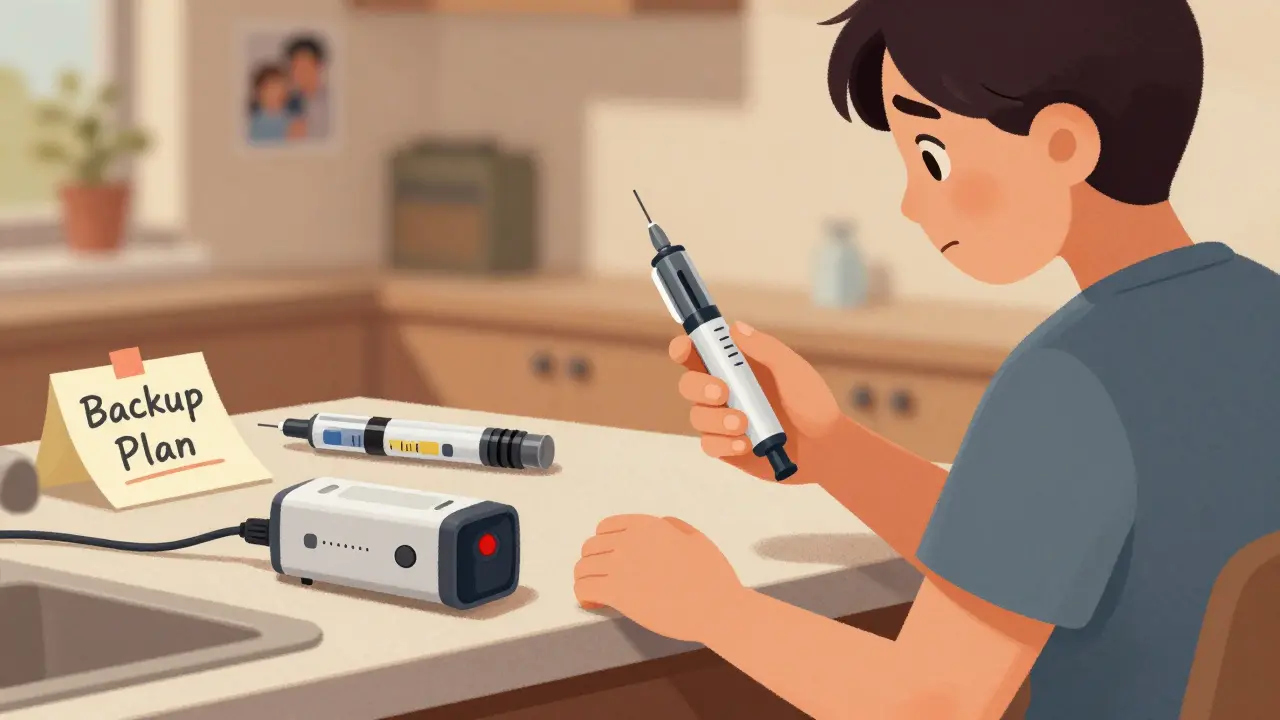
One user on TuDiabetes.org shared: "My Medtronic pump failed during a family vacation. I ended up in the ER with DKA within five hours. Now I always carry backup pens."
That’s why experts say: you need a backup plan. Always have insulin pens and syringes on hand.
Who Is It Best For?
Not everyone benefits from a pump. The American Diabetes Association and the Association of Diabetes Care & Education Specialists (ADCES) say it’s most helpful for people who:
- Have HbA1c above 7.5% despite trying multiple daily injections
- Experience frequent or severe low blood sugar episodes
- Have hypoglycemia unawareness (don’t feel when their blood sugar drops)
- Have high glucose variability - swings from high to low with no clear pattern
- Want more freedom in eating, sleeping, or exercising
It’s also strongly recommended for children as young as 2 years old. Studies show early adoption leads to better long-term outcomes. But if you struggle with tech, have cognitive challenges, or feel anxious about devices, a pump might add more stress than relief.
How to Get Started: The 4-Step Process
Switching isn’t a quick decision. It takes planning, education, and patience.
- Talk to your diabetes care team: Don’t just ask your endocrinologist. Work with a certified diabetes care and education specialist (CDCES). They’ll assess your readiness - can you handle the device? Do you understand carb counting? Are you emotionally prepared for the responsibility?
- Choose your pump: There are two main types: tube-based (like Medtronic or Tandem) and tubeless patch pumps (like Omnipod). Tubeless pumps are waterproof, discreet, and easier for active lifestyles. Tube pumps often have bigger insulin reservoirs (up to 300 units) and more advanced features like predictive low glucose suspend.
- Get trained: Most people need 3-5 education sessions over 2-4 weeks. You’ll learn how to insert the infusion set, program basal rates, calculate boluses, troubleshoot errors, and respond to alerts. The Cleveland Clinic reports 70% of new users need 2-3 weeks to feel confident.
- Start slow: Begin with the pump in manual mode - no automation. Use it like a fancy insulin syringe. Once you’re comfortable, turn on the CGM integration and automated features. Don’t rush into closed-loop mode.
Costs and Insurance: What You Need to Know
Let’s be real: pumps are expensive. The device itself costs $5,000-$7,000. Annual supplies (infusion sets, reservoirs, sensors) run $3,000-$5,000. But here’s the good news: in the U.S., 90% of patients get coverage through Medicare, Medicaid, or private insurance. Most pay $100-$500 in copays after meeting their deductible.
Insurance denials still happen - 22% of people report being turned down. If that’s you, ask for a letter of medical necessity from your doctor. Mention your HbA1c, hypoglycemia history, or quality of life issues. Keep records. Appeal if needed.
In New Zealand and other countries with public healthcare, access varies. Some regions cover pumps fully; others require proof of medical need. Check with your local diabetes clinic or health provider.
Market Trends and What’s Coming
Insulin pump use is rising fast. In the U.S., 38.4% of type 1 diabetes patients used a pump in 2021 - up from 28.6% in 2017. Among children, it’s even higher: 45.2%. The global market is expected to hit $8.7 billion by 2029.
New systems are coming fast. The Medtronic MiniMed 880G (expected late 2024) will extend hypoglycemia protection to 150 minutes. The Beta Bionics iLet - a true bionic pancreas that delivers both insulin and glucagon - is in phase 3 trials and could be available by 2025.
By 2027, experts predict 65% of new pediatric type 1 diagnoses will start on hybrid closed-loop systems. The trend is clear: automation is becoming the standard.
Final Thoughts: Is It Worth It?
Insulin pump therapy isn’t a cure. It’s a tool. A powerful one - but one that demands responsibility.
If you’re tired of injections, struggle with unpredictable blood sugars, or fear nighttime lows - a pump might give you back your freedom. But if you’re overwhelmed by tech, hate constant monitoring, or can’t commit to daily care - stick with injections. There’s no shame in that.
The goal isn’t to use a pump. It’s to live well. Whether you use a pump, pens, or both - what matters is that your blood sugar stays in a safe range, you feel in control, and you’re not letting diabetes run your life.
Can children use insulin pumps?
Yes. Modern insulin pumps are approved for children as young as 2 years old. Studies show early adoption leads to better long-term blood sugar control and fewer complications. Patch pumps like the Omnipod 5 are especially popular with kids because they’re waterproof, discreet, and don’t have tubing that can get caught on things. Many schools and daycare centers now have policies to support pump use.
Do I still need to check my blood sugar if I use a pump?
Yes - absolutely. Even with a CGM, you need to verify readings with a fingerstick at least once a day, especially if your numbers don’t match how you feel, if you’re changing insulin doses, or if you’re sick. Automated systems aren’t perfect. They rely on accurate data. Skipping checks can lead to dangerous errors.
What happens if my pump stops working?
If your pump stops, insulin delivery stops. You can develop diabetic ketoacidosis (DKA) within 4-6 hours. That’s why every pump user must carry backup insulin (in pens or syringes) and know how to use it. Always have extra infusion sets, batteries, and alcohol wipes on hand. If you can’t fix the pump, switch to injections immediately and contact your care team.
Are insulin pumps waterproof?
Some are, some aren’t. Tubeless patch pumps like the Omnipod 5 are waterproof up to 3 meters for 30 minutes - so you can swim, shower, or sweat without removing it. Tube-based pumps are generally not waterproof and must be disconnected during water activities. Always check your pump’s manual. Even waterproof pumps should be checked for leaks or damage after exposure to water.
How long does an infusion set last?
Most infusion sets are designed to last 2-3 days. Some users stretch them to 4 days, but that increases the risk of infection, poor insulin absorption, and skin irritation. The CDCES recommends changing your set every 48-72 hours. Rotate insertion sites to avoid scar tissue buildup.
Suchi G.
March 18, 2026 AT 06:54After switching to my Omnipod 5 last year, I went from HbA1c of 9.1 to 6.8. Not because I’m disciplined - I’m not. It’s because the pump does the heavy lifting when I’m too tired, too busy, or too emotionally drained to care. I used to wake up at 3 a.m. sweating, terrified my sugar was crashing. Now? I sleep. I actually sleep. And yes, I still have to change the pod every 3 days. Yes, I still get the beeps. But the trade-off? Worth every second of frustration. I’m not ‘cured.’ But I’m finally living.
becca roberts
March 19, 2026 AT 07:36Let’s be real - the pump didn’t make my life easier. It just made my life *different*. I used to think, ‘Oh, I’ll just skip a meal.’ Now I think, ‘Oh no, I forgot to bolus for that avocado toast and now my CGM is screaming.’
And the alarms? I swear my pump has a vendetta against my sleep. One time it woke me up because I moved in my sleep and the tubing twisted. I yelled at it. It didn’t care.
But… I haven’t had a DKA scare in 18 months. So yeah. I’ll keep the beeping.
Andrew Muchmore
March 20, 2026 AT 02:01Backup insulin isn’t optional. It’s survival. I’ve had two pump failures. Both times I ended up in the ER. No drama. No panic. Just insulin in my arm and a quiet realization: technology is a tool, not a savior. Always carry pens. Always know how to use them. Everything else is noise.
Paul Ratliff
March 20, 2026 AT 15:28my pump broke on a road trip. no joke. i had to do 3 shots in a gas station bathroom while my kids screamed in the backseat. i cried. then i ate a burrito. my sugar was 280. i didn’t care. i was alive. pumps are great. but you gotta be ready for the chaos.
SNEHA GUPTA
March 21, 2026 AT 00:38The philosophical tension here is not about technology versus biology - it’s about autonomy versus dependence. We are told that automation liberates us from the tyranny of the needle. But in truth, we trade one form of bondage for another: the constant vigilance of the algorithm. The pump doesn’t reduce responsibility - it redistributes it. The body still demands attention. The mind still must calculate. The fear still lingers. Perhaps the real question is not whether to use a pump, but whether we are ready to be fully accountable for the illusion of control it offers.
Nicole Blain
March 21, 2026 AT 20:39just got my first pump last month. still learning. still scared. still crying sometimes. but i ate pizza last night. without checking carbs. without bolusing. just… ate. and my sugar was fine. 🥺❤️
Kathy Underhill
March 23, 2026 AT 01:20Insulin pumps don’t fix diabetes. They manage it. The difference matters. You still have to eat, move, rest, and understand your body. The device doesn’t think for you. It doesn’t feel your stress or your hunger. It doesn’t know if you skipped breakfast because you were anxious. It just delivers what you program. That’s why training isn’t optional. It’s foundational.
Prathamesh Ghodke
March 24, 2026 AT 03:20I’m from India. We don’t have easy access to pumps here. Insurance? What’s that? But my 7-year-old uses an Omnipod. We imported it. Paid out of pocket. It’s not perfect. The adhesive falls off in the humidity. The CGM sensor gets lost in the chaos of school. But she sleeps through the night now. And that? That’s everything.
Stephen Habegger
March 24, 2026 AT 09:01Started on a pump after 15 years of pens. Best decision ever. I went from 3 lows a week to 1 every 3 weeks. I took my dog on a hike. Didn’t panic. Didn’t carry 10 snacks. Just went. Life’s too short to be scared of your own body.
Sanjana Rajan
March 25, 2026 AT 05:57Everyone’s acting like pumps are a miracle. Newsflash: they’re expensive, high-maintenance gadgets that still require you to do the work. And if you’re the type who forgets to charge your phone? You’re gonna crash. Hard. Stop romanticizing this. It’s not freedom. It’s a 24/7 tech job with side effects.
Kyle Young
March 25, 2026 AT 06:40Is the reduction in nocturnal hypoglycemia statistically significant across all age groups? Or is the data skewed toward younger, tech-savvy users? And what about long-term tissue damage from continuous infusion? Are there longitudinal studies tracking fibrosis at infusion sites over 10+ years? The marketing materials rarely mention this.
Aileen Nasywa Shabira
March 25, 2026 AT 10:50Oh wow, so the pump is magic? Let me guess - next you’ll tell me insulin is a cure and we can all just chill now.
Newsflash: DKA still kills. CGMs still glitch. Algorithms still fail. And people who think pumps make life easy? They’re the same ones who don’t carry backup. Don’t be that person. Your ‘freedom’ is just a temporary glitch away from the ER.
Kendrick Heyward
March 26, 2026 AT 01:00I used to think I was strong because I did 5 shots a day. Then I got a pump. And I realized I wasn’t strong - I was just stubborn.
Now I cry when I see my overnight trends. Not because I’m scared. Because I’m proud.
My pump saved me. Not because it’s fancy. Because it let me be human.
lawanna major
March 26, 2026 AT 13:50There’s a quiet dignity in managing this disease. Whether you use pens or pumps, the discipline is the same. The fear is the same. The exhaustion is the same. The difference is not in the tool - it’s in the person using it. A pump won’t make you better. But if you’re ready to show up for yourself - it might help you stay. And that’s more than enough.