Hypoglycemia Risk Calculator
Hypoglycemia Risk Assessment
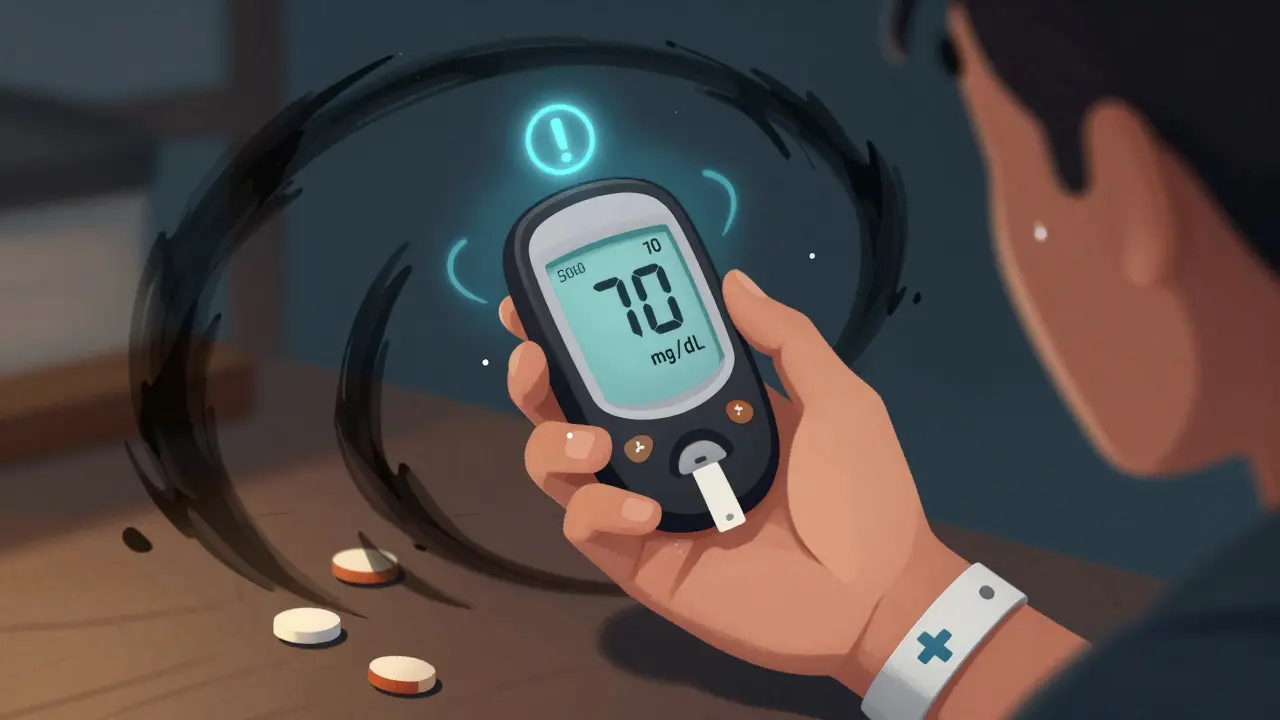
This tool helps you understand your risk of hypoglycemia (low blood sugar) based on your current situation. Blood sugar below 70 mg/dL (3.9 mmol/L) is considered hypoglycemic.
When you start insulin therapy, it’s not just about getting your blood sugar under control. For many people, the real challenge begins after the first injection: dealing with the side effects that come with it. Two of the most common and troubling issues are hypoglycemia and weight gain. These aren’t just minor inconveniences-they can change how you live, what you eat, how you sleep, and even whether you stick with your treatment plan.
Why Hypoglycemia Is the Biggest Fear
Hypoglycemia means your blood sugar drops too low-below 70 mg/dL (3.9 mmol/L). It’s not rare. In fact, for people with type 1 diabetes on intensive insulin therapy, it happens about 2 to 3 times per year as a severe episode. That’s not a one-off. It’s a regular risk. And for those with type 2 diabetes who’ve been on insulin for years, it’s just as real. You might feel it coming: your hands shake, your heart races, you break out in a cold sweat. Maybe your vision blurs, or you get dizzy. Sometimes, you just feel confused-like you can’t think straight. These are your body’s alarms. But here’s the scary part: after years of frequent lows, your body stops sending those signals. This is called hypoglycemia unawareness. About one in four people with type 1 diabetes develop it after 15 to 20 years. That means you could pass out before you even know something’s wrong. The dangers go beyond feeling bad. Severe hypoglycemia can cause seizures, loss of consciousness, or even brain damage. It’s linked to heart stress and increases the risk of car accidents. The Diabetes Control and Complications Trial (DCCT) showed that tight blood sugar control cuts complications like nerve and eye damage by 76%-but triples your chance of a severe low. That’s the trade-off doctors face every day: better long-term health versus immediate danger.How Insulin Causes Weight Gain
Weight gain is another side effect that catches people off guard. You might have started insulin because you were losing weight from uncontrolled diabetes. Now, suddenly, the scale creeps up. It’s not because you’re eating more-it’s because insulin changes how your body uses energy. Before insulin, your body was throwing out sugar through your urine. That meant you were losing calories every day. Once insulin starts working, your cells finally absorb glucose instead of letting it escape. That’s good for your health-but it also means your body starts storing fat. Insulin is an anabolic hormone. It tells your body to hold onto energy, not burn it. And if you’re eating the same amount of carbs as before, your body turns the extra into fat. Studies show that in the first year of insulin therapy, people typically gain 4 to 6 kilograms (9 to 13 pounds). Some gain more. Some gain less. It depends on your diet, activity level, and how much insulin you need. But here’s what’s often ignored: many people deliberately skip insulin doses to avoid gaining weight. That’s dangerous. Skipping insulin leads to high blood sugar, which damages your kidneys, eyes, and nerves over time. You trade one problem for a worse one.How to Prevent Hypoglycemia
The good news? You don’t have to live in fear. There are real, proven ways to reduce low blood sugar episodes. First, monitor your blood sugar often. If you’re on multiple daily injections or an insulin pump, check at least 4 to 6 times a day. That includes before meals, after meals, at bedtime, and sometimes in the middle of the night. Continuous glucose monitors (CGMs) are a game-changer. They show you trends, not just numbers. If your sugar is dropping fast, you get an alert. That gives you time to eat a snack before you crash. Second, learn to match your insulin to your food. This isn’t guesswork. It’s math. Work with a diabetes educator to figure out your insulin-to-carb ratio. If you eat 40 grams of carbs, how much insulin do you need? And if your blood sugar is 12 mmol/L (216 mg/dL), how much correction dose should you take? These aren’t just numbers-they’re tools to avoid lows. Third, carry fast-acting sugar with you at all times. Glucose tablets, juice boxes, or even candy. Don’t wait until you feel bad. If your sugar is below 4 mmol/L (72 mg/dL), treat it immediately. Eat 15 grams of carbs, wait 15 minutes, check again. Repeat if needed. And if you’re alone and start to feel confused, tell someone. Or wear a medical ID bracelet. Emergency responders need to know you have diabetes.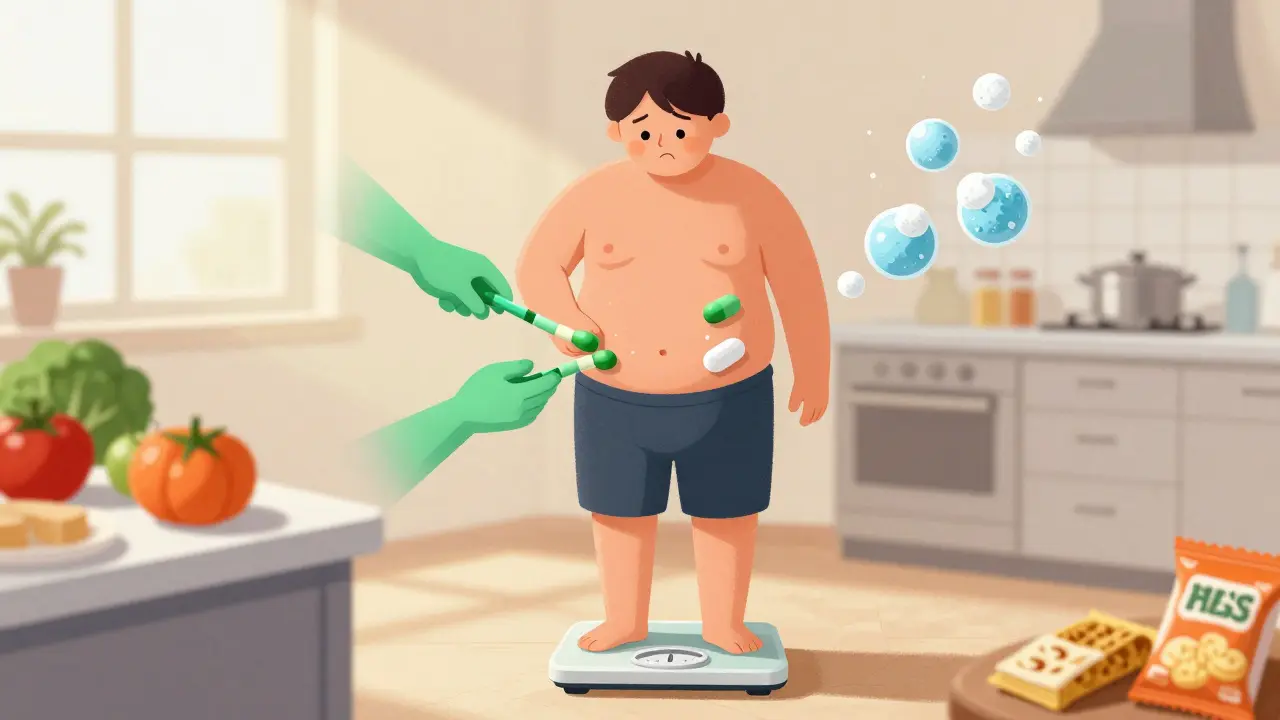
How to Manage Weight Gain
Weight gain from insulin doesn’t have to be inevitable. It’s not a death sentence-it’s a signal to adjust your approach. Start with food. Insulin doesn’t make you gain weight because it’s bad. It makes you gain weight because you’re still eating like you’re burning sugar. You need to eat less of the same things. Focus on whole foods: vegetables, lean proteins, healthy fats. Cut back on refined carbs-white bread, pasta, sugary snacks. These spike your blood sugar and force your body to release more insulin, which stores more fat. Move more. You don’t need to run marathons. Just walk 30 minutes a day. Strength training twice a week helps too. Muscle burns more calories than fat-even when you’re resting. That means your body will need less insulin to handle the same amount of food. Talk to your doctor about newer options. GLP-1 receptor agonists like semaglutide (Ozempic, Wegovy) are now used alongside insulin. They help lower blood sugar, reduce appetite, and cause weight loss. In clinical trials, people lost 5 to 10 kilograms over 30 weeks while on insulin plus semaglutide. That’s more than what they gained on insulin alone. Also, don’t ignore early intervention. A 2023 study showed that people who got nutritional counseling within the first month of starting insulin gained only 2.8 kilograms in the first year-less than half the average. The sooner you adjust, the easier it is.Technology Is Changing the Game
New tools are making insulin therapy safer and easier. Closed-loop systems-sometimes called artificial pancreases-automatically adjust insulin based on your real-time glucose levels. In trials, they cut time spent in hypoglycemia by 72%. That’s huge. Newer insulins also help. Insulin degludec (Tresiba) and insulin glargine U300 (Toujeo) are longer-acting and more stable than older versions like NPH. They cause about 20 to 40% fewer nighttime lows. But even these aren’t perfect. Toujeo, for example, can delay recovery from a low because it sticks around so long. Insulin pumps with automated suspension features stop insulin delivery if your sugar drops too fast. That’s a lifesaver for people who sleep through lows. But here’s the catch: these tools aren’t available to everyone. Cost, insurance, and access still limit who can use them. If you can’t get them, don’t give up. The basics still work: monitoring, matching food to insulin, moving more, and eating smart.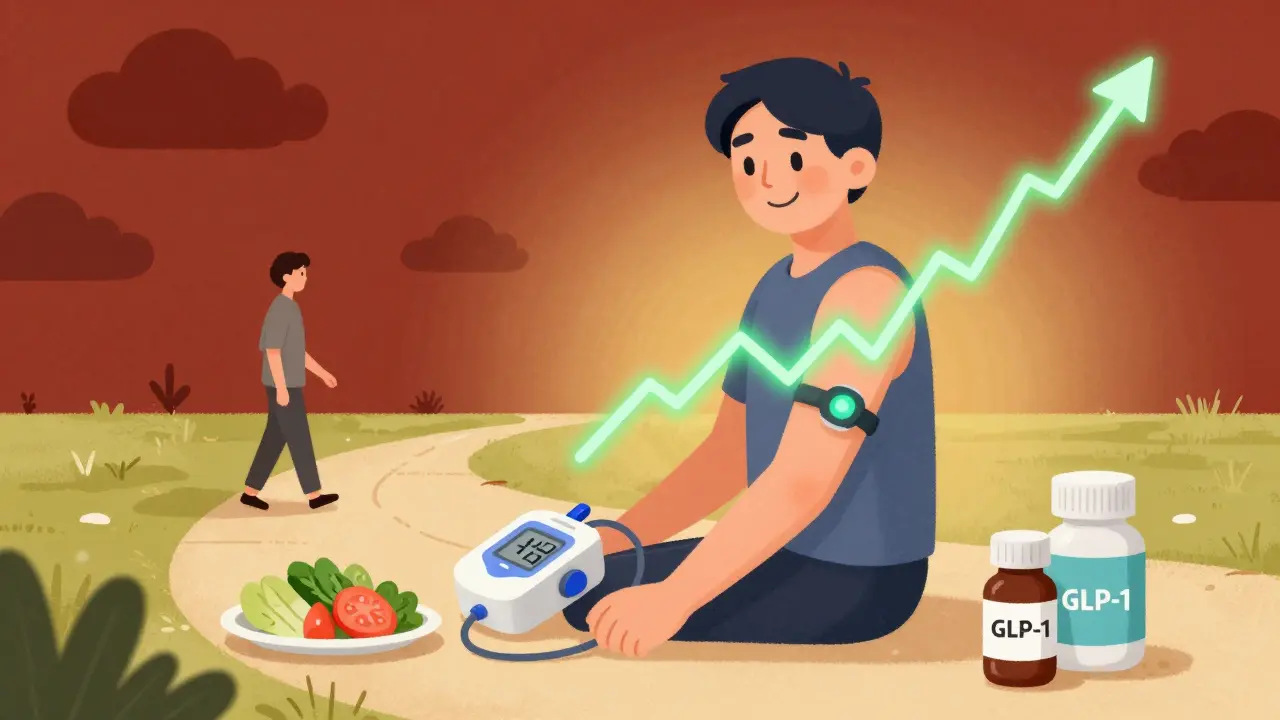
What You Can Do Today
You don’t need to wait for a new drug or fancy device to take control.- Check your blood sugar before bed. If it’s below 6 mmol/L (108 mg/dL), have a small snack with protein and fat-like peanut butter on whole grain toast.
- Keep glucose tablets in your car, purse, and desk drawer.
- Write down your meals and insulin doses for a week. Look for patterns. Do you always go low after lunch? Maybe you’re taking too much insulin for your carbs.
- Ask your doctor about a CGM. Even if you’re not on a pump, it can give you peace of mind.
- Start walking 20 minutes a day. It doesn’t have to be perfect. Just start.
It’s Not All or Nothing
Many people think they have to choose: perfect blood sugar control or no side effects. But that’s false. The goal isn’t to eliminate all lows or stop all weight gain. It’s to reduce them enough so you can live without fear. The American Diabetes Association now recommends personalized A1c targets. For older adults or those with heart disease, an A1c of 7.5% to 8% might be safer than 6.5%. That’s not giving up. It’s smart management. You’re not weak for worrying about weight. You’re not reckless for fearing a low. These are real risks. But they’re not unbeatable. With the right tools, knowledge, and support, you can use insulin to protect your health without losing your life to its side effects.Can insulin cause seizures?
Yes, severe hypoglycemia caused by too much insulin can lead to seizures. When blood sugar drops below 40 mg/dL (2.2 mmol/L), the brain doesn’t get enough fuel to function properly. This can trigger abnormal electrical activity, resulting in a seizure. If someone is having a seizure from low blood sugar, they need immediate medical help. Glucagon injections or emergency IV glucose are required. Never try to give food or drink to someone who is unconscious or seizing.
Why do I feel hungrier after starting insulin?
Insulin helps your cells absorb glucose, which lowers your blood sugar. When your body senses low glucose, it triggers hunger signals to encourage you to eat. This is a natural survival response. Also, if you were losing weight before starting insulin, your body may be trying to return to its previous weight. Eating more isn’t always the answer-adjusting portion sizes and choosing protein-rich, low-glycemic foods can help manage hunger without causing weight gain.
Is weight gain from insulin permanent?
Not necessarily. Many people gain weight in the first few months as their body starts storing glucose properly. But after that, weight gain usually slows or stops if you adjust your diet and activity. Studies show that with structured lifestyle changes-like reducing carbs, increasing protein, and exercising regularly-people can lose the extra weight even while staying on insulin. It takes effort, but it’s possible.
Can I stop insulin to avoid weight gain?
Stopping insulin to avoid weight gain is dangerous. Without insulin, your blood sugar rises dangerously high, leading to diabetic ketoacidosis (DKA), nerve damage, kidney failure, and other life-threatening complications. If you’re struggling with weight gain, talk to your doctor. There are safer options: adding GLP-1 agonists, adjusting insulin doses, or working with a dietitian. Never stop insulin without medical supervision.
How do I know if I have hypoglycemia unawareness?
If you’ve had diabetes for more than 10 to 15 years and no longer feel the warning signs of low blood sugar-like shaking, sweating, or a fast heartbeat-you may have hypoglycemia unawareness. You might only notice symptoms when you’re already confused, dizzy, or passing out. Continuous glucose monitoring (CGM) is the best way to detect this. If your CGM shows frequent lows without symptoms, talk to your doctor about adjusting your target range and using alarms.
Paul Huppert
December 31, 2025 AT 21:21Just started insulin last month and already hit a low at work-no warning signs. Scared the crap out of me. Now I keep glucose tabs in every pocket.
Frank SSS
January 1, 2026 AT 06:57Yeah right, ‘manage weight gain’-like that’s easy when your body thinks insulin is a buffet invitation. I gained 18 lbs in 3 months and my jeans are now fashion statements of regret. 😑
Hanna Spittel
January 1, 2026 AT 07:14They’re hiding the truth. Big Pharma wants you fat so you buy more meds. 😏 Insulin isn’t the problem-it’s the system.
Brady K.
January 3, 2026 AT 04:47Let’s be real-insulin is basically a metabolic leash. You’re not gaining weight because you’re weak, you’re gaining it because your biology just got upgraded to ‘energy hoarder mode.’ Time to hack the system with protein and resistance training, not guilt.
Joy Nickles
January 3, 2026 AT 11:20ok so i just started insulin and now i'm always hungry?? like constantly?? and i feel like i'm gonna pass out if i don't eat every 2 hours?? is this normal?? or am i just broken??
Emma Hooper
January 5, 2026 AT 09:27My insulin doc called it ‘the sugar trap’-you’re not addicted to food, you’re addicted to survival. Your body’s screaming for glucose because it finally got the key to unlock the pantry. Now you gotta retrain it. No shame, just strategy.
Swap that bagel for eggs and avocado. Your pancreas will thank you. Your jeans? They’ll thank you too.
Martin Viau
January 6, 2026 AT 09:49Canada’s got better access to CGMs and GLP-1s. Why are Americans still fighting with insurance just to survive? This isn’t healthcare-it’s a lottery.
Marilyn Ferrera
January 7, 2026 AT 00:06For anyone scared of hypoglycemia unawareness: get a CGM. Even the basic ones. They saved me. I used to wake up at 3 a.m. with a 42 mg/dL reading and no clue. Now I get alerts. I sleep. I live.
Harriet Hollingsworth
January 7, 2026 AT 21:16You people are so careless. Skipping insulin to avoid weight gain? That’s not ‘management’-that’s suicide with a side of denial. If you’re not willing to follow the science, don’t complain when your kidneys fail.
Deepika D
January 8, 2026 AT 11:52Hey everyone, I’ve been on insulin for 12 years and I’ve lost 35 lbs while staying on it-yes, really! It took me a year, but here’s what changed: I stopped counting calories and started counting insulin-to-carb ratios. I swapped white rice for cauliflower rice, started walking after every meal, and got a CGM. I also found a diabetes support group online-it changed everything. You’re not alone. You’re not broken. You’re just learning a new language of your body. And guess what? Your body is trying to talk to you. Listen. It’s not your fault. It’s not your fault. It’s not your fault. You’re doing better than you think. And if you’re reading this right now, you’re already on the path. Keep going. One meal. One walk. One glucose check at a time. You’ve got this. I believe in you. 💪❤️