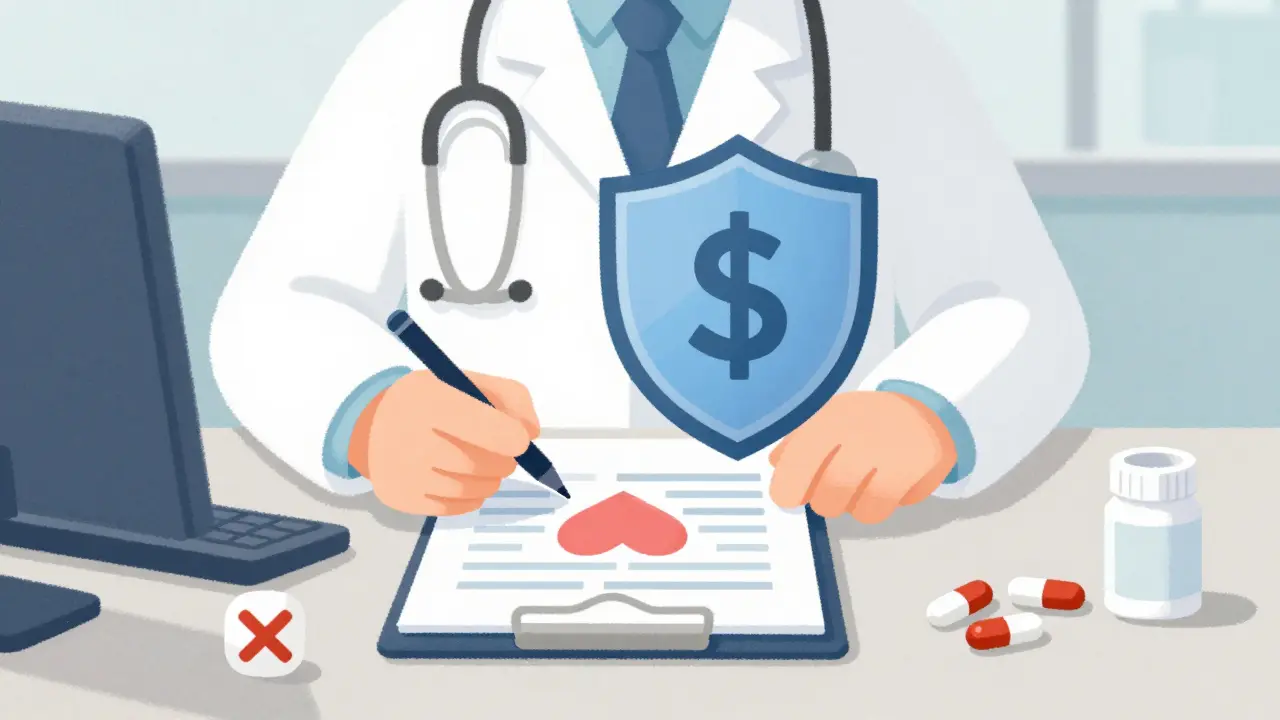
When your doctor prescribes a brand-name drug but the insurer says "no, take the generic," you're seeing insurer pressure in action. This isn't just paperwork-it's a daily reality for healthcare providers across the country. Insurers push for generic drug substitution requirements policies enforced by health insurers that mandate generic medications over brand-name alternatives to control costs, typically involving formulary tiers, prior authorization, and step therapy protocols. These rules save billions annually but create real friction for providers. Let's break down how they work and what doctors actually do to respond.
How Insurers Enforce Generic Drug Substitution
Insurers use three main tools to push generics. First, formulary tiers a pricing structure where generic drugs occupy the lowest cost-sharing tier (typically $5-$15 copays), while brand-name drugs without generic equivalents sit in higher tiers (often $40-$100+ copays). This makes patients pay way more for brand-name drugs, creating financial pressure to switch. Second, prior authorization a process where providers must submit clinical justification for brand-name drugs before insurers approve coverage. Third, step therapy protocols forcing patients to "fail" on generics before accessing brand-name drugs. The FDA confirms generics cost 80-85% less than brand-name drugs, which is why insurers push hard for these policies. By 2022, 90% of all U.S. prescriptions were filled with generics.
How Providers Respond to These Requirements
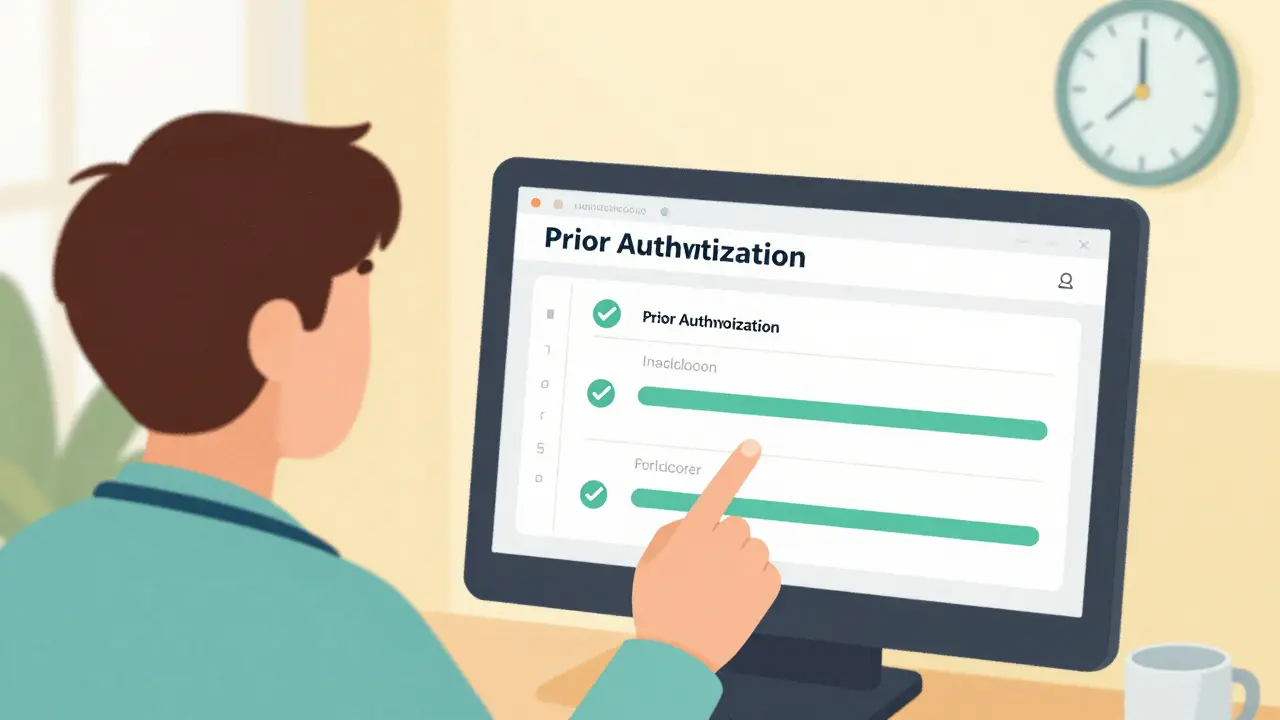
Doctors don't just roll over. They've developed concrete strategies. Many now use standardized template letters pre-written clinical justifications for common exceptions, used by 68% of physicians per 2023 AAFP data to speed up prior auth requests. Others integrate electronic prior authorization systems that automate submission through EHRs, reducing approval time by 55% according to a 2024 JAMIA study directly into their electronic health records. When insurers deny coverage for a brand-name drug needed for a patient with gastrointestinal sensitivity to the generic, providers like those at Mayo Clinic now submit detailed lab results showing therapeutic failure-this gets approvals 37% faster than subjective descriptions.
State-Specific Rules That Change the Game
California's AB 347 law requiring health insurance plans to "expeditiously" grant step therapy exception requests when clinicians submit documentation, with insurers must respond within 72 hours for urgent cases made a huge difference. A California psychiatrist reported exceptions now take under 72 hours with 92% first-time approval rates. Meanwhile, Arizona's HB 2175 mandates medical directors personally review denial claims, prohibiting reliance solely on AI systems for medical necessity decisions, signed in May 2025. These laws show states are stepping in where federal rules fall short. Not all states have such protections, though-this creates a patchwork where providers must learn different rules for each insurer.
The Real Administrative Burden
It's not just paperwork-it's time stolen from patient care. Physicians spend an average of 16.9 minutes per prior authorization request according to a 2023 MGMA survey. The AMA reports doctors waste 13.1 hours weekly on prior auth tasks alone. One Reddit user (@DrCardio92) shared they now add "medical necessity" notes to 100% of brand-name prescriptions, increasing their processing time by 40%. Worse, 78% of providers say prior auth sometimes causes patients to abandon treatment entirely. A Mayo Clinic case in Minnesota shows the stakes: an insurer denied coverage for a brand-name anticoagulant despite documented GI sensitivity, leading to two emergency department visits for bleeding complications during a 22-day appeals process.

Practical Strategies That Actually Work
Successful providers do three things consistently. First, they build relationships with specific insurer case managers-this cuts approval times dramatically. Second, they use electronic prior authorization systems integrated with EHRs, which reduce processing time by 55% compared to manual submissions. Third, they document with objective data. For example, showing lab values proving a generic drug failed for a patient (like abnormal thyroid levels for levothyroxine) gets approvals far faster than saying "the patient didn't feel well." Medium-sized practices (10-50 doctors) now hire 1.8 full-time staff just for prior auth tasks at $112,400 per position yearly, per 2024 MGMA data. It's expensive, but cheaper than losing patients to treatment abandonment.
What's Next for Generic Drug Substitution?
The federal government is stepping up. The CMS Interoperability and PA final rule mandates standardized electronic prior auth for all Medicare Advantage and Medicaid plans by January 2027, which McKinsey predicts will cut processing time by 40-60%. Meanwhile, insurers like UnitedHealthcare aim for 95% generic utilization by 2030. But medical groups warn this could backfire. The AMA's 2024 survey found 68% of physicians believe current prior auth rules harm patient outcomes. The FDA is also studying narrow therapeutic index drugs like levothyroxine, with draft guidance expected in late 2025. This might lead to more nuanced substitution rules-recognizing that not all generics are interchangeable for every patient.
What's the difference between prior authorization and step therapy?
Prior authorization requires providers to get insurer approval before prescribing a specific drug, usually for brand-name medications. Step therapy forces patients to try cheaper generics first and "fail" before moving to brand-name drugs. Both are tools insurers use to control costs, but step therapy is about sequence while prior auth is about permission.
Why do insurers push for generics despite patient concerns?
Insurers cite clear cost savings: generics cost 80-85% less than brand-name drugs. The FDA confirms this, and it adds up to billions in annual system savings. However, critics argue this ignores individual patient needs-like when a patient has documented allergies to a generic's inactive ingredients. Insurers often respond that 98.7% of substitutions proceed without complications, but studies show 28% of physicians have seen adverse outcomes from switches for narrow therapeutic index drugs like levothyroxine.
How do Pharmacy Benefit Managers (PBMs) affect generic substitution?
PBMs like CVS Caremark and OptumRx control formulary decisions for 85% of insured Americans. They work with insurers to create tiered pricing that heavily favors generics. Many PBMs are now owned by parent insurance companies (like UnitedHealthcare owning OptumRx), creating vertically integrated systems that maximize generic use. This has pushed private plan adoption of strict substitution policies from 28% in 2010 to 76% in 2023.
What's the fastest way to get prior authorization approved?
Submit electronic prior auth requests through your EHR system, include objective clinical data (like lab results showing therapeutic failure), and build relationships with specific insurer case managers. For urgent cases, California's AB 347 requires insurers to respond within 72 hours. The AMA reports that approvals are 37% faster when providers cite specific clinical metrics rather than general descriptions.
Are there drugs where generics aren't safe to substitute?
Yes, especially narrow therapeutic index drugs like levothyroxine, warfarin, and some seizure medications. The FDA requires generics to be within 80-125% of the brand-name drug's blood concentration, but critics argue this margin is too wide for drugs where small changes affect outcomes. For example, levothyroxine switches have caused treatment failures in 28% of physicians' practices. Providers must document these risks clearly during prior auth requests.
Bella Cullen
February 6, 2026 AT 06:06Ugh, this is such a headache. Insurers making us jump through hoops for generics. It's not just paperwork-it's patients not getting the meds they need. Like, why can't they just let doctors do their job? I'm too tired to fight this every day.
Gregory Rodriguez
February 7, 2026 AT 05:34Well isn't this just peachy? Insurers saving a buck while doctors scramble like headless chickens. But hey at least we get to play detective with prior auth forms. Seriously though if they'd just let us prescribe what's best for patients instead of forcing generics we'd all be better off. It's like they're trying to make healthcare a game of musical chairs with meds. Oh wait that's exactly what it is!
Johanna Pan
February 8, 2026 AT 16:08This is really important especially for people from different backgrounds. Gotta make sure they understand the options. Some folks might not know why generics are used but its important to explain the cost savings. But also doctors need to be able to make exceptions when needed. Its all about balancing cost and care. We should be working together not against each other.
lance black
February 8, 2026 AT 16:39Prior auth is a time suck. Fix it now.
Pamela Power
February 9, 2026 AT 07:22Oh please this is just another example of how broken the system is. Insurers don't give a damn about patients they only care about profits. They're forcing dangerous substitutions on people who clearly need brand-name drugs. It's reckless and should be illegal. Doctors are being held hostage by these greedy corporations. This isn't healthcare it's corporate greed.
Rene Krikhaar
February 10, 2026 AT 09:25I've been in this field for over 15 years and let me tell you prior authorization is a nightmare but there are ways to make it work better for everyone.
For instance when a patient has a documented sensitivity to a generic's inactive ingredients like lactose or dyes it's crucial to include lab results showing the issue.
We submitted the lab results showing the patient's antibodies were elevated and the insurer approved the brand name within 24 hours.
Another strategy is building relationships with case managers at the insurance company.
I've found that calling the specific case manager assigned to my practice and explaining the situation personally speeds things up.
Also using electronic prior auth systems integrated into the EHR saves so much time compared to faxing or mailing forms.
The AMA reports doctors waste over 13 hours a week on prior auth tasks which is insane when you think about how many patients could be seen in that time.
It's not just about saving money for insurers it's about patient safety.
For drugs like levothyroxine where the therapeutic window is narrow even small differences in absorption can cause serious issues.
I've seen patients on the wrong dose of generic levothyroxine end up in the ER because the switch wasn't monitored properly.
The key is documentation. When you submit a prior auth request include specific lab values, test results, and clinical notes that clearly show why the brand name is necessary.
Also don't be afraid to escalate if the initial request is denied.
Many insurers have appeals processes but you have to know how to navigate them.
It's frustrating but persistence pays off. I've had to appeal several times but eventually got approvals for patients who needed the brand name.
The system is broken but there are ways to work within it to get what patients need.
We need better policies but until then we have to keep pushing for our patients.
Carl Crista
February 11, 2026 AT 20:08PBMs and insurers are in cahoots. They want to control everything. It's all about profit. No one cares about real health. They're pushing generics to make more money. It's a scam.
Dr. Sara Harowitz
February 13, 2026 AT 11:47This is why America is failing! Insurers are out of control. We need stricter regulations. They're not following the rules! This is unacceptable. We must take action now!
Carol Woulfe
February 14, 2026 AT 00:28The system is rigged. Big Pharma and insurers colluding. They want to keep us dependent on brand names. But wait no they want generics. It's all part of the plan. I've seen it happen. They're manipulating the system to control us. It's terrifying.
Brendan Ferguson
February 15, 2026 AT 12:03I think there's a balance. Generics are great for most cases but we need exceptions for certain drugs. It's about patient-specific care. We should have clear guidelines for when generics can be substituted and when they can't. It's not black and white. Let's work together to find solutions.
Arjun Paul
February 15, 2026 AT 21:28This is a serious issue. The system is broken. We need to fix it. But insurers are too greedy. It's obvious.