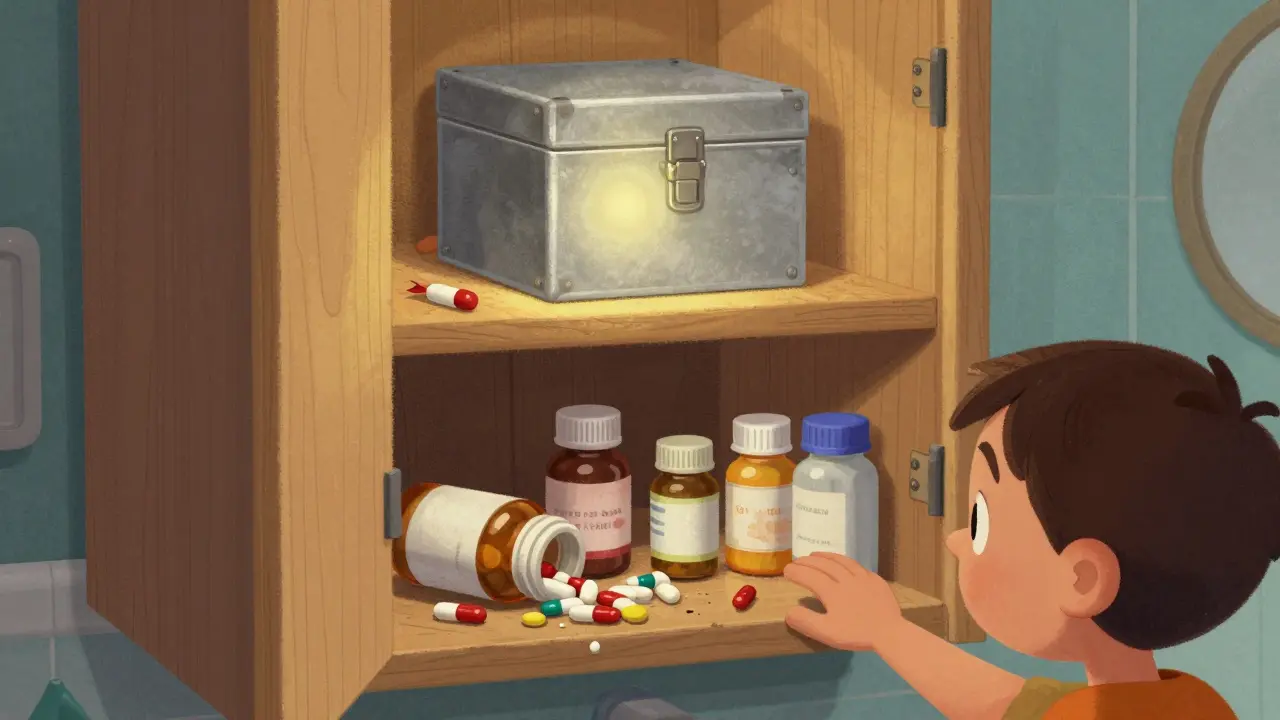
Most people don’t think twice about where their old pills go after they’re done with them. You might toss them in the bathroom cabinet, leave them in a drawer, or even flush them down the toilet. But here’s the truth: improper storage and disposal of medications isn’t just careless-it’s dangerous. Every year, millions of unused prescriptions end up in waterways, medicine cabinets, or the hands of kids and teens who shouldn’t have them. The good news? You don’t need a degree in pharmacology to get it right. With clear steps and a few simple habits, you can protect your family, your community, and the environment.
How to Store Medications Safely
Your medicine cabinet isn’t the best place for prescriptions. Bathroom humidity, kitchen heat, and sunlight can break down pills and liquids, making them less effective-or even harmful. The ideal storage spot is cool, dry, and out of reach. A locked drawer in a bedroom or a high shelf in a closet works better than any bathroom shelf.For controlled substances like opioids, benzodiazepines, or stimulants, lock-box storage isn’t optional-it’s critical. The DEA requires these to be kept secure because they’re high-risk for misuse. A simple combination lockbox from a hardware store costs less than $20 and can prevent accidental overdoses or theft. Keep these separate from other meds, even if they’re in the same drawer.
Temperature matters too. Most pills are fine at room temperature-between 68°F and 77°F (20°C-25°C). But some, like insulin, certain antibiotics, or eye drops, need refrigeration. Check the label. If it says “store in the fridge,” keep it between 36°F and 46°F (2°C-8°C). Never freeze unless the instructions say so. Freezing can ruin the chemical structure.
Always keep medications in their original containers. That’s not just for show. The label has the name, dosage, expiration date, and your doctor’s instructions. If you transfer pills to a pill organizer, keep the original bottle nearby. Never mix different drugs in one container. It’s easy to mix them up-and dangerous if someone else grabs the wrong one.
What Happens When You Flush Medications?
Flushing pills down the toilet sounds like a quick fix. But here’s what happens: pharmaceuticals don’t break down easily in water. They end up in rivers, lakes, and even drinking water supplies. The EPA estimates that 247 million pounds of pharmaceuticals enter U.S. waterways every year from improper disposal. Fish show signs of hormonal disruption. Microplastics in water now carry traces of antidepressants and antibiotics.There’s one exception: the FDA’s flush list. Only 15 specific opioid painkillers and one benzodiazepine (like alprazolam) are approved for flushing because they’re so dangerous if misused. If your medication is on that list and you don’t have a take-back option, flushing is the safest choice. You can find the full list on the FDA’s website. But for 99% of medications, flushing is not just unnecessary-it’s illegal in healthcare settings and strongly discouraged at home.
Take-Back Programs: The Best Option
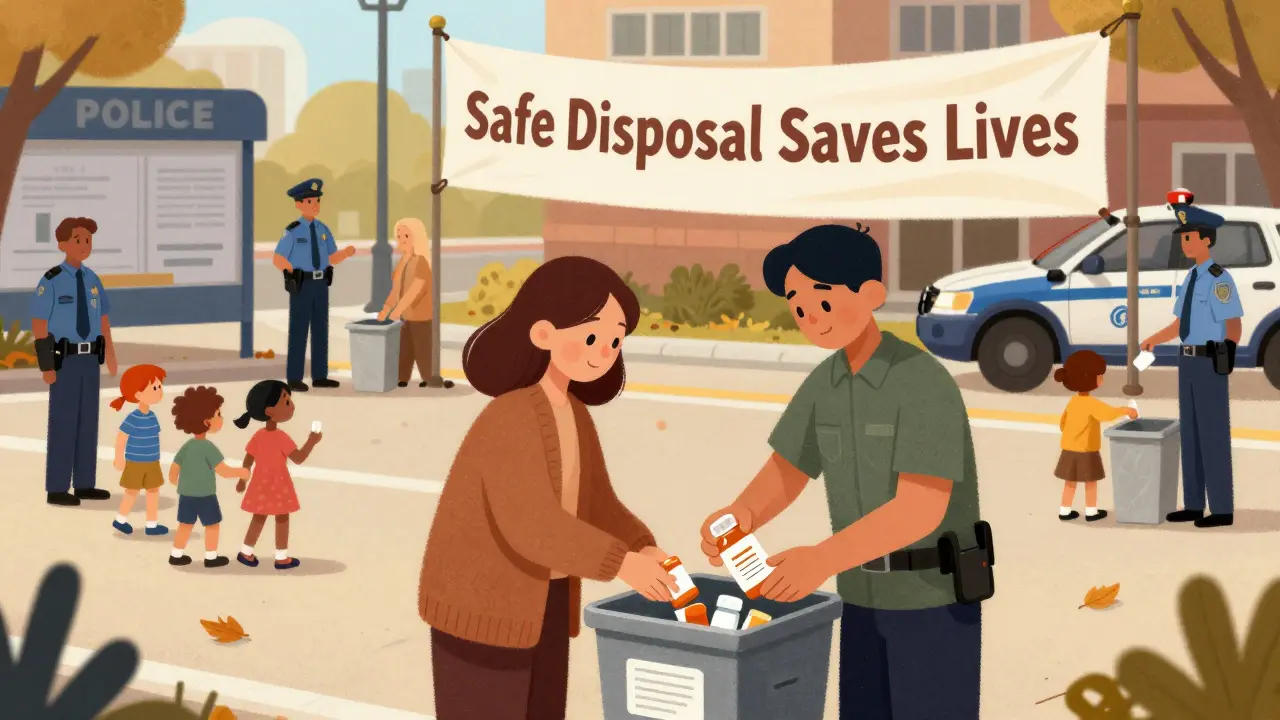
The safest, cleanest way to dispose of unused meds? Take them back. Drug take-back programs collect prescriptions at pharmacies, hospitals, police stations, and community events. These programs are run by the DEA and local agencies. They collect everything-pills, patches, liquids, even needles-and incinerate them safely.Since 2010, these programs have collected over 14 million pounds of unused medications. In New Zealand, take-back bins are available at many community pharmacies. You don’t need to be a patient there-you can drop off meds from any prescription. No questions asked. No paperwork. Just drop the bottle in the bin.
But here’s the catch: take-back programs are only for ultimate users-the people who were prescribed the meds. Hospitals, clinics, and nursing homes can’t use these bins. They have to follow strict federal rules for hazardous waste disposal. So if you’re a caregiver or family member, you can drop off your own leftover pills. But if you’re handling meds from a care facility, you need to work with their environmental health team.
How to Dispose of Medications at Home
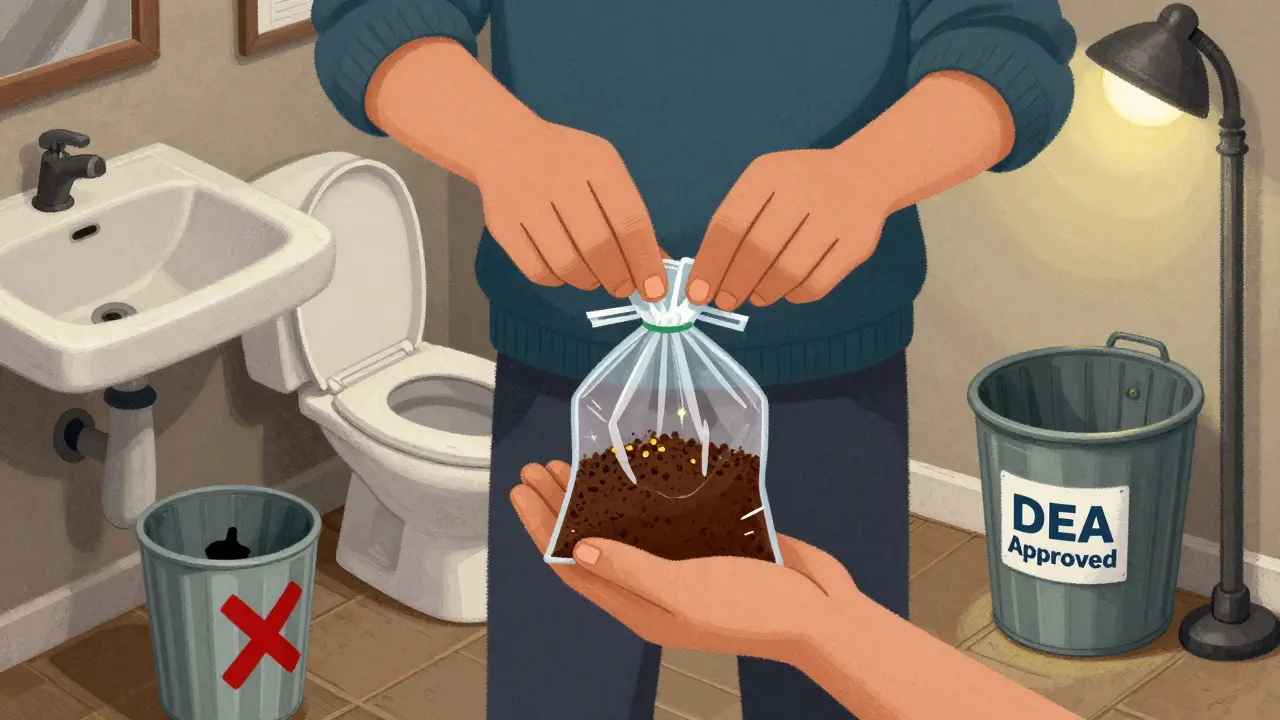
If there’s no take-back option nearby, the FDA has a simple, safe method for home disposal:- Take the pills out of their original bottles.
- Mix them with something unappetizing-used coffee grounds, cat litter, or dirt. Don’t crush pills unless the label says it’s safe.
- Put the mixture in a sealed plastic bag or container. A used yogurt tub or jar with a tight lid works.
- Scratch out your name and prescription number on the empty bottle with a marker.
- Throw the sealed container in the trash.
This method reduces the risk of accidental ingestion by kids or pets by 99.8% compared to flushing. It also stops people from digging through your trash looking for painkillers. And it’s legal everywhere. No special permits. No fees. Just five minutes of your time.
What Counts as Hazardous Waste?
Not all meds are created equal. About 5-10% of pharmaceutical waste is classified as hazardous by the EPA. These are drugs that are toxic, carcinogenic, or environmentally persistent. Examples include warfarin, arsenic trioxide, nicotine patches, and certain chemotherapy agents.Hazardous waste can’t go in the trash or down the drain. It must be incinerated at a licensed facility. In healthcare settings, staff must use labeled, leak-proof, puncture-resistant containers and keep records for at least three years. A hazardous waste manifest must accompany every shipment, showing where it came from and where it’s going.
At home, you don’t need to worry about this classification. If you’re not a healthcare provider, just follow the coffee grounds method above. But if you’re caring for someone on chemo or other strong meds, ask the pharmacy or hospital for disposal instructions. They’ll tell you if it’s hazardous and how to handle it.
Controlled Substances: A Special Case
Opioids, benzodiazepines, ADHD meds, and other controlled substances have extra rules. Even if they’re expired or unused, they’re still classified as Schedule II-V drugs under DEA law. That means they can’t be thrown in the trash without proper preparation.At home: use the coffee grounds method. But if you’re in a care facility, you can’t just toss them. They must be handled by the Environmental Health and Safety (EHS) department. Do not send them with regular chemical waste. They need separate documentation and secure storage until incineration.
Many people don’t realize that pharmacies can’t take back controlled substances unless they’re registered DEA collectors. That’s why take-back events are often hosted by police departments or hospitals. If you’re unsure, call your local pharmacy or sheriff’s office. They’ll tell you where to go.
Common Mistakes and How to Avoid Them
Here are the top errors people make-and how to fix them:- Mixing meds in one container: Always keep each prescription in its own bag or container. Mixing leads to accidental overdoses.
- Keeping expired meds “just in case”: Expired antibiotics can become toxic. Painkillers lose potency. Toss them after the expiration date-or sooner if they look discolored or smell odd.
- Believing flushing is safe: Unless it’s on the FDA flush list, don’t do it. Even one pill can contaminate thousands of gallons of water.
- Leaving meds in unlocked cabinets: Teens are 3x more likely to abuse prescription drugs from home medicine cabinets than from dealers. Lock them up.
- Ignoring take-back events: These happen twice a year in most towns. Sign up for alerts from your local pharmacy or health department.
What’s Changing in 2025?
New rules are coming. By 2025, the EPA may introduce water quality standards specifically for pharmaceuticals. Some states are pushing for “producer responsibility” laws, where drug companies pay for disposal programs. Smart disposal kiosks are being piloted in hospitals-they scan your bottle, tell you how to dispose of it, and print a receipt.Meanwhile, take-back programs are expanding. In New Zealand, pharmacies are required to offer free disposal bins by 2026. In the U.S., the DEA is reviewing whether more pharmacies can become authorized collectors. The goal? Make safe disposal as easy as buying a soda.
For now, your job is simple: store meds safely, dispose of them properly, and spread the word. One person changing their habits can prevent a child from overdosing, a river from being poisoned, or a family from losing someone to addiction.
Can I flush my old pills down the toilet?
Only if they’re on the FDA’s flush list-15 specific opioid painkillers and one benzodiazepine. For all other medications, flushing is unsafe and illegal in healthcare settings. At home, it’s strongly discouraged because it pollutes water supplies. Use the coffee grounds method instead.
Where can I find a drug take-back bin near me?
In New Zealand, most community pharmacies have free take-back bins. You can also check with your local police station, hospital, or city council. The DEA’s National Take Back Initiative website lists collection sites in the U.S., and similar programs exist in other countries. Call your nearest pharmacy-they’ll know where the closest drop-off is.
Do I need to remove pills from their bottles before disposal?
Yes. Take pills out of their original containers and mix them with coffee grounds, cat litter, or dirt. This makes them unappealing and unrecognizable. Then put the mixture in a sealed bag or container. Scratch out your personal info on the empty bottle and throw it away separately.
Is it safe to throw expired medicine in the trash?
Only if you mix it with an unappetizing substance like coffee grounds or cat litter and seal it in a container. Never throw pills in the trash as-is-they can be dug up by kids, pets, or people looking for drugs. The mixing step is what makes disposal safe.
What should I do with insulin or other refrigerated meds?
Don’t flush or throw away refrigerated meds like insulin without mixing them first. Take them to a take-back program if possible. If not, remove them from the vial, mix with coffee grounds or cat litter in a sealed container, and put them in the trash. The cold storage doesn’t change the disposal method-just the handling before disposal.
Can I donate unused medications?
In most places, no. Even if the meds are unopened and expired, donation is rarely allowed due to safety and legal concerns. Some states have drug donation programs, but they’re rare and only accept certain types of meds. The safest route is always take-back or proper disposal.
Why can’t pharmacies take back all types of drugs?
Pharmacies can only accept medications from individuals (ultimate users), not from clinics or hospitals. Controlled substances require special DEA registration to collect. Many pharmacies don’t have that license. That’s why take-back events are often hosted by police or public health departments-they have the legal authority to collect and destroy them safely.
Tom Swinton
January 6, 2026 AT 04:01Okay, I’ll be real-I used to toss old pills in the toilet like it was a magic portal to Neverland. Then my cousin’s kid found a bottle of Oxy in the bathroom cabinet and nearly died. Now I keep everything locked in a $15 combo box under my bed. Seriously, if you’re not doing this, you’re playing Russian roulette with your family. And no, the bathroom cabinet is NOT a ‘safe’ spot-it’s basically a drug dealer’s welcome mat. Also, coffee grounds? Genius. I mix my expired gabapentin with used grounds, seal it in a yogurt tub, and toss it like it’s trash from a crime scene. No one’s digging through my garbage for painkillers. And yes, I still check the label for refrigeration. Insulin ain’t no joke. This post? Lifesaver.
Vinayak Naik
January 7, 2026 AT 17:21bro i just throw all my meds in the bin like its just old receipts 😅 but now i know its like flushing ur toilet with poison 🌍😭 i live in india and we got zero take back bins here so i mix em with chili powder and old coffee (spicy meds now lol) and bury em in the garden. not ideal but better than polluting the river where we bath. also-why the hell do drug cos make so many pills we dont need? 100 tabs for 10 days? bro i’m not a pharmacy.
Cam Jane
January 9, 2026 AT 01:15Yes. Yes. YES. This is the kind of info we NEED to spread. I’m a nurse, and I’ve seen too many kids OD on grandma’s leftover Xanax. Lock it up. Mix it with cat litter. Use take-back bins. And if you’re not sure? CALL YOUR PHARMACY. They’re not gonna judge you-they’ve seen it all. Also, don’t hoard meds ‘just in case.’ Expired antibiotics can make you sicker. Toss ‘em. Simple. Safe. Smart.
Wesley Pereira
January 10, 2026 AT 01:26So let me get this straight-we’re supposed to trust the DEA’s ‘flush list’ but not the FDA’s ‘don’t flush’ list? And pharmacies can’t take back controlled substances unless they’re DEA-registered? Which means most of them can’t? So the only way to dispose of your Vicodin is… to wait for a biannual police event? Or mix it with your cat’s poop? Brilliant. Just brilliant. I mean, if the system’s this broken, why are we blaming the patient? The real problem is corporate greed and bureaucratic incompetence. But hey, at least we’ve got coffee grounds.
Stuart Shield
January 10, 2026 AT 06:06Flushing meds is like pouring your ex’s love letters into the ocean-messy, dramatic, and ultimately pointless. I live in London and we’ve got bins in every pharmacy, even the 24-hour ones. Drop it in, walk away. No questions. No shame. I once dropped off my dad’s chemo leftovers after he passed. Felt weird, but right. And yeah, the fridge ones? Still go in the trash after mixing. Temperature doesn’t make them magical. Just make sure they’re unrecognizable. Also-stop hoarding. Your ‘just in case’ ibuprofen is probably expired since 2020.
Indra Triawan
January 10, 2026 AT 12:52Is it not symbolic, really? We treat medicine like disposable consumer goods-buy it, use it, discard it-while the planet bleeds from our indifference. The pills, the bottles, the chemical ghosts in the water-they are echoes of our disconnection from nature, from care, from responsibility. We are not just disposing of drugs-we are disposing of the sacredness of healing. And yet, we call ourselves civilized. The coffee grounds? A bandage on a severed artery.
Susan Arlene
January 11, 2026 AT 23:54lol i just keep em in the drawer. no one ever looks there. also my cat would eat them if i mixed em with coffee grounds. so… yeah. i guess i’m the bad guy. but i did throw out my expired antidepressants last week. kinda felt like i was dumping a part of my past. weird.
Joann Absi
January 12, 2026 AT 02:00🚨 AMERICA ISN’T READY FOR THIS 🚨
Flushing pills? 🇺🇸 ISN’T THAT ILLEGAL?!
My cousin’s kid got into her mom’s Xanax and now she’s in rehab and the whole family’s on TV 😭
WE NEED TO LOCK IT UP OR WE’RE ALL GONNA DIE 😭💊
Also-why is New Zealand better than us?? 🇳🇿👑
Someone call the president. I’m crying. 🇺🇸💔 #MedicationSafety #NotMyPresidentButMyPills
Jeane Hendrix
January 12, 2026 AT 16:10Wait-so if I’m a caregiver for my mom on chemo, and she’s on a Schedule II opioid, and I’m not the original prescriber, but I’m the one managing her meds… can I drop her leftover pills in a take-back bin? Or do I need to coordinate with her oncology team? The FDA says ‘ultimate users’ can drop them off, but the DEA says ‘only if the pharmacy is registered.’ And my local CVS isn’t registered. So… do I call the sheriff? Or just mix it with cat litter and hope for the best? I just want to do the right thing without getting sued.