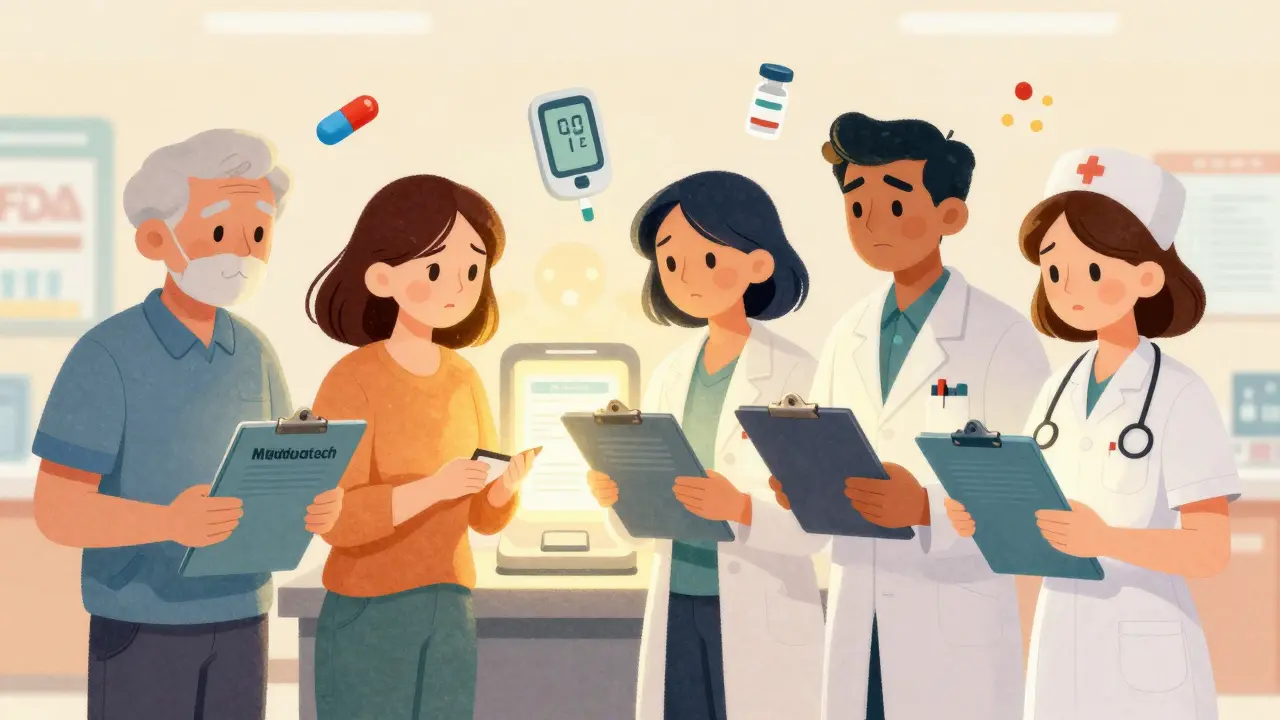
Every year, millions of people take medications that help them live longer, feel better, or manage chronic conditions. But sometimes, those same drugs cause unexpected problems - severe rashes, dangerous drops in blood pressure, liver damage, or even death. Most of these reactions never make it into medical journals or news headlines. Why? Because they’re not reported. That’s where MedWatch comes in.
MedWatch isn’t just another government form. It’s the U.S. Food and Drug Administration’s main tool for catching hidden dangers in medicines, medical devices, and other health products after they’ve been approved and sold to the public. Think of it as an early warning system built by patients, doctors, and pharmacists - not labs or lobbyists. If you’ve ever had a side effect that surprised your doctor, or seen someone else react badly to a drug, you’ve seen why MedWatch matters.
What Exactly Is MedWatch?
MedWatch, officially called the FDA Safety Information and Adverse Event Reporting Program, started in 1993. It was created because clinical trials can’t catch every problem. In trials, only a few thousand people take a drug for months. But once millions start using it, rare side effects show up. A drug might be safe for most - but deadly for one in 100,000. That’s the kind of danger MedWatch is designed to find.
The program doesn’t just track pills. It covers prescription drugs, over-the-counter medicines, vaccines, blood products, gene therapies, medical devices like pacemakers and glucose monitors, dietary supplements, cosmetics, and even infant formula. Anything regulated by the FDA falls under its scope.
Since 2021, MedWatch has processed over 1.4 million reports annually. About 65% of those come from drugs and biologics. Medical devices make up 30%. The rest? Supplements, baby food, even acne creams. The system works because it listens to everyone - not just hospitals or manufacturers.
Who Can Report and How?
You don’t need to be a doctor to report. Anyone can. Patients, caregivers, pharmacists, nurses, and even family members who notice something wrong can file a report. There are two main forms, and they’re free to use.
- Form FDA 3500B - For patients and consumers. This is the simplest version. It asks for basic info: what medicine you took, what happened, when, and your contact details. It’s available in English and Spanish.
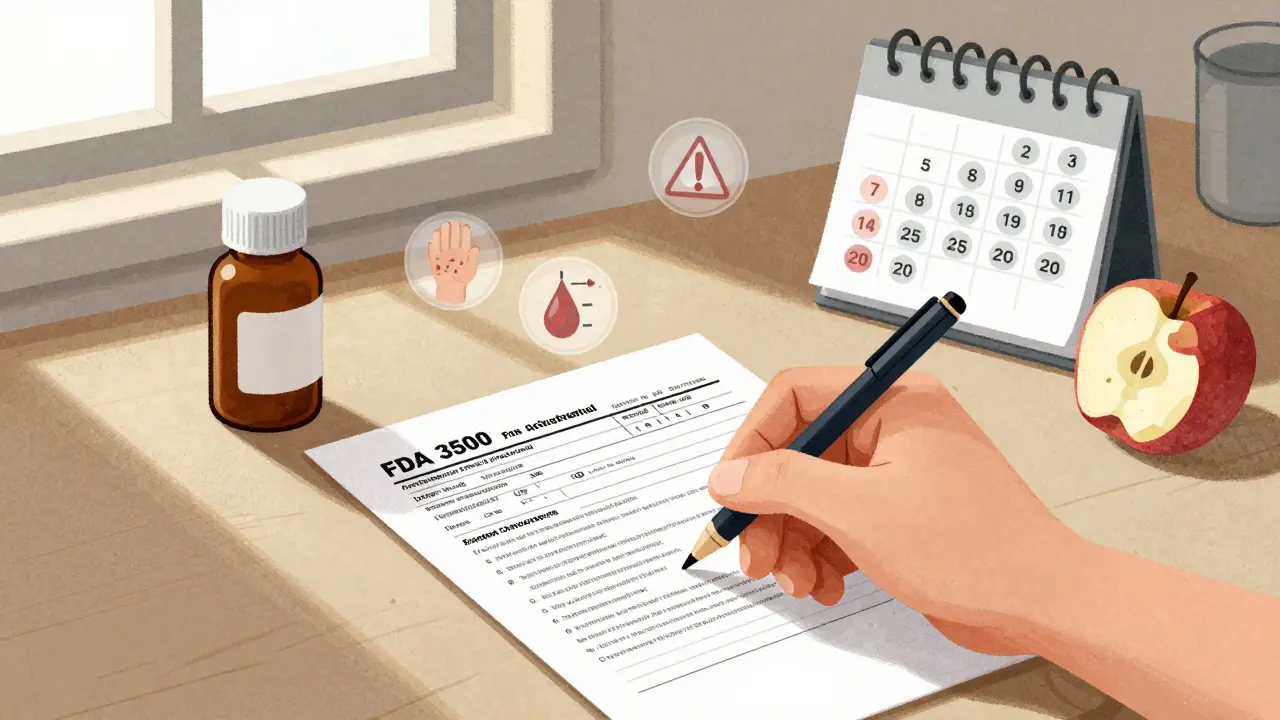
- Form FDA 3500 - For healthcare professionals. This one asks for more clinical details - lab results, medical history, timing of symptoms. But even this form takes less than 20 minutes to fill out online.
You can report three ways:
- Online at fda.gov/MedWatch (the easiest method)
- By phone: 1-800-FDA-1088 (available 24/7, average wait time under 3 minutes)
- By mail or fax - downloadable forms are available on the FDA site
There’s no cost. No registration. No follow-up required. But if you leave your contact info, the FDA may reach out if they need more details.
What Counts as a Reportable Event?
You don’t need to be sure something is dangerous to report it. If you’re worried, report it. The FDA says you should report any event that might be serious - even if you’re not certain it was caused by the product.
Here’s what counts as serious:
- Death
- Hospitalization (or prolonging a hospital stay)
- Disability or permanent damage
- Birth defects or pregnancy complications
- Life-threatening reaction
- Event requiring medical intervention to prevent serious harm
For example:
- Your elderly parent started a new blood pressure drug and fell unconscious two days later - even if they didn’t go to the hospital, you should report it.
- Your child developed a severe rash after using a new acne cream - that’s reportable, even if it cleared up.
- A diabetic friend’s glucose monitor gave wrong readings three times - that’s a device failure, and it needs reporting.
The FDA doesn’t expect you to diagnose. They just need the facts: what happened, when, and what product was involved.
What Happens After You Report?
Once submitted, your report goes into a national database. It’s not just filed away. Trained analysts review every report. They look for patterns. If 10 people report the same rare reaction to a new diabetes drug, that’s a red flag.
Between 2018 and 2021, MedWatch data led to:
- 18 changes to drug labels (adding new warnings)
- 7 public safety alerts
- 3 products withdrawn from the market
One famous case: In 2007, reports of heart attacks linked to the diabetes drug rosiglitazone (Avandia) started piling up. MedWatch helped confirm the pattern. The FDA added a black box warning - the strongest possible - and restricted its use.
But here’s the catch: experts say only 1% to 10% of serious side effects are ever reported. That means for every one report they get, there are 10 to 100 more that go unreported. Why? Many people don’t know about MedWatch. Others think it won’t make a difference. Some fear retaliation from doctors. But the truth? Your report could save someone’s life.
Why Your Report Matters
Manufacturers are required to report adverse events, but they don’t always catch what patients experience. A 2022 study found that consumers report problems doctors never see - like dizziness after taking a pill on an empty stomach, or a rash that only appears after sun exposure. These details matter.
Doctors in oncology and psychiatry report more often because they’re trained to. But primary care doctors? Only 42% report regularly. That’s a gap. Patients fill it.
One woman in Ohio reported that her new antidepressant caused sudden, violent shaking. She didn’t know if it was related - but she reported it anyway. Within months, 17 other reports came in with the same symptom. The FDA investigated. The drug’s label was updated to warn about tremors. Others were warned before they got hurt.
That’s the power of MedWatch. It’s not flashy. It doesn’t make headlines. But it’s the quiet system that keeps drugs safer for everyone.
Common Misconceptions
There are a few myths about MedWatch that stop people from reporting:
- Myth: "I’ll get sued if I report." Truth: Reporting is protected. You can’t be penalized for submitting a report.
- Myth: "The FDA won’t do anything." Truth: Even one report can trigger a review. If enough people report the same thing, action follows.
- Myth: "Only doctors can report." Truth: The consumer form exists because patients are essential reporters.
- Myth: "I need to be certain it was the drug." Truth: Uncertainty is why the system exists. You’re not diagnosing - you’re sharing what happened.
Also, don’t wait for a “big” reaction. A persistent headache, nausea that lasts weeks, or mood swings after starting a new pill - these are valid reasons to report. The FDA doesn’t need a dramatic event to act. Sometimes, the smallest pattern leads to the biggest change.
How to Make Your Report Count
If you’re reporting, here’s how to make it as useful as possible:
- Write down the details. What was the medicine? What was the dose? When did you start taking it? When did the problem start?
- Include timing. Did the symptom start within hours? Days? Weeks? This helps determine if it’s connected.
- Describe the outcome. Did it go away? Did you need treatment? Did it get worse?
- Include other meds. List any other drugs, supplements, or vitamins you’re taking. Interactions matter.
- Don’t leave out the basics. Age, gender, and existing conditions help analysts spot patterns.
Even if you don’t have all the answers, report anyway. The FDA says incomplete reports are still valuable. They’ll reach out if they need more.

What’s Next for MedWatch?
The FDA is working to make MedWatch faster and smarter. In 2023, they launched a new online portal with mobile-friendly forms and real-time error checks. Submission errors dropped by 27%.
By 2025, they plan to let patients report side effects directly through electronic health records - meaning your doctor’s system could auto-send a report if it detects a flagged reaction.
They’re also testing AI tools to sort reports faster. One pilot cut review time for high-priority cases by 35%. And by 2026, they’ll require all reports to use standardized medical language (SNOMED CT), so computers can better spot patterns.
But none of this matters if no one uses it. The system is only as strong as the reports it receives.
Frequently Asked Questions
Can I report a side effect if I’m not sure it was caused by the medication?
Yes. MedWatch is designed for situations where the connection isn’t clear. If you suspect a medication might be involved - even if you’re not sure - report it. The FDA’s job is to look for patterns across thousands of reports. One report might seem insignificant, but if 50 others say the same thing, it becomes a safety signal.
Do I need to give my real name when reporting?
No, but it helps. You can report anonymously. However, if you leave your contact information, the FDA may follow up to get more details - which could make your report more useful. Your information is kept private and is not shared with the drug manufacturer.
How long does it take for the FDA to act on a report?
There’s no set timeline. Some reports are reviewed within days if they point to a life-threatening pattern. Others may take months or years if they’re isolated. The FDA doesn’t notify reporters of outcomes, but if a safety change happens - like a new warning on a drug label - it’s posted publicly on the FDA website.
Can I report a problem with a dietary supplement?
Yes. Dietary supplements are covered under MedWatch. Unlike prescription drugs, supplements don’t need FDA approval before sale. That makes reporting even more important. If a supplement causes liver damage, heart palpitations, or interactions with other drugs, your report helps the FDA track trends and take action.
Is MedWatch only for U.S. residents?
Yes. MedWatch only accepts reports for products sold or used in the United States. If you’re outside the U.S. and experienced a side effect, contact your country’s national drug safety agency. But if you’re a U.S. resident who took a drug in another country - or if a product sold in the U.S. caused harm abroad - you can still report it.
Final Thought
MedWatch doesn’t need you to be a scientist or a doctor. It just needs you to pay attention. If something feels wrong after taking a medicine - even if it’s small, even if it’s been years - speak up. Your report might not change your life. But it could change someone else’s.
Agbogla Bischof
March 22, 2026 AT 16:52Caroline Dennis
March 23, 2026 AT 12:51Aaron Sims
March 23, 2026 AT 22:33Jacob Hessler
March 25, 2026 AT 16:43Darlene Gomez
March 26, 2026 AT 11:41Alex Arcilla
March 28, 2026 AT 09:13Stephen Alabi
March 29, 2026 AT 03:03Katie Putbrese
March 30, 2026 AT 15:00Jefferson Moratin
March 30, 2026 AT 22:41Brandon Shatley
March 31, 2026 AT 02:09Blessing Ogboso
April 1, 2026 AT 22:33Grace Kusta Nasralla
April 3, 2026 AT 01:56Chris Farley
April 3, 2026 AT 21:50