Most people treat Melatonin as a simple sleeping pill. You swallow it right before bed, hoping to knock out quickly. But if you are taking it that way, you might be using the wrong dose, the wrong timing, or even the wrong formulation. The result? Morning grogginess, vivid dreams, or simply no effect at all.
Melatonin is not a sedative like benzodiazepines. It is a hormone produced by the pineal gland that signals to your brain that it is time to wind down. Think of it as the dimmer switch for your internal clock, not the power button. A 2024 meta-analysis published in the Journal of Sleep Research revealed that efficacy peaks at specific doses and timings that contradict common habits. Getting these details right can mean the difference between a restful night and a confused morning.
Finding Your Right Melatonin Dose
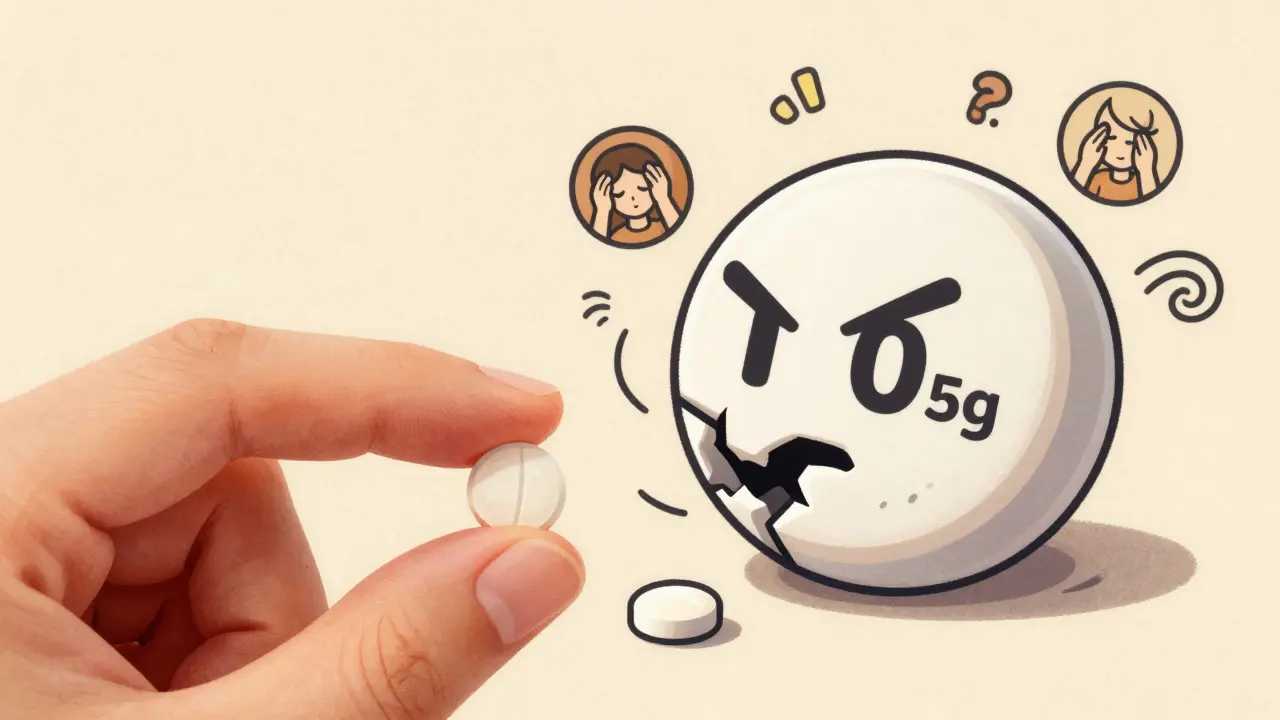
The biggest mistake people make is starting with high doses. Store shelves are stocked with 5 mg, 10 mg, or even higher pills. However, more is rarely better when it comes to this hormone. In fact, taking too much can saturate your melatonin receptors, potentially reducing effectiveness and increasing side effects.
Here is what the data says about effective dosing ranges:
- Starting Point: Most adults should begin with 0.5 mg to 1 mg. This low dose is often sufficient to trigger the sleep signal without overwhelming the system.
- Typical Effective Range: For general insomnia, doses between 1 mg and 3 mg are commonly effective. The NHS in the UK officially recommends 2 mg slow-release tablets for short-term treatment.
- Peak Efficacy: The 2024 meta-analysis found that sleep onset latency (the time it takes to fall asleep) improved most significantly at 4 mg per day.
- Safety Ceiling: Doses above 5 mg increase the risk of side effects like headaches, dizziness, and next-day drowsiness. The absolute maximum recommended by some experts is 10 mg, but this should only be done under specialist supervision for conditions like ADHD or cerebral palsy.
If you are currently taking 5 mg or more and still struggling to sleep, try cutting the dose in half. Your body may be experiencing receptor saturation, where the extra hormone just bounces off because there are no more receptors available to bind with it.
The Critical Role of Timing
When you take melatonin matters just as much as how much you take. Many guidelines suggest taking it 30 minutes before bed, but recent research challenges this assumption.
The same 2024 study analyzed 27 randomized controlled trials and found that administering melatonin 3 hours before desired bedtime was significantly more effective for reducing sleep onset latency than the standard 30-minute window. Why? Because melatonin needs time to build up in your bloodstream and signal the suprachiasmatic nucleus (your master clock) to prepare for sleep.
| Timing Strategy | Best For | Pros | Cons |
|---|---|---|---|
| 30-60 Minutes Before Bed | Immediate hypnotic effect (e.g., on flights) | Quick onset; convenient | Less effective for long-term circadian regulation |
| 3-4 Hours Before Bed | General insomnia & circadian alignment | Significantly reduces sleep onset latency; aligns body clock | Requires planning; may cause early evening drowsiness |
| Variable (Chronotype-based) | Jet lag & shift work | Personalized; highest efficacy for travel | Complex to calculate; requires tracking |
If your goal is to fix a chronic sleep schedule issue, try shifting your dose earlier. For example, if you want to sleep at 11 PM, take your melatonin around 7 or 8 PM. This gives your body ample time to lower its core temperature and produce natural sleep pressure.
Formulation Matters: Fast vs. Slow Release
Not all melatonin pills are created equal. The release mechanism determines how long the hormone stays active in your system.
Fast-Release Melatonin: This form enters your bloodstream quickly, peaking within 30-60 minutes. It is ideal for helping you fall asleep faster or for jet lag protocols where you need to shift your clock rapidly. However, its effects wear off relatively quickly, which means it won’t help if you struggle with staying asleep through the night.
Slow-Release (Extended-Release) Melatonin: These tablets dissolve gradually, providing a steady stream of melatonin throughout the night. The NHS recommends 2 mg slow-release tablets for maintaining sleep. If you wake up frequently at 3 AM and can’t get back to sleep, slow-release might be the better option. However, avoid using slow-release for jet lag adjustment, as lingering melatonin can confuse your circadian clock upon arrival.
Jet Lag Protocols: East vs. West Travel
Jet lag occurs when your internal clock is out of sync with your new time zone. Melatonin can help reset this clock, but the protocol depends entirely on the direction of your travel.
Traveling East (e.g., New York to London): You are losing time, so you need to advance your clock. Take 1-3 mg of fast-release melatonin at your destination’s bedtime. Do not take it before 8 PM local time unless necessary. This helps pull your sleep cycle forward.
Traveling West (e.g., London to New York): You are gaining time, so you need to delay your clock. Melatonin is less critical here because delaying sleep is naturally easier for humans. However, if needed, take melatonin late at night or early morning in the new time zone to push your wake-up time later. Some protocols suggest avoiding melatonin entirely for westward travel and relying on bright light exposure instead.
The Timeshifter protocol, updated in 2024, emphasizes personalized timing based on your individual chronotype (whether you are a morning lark or night owl). Using an app to calculate precise timing can improve efficacy by up to 38% compared to generic advice. Remember, keep jet lag treatment short-no more than 5 consecutive days-and limit yourself to 16 courses per year to prevent dependency.
Safety, Side Effects, and Interactions
While melatonin is generally safe for short-term use, it is not without risks. Higher doses (above 5 mg) correlate with increased reports of:
- Vivid dreams or nightmares
- Morning grogginess and "melatonin hangover"
- Headaches and dizziness
- Nausea
There is also concern about long-term use disrupting your body’s natural production of melatonin. While evidence is mixed, it is wise to use melatonin as a temporary tool rather than a permanent solution. Additionally, melatonin can interact with blood thinners, immunosuppressants, and diabetes medications. Always consult a healthcare provider before starting any supplement regimen, especially if you have underlying health conditions.
Practical Steps to Optimize Your Sleep
To get the most out of melatonin, combine it with good sleep hygiene. Here is a simple checklist:
- Start Low: Begin with 0.5-1 mg. Increase only if necessary, up to 3-4 mg.
- Time It Right: For insomnia, take it 3-4 hours before bed. For immediate sleep aid, take it 30-60 minutes before.
- Choose the Form: Use fast-release for falling asleep/jet lag; slow-release for staying asleep.
- Avoid Light: Blue light from screens blocks melatonin production. Dim lights 1-2 hours before bed.
- Limit Duration: Use melatonin for short-term issues (insomnia, jet lag) rather than chronic daily use.
By treating melatonin as a precise tool rather than a blunt instrument, you can harness its full potential to regulate your circadian rhythm effectively. Remember, consistency is key. Give any new protocol at least a week to show results before adjusting your approach.
What is the best time to take melatonin for insomnia?
Recent research suggests taking melatonin 3-4 hours before your desired bedtime is more effective for reducing sleep onset latency than taking it 30 minutes before bed. This allows the hormone to signal your body clock to prepare for sleep naturally.
Is 10 mg of melatonin too much?
Yes, for most adults, 10 mg is considered excessive. Studies show efficacy peaks around 4 mg, and doses above 5 mg increase the risk of side effects like headaches, dizziness, and morning grogginess. Start with 0.5-1 mg and increase gradually only if needed.
Should I use fast-release or slow-release melatonin for jet lag?
Use fast-release melatonin for jet lag. It provides a quick spike in hormone levels to help shift your circadian rhythm without lingering in your system, which could confuse your clock upon arrival. Slow-release is better for staying asleep through the night.
How long does it take for melatonin to kick in?
Melatonin typically reaches peak plasma concentration within 30-60 minutes after oral ingestion. However, its physiological effects on the circadian clock can last 4-8 hours depending on the dose and formulation.
Can melatonin disrupt my natural hormone production?
There is some concern that long-term, high-dose melatonin use may suppress the body's natural production. To minimize this risk, use the lowest effective dose and limit usage to short-term periods for specific issues like insomnia or jet lag.
Hafiz Omeiza
June 23, 2026 AT 18:52It is fundamentally incorrect to suggest that melatonin acts merely as a dimmer switch without acknowledging the complex pharmacokinetics involved. The assertion that efficacy peaks at 4 mg is a gross oversimplification of the data, which clearly indicates individual variability based on receptor density and metabolic rate. One must consider that the suprachiasmatic nucleus does not respond uniformly to exogenous hormones, rendering generic timing protocols largely ineffective for the average consumer. Furthermore, the distinction between fast-release and slow-release formulations is often misunderstood by laypeople who fail to grasp the half-life implications. It is imperative that individuals consult with a qualified endocrinologist before altering their circadian rhythm through supplementation, rather than relying on internet guides that lack rigorous peer review. The notion that one can simply 'cut the dose in half' ignores the potential for rebound insomnia and hormonal feedback loops. We must approach this topic with scientific rigor, not casual anecdotal evidence.
Alex Johnston
June 24, 2026 AT 05:05They want you to think it's just a hormone but have you considered that the pineal gland is actually being calcified by fluoride in your water supply to suppress your third eye vision? :D Melatonin isn't just for sleep, it's a key to unlocking memories from past lives that the mainstream medical establishment tries to keep buried under layers of bureaucratic nonsense. The big pharma companies are terrified of people realizing they can reset their own biological clocks because then they wouldn't need the expensive sedatives that keep you docile and compliant. I've been taking raw melatonin extracted from my own dreams for years and I can see the grid lines around every building now. Wake up sheeple, the dimmer switch is a lie designed to keep you in the dark while they harvest your bio-energy. :)
Annemarie Kautz
June 25, 2026 AT 15:34idk why everyone makes such a big deal about this stuff lol i just take whatever pill i find in the cabinet and hope for the best. usually works fine until i wake up feeling like trash. maybe its the placebo effect or maybe im just broken. anyway good luck with all ur science stuff guys. :P
Sam Dudgeon
June 27, 2026 AT 13:35you really think taking a pill fixes the root cause of your sleep issues? its probably your toxic relationship with technology or maybe your mother never hugged you enough when you were young. i feel like you are avoiding the deeper emotional pain that keeps you awake at night staring at the ceiling. tell me what is truly keeping you up is it fear of death or just loneliness? i can help you dig into that if you want to share more about your childhood trauma. its sad how we rely on chemicals instead of confronting our inner demons. let me know if you want to talk more about your feelings.
Kimberly Maten-ao
June 29, 2026 AT 07:05This article misses the point entirely regarding the mechanism of action for shift workers specifically. If you are working night shifts, taking melatonin 3 hours before bed is useless because you are fighting against natural light exposure during the day. The protocol needs to account for light therapy as well, not just the supplement. I demand a more nuanced discussion on how blue light blockers interact with these specific dosages because simply swallowing a pill doesn't override the photic input to the SCN. It is frustrating to see such basic advice given without considering the environmental factors that dictate circadian entrainment. Stop giving generic advice and start addressing the reality of modern work schedules.
Alyssa Smith
June 30, 2026 AT 07:41I am so glad someone finally wrote this because I was struggling for years trying to figure out why I felt so groggy in the morning. It turns out I was taking way too much! I started with 0.5 mg as suggested and wow, the difference is incredible. My energy levels in the morning are so much better and I feel like myself again. It is amazing how small changes can make such a big impact on your overall well-being. Thank you for sharing this helpful guide, it has really changed my perspective on sleep hygiene. I hope others give it a try and experience the same positive results!
Jake Kitzmiller
July 2, 2026 AT 00:48Hey folks, just wanted to add that if you are traveling east, you should also try to get bright sunlight as soon as you wake up in the new time zone. This helps reinforce the signal from the melatonin. I use an app called Timeshifter which calculates the exact times for me based on my flight details. It sounds complicated but it really takes the guesswork out of it. Just remember to wear sunglasses if you need to delay your clock for westward travel. Hope this helps anyone planning a trip soon!
Sumit gupta
July 2, 2026 AT 14:33Interesting read. I mostly stick to natural methods like cutting off caffeine after 2 pm and keeping the room cool. But for jet lag, the melatonin trick with the 3 hour window actually worked for me last time I flew to Europe. Didn't expect it to be that effective but hey, no harm in trying low doses. Chill vibes only.