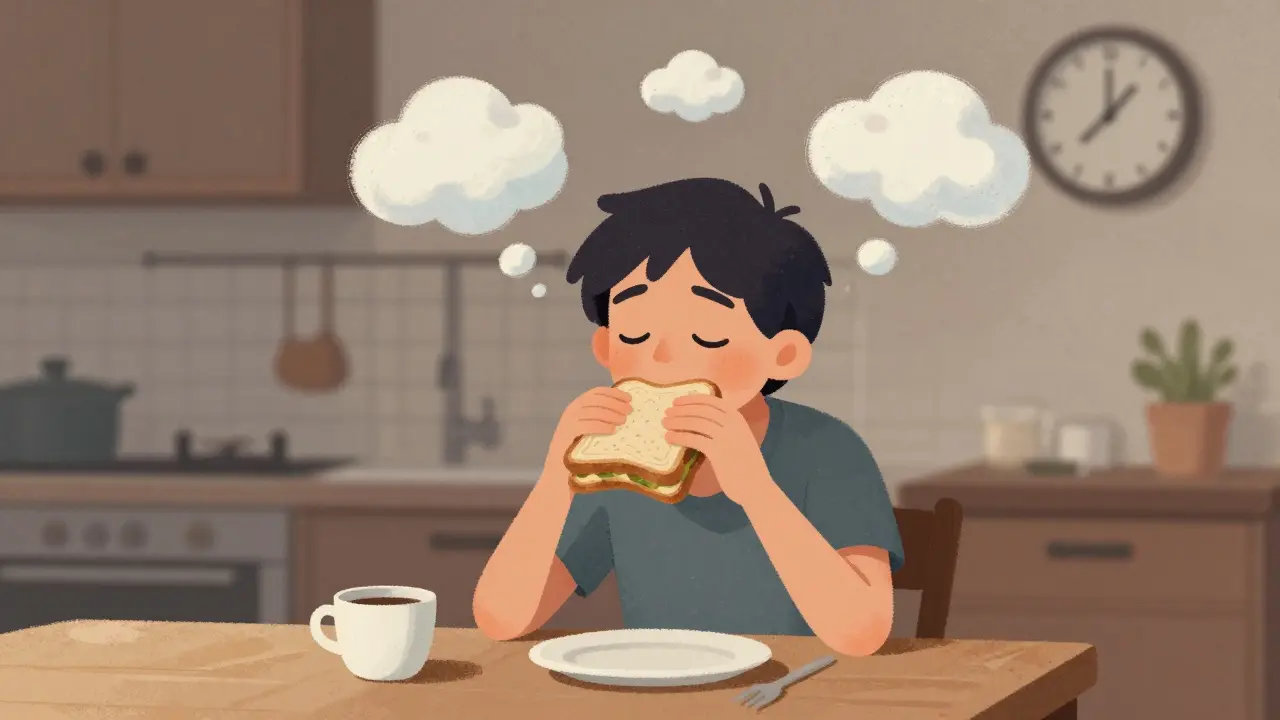
When you’re constantly fighting to stay awake during the day-even after a full night’s sleep-you’re not just tired. You might have narcolepsy. It’s not laziness. It’s not poor sleep habits. It’s a neurological condition where your brain can’t properly control when you’re asleep or awake. People with narcolepsy experience excessive daytime sleepiness so intense that sleep attacks can happen mid-conversation, while driving, or even during a meal. These aren’t just yawns. They’re sudden, uncontrollable episodes of falling asleep that last 15 to 30 minutes, followed by a brief feeling of refreshment-only for the cycle to start again.
What Narcolepsy Really Looks Like
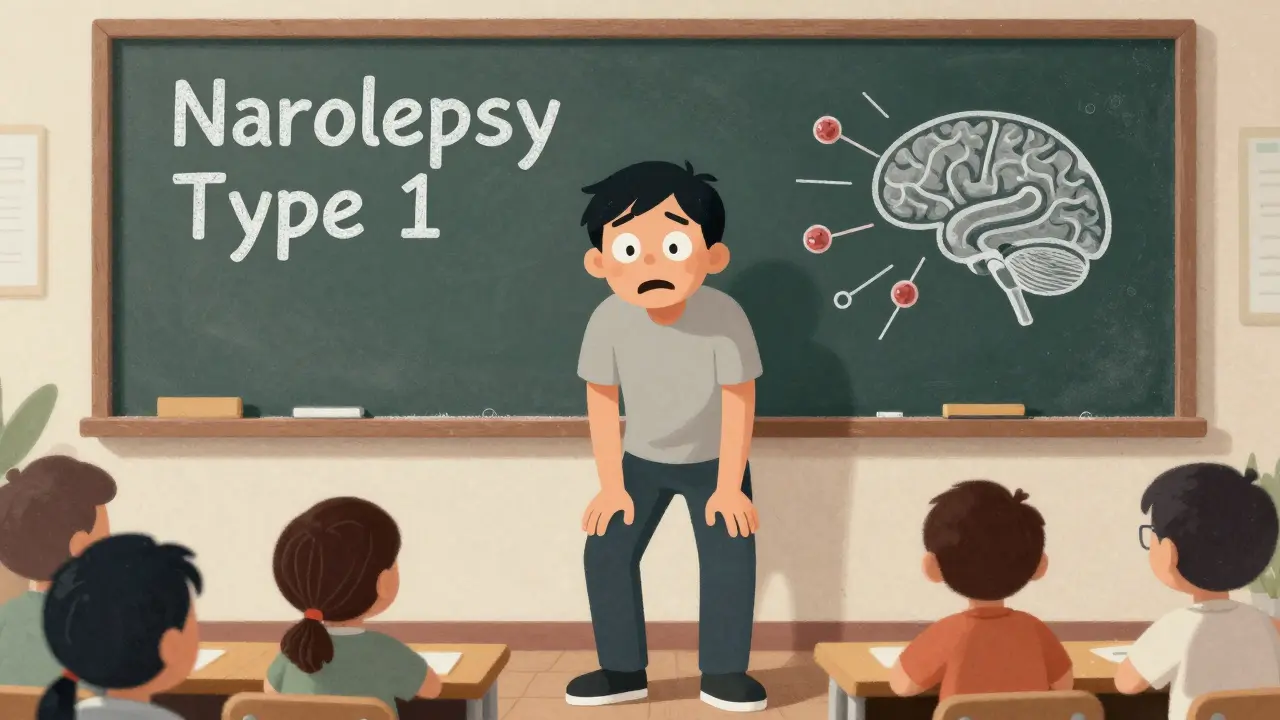
Narcolepsy isn’t just about being sleepy. It’s a complex disorder with five core symptoms, and most people don’t experience all of them at once. But if you have excessive daytime sleepiness (EDS), you’re not alone-100% of people with narcolepsy have it. EDS is the first sign, often showing up in teens or early twenties, though about one in four cases appear after age 40. The sleepiness doesn’t go away with caffeine or naps. It’s persistent, daily, and physically exhausting.Then there’s cataplexy-sudden muscle weakness triggered by strong emotions like laughter, surprise, or anger. It’s not fainting. You stay awake, but your knees buckle, your head drops, or your face goes slack. This happens in about 70% of cases and defines Narcolepsy Type 1 (NT1). If you don’t have cataplexy, you might have Narcolepsy Type 2 (NT2), which shares the same daytime sleepiness but lacks the muscle control issues.
Other symptoms include sleep paralysis-feeling wide awake but unable to move for a minute or two when falling asleep or waking up-and vivid hallucinations, often terrifying, that happen right at the edge of sleep. These aren’t dreams. They feel real. Nighttime sleep is just as broken as daytime alertness. Most people with narcolepsy spend eight hours in bed but only get six and a half hours of actual sleep, chopped into four or five fragments.
How It’s Diagnosed
There’s no single blood test for narcolepsy. Diagnosis requires a two-step process. First, you’ll spend a night in a sleep lab for a polysomnogram, which records brain waves, breathing, and muscle activity. This rules out sleep apnea or other disorders. Then comes the Multiple Sleep Latency Test (MSLT), done the next day. You’re given five chances to nap, two hours apart. If you fall asleep in under eight minutes on average and enter REM sleep in two or more of those naps, it’s a strong indicator of narcolepsy.For Type 1, doctors may also test your cerebrospinal fluid for hypocretin-1 levels. If it’s below 110 pg/mL, that confirms the diagnosis. Hypocretin is a brain chemical that helps keep you awake. In NT1, your immune system mistakenly attacks the cells that make it. This is why narcolepsy is now understood as an autoimmune disorder in most cases.
Stimulants: The First-Line Treatment for Daytime Sleepiness
The goal of treatment isn’t to cure narcolepsy-it’s to manage the symptoms so you can live normally. For excessive daytime sleepiness, stimulants are the most common starting point. But not all stimulants are the same.Modafinil (Provigil) is often the first choice. It’s not a traditional stimulant like caffeine or amphetamines. Instead, it works by increasing dopamine in the brain and supporting the remaining hypocretin system. A 2020 study showed that 70% of people taking modafinil saw a five-point drop on the Epworth Sleepiness Scale-a big improvement for someone who was scoring 18 before. It’s taken once a day, usually in the morning. Side effects are mild: headaches, nausea, or anxiety in a small number of people. Only about 5% stop taking it because of side effects.
Armodafinil (Nuvigil) is the longer-lasting version of modafinil. It stays in your system longer-about 15 hours instead of 12-so it can be taken once daily without needing a second dose. In a 2019 trial, 65% of patients on armodafinil had Epworth scores below 10, meaning they were no longer severely sleepy. Many people prefer it because it gives steady energy without the midday crash.
Traditional stimulants like methylphenidate (Ritalin) and amphetamine salts (Adderall) are more powerful. They work faster and can help those with severe EDS who don’t respond to modafinil. About 80% of users report better alertness. But the trade-off is higher risk: increased heart rate, elevated blood pressure, trouble sleeping, appetite loss, and emotional numbness. Around 45% of people stop using them within a year because of side effects. They’re also controlled substances, meaning prescriptions are harder to refill and carry stigma.
What Works Best? Comparing the Options
Here’s how the main treatments stack up:| Medication | Typical Dose | ESS Reduction | Side Effect Discontinuation Rate | Abuse Potential |
|---|---|---|---|---|
| Modafinil | 200-400 mg/day | 5.2 points | <5% | Low |
| Armodafinil | 150-250 mg/day | 5.8 points | <5% | Low |
| Methylphenidate | 10-60 mg/day | 7.5 points | 25% | Moderate |
| Adderall | 5-60 mg/day | 7.8 points | 45% | High |
| Solriamfetol | 75-150 mg/day | 7.5-9.8 points | 8% | Very Low |
| Pitolisant | 17.8-35.6 mg/day | 6.1 points | 10% | Low |
Modafinil and armodafinil are safer for long-term use. They’re preferred for mild to moderate cases. Traditional stimulants like Adderall work better for severe cases, but only if you can tolerate the side effects. Newer drugs like solriamfetol and pitolisant offer good results with lower abuse risk, but they cost more-up to $850 a month compared to $400 for generic modafinil. Insurance often blocks them unless you’ve tried the older options first.
Real-Life Outcomes and Challenges
Sarah, a 34-year-old teacher in Ohio, went from scoring 18 on the Epworth scale (severe sleepiness) to 6 after switching to armodafinil 250 mg. She now teaches full-time without napping in the staff room. On the other hand, Mark, a 42-year-old mechanic, tried Adderall for six months. He stayed awake at work but lost 20 pounds, couldn’t enjoy meals with his kids, and felt emotionally flat. He switched back to modafinil and says he’s finally feeling like himself again.Many people report that stimulants lose effectiveness after 12 to 18 months. This isn’t tolerance in the addiction sense-it’s the brain adapting. Dose increases help, but not always. Some patients need to combine treatments: modafinil in the morning, sodium oxybate at night for cataplexy and deeper sleep.
Access is another hurdle. Insurance companies require prior authorization, which can take two weeks or more. In the U.S., 78% of patients report delays getting prescriptions approved. And even when approved, some medications like sodium oxybate are only available through special pharmacies because of strict federal controls.

What’s Next? The Future of Treatment
Current drugs treat symptoms, not the root cause. Researchers are working on therapies that could restore hypocretin function. One promising drug, TAK-994, showed big improvements in sleepiness in trials-but development was paused in 2023 due to liver safety concerns. Another, JZP-258 (a lower-sodium version of oxybate), is under FDA review and could be available by late 2024, helping patients who can’t tolerate the high salt content in current oxybate formulations.Long-term, scientists are exploring immunotherapies to stop the autoimmune attack on hypocretin cells. If successful, this could change narcolepsy from a lifelong symptom management condition into something that can be prevented or reversed.
Managing Narcolepsy Every Day
Medication helps, but it’s not enough. Lifestyle matters. Scheduled naps-15 to 20 minutes, two to three times a day-can reduce sleep attacks. Avoid alcohol and heavy meals before work or driving. Stick to a regular sleep schedule, even on weekends. Tell your employer. Under the Americans with Disabilities Act, you’re entitled to reasonable accommodations: flexible hours, a quiet place to nap, or adjusted deadlines.Don’t wait to get diagnosed. Many people live for years thinking they’re just lazy or depressed. Narcolepsy is underdiagnosed-over 100,000 people in the U.S. alone haven’t been diagnosed. If you’ve had unexplained daytime sleepiness for three months or more, talk to a sleep specialist. Bring your sleep diary, note your symptoms, and ask about the MSLT.
There’s no cure yet. But with the right treatment, you can drive, work, parent, and live without being ruled by sleepiness. The goal isn’t perfection-it’s control.
Can narcolepsy be cured?
No, narcolepsy cannot be cured today. Current treatments manage symptoms like excessive daytime sleepiness and cataplexy, but they don’t restore the brain’s hypocretin system. Research is ongoing into disease-modifying therapies, including immunotherapies and hypocretin replacement, but these are still in experimental stages.
Are stimulants addictive if used for narcolepsy?
Traditional stimulants like Adderall and Ritalin have abuse potential and are classified as Schedule II drugs. However, when taken as prescribed for narcolepsy, addiction is rare. The goal is symptom control, not euphoria. Modafinil and armodafinil have very low abuse potential and are not controlled substances. Always follow your doctor’s dosing instructions and report any cravings or mood changes.
Why do I feel worse after taking my stimulant?
This is called rebound fatigue. It happens when the medication wears off, especially if you’re on a single morning dose. Your brain hasn’t had time to adjust to natural wakefulness. Solutions include splitting the dose (if approved by your doctor), switching to armodafinil for longer coverage, or adding a small afternoon nap. Avoid caffeine in the afternoon-it can make rebound worse.
Can I drive with narcolepsy?
Yes, if your symptoms are well-controlled with treatment. Most people with narcolepsy can drive safely with medication and scheduled naps. However, you must report your diagnosis to your local motor vehicle agency, as laws vary by state or country. Never drive if you feel drowsy-even for a few minutes. Use a nap before long trips and avoid driving at night.
What if modafinil doesn’t work for me?
If modafinil doesn’t reduce your Epworth Sleepiness Scale score by at least 3 points after four weeks, your doctor may increase the dose to 400 mg/day. If that still doesn’t help, switching to armodafinil or trying a traditional stimulant like methylphenidate is the next step. For severe cases, solriamfetol or pitolisant may be options. Never stop or change medication without medical supervision.
How often should I see my doctor for narcolepsy?
When starting treatment, check in every month for the first three months to adjust dosage and monitor side effects. Once stable, visits every three to six months are typical. Annual cardiovascular screening (blood pressure, heart rate, ECG) is recommended, especially if you’re on traditional stimulants. Keep a sleep diary and note any changes in symptoms or side effects to bring to each appointment.
John O'Brien
January 26, 2026 AT 17:42Man i thought i was just lazy until i read this. Been falling asleep at my desk for years, thought it was caffeine withdrawal or bad sleep hygiene. Turns out i had narcolepsy type 2. Took me 7 years to get diagnosed. This post is the first time someone actually explained what it feels like without sounding like a textbook.
Kegan Powell
January 28, 2026 AT 13:04so many of us are out here just surviving with modafinil and scheduled naps 🤍
we dont need to be cured, we just need to be believed. the real enemy isnt the sleepiness, its the stigma that says if you were just more disciplined youd be fine. nah. my brain just forgot how to stay awake. and thats ok.
Kirstin Santiago
January 28, 2026 AT 19:48For anyone reading this and thinking 'maybe this is me' - please, talk to a sleep specialist. I waited three years because i thought it was depression. Turns out i had cataplexy triggered by laughter - i'd collapse laughing at memes. It’s not weakness. It’s neurology. You’re not broken, you’re just wired differently.
Conor Flannelly
January 29, 2026 AT 19:49Back home in ireland, we call it 'the sleepy sickness' - no one takes it seriously until someone falls asleep on the bus and misses their stop. The NHS here took 14 months to even schedule the MSLT. By then, i’d lost two jobs. Modafinil saved my life, but the system didn’t care until i cried in front of a consultant. This post? It’s the first thing i’ve seen that gets it right.
Conor Murphy
January 29, 2026 AT 19:49My sister had narcolepsy. She used to nap in the car while i drove. One time she woke up mid-sentence and said 'i just lost 20 minutes'. That’s the thing - you don’t know how long you were out. It’s like your brain hits snooze and forgets to wake you up. I used to think she was faking. Now i wish i’d believed her sooner.
Marian Gilan
January 30, 2026 AT 13:51modafinil is just the government's way of keeping you docile while they pump fluoride into the water to make you sleep more. they dont want you awake. they want you tired. and the 'hypocretin theory'? total bs. its all about the 5g towers and the microchips in your toothpaste. i know because i read it on a forum in 2017 and it made sense. why do you think they call it narcolepsy? narco = narcotic. they're drugging us.
Desaundrea Morton-Pusey
February 1, 2026 AT 09:47so basically this is just an ad for big pharma? modafinil costs 400 a month? you think i'm paying that? i'll just drink 10 energy drinks and call it a day. also why are we even talking about this? america is falling apart and you're writing a novel about sleepy people.
Murphy Game
February 3, 2026 AT 07:03if you're taking stimulants for narcolepsy, you're just addicted to speed. you think you're managing a condition? you're just chemically masking a failure to wake up on time. this isn't a medical issue, it's a moral one. get a job, stop napping, stop blaming your brain. wake up. literally.