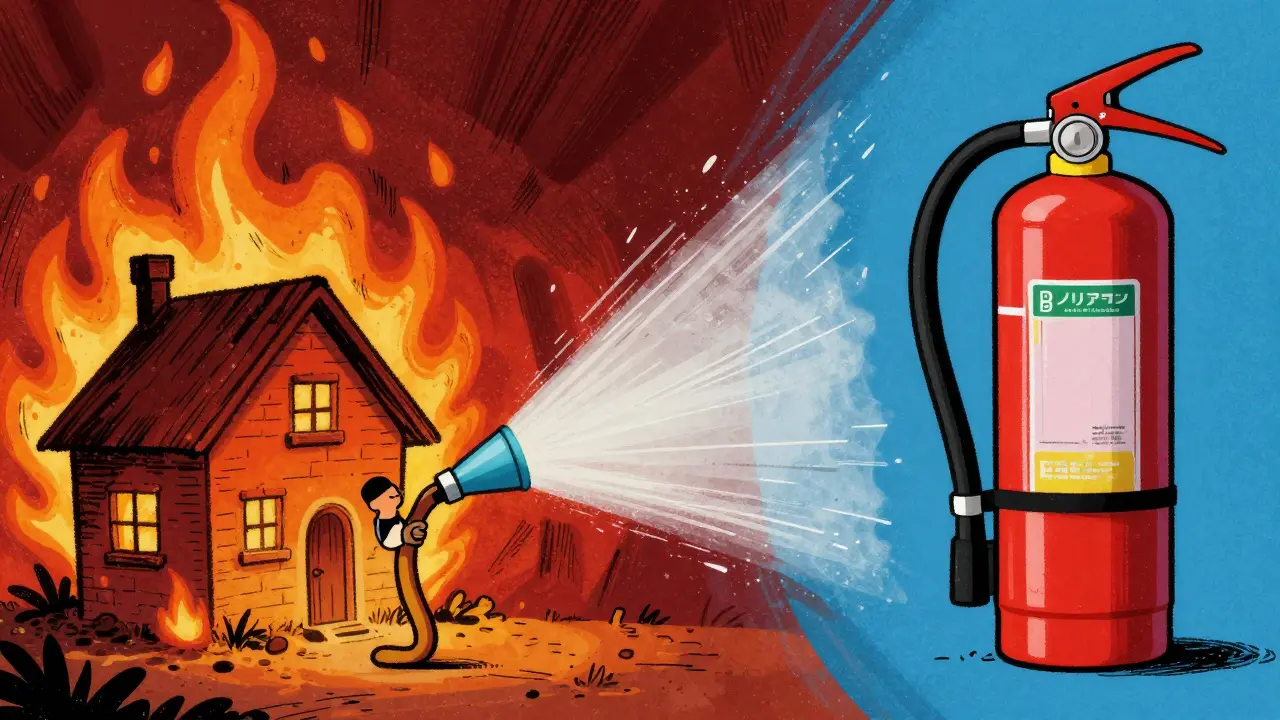
Imagine you're in the middle of a panic-inducing asthma attack. Your chest feels tight, and you're struggling to pull in air. In that moment, reaching for the wrong inhaler isn't just a mistake-it can be a dangerous delay in treatment. Many people treat all inhalers as "the thing that helps me breathe," but using a preventive medication during an emergency is like trying to put out a house fire with a garden hose that hasn't been turned on yet. Understanding the gap between immediate relief and long-term control is the only way to stay safe.
If you've ever wondered why you have two different devices or why your doctor insists you use one every single morning even when you feel great, you're not alone. The confusion often stems from the fact that these devices look nearly identical. However, rescue inhalers is a fast-acting medication used to reverse acute symptoms of asthma , while maintenance inhalers are designed to stop those symptoms from happening in the first place. Let's break down exactly how they differ and why using both is often the gold standard for respiratory health.
The Quick Fix: How Rescue Inhalers Work
When your airways suddenly tighten-whether it's due to pollen, cold air, or exercise-you need a "bronchodilator." This is exactly what a rescue inhaler does. It targets the smooth muscles in your lungs, forcing them to relax almost instantly.
Most rescue inhalers belong to a class of drugs called Short-Acting Beta Agonists (or SABAs), with Albuterol being the most common active ingredient. Whether it's branded as Ventolin or ProAir, the goal is the same: speed. These medications usually kick in within 1 to 5 minutes and provide a window of relief that lasts about 4 to 6 hours.
The catch? Rescue inhalers are a "band-aid" solution. They open the pipes, but they don't fix the reason why the pipes closed. They have zero anti-inflammatory properties, meaning if you rely on them too much, you're treating the symptoms while the actual disease continues to simmer under the surface.
The Foundation: Maintenance Inhalers and Prevention
If rescue inhalers are the fire extinguisher, maintenance inhalers are the fire-proof coating on your walls. Also known as "controller" medications, these are not meant for emergencies. If you use one during a severe attack, you'll likely be waiting far too long for it to work.
Most controllers use Inhaled Corticosteroids (ICS) like fluticasone or budesonide. These work by reducing the swelling and mucus production in your bronchial tubes. Because they focus on inflammation, they don't work instantly. In fact, it can take 24 to 48 hours to start feeling the effects, and up to three weeks of consistent daily use to reach full effectiveness.
The data shows this approach works. According to a Cochrane Review of over 15,000 participants, consistent use of maintenance therapy can reduce asthma flare-ups by 40% to 60%. By keeping the airways "quiet" and less reactive, you drastically reduce the number of times you'll actually need your rescue inhaler.
Side-by-Side Comparison
To make it easier to spot the differences, here is a breakdown of how these two categories compare across key performance metrics.
| Feature | Rescue Inhaler (SABA) | Maintenance Inhaler (Controller) |
|---|---|---|
| Primary Goal | Immediate symptom relief | Long-term prevention |
| Onset of Action | 1-5 minutes | Days to Weeks |
| How it Works | Relaxes bronchial muscles | Reduces airway inflammation |
| Frequency | As needed (PRN) | Daily, regardless of symptoms |
| Key Examples | Albuterol, Levalbuterol | Fluticasone, Budesonide, Salmeterol |
The Danger of the "Mix-Up"
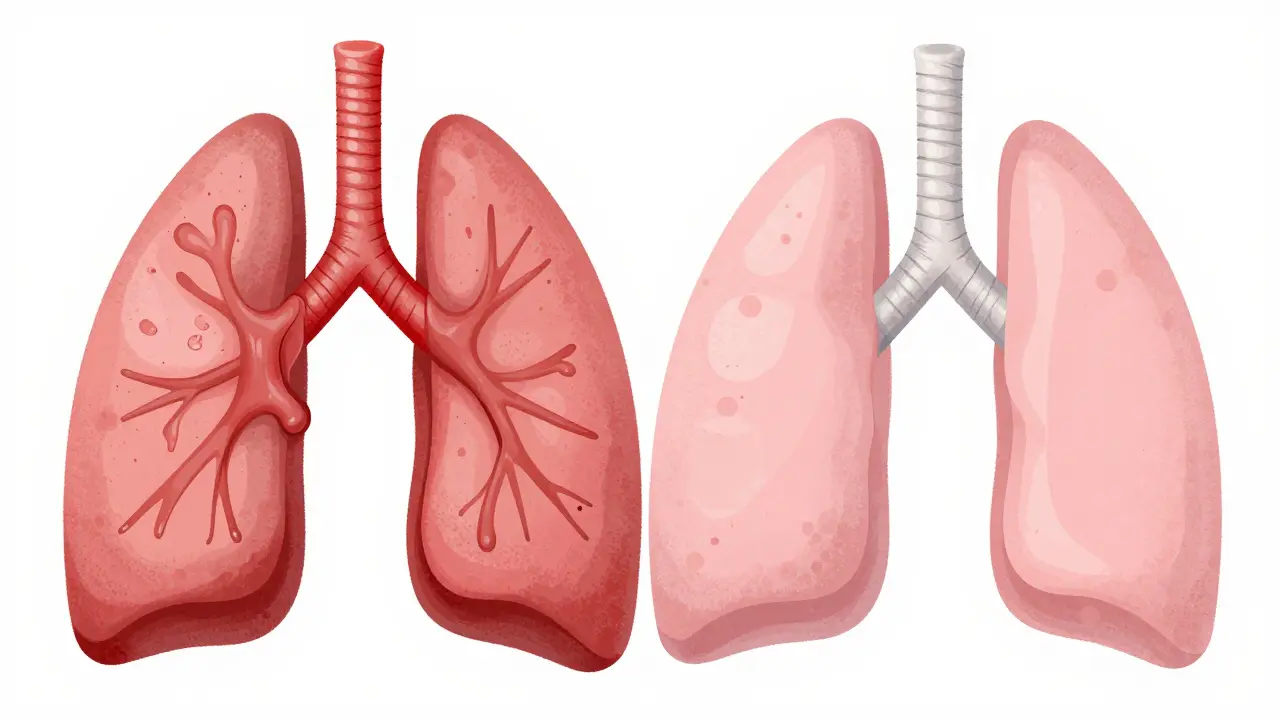
Mistaking one for the other is a common and dangerous error. Because many devices are similar in size and shape, it's easy to grab the wrong one in a panic. There are documented cases where children have used maintenance inhalers during an attack, leading to critical delays in breathing relief because the medication simply doesn't act fast enough to open the airways.
Medical experts, including those at the American College of Allergy, Asthma & Immunology, have noted that a significant percentage of near-fatal asthma cases involve people who relied solely on rescue inhalers and ignored their maintenance therapy. When you only use a rescue inhaler, you're essentially ignoring the underlying inflammation, which makes the lungs more hypersensitive and the next attack potentially more severe.
To prevent this, many clinics suggest a color-coding system. While manufacturers have different schemes, a common rule of thumb is using red for rescue and blue for maintenance. Always check the labels and, if possible, use a physical marker or a distinct case to tell them apart at a glance.
The New Hybrid: SMART Therapy
The medical world is moving toward a more streamlined approach to stop this confusion. SMART Therapy (Single Maintenance and Reliever Therapy) uses a single inhaler-typically a combination of a corticosteroid and a long-acting beta agonist like formoterol-to handle both jobs.
Devices like Symbicort are uniquely designed for this. You use it every day to keep inflammation down, but you can also use it as a rescue medication when you feel a wheeze coming on. This eliminates the "two-device dance" and reduces the risk of grabbing the wrong medication during a crisis. For many with moderate to severe asthma, this is now the first-line recommendation from the Global Initiative for Asthma (GINA).
Mastering Your Technique
Having the right medicine is only half the battle; getting it into your lungs is the other half. If you just spray the medicine into your mouth, you're wasting a huge percentage of the dose. Proper technique can increase lung deposition from 15% up to 40%.
- The Shake: Most aerosol inhalers need a good shake to mix the medication.
- The Breath: Exhale fully before putting the inhaler to your lips.
- The Timing: Start inhaling slowly and deeply just as you press the canister.
- The Hold: Hold your breath for about 10 seconds. This gives the small particles time to settle deep into the lung tissue rather than being exhaled immediately.
For maintenance users, adherence is the biggest hurdle. Missing just a few doses a week can cut the effectiveness of your controller by nearly half. Using a pill-box style reminder or a phone alert can ensure you don't drift into that danger zone where your asthma becomes "uncontrolled."
Knowing When to Call the Doctor
How do you know if your current plan is working? A good rule of thumb is to track your rescue inhaler use. If you are using your rescue medication more than two times a week (for reasons other than exercise), your asthma is likely poorly controlled. This is a signal that your maintenance dose may need adjusting.
Watch for "red flag" symptoms: waking up at night due to shortness of breath, needing your rescue inhaler multiple times a day, or feeling that your rescue medication isn't lasting as long as it used to. These are signs that the inflammation in your lungs is winning, and you need a professional medication review immediately.
Can I use my maintenance inhaler as a rescue inhaler?
Generally, no. Most maintenance inhalers (like those containing only corticosteroids) take hours or days to work and will not open your airways during an acute attack. The only exception is a specific type of combination inhaler (like Symbicort) if your doctor has explicitly prescribed it for SMART therapy. Always confirm with your provider before using a controller for rescue.
Why do I need a maintenance inhaler if I feel fine?
Asthma is an inflammatory disease. Even when you don't feel wheezy, your airways may be slightly swollen and hypersensitive. Maintenance inhalers treat this hidden inflammation. If you stop using them because you feel "fine," the inflammation returns, making you much more likely to have a severe, sudden attack that requires emergency rescue medication.
What happens if I overuse my rescue inhaler?
Overusing a SABA (like Albuterol) can lead to a cycle of "rebound" symptoms and may mask the fact that your asthma is worsening. In some cases, excessive use can lead to tachycardia (fast heart rate) or tremors. More importantly, it indicates that your maintenance therapy is insufficient and your risk of a severe exacerbation is increasing.
How do I store my inhalers to keep them effective?
Inhalers should be stored in a cool, dry place, typically below 30°C (86°F). Avoid leaving them in hot cars or damp bathrooms, as extreme temperatures can degrade the chemical formulation of the medication, making it less effective when you need it most.
How often do inhalers expire?
Expiration dates vary by brand, but generally, rescue inhalers are good for about 12 months after opening. Maintenance inhalers can range from 3 to 6 months depending on the formulation. Always check the date on the canister or keep a note of when you started the device.
mimi clouet
April 11, 2026 AT 17:43Honestly the part about using a spacer is so underrated because if you just blast it into your throat you're basically just flavoring your tongue 🙄 I've told so many people that the technique is literally half the battle and it's wild how many people just skip the hold for 10 seconds! 🌸✨
Shaylia Helland
April 12, 2026 AT 17:32it's just so stressful when you think about how easy it is to grab the wrong one in a panic because everything looks the same and i remember my cousin once had a total meltdown because she couldn't tell her rescue from her daily and it just goes to show how we need better labels on these things since the stress of not breathing just makes your brain shut down completely and you can't even read a simple label anymore
Sam Dyer
April 13, 2026 AT 12:33Listen up you bunch of amateurs, the real pros know that the pharmaceutical companies just want you hooked on those daily controllers to line their pockets with our hard-earned cash while we're just trying to breathe in the greatest country on earth! 🇺🇸 It's a total racket if you ask me and the medical industrial complex is just laughing at us while we shake these little plastic tubes like we're doing some weird ritual :-)
S.A. Reid
April 15, 2026 AT 09:53While the prose provided is adequate for a general audience, I find the preoccupation with 'color coding' to be somewhat pedestrian. One must wonder if the pharmacological dependency is merely a curated narrative pushed by the globalist elite to ensure a compliant, breathless population. It is quite a quaint notion that a simple plastic device is the pinnacle of respiratory care when the true solutions are likely being suppressed in underground labs. Nevertheless, the distinction between a SABA and a corticosteroid is a basic tenet of medicine that any educated individual should grasp without the need for a simplified chart.
Clint Humphreys
April 15, 2026 AT 23:41I'm just saying it's funny how they call it 'maintenance' like your lungs are some kind of old Honda Civic and you just need an oil change every morning to keep the engine running smooth. It's a friendly reminder that the chemicals they put in these things are designed to keep you in a state of perpetual mild sedation so you don't notice that the air quality is being manipulated by the same people who design the inhalers. I'm not saying it's a conspiracy, but have you ever noticed how the 'red flags' always lead you right back to the doctor for a higher dosage of the same stuff? Just a thought for those of you who actually care about what's going into your bloodstream.
rupa das
April 16, 2026 AT 00:59smart therapy is overrated
Mark Dueben
April 16, 2026 AT 20:03I think it's a bit unfair to dismiss the new therapies too quickly. Everyone has a different journey with their health and maybe for some, the single-device approach is exactly what they need to feel secure in their daily routine.
Ikram Khan
April 17, 2026 AT 04:59OMG YES! The part about the rescue inhaler being a band-aid is such a powerful way to put it! 😱 I used to just rely on my Albuterol and wondered why I was always struggling, but once I actually stuck to the maintenance plan, it was like a whole new world of breathing! Keep pushing through and stay strong everyone! 💪✨
Becca Suttmiller
April 18, 2026 AT 14:07I appreciate the clear breakdown of the two types. It's helpful for anyone who might be feeling overwhelmed by their prescriptions to have a simple reference guide.