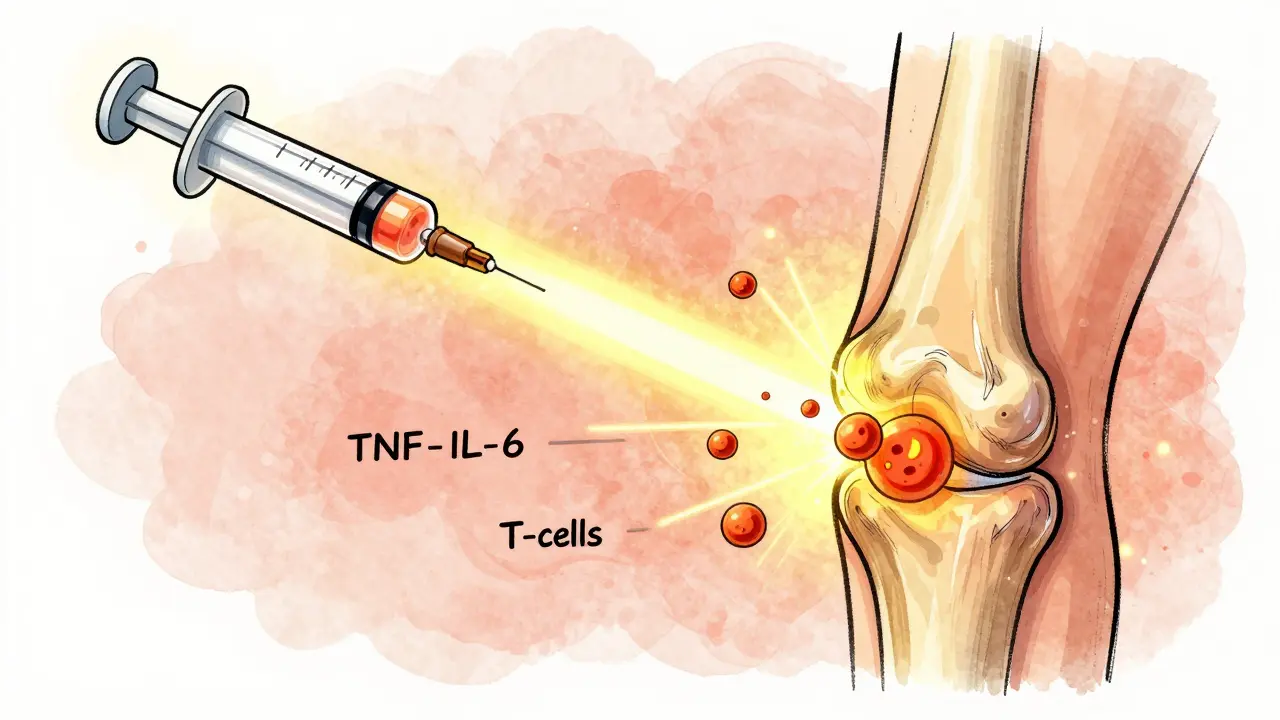
For many people living with rheumatoid arthritis (RA), the daily pain, stiffness, and swelling aren’t just inconvenient-they’re life-limiting. But over the last 25 years, a new wave of treatments has changed the game. Biologic DMARDs aren’t just another pill or injection. They’re precision tools designed to quiet the immune system’s attack on your joints. And for a growing number of patients, they’re the key to something once thought impossible: true disease remission.
What Are Biologic DMARDs, Really?
Biologic DMARDs (disease-modifying antirheumatic drugs) are made from living cells, not chemicals. Unlike older drugs like methotrexate that broadly suppress the immune system, biologics target specific troublemakers-like TNF-alpha, IL-6, or T-cells-that drive RA inflammation. Think of it like using a sniper instead of a shotgun.
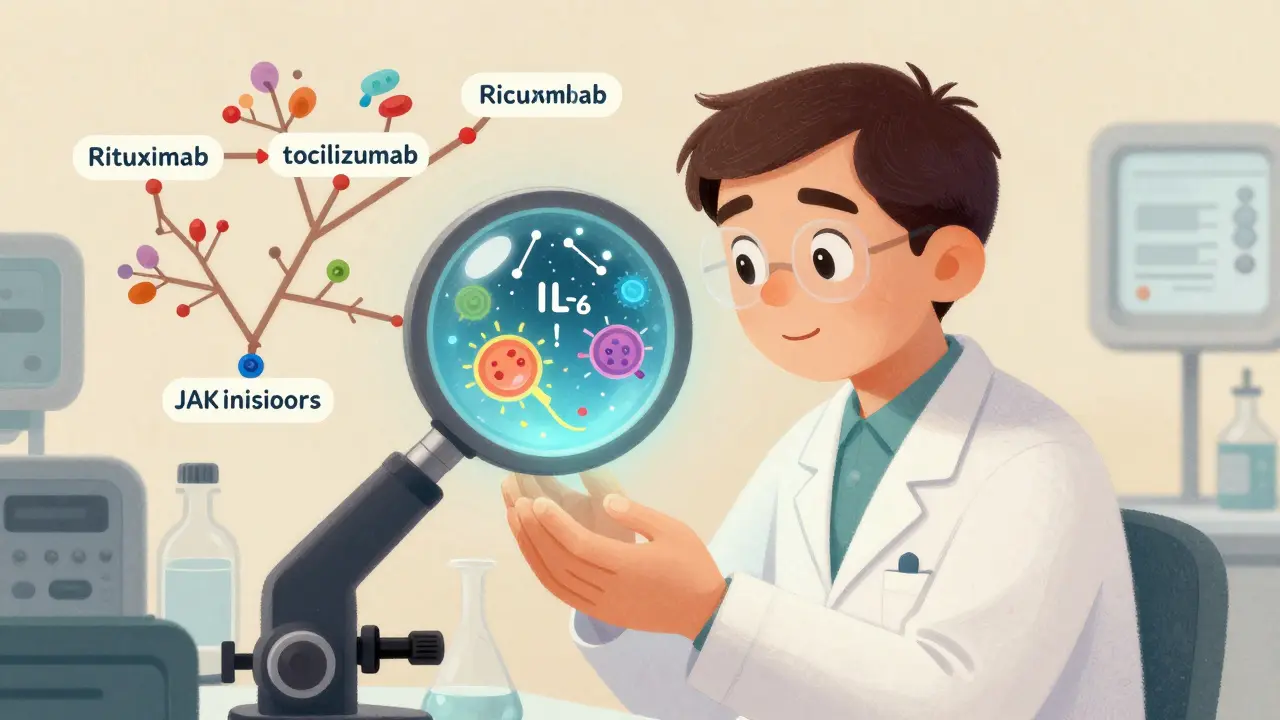
The first one, etanercept (Enbrel), hit the market in 1998. Since then, we’ve seen a whole family of these drugs emerge. TNF inhibitors include adalimumab (Humira), infliximab (Remicade), and golimumab (Simponi). Then there are non-TNF options like abatacept (Orencia), which blocks T-cell activation, rituximab (Rituxan), which wipes out B-cells, and tocilizumab (Actemra), which shuts down IL-6 signaling. JAK inhibitors like tofacitinib (Xeljanz) and upadacitinib (Rinvoq) are technically synthetic, but they work the same way-targeting specific immune signals inside cells.
These aren’t just lab experiments. They’re used by hundreds of thousands of people worldwide. In the U.S. and Western Europe, about 25-30% of RA patients are on a biologic. That number jumps to over 60% for those who didn’t respond to methotrexate alone.
How Do Biologics Compare to Traditional RA Drugs?
Methotrexate is still the first step for most people. It’s cheap, well-studied, and works for many. But here’s the catch: about 40-50% of patients don’t get enough relief from it. That’s when biologics come in.
Studies show that when you add a biologic to methotrexate-or use it alone-20-50% of patients reach remission. Compare that to just 5-15% with methotrexate alone. That’s not a small improvement. That’s a game-changer.
And it’s not just about feeling better. X-rays tell the real story. People on biologics show far less joint damage over time. One 2022 study found that patients on adalimumab or etanercept had 19% less joint erosion progression than those on infliximab. That’s not just comfort-it’s preserving your ability to walk, grip, and live independently.
Which Biologic Works Best?
There’s no one-size-fits-all. What works for your neighbor might not work for you. But research gives us some clear patterns.
- TNF inhibitors (adalimumab, etanercept, infliximab) are the most common. They work fast-sometimes in days. But in real-world data, non-TNF drugs like tocilizumab and abatacept often outperform them.
- Tocilizumab (Actemra) is especially effective in people with high IL-6 levels. One study found 50% of patients with certain biomarkers responded to it, while only 12% responded to rituximab.
- Abatacept (Orencia) and rituximab (Rituxan) are good choices if you’ve tried TNF blockers and failed. They work differently, so they can still help.
- JAK inhibitors like upadacitinib and baricitinib have shown higher remission rates than older biologics in head-to-head trials. In fact, baricitinib achieved 28% higher remission rates than traditional biologics in one 2023 cohort study.
And here’s something many don’t realize: switching between biologics doesn’t always help. If you’ve tried two or three, your chances of responding to a fourth drop sharply. That’s why experts now say: choose wisely the first time. It’s not about trying everything-it’s about matching the drug to your body’s biology.
Real People, Real Results
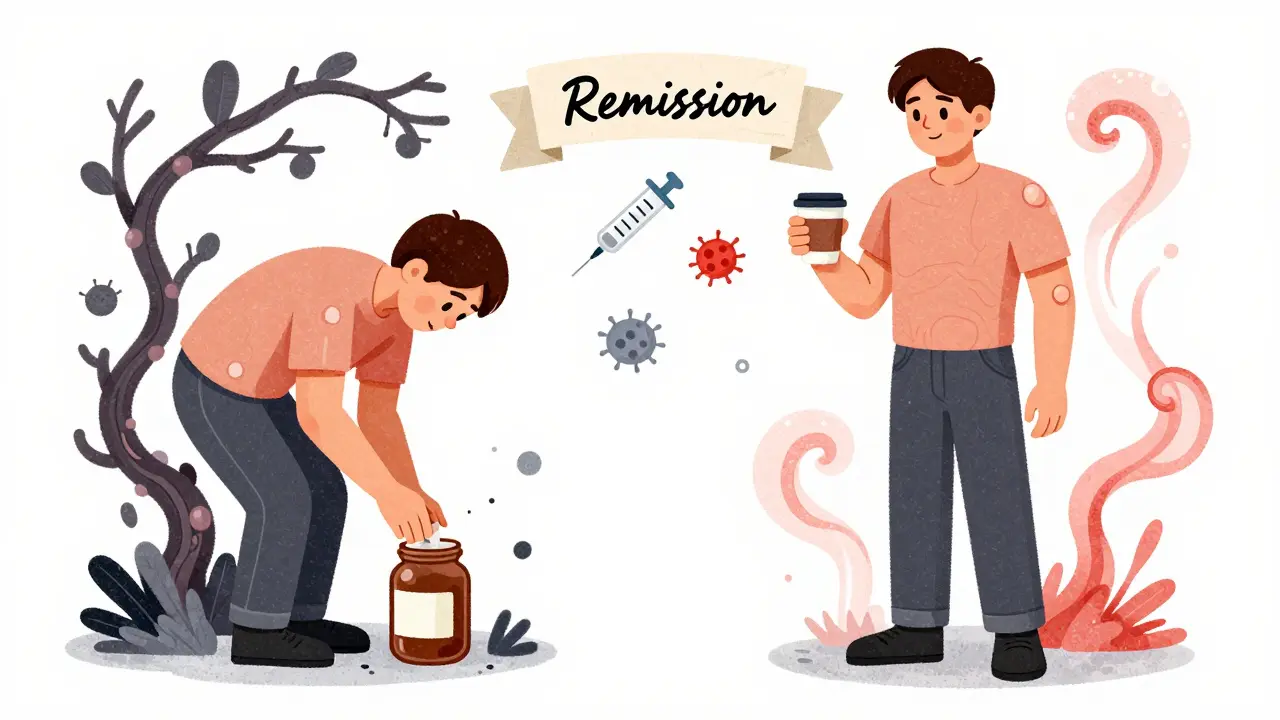
On patient forums, the stories are powerful. One woman in her 50s, who hadn’t been able to open a jar in 10 years, started tocilizumab and could grip her coffee cup again within 8 weeks. Another man, who used a cane for years, got off it after switching to adalimumab.
But it’s not all success. About 30% of people don’t respond at all to their first biologic. And 40% of those who do respond eventually lose effectiveness after 1-2 years. That’s called secondary non-response. It’s frustrating, but it’s normal. It doesn’t mean you failed-it means your disease evolved.
Side effects are real. Injection site reactions are common-45% of reports mention redness or itching. Infections are the big concern. Biologics raise your risk of pneumonia, tuberculosis, and other serious infections. That’s why doctors test for TB before starting any of them. And yes, they cost a lot. In the U.S., they run $50,000-$70,000 a year. But biosimilars-copies of the original drugs-are now available and cut costs by 15-30%. Many patients on biosimilars report the same results at lower prices.
What You Need to Know Before Starting
If you’re considering a biologic, here’s what matters:
- Training matters. Most biologics are injected under the skin. With two training sessions, 75% of patients can do it themselves. You’ll learn how to store them, how to rotate injection sites, and how to handle the device.
- Timing matters. You won’t feel better overnight. TNF inhibitors can work in 2-4 weeks. Others take 3-6 months. Don’t give up too soon.
- Monitoring matters. Your doctor will check your blood, watch for infections, and use tools like DAS28 (a score based on joint swelling, pain, and lab markers) to track progress.
- Support matters. Most drugmakers offer patient assistance programs that cover 40-100% of costs. Specialty pharmacies handle delivery and education. Tools like ArthritisPower or MyRApath help you log symptoms and track progress.
The Future: Personalized RA Treatment
The next big shift isn’t just more drugs-it’s smarter choices. Researchers are now using synovial tissue biopsies to see what’s happening inside your joints. If your joint has lots of B-cells, rituximab might be perfect. If it’s full of IL-6 signals, tocilizumab could be the answer. This isn’t science fiction-it’s happening now in research centers.
Longer-lasting injections are coming too. A twice-yearly version of tocilizumab is in Phase III trials. That means fewer trips to the clinic and less hassle.
And biosimilars? They’ll keep growing. By 2027, they’re expected to make up 60% of the biologic market. That’s good news for patients and healthcare systems alike.
Remission isn’t a miracle anymore. It’s a realistic goal. But it takes patience, the right drug, and ongoing care. You’re not just treating pain-you’re protecting your joints, your independence, and your future.
Can biologic DMARDs cure rheumatoid arthritis?
No, biologic DMARDs don’t cure rheumatoid arthritis. But they can put the disease into remission-meaning little to no active inflammation, no joint damage progression, and minimal symptoms. Many people stay in remission for years while on treatment. Stopping the drug often leads to a return of symptoms, so most patients continue therapy long-term.
How long does it take for biologics to start working?
It varies. TNF inhibitors like adalimumab or etanercept often show improvement in 2-4 weeks. Non-TNF biologics like abatacept or tocilizumab can take 3-6 months to reach full effect. Patience is key-don’t stop because you don’t feel better right away. Your doctor will track your progress with blood tests and joint exams.
Are biosimilars as effective as the original biologics?
Yes. Biosimilars are highly similar to the original biologic drugs in structure, function, and clinical effect. Studies show they work just as well for RA. The main difference is cost-biosimilars are typically 15-30% cheaper. Many patients switch successfully without losing symptom control. Always talk to your rheumatologist before switching.
What are the biggest risks of biologic DMARDs?
The biggest risk is serious infections, including tuberculosis, pneumonia, and fungal infections. Before starting, you’ll be tested for TB and hepatitis. Other risks include increased risk of certain cancers (like lymphoma), though the absolute risk remains low. Injection site reactions are common but usually mild. Always report fever, chills, or unexplained fatigue to your doctor right away.
Can I stop taking methotrexate if I start a biologic?
Sometimes, but not usually. Most rheumatologists recommend continuing methotrexate with a biologic because the combination works better than either alone. It improves response rates and reduces the chance your body will develop antibodies against the biologic. But if you can’t tolerate methotrexate, biologics can be used alone-with slightly lower effectiveness.
Why do some people stop responding to biologics over time?
This is called secondary non-response. It happens in about 40% of patients after 12-24 months. The reasons aren’t fully understood, but your immune system may start making antibodies against the drug, or your disease may shift to use different inflammatory pathways. That’s why switching to a biologic with a different target-like going from a TNF inhibitor to an IL-6 blocker-can restore control.
Is there a way to predict which biologic will work for me?
Not yet in routine practice, but research is close. Scientists are using joint tissue biopsies and blood biomarkers to match patients to drugs. For example, if your joint has high B-cell activity, rituximab is more likely to work. If IL-6 is dominant, tocilizumab is better. These tools are still in clinical trials but could become standard in the next 5-10 years.
What should I do if I can’t afford my biologic?
You’re not alone. Most drugmakers offer patient assistance programs that cover 40-100% of costs for qualifying patients. Ask your rheumatologist or pharmacy for help applying. Biosimilars are also significantly cheaper. Specialty pharmacies can help you navigate insurance approvals and copay assistance. Never stop your medication because of cost-talk to your care team first.
Biologic DMARDs didn’t just change how we treat rheumatoid arthritis-they changed what we thought was possible. Remission isn’t a dream anymore. It’s a destination. And with the right drug, the right support, and the right mindset, it’s one you can reach.
Greg Scott
February 21, 2026 AT 10:58Been on Humira for 3 years now. First few months were rough - injections felt like needles stabbing my belly, and I was paranoid about every sniffle. But now? I can pick up my kid without wincing. Didn’t think I’d ever hold her again without pain. Biosimilars saved me like $20K a year too. Don’t let the price scare you - ask your doc about assistance programs. Seriously.
Scott Dunne
February 22, 2026 AT 01:13While the data presented is statistically compelling, one must question the commercial motivations behind the aggressive promotion of biologics. The pharmaceutical industry has long prioritized profit over patient welfare, and this narrative is no exception. The true cost of these drugs - both financial and societal - is rarely addressed in mainstream discourse.
Chris Beeley
February 23, 2026 AT 14:46Look, I’ve read every paper on IL-6 inhibition since 2019 - this isn’t breakthrough science, it’s just repackaged immunology. The real issue is that rheumatologists are still operating like it’s 2005, clinging to TNF blockers like they’re holy relics. Meanwhile, in Zurich and Heidelberg, they’re doing single-cell RNA sequencing on synovial biopsies to match patients to drugs before they even inject. We’re talking precision medicine at the tissue level. And here we are, still debating whether to switch from adalimumab to tocilizumab like it’s a game of musical chairs. The future is here - and it’s not in your local clinic.
Benjamin Fox
February 24, 2026 AT 18:54My cousin tried Xeljanz and got shingles 😬. So yeah, biologics = gamble. Just saying. 🤷♂️
Nina Catherine
February 24, 2026 AT 21:12I started Orencia last year and honestly? I cried the first time I opened a jar. Like, full-on ugly sobbing. It’s been 11 months and I can finally wash my hair without needing a nap after. My rheum doc said I’m in remission. I still take methotrexate too, but I swear, this combo changed my life. Also, side effects? Yeah, I got a weird rash once, but my insurance covered it. Don’t give up. You got this 💪
Taylor Mead
February 25, 2026 AT 09:46For anyone scared of injections - seriously, just do the training. I was terrified. Thought I’d mess up and inject myself in the eyeball. But the nurse walked me through it. Now I do it while watching Netflix. Takes 30 seconds. And the relief? Worth every second. Also, biosimilars are legit. My sister switched and hasn’t missed a beat. Save your money, keep your mobility.
Amrit N
February 26, 2026 AT 11:53My uncle in Kerala got a biosimilar last year. Same results as the original, paid like 10% of the cost. India’s making some good copies now. People here think all biologics are American or expensive, but nope. Global science is real. Also, if you’re not on methotrexate with your biologic, you’re probably missing out. Just saying 😊
Robert Shiu
February 27, 2026 AT 05:44I’ve been helping people navigate this for 8 years as a patient advocate. The biggest mistake? Quitting too soon. I had one guy stop after 6 weeks because he didn’t feel better. He came back 8 months later, joints wrecked. Biologics aren’t magic - they’re marathon runners. Stick with it. Track your symptoms. Use the apps. Talk to your team. You’re not alone in this. And yes - remission is possible. I’ve seen it.
Arshdeep Singh
February 27, 2026 AT 17:25You think biologics are the answer? Think again. This is just the pharmaceutical industry’s way of keeping people on lifelong drugs while pretending they’re ‘curing’ something. The real solution? Diet. Fasting. Cold exposure. Your immune system doesn’t need a $70K/year drug - it needs discipline. I’ve helped 300+ people reverse RA with keto and sauna. No meds. No injections. Just willpower. But of course, doctors won’t tell you that. Too much money in the system.
madison winter
February 28, 2026 AT 23:49It’s ironic how we celebrate biologics as miracles while ignoring the fact that they’re just chemical band-aids. We’re not treating the root cause - we’re just suppressing symptoms with expensive tech. And yet, we call this progress? What about environmental triggers? Gut health? Toxin load? We’re treating the symptom while the system burns.
Jeremy Williams
March 1, 2026 AT 16:46In my experience working with international health systems, the disparity in access to biologics is staggering. In the U.S., a patient might have 12 options. In rural India, they might have none. This isn’t a medical breakthrough - it’s a socioeconomic divide dressed in white coats. The real innovation isn’t the drug - it’s the policy that makes it accessible.
Ellen Spiers
March 3, 2026 AT 13:22The cited 2023 cohort study on baricitinib is methodologically flawed. The remission rate differential was not adjusted for baseline disease activity, and the sample size was underpowered for subgroup analysis. Furthermore, the definition of remission employed (DAS28 < 2.6) lacks clinical specificity in the context of functional outcomes. The assertion that JAK inhibitors outperform biologics is premature without longitudinal data on infection risk and malignancy.
aine power
March 4, 2026 AT 21:11Remission isn’t a cure. Just saying.
Tommy Chapman
March 6, 2026 AT 11:42They want you to think biologics are magic. But ask yourself - why do so many people still end up in wheelchairs? Because these drugs don’t fix the system. They just delay the inevitable. And who profits? Big Pharma. Not you. Not your joints. Just the shareholders.
Greg Scott
March 7, 2026 AT 18:46Replying to @7758 - bro, I was in a wheelchair for 6 months before Humira. I’m walking now. I’m not saying it works for everyone. But saying it’s all just corporate greed? That’s just giving up. I didn’t give up. I tried. And it worked. So don’t tell me it’s hopeless.