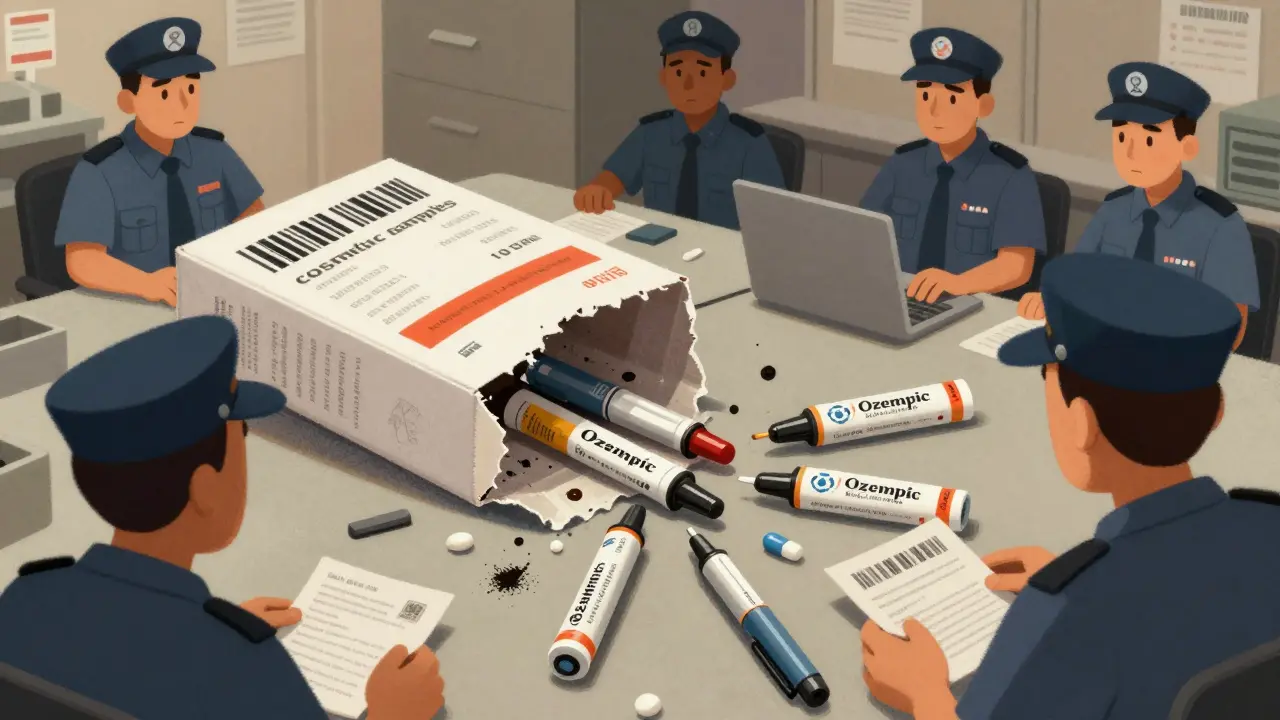
Every year, millions of fake pills, injectables, and vials end up in the hands of people who think they’re getting real medicine. These aren’t harmless knockoffs. They’re dangerous. Some contain no active ingredient at all. Others are laced with fentanyl, heavy metals, or industrial solvents. And they’re being shipped right into your mailbox.
What Gets Seized-and Where
In 2025, global law enforcement seized over 50 million doses of counterfeit medications in a single operation. That’s not a typo. Interpol’s Pangea XVI operation involved 90 countries, shut down 13,000 illegal websites, and arrested 769 people. The drugs? Mostly weight-loss injectables like Ozempic and Tirzepatide, erectile dysfunction pills, Botox, dermal fillers, and HIV treatments.
The U.S. Customs and Border Protection intercepted 16,740 counterfeit pre-filled pens in August 2025 alone. Most came from Hong Kong, China, Colombia, and South Korea. These weren’t hidden in suitcases. They were shipped as small parcels-often labeled as ‘cosmetic samples’ or ‘dietary supplements’-bypassing inspection because they don’t look like traditional drug shipments.
It’s not just the U.S. Nigeria shut down a factory producing fake herbal HIV treatments. South Africa seized R2.2 million worth of counterfeit meds in Gqeberha. In Cincinnati, CBP confiscated $3.5 million in fake pharmaceuticals. These aren’t isolated incidents. They’re the tip of the iceberg.
Who’s Buying-and Why
People aren’t buying fake drugs because they’re reckless. Many are desperate. GLP-1 medications like Ozempic cost over $1,000 a month in the U.S. with insurance. Without it, they’re $2,000+. That’s more than most people make in two weeks. So they turn to online marketplaces.
NABP found that 47% of counterfeit GLP-1 drugs are sold on Etsy. Another 31% come directly from illegal manufacturers in Asia. A quarter come from foreign pharmacies that look legit but aren’t. These sellers use Instagram, TikTok, and Facebook ads with fake before-and-after photos. They offer ‘discounts,’ ‘free shipping,’ and ‘doctor-approved’ seals. The packaging? Almost identical to the real thing.
One Reddit user, a pharmacist, shared a case from August 2025: a patient developed severe cellulitis after using a counterfeit dermal filler bought off Etsy. The packaging looked real. The needle felt right. But inside? Unknown particulates. The patient needed surgery.
How Fake Drugs Are Made-and Why They’re So Hard to Catch
Counterfeiters aren’t amateurs. They’re organized crime groups with labs, logistics, and legal loopholes. They copy labels perfectly. They source the same plastic vials and foil seals. They even replicate batch numbers and QR codes.
But here’s the catch: U.S. customs can’t seize a drug just because it’s unapproved. It has to be counterfeit. That means it must falsely claim to be a branded product. If a pill says ‘Ozempic’ but isn’t made by Novo Nordisk, it’s illegal. But if it just says ‘Semaglutide’ without a brand name, it might not meet the legal definition of counterfeiting-so it slips through.
That’s a massive gap. As Dr. Carmen Catizone of NABP put it: ‘CBP cannot seize medications that violate only the FDCA-they must be counterfeit to be seized.’
Counterfeiters are also shifting tactics. Instead of shipping fully assembled drugs, they send parts: empty pens, labels, packaging, and powders. They assemble the final product near the destination-like in a garage in Texas or a warehouse in Ontario. This makes detection nearly impossible at borders.
The Real Danger: What’s Inside
It’s not just about getting no effect. It’s about getting poisoned.
Lab tests on seized GLP-1 counterfeits show alarming results:
- 32% contained no active ingredient
- 27% had trace amounts of fentanyl
- 19% included heavy metals like lead and mercury
- 14% had industrial solvents like acetone and toluene
The FDA’s MedWatch database saw a 43% jump in adverse events linked to suspected counterfeit drugs in early 2025. Most were from weight-loss injectables and cosmetic fillers. One patient had kidney failure after using a fake Botox. Another went blind from contaminated dermal filler.
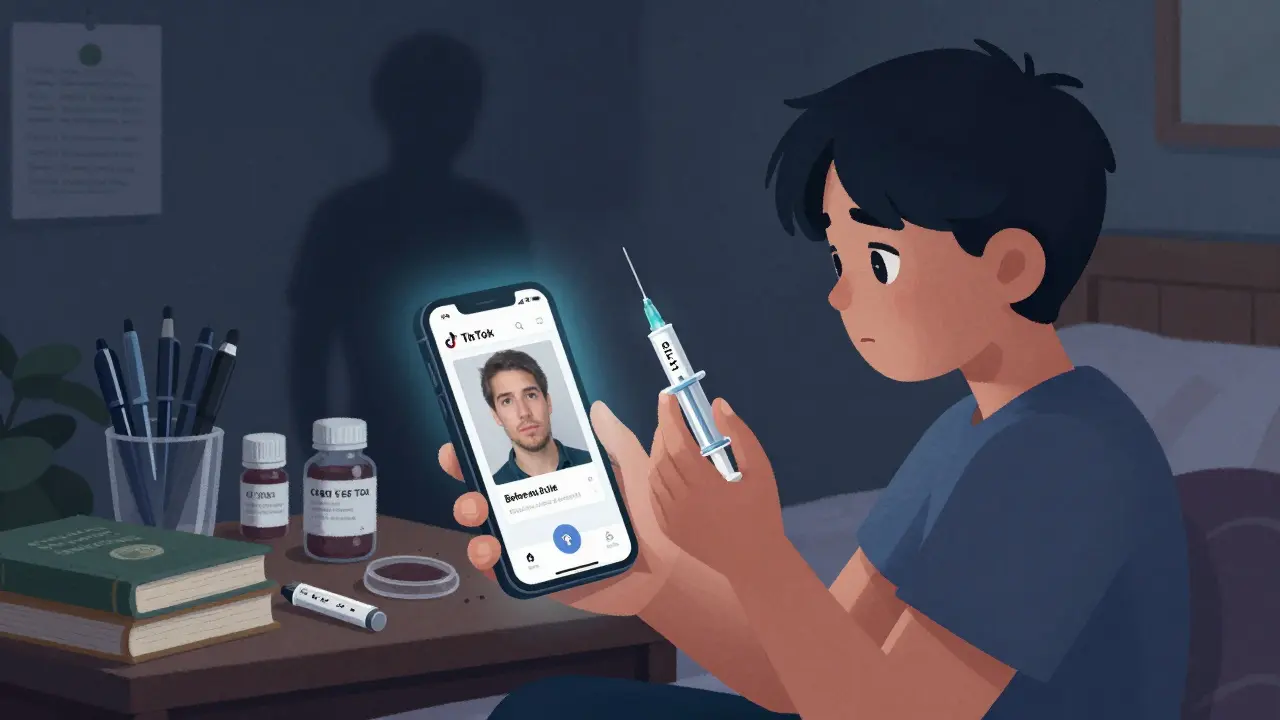
And it’s not just adults. The DEA reported 61.1 million fake pills seized in 2024. Many were made to look like oxycodone or Adderall. Kids buy them thinking they’re studying aids. Some die within hours.
Lessons Learned: What’s Working-and What’s Not
There’s progress. Pfizer has trained law enforcement in 183 countries since 2004. They teach agents to spot tiny inconsistencies: a slightly off font on the label, a misaligned barcode, a different color cap. These details matter.
Blockchain tracking systems, used by companies like Roche and Merck, have cut counterfeit incidents by 37% in pilot programs. Each vial gets a digital passport. You scan it, and you see its full journey-from factory to pharmacy.
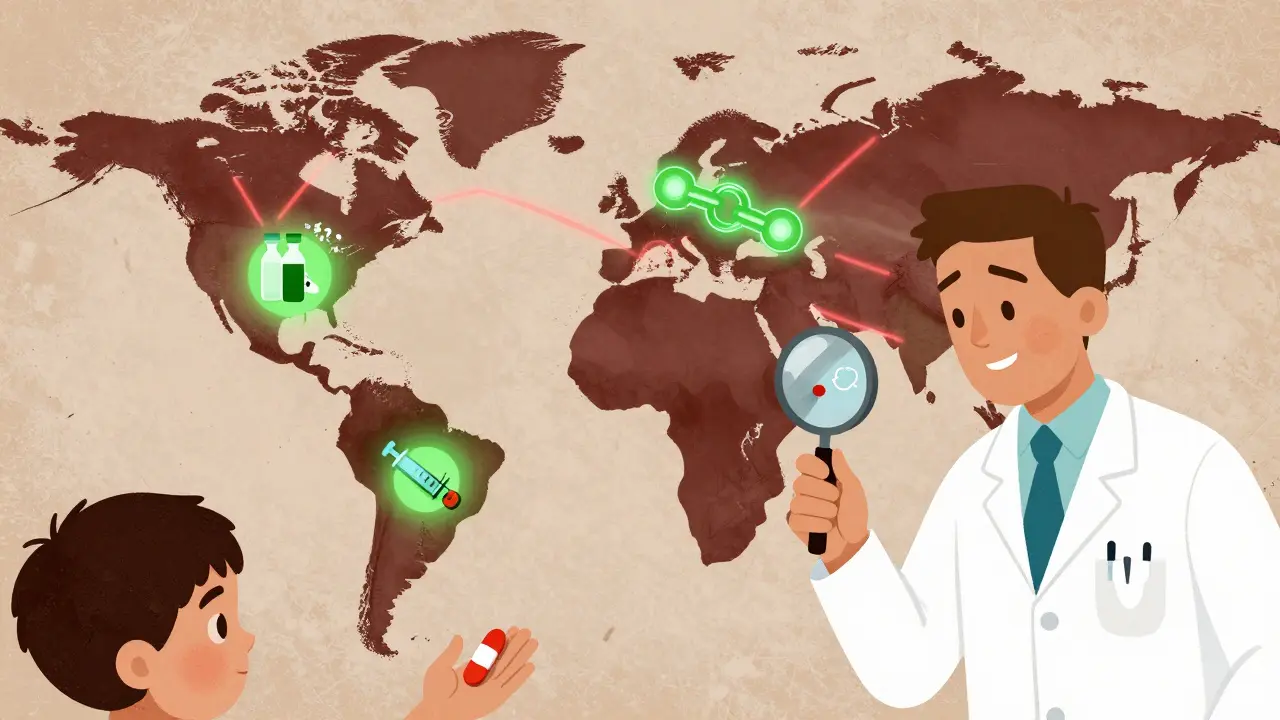
But enforcement is still reactive. Seizures happen after people are already harmed. And global cooperation? It’s patchy. India and China (including Hong Kong) are the top sources of counterfeit drugs entering the U.S. But enforcement actions there are rare. Political will, corruption, and lack of resources hold back action.
Meanwhile, online marketplaces do little to stop sellers. Etsy, Amazon, and Facebook allow listings that say ‘for research only’ or ‘not for human consumption’-a loophole counterfeiters exploit. Until platforms are held accountable, the flow won’t stop.
What You Can Do
If you’re prescribed a medication:
- Only fill prescriptions at licensed pharmacies. Check your state board’s website to verify.
- Never buy injectables or pills from Instagram, Etsy, or Facebook Marketplace.
- Look at the packaging. Does the batch number match the one on the manufacturer’s site? Is the seal intact? Is the ink smudged?
- If something looks off, report it. Contact your pharmacist or the FDA’s MedWatch program.
If you’re using a weight-loss drug or cosmetic injectable and feel dizzy, nauseous, or have swelling at the injection site-get help immediately. Don’t wait. It could be fake.
And if you know someone buying meds online? Talk to them. Not judgmentally. Just honestly. These aren’t savings. They’re risks with no safety net.
The Bigger Picture
Counterfeit drugs aren’t just a crime. They’re a public health emergency. The OECD estimates the global fake goods market hit $467 billion in 2021. Pharmaceuticals are the fastest-growing segment. And it’s not slowing down.
Without stronger global enforcement, better tech, and real accountability from online platforms, this will get worse. By 2026, NABP predicts 78% of counterfeit GLP-1 drugs will be sold through social media. That’s not speculation. That’s a projection based on current trends.
Every seized shipment is a win. But every person who takes a fake pill without knowing it? That’s a failure. And we’re losing more of those than we’re winning.
How can I tell if my medication is counterfeit?
Check the packaging for inconsistencies-spelling errors, mismatched colors, or blurry printing. Compare the batch number with the manufacturer’s website. Look at the pill itself: fake ones often have uneven edges, odd smells, or unusual texture. If you’re unsure, take it to a licensed pharmacist. They can test it or contact the manufacturer. Never rely on online reviews or seller claims.
Are online pharmacies ever safe?
Only if they’re verified by the National Association of Boards of Pharmacy (NABP) through their Vetted Pharmacy program. Look for the VIPPS seal on the website. If it’s not there, don’t buy. Most international online pharmacies are illegal. Even if they claim to be ‘based in Canada’ or ‘licensed in the UK,’ they often aren’t. The FDA warns that over 96% of online pharmacies operate illegally.
Why are fake GLP-1 drugs so common now?
They’re expensive, in high demand, and easy to replicate. Ozempic and Wegovy cost thousands without insurance. People are desperate. Counterfeiters see that demand and mass-produce look-alikes. The active ingredient-semaglutide-isn’t hard to synthesize. What’s hard is making the packaging perfect. That’s why they’re so convincing. And because they’re injectables, people assume the needle makes them real.
Can customs stop all counterfeit drugs at the border?
No. U.S. Customs can only seize items that are clearly counterfeit-meaning they falsely claim to be a branded product. A pill labeled ‘Semaglutide’ without a brand name might be illegal, but not necessarily counterfeit under current law. That’s a major loophole. Plus, most fake drugs arrive in small parcels, which aren’t routinely scanned. Less than 2% of incoming mail is inspected.
What’s being done to stop this?
Interpol, the FDA, and global pharma companies are working together on tracking tech, like blockchain and QR authentication. Pfizer has trained thousands of law enforcement officers worldwide. Some countries are tightening import rules. But progress is slow. Enforcement is uneven. And online sales are growing faster than regulations can keep up. The real solution needs global cooperation, platform accountability, and public awareness-all working at once.
Jose Mecanico
January 12, 2026 AT 01:08Had a patient come in last month with a fake Ozempic pen. Packaging was flawless-same font, same seal, even the QR code scanned. But the liquid was cloudy. Turned out it was just glycerin and food coloring. She’d lost 12 lbs in two weeks… and gained a bad infection. We reported it. No one cares until someone ends up in the ER.
Eileen Reilly
January 13, 2026 AT 00:03OMG I JUST BOUGHT ONE OF THOSE OFF ETSY LAST WEEK 😱 I THOUGHT IT WAS A ‘DIET SUPPLEMENT’ BUT NOW IM SCARED AF. WHAT DO I DO??
Monica Puglia
January 13, 2026 AT 18:00Hey, you’re not alone. 🫂 If you still have the packaging, take it to a pharmacy-they can check it for you for free. And please don’t panic, but stop using it. Your health matters more than saving a few bucks. You got this.
Alice Elanora Shepherd
January 14, 2026 AT 11:47The regulatory gap is systemic. Under the FDCA, unapproved ≠ counterfeit. This is a legal loophole that criminal enterprises exploit with surgical precision. The FDA lacks statutory authority to seize non-branded generics-even when they contain fentanyl or heavy metals. Until Congress amends 21 U.S.C. § 331, this will persist.
Rinky Tandon
January 14, 2026 AT 19:16Let me be brutally honest-this isn’t about ‘desperate people.’ It’s about lazy, entitled consumers who think they deserve luxury healthcare at Walmart prices. You want Ozempic? Work. Save. Get insurance. Don’t gamble your kidneys on a TikTok ad. These aren’t ‘victims’-they’re enablers of a global crime syndicate. And yes, I’m talking to YOU.
Meanwhile, Etsy’s CEO is probably sipping champagne while people get kidney failure. Corporate greed isn’t a bug-it’s the feature.
And don’t even get me started on how India and China are the epicenters of this. They’re not ‘developing nations’-they’re organized crime cartels with passports.
Sumit Sharma
January 15, 2026 AT 22:01As a pharmacologist in Delhi, I’ve seen this for years. The supply chain is decentralized: raw semaglutide from Shenzhen, vials from Bangalore, labels printed in Lahore, assembled in Karachi. Then shipped via ‘cosmetic samples’ to the U.S. via Dubai. No one tracks the final assembly point because customs only checks for brand names. The system is designed to fail.
Blockchain is a band-aid. The real solution is mandatory serialization at the API level-every gram of active ingredient must be traceable from synthesis to syringe. But pharma won’t fund it. Too expensive. Too inconvenient.
Alex Fortwengler
January 16, 2026 AT 03:27Big Pharma’s lying to you. They make Ozempic for $2 a dose. Sell it for $1,000. Then cry about ‘counterfeits’ when people buy the real stuff for $20 online. This whole thing is a scam to keep prices high. The ‘fentanyl’ in fake pills? Probably just a red herring to scare you into buying the overpriced brand. Wake up.
And don’t even get me started on the FDA. They’re just a PR arm for Pfizer. They seized 16k pens? That’s less than 0.1% of what’s out there. They don’t want to stop this-they want you scared enough to keep paying $2,000 a month.
jordan shiyangeni
January 17, 2026 AT 12:07Let’s be clear: this isn’t about counterfeit drugs. It’s about the collapse of the American healthcare system. People aren’t buying fake meds because they’re stupid-they’re buying them because the system forced them to choose between insulin and rent. This isn’t a crime problem. It’s a moral failure. And every politician who voted against Medicare for All is complicit.
Meanwhile, the DEA arrests kids for Adderall counterfeits while letting Novo Nordisk charge $1,200 for a vial. That’s not justice. That’s capitalism.
And yes, I’ve seen the data. The ‘fentanyl’ in these pills? Often trace amounts. The real killer is the lack of access to real medicine. Fix that, and this problem evaporates.
Abner San Diego
January 18, 2026 AT 02:54Why are we even talking about this? It’s 2025. If you’re dumb enough to buy meds off Etsy, you deserve what you get. I don’t feel bad for people who think a ‘doctor-approved’ seal on Instagram means anything. This isn’t a public health crisis-it’s a Darwinian filter. The weak get poisoned. The smart ones go to a real pharmacy.
Also, why are we blaming China? We import 80% of our antibiotics from there. If you want clean meds, make them here. Stop outsourcing your healthcare and then cry when the product sucks.
laura manning
January 18, 2026 AT 08:32It is imperative to note, with unequivocal clarity, that the prevalence of counterfeit pharmaceuticals-particularly those containing fentanyl, heavy metals, and industrial solvents-is not merely an emergent trend; it is a catastrophic, systemic failure of international regulatory harmonization, compounded by the abdication of corporate responsibility by e-commerce platforms and the institutional inertia of federal enforcement agencies.
Furthermore, the assertion that ‘people are desperate’ is not an exculpatory justification, but rather an indictment of a socio-economic architecture that permits pharmaceutical monopolies to price-gouge with impunity, while simultaneously criminalizing the very populations they have impoverished.
Until such time as the U.S. Department of Justice redefines ‘counterfeit’ to encompass unapproved but chemically identical substances, and until Congress mandates real-time serialization for all active pharmaceutical ingredients, this crisis will persist-exponentially.
Bryan Wolfe
January 19, 2026 AT 15:12I know this sounds cheesy, but please-don’t give up. I’ve seen people go from buying fake Ozempic online to getting real help through patient assistance programs. There are nonprofits that help you get meds for $5 a month. You don’t have to risk your life. Talk to your doctor. Call the NABP hotline. There’s a way out.
And if you’re reading this and you’re thinking, ‘I’m not one of those people’-you might be. We all think we’re immune until we’re not. Stay informed. Stay safe. You’re not alone.
Jay Powers
January 21, 2026 AT 08:16My cousin took a fake Botox from a guy on Facebook. He went blind in one eye. The seller vanished. No one got arrested. No one paid for it. Just a 23-year-old kid who wanted to look good for his wedding. That’s the real cost here. Not money. Not politics. Just… life.
Lawrence Jung
January 23, 2026 AT 02:51Counterfeit drugs are just the symptom. The disease is modernity. We live in a world where everything is commodified-even health. We want instant gratification, zero risk, and infinite choice. But biology doesn’t work that way. You can’t hack your way out of a human body. The fake pills are just the universe pushing back.