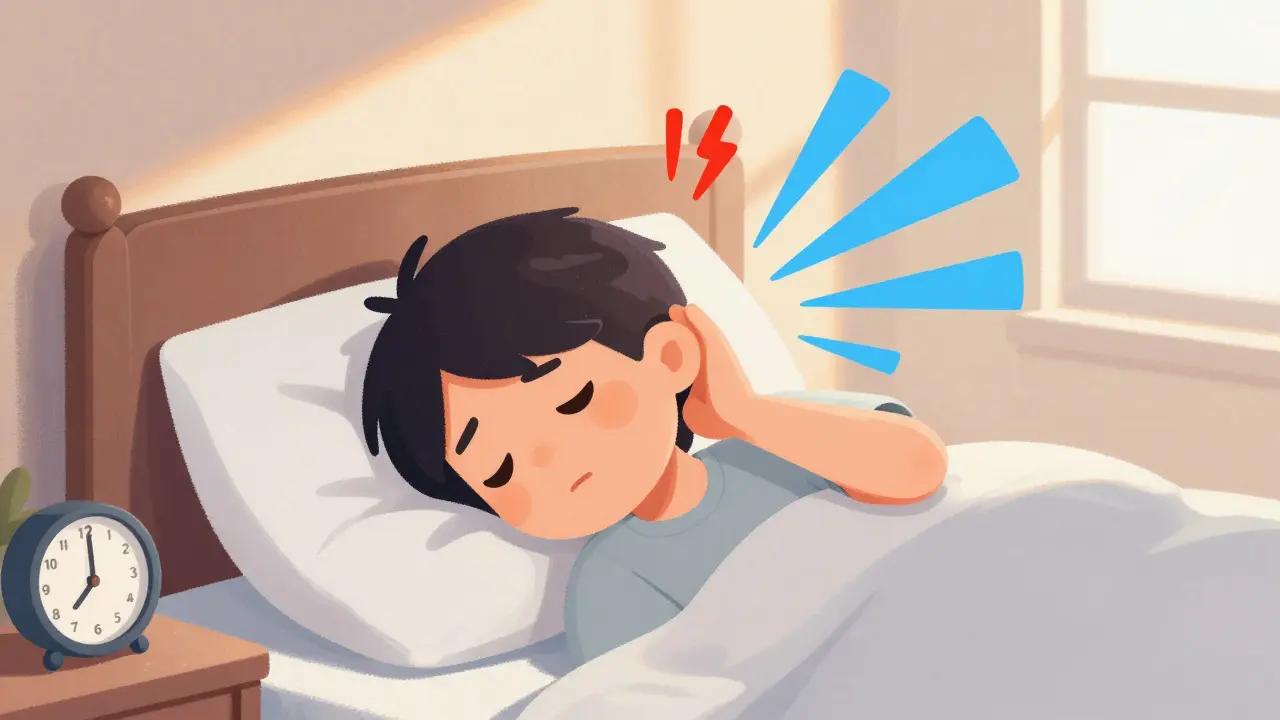
If you wake up one morning and one ear feels muffled, like you’re underwater, or sounds seem distant and tinny - don’t wait. This isn’t just an earache or wax buildup. It could be sudden sensorineural hearing loss (SSNHL), a medical emergency where hearing drops by at least 30 decibels across three connected frequencies within 72 hours. Left untreated, up to two-thirds of people may never fully recover their hearing. But if you act fast - within days, even hours - steroid therapy can make the difference between hearing normally and living with permanent hearing loss.
What Exactly Is Sudden Sensorineural Hearing Loss?
SSNHL isn’t just a drop in volume. It’s damage to the inner ear or the nerve pathway from the ear to the brain. Unlike conductive hearing loss (caused by blockages like earwax), SSNHL affects the delicate hair cells or nerves that turn sound into electrical signals your brain understands. The cause is often unknown - in about 85% of cases, doctors can’t pinpoint why it happened. Possible triggers include viral infections, autoimmune reactions, or tiny blood clots cutting off oxygen to the cochlea. But the exact cause doesn’t matter as much as the timing.
It hits suddenly - sometimes overnight. People report it after waking up, after a loud concert, or even after a stressful day. You might feel pressure in the ear, ringing (tinnitus), or dizziness. The key sign? Hearing loss in just one ear. If both ears go quiet at once, that’s a different emergency. But if one side suddenly sounds wrong, treat it like a stroke for your ear.
Why Steroids Are the Only Proven Treatment
For decades, doctors tried everything: antivirals, blood thinners, hyperbaric oxygen, even herbal remedies. None worked better than a placebo. Then came steroids - and everything changed.
High-dose oral corticosteroids, like Prednisone or Dexamethasone, reduce inflammation and swelling in the inner ear. They may also improve blood flow to the cochlea and calm immune attacks that damage hearing cells. The 2019 clinical guideline from the American Academy of Otolaryngology-Head and Neck Surgery Foundation made it official: steroids are the first-line treatment. No other therapy has shown consistent, measurable benefit.
The standard dose? One milligram of Prednisone per kilogram of body weight per day - capped at 60 mg daily. That’s typically 60 mg once a day for 7 to 14 days, followed by a slow taper over the same period. Dexamethasone, a stronger steroid with a longer half-life, is sometimes used instead, especially if patients can’t tolerate the side effects of Prednisone.
Studies show 47% to 62% of patients who start steroids within the first two weeks recover at least some hearing. Those who wait beyond four weeks? Only 19% see improvement. And after six weeks? There’s almost no benefit. Every hour counts.
Oral vs. Injection: Which Steroid Therapy Works Best?
Most people start with oral steroids. They’re cheap, easy, and widely available. A full 14-day course of generic Prednisone costs less than $15. But not everyone tolerates it.
Side effects are real. About 28% of diabetic patients see dangerous spikes in blood sugar. Insomnia hits 41%. Mood swings, weight gain (average 4.7 kg over two weeks), and stomach upset are common. Some patients need acid-reducing meds just to get through the course.
That’s where intratympanic (IT) steroid injections come in. A doctor injects Dexamethasone (24 mg/ml) directly into the middle ear through the eardrum. The steroid diffuses into the inner ear, bypassing the bloodstream entirely. This means fewer side effects - no blood sugar spikes, no insomnia, no weight gain.
IT injections aren’t first-line. They’re for people who don’t improve after oral steroids, or for those who can’t take oral steroids due to diabetes, high blood pressure, or mental health conditions. Studies show 42% to 65% of these patients regain hearing after IT therapy. One Reddit user wrote: “IT injections saved my hearing after oral steroids failed. The needle hurt - 8/10 pain - but I’d do it again.”
Both methods work. Oral steroids are the standard. IT injections are the backup - and sometimes the better choice for high-risk patients.
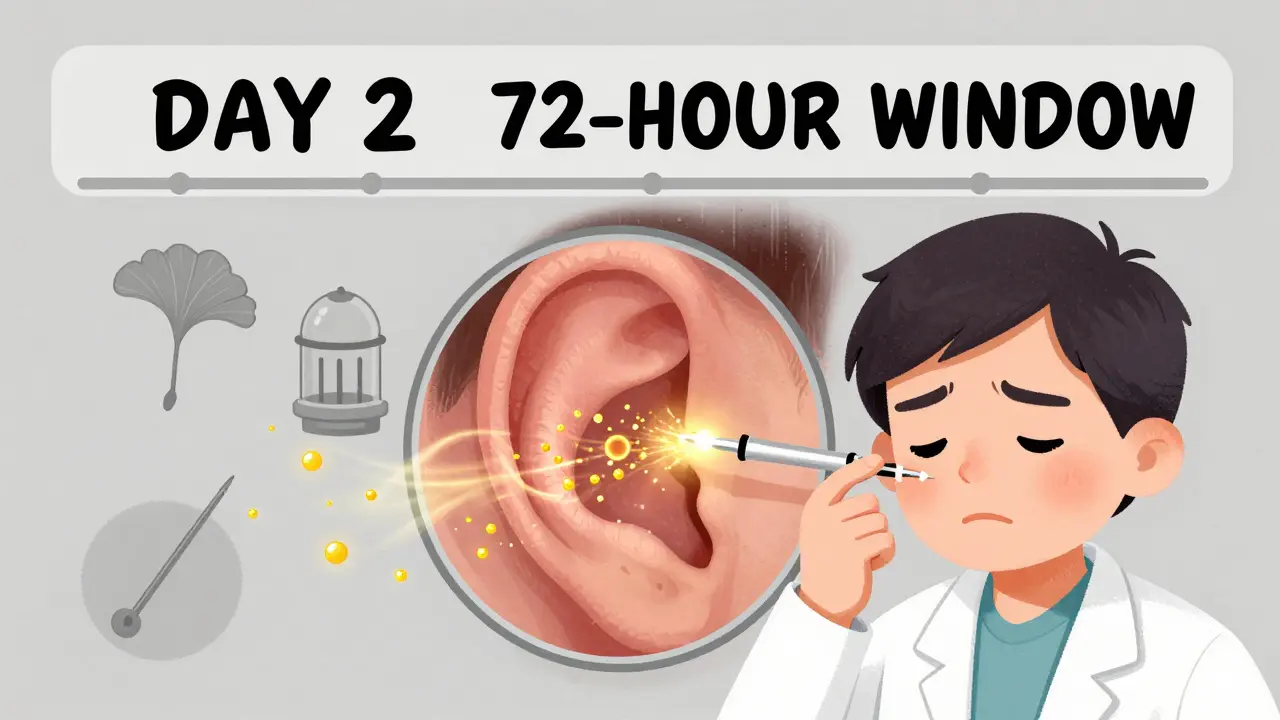
Time Is Everything - The 72-Hour Rule
There’s no “maybe tomorrow.” SSNHL is a race against time. The AAO-HNSF guideline says treatment should begin within 72 hours of symptom onset. Why? Because the inner ear’s healing window closes fast.
Research from 2015 shows 61% of patients treated within two weeks had significant recovery. That number drops to 19% if treatment starts after four weeks. After six weeks? Almost no recovery happens. And yet, 65% of patients delay seeking help beyond 72 hours.
Why? Many think it’s just “ear congestion.” Others wait for their primary care doctor’s next appointment. Some are told it’s “just stress.” One patient in a 2023 survey waited 11 days because she thought her hearing would “come back on its own.” It didn’t.
Primary care doctors need to act too. A simple tuning fork test - Weber and Rinne - can be done in under two minutes. If the sound lateralizes to the good ear, SSNHL is likely. The next step? Immediate referral for a full audiogram. That test must happen within 72 hours. Delayed diagnosis is the biggest reason for permanent hearing loss.
What Doesn’t Work - And Why You Should Avoid It
There’s a lot of noise out there. Online forums push hyperbaric oxygen therapy, antivirals, ginkgo biloba, or even acupuncture. Don’t waste time or money on them.
Hyperbaric oxygen (HBOT) - breathing pure oxygen in a pressurized chamber - shows a tiny boost in recovery when combined with steroids: about 6% to 12% extra improvement. But it’s expensive ($200-$1,200 per session), hard to access (only 37% of U.S. hospitals offer it), and must be done within 28 days. It’s not a standalone treatment.
Antivirals like acyclovir? No benefit over placebo. Blood thinners? No evidence. Vasodilators? Useless. A 2020 meta-analysis of over 1,200 patients confirmed: these treatments don’t work. Yet, some clinics still offer them. Be wary.
The only proven, guideline-backed treatments are oral and intratympanic steroids. Everything else is distraction.
Real People, Real Outcomes
Stories from patients tell the real story.
One man, 58, woke up with total hearing loss in his right ear. He went to his GP the next day. They didn’t know what to do. He waited four days before finding an ENT. He started Prednisone on day five. He recovered 85% of his hearing. He says, “I thought I’d be deaf for life. I’m not.”
Another woman, 63, has type 2 diabetes. She couldn’t take oral steroids - her blood sugar would spike dangerously. Her ENT gave her three IT injections over two weeks. Her hearing improved by 70%. She didn’t gain weight. Didn’t lose sleep. Just got better.
But then there’s the 43% of patients who wait too long. One Reddit user wrote: “I ignored it for 10 days. Thought it was earwax. Now I have tinnitus and no hearing in that ear. I’ll never get it back.”
These aren’t outliers. They’re the rule. The data matches the stories: early action = recovery. Delay = permanent loss.
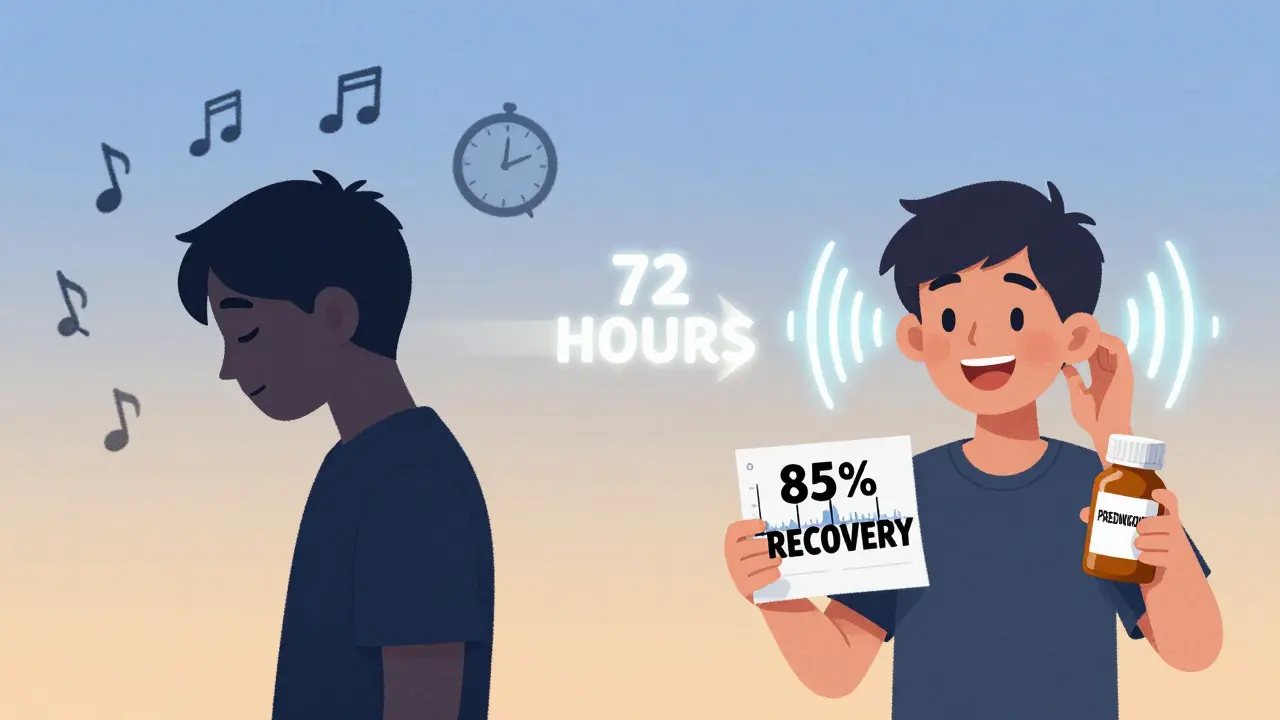
What Comes After Treatment?
Recovery isn’t always complete. Even with steroids, some people are left with partial hearing loss, tinnitus, or balance issues. That’s why follow-up matters.
Doctors should repeat the audiogram after treatment ends - and again at six months. This tracks progress and helps determine if further intervention is needed. Patients who don’t get follow-up audiograms have a 23% higher risk of malpractice claims, not because doctors are negligent, but because without documentation, it’s hard to prove the condition was treated properly.
For those with lasting hearing loss, hearing aids or cochlear implants can help. But prevention is better than correction. That’s why awareness is critical.
How to Act Fast - A Simple Checklist
- Recognize the signs: One ear suddenly muffled, ringing, pressure, or fullness.
- Don’t wait: If it happened in the last 72 hours, treat it like an emergency.
- See a doctor immediately: Go to urgent care or an ENT. Don’t wait for your primary care appointment.
- Ask for an audiogram: This is the only test that confirms SSNHL. Demand it.
- Start steroids fast: If diagnosed, begin oral Prednisone or Dexamethasone right away.
- Follow up: Get another hearing test after treatment and again at six months.
If you’re a primary care provider: learn the tuning fork tests. Know the 72-hour window. Refer immediately. You don’t need to be an ENT to save someone’s hearing.
The Future of SSNHL Treatment
Research is moving toward personalization. Scientists are studying blood markers that predict who will respond to steroids. A phase 2 trial (NCT04567821) is testing if certain inflammatory proteins can tell doctors which patients will benefit most. The goal? Stop giving steroids to people who won’t respond - and focus on those who will.
For now, steroids remain the gold standard. The 2025 guideline update will likely refine dosing, not replace it. Experts agree: steroids will stay first-line for at least the next decade.
The real challenge isn’t finding a better drug. It’s getting people to act fast. Public awareness campaigns haven’t moved the needle. Too many still think sudden hearing loss is something you wait out.
It’s not.
It’s a race. And the clock starts the moment your hearing changes.
Can sudden hearing loss fix itself without treatment?
About 32% to 65% of people with sudden sensorineural hearing loss recover some hearing on their own, but this is unpredictable. Waiting increases the risk of permanent damage. Treatment with steroids improves recovery rates by up to 30%, making it the standard of care. Don’t rely on spontaneous recovery.
How long do steroid side effects last?
Most side effects from a short 7- to 14-day steroid course fade within days after stopping. Insomnia, mood swings, and increased appetite usually resolve quickly. Weight gain from fluid retention goes down as the body re-balances. Blood sugar levels return to normal in diabetic patients within 48 hours of discontinuing steroids. Long-term side effects like osteoporosis or cataracts are not a concern with short-term use.
Are intratympanic steroid injections painful?
The procedure involves numbing the eardrum with a local anesthetic, so most patients feel only pressure or mild discomfort. The injection itself lasts under a minute. Some report a brief, sharp sting or dizziness during or right after, but it passes quickly. Pain levels vary, but most rate it between 3 and 6 out of 10. The benefit - saving your hearing - usually outweighs the temporary discomfort.
Can I take steroids if I have diabetes or high blood pressure?
Oral steroids can raise blood sugar and blood pressure, which is risky for people with diabetes or hypertension. In these cases, intratympanic steroid injections are preferred. They deliver the medication directly to the ear without affecting the rest of the body. Your doctor can adjust your diabetes medication during treatment and monitor you closely. The risk of permanent hearing loss is greater than the risk of temporary side effects.
Is steroid therapy covered by insurance?
Oral steroids like Prednisone are generic and usually covered with minimal copay ($5-$15). Intratympanic injections are more expensive ($200-$400 per session) and often require prior authorization. About 42% of initial claims get denied, but appeals are successful if you provide the audiogram and diagnosis code (H93.25). Medicare and most private insurers cover the treatment when medically necessary and properly documented.
Ian Cheung
January 9, 2026 AT 22:01Life's too short to miss the sound of rain on the roof.
anthony martinez
January 11, 2026 AT 14:56Mario Bros
January 11, 2026 AT 20:33Jake Nunez
January 12, 2026 AT 13:42Christine Milne
January 12, 2026 AT 20:27Bradford Beardall
January 13, 2026 AT 11:34McCarthy Halverson
January 15, 2026 AT 00:31Michael Marchio
January 15, 2026 AT 05:25Jake Kelly
January 16, 2026 AT 17:55Ashlee Montgomery
January 17, 2026 AT 03:31neeraj maor
January 17, 2026 AT 10:21Ritwik Bose
January 18, 2026 AT 19:01