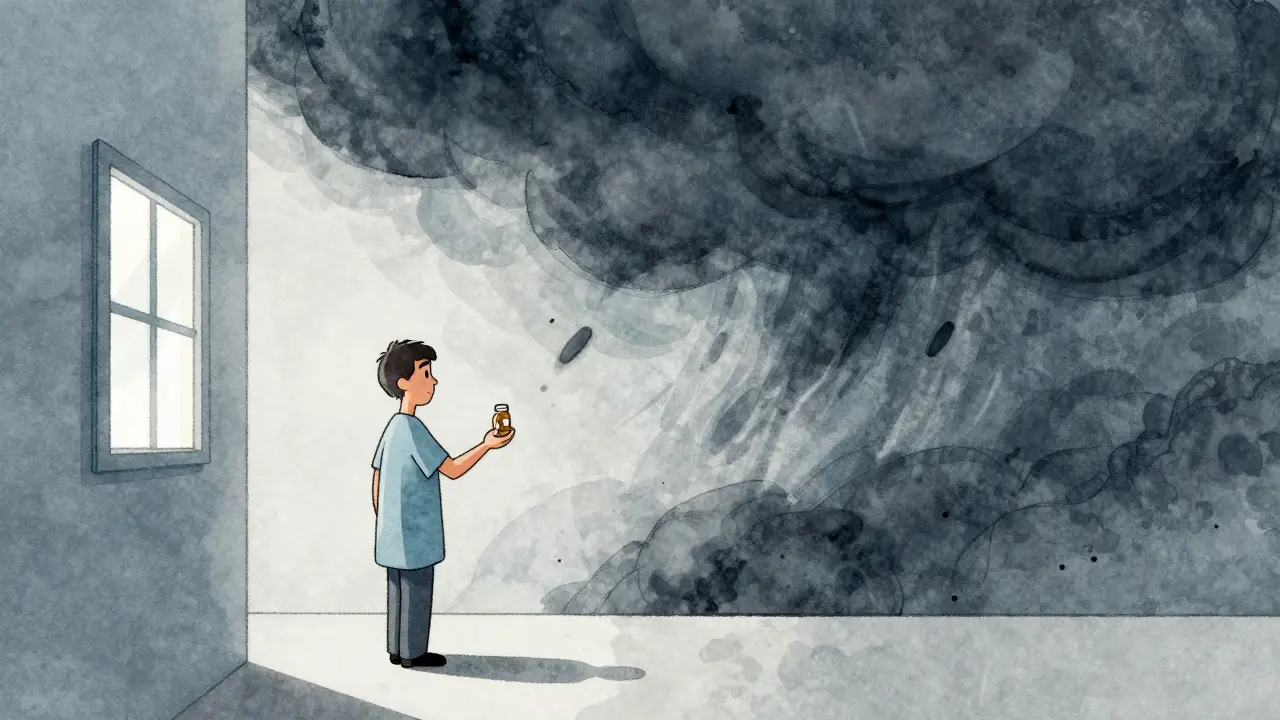
You might think forgetting a single pill here or there won’t matter much, but the numbers tell a very different story. Every year in the United States alone, approximately 125,000 preventable deaths occur specifically because people do not take their medications exactly as prescribed. This isn’t just about feeling under the weather; it is a massive public health crisis that impacts everything from your personal bank account to the stability of the entire healthcare system. When we talk about Medication Adherencethe practice of taking medications exactly as prescribed by a doctor, we are actually discussing one of the strongest predictors of survival and quality of life in modern medicine.
Why Doctors Prescribe Specific Regimens
It is easy to misunderstand why a doctor writes a strict schedule for a Prescription Drug Therapya planned course of treatment using medication. You might feel better after a week of antibiotics and decide to stop taking them two days early, thinking you have cured yourself. That decision can lead to antibiotic resistance, turning treatable infections into deadly superbugs. Similarly, skipping blood pressure medicine when you don’t feel symptoms does not mean your blood pressure has normalized; it often means the medication is working effectively to keep dangerous spikes away.
The risk becomes even clearer when looking at long-term conditions. For patients managing heart disease or diabetes, missing doses disrupts the delicate balance the body needs to function. According to recent analysis from the OECD, nonadherence contributes to roughly 200,000 deaths annually globally. To put that danger in perspective, the risk of death due to medication mismanagement is about ten times higher than the risk of homicide in the US. For adults over fifty, that risk jumps to thirty times higher.
The Ripple Effect on Your Health
When you miss doses, the immediate consequence isn’t usually an emergency room visit on the same day. Instead, the damage builds up silently. Over time, uncontrolled conditions lead to severe complications. A patient who skips their asthma inhaler increases their likelihood of needing an ambulance. Someone with mental health conditions who inconsistently takes their medication faces a 59% rate of inconsistency, which drastically lowers their chance of recovery and raises the risk of relapse.
- Hospital Readmissions: Research shows that nearly one-fifth of all Medicare patient readmissions within 30 days are directly caused by patients not following their discharge medication plans.
- Chronic Progression: Diseases that are manageable with daily medication, like hypertension, quickly become irreversible once the patient stops treatment, often leading to organ failure.
- Treatment Failure: Up to 50% of all treatment failures across medical specialties are attributed to patients simply not taking their drugs as instructed.
The Financial Reality Check
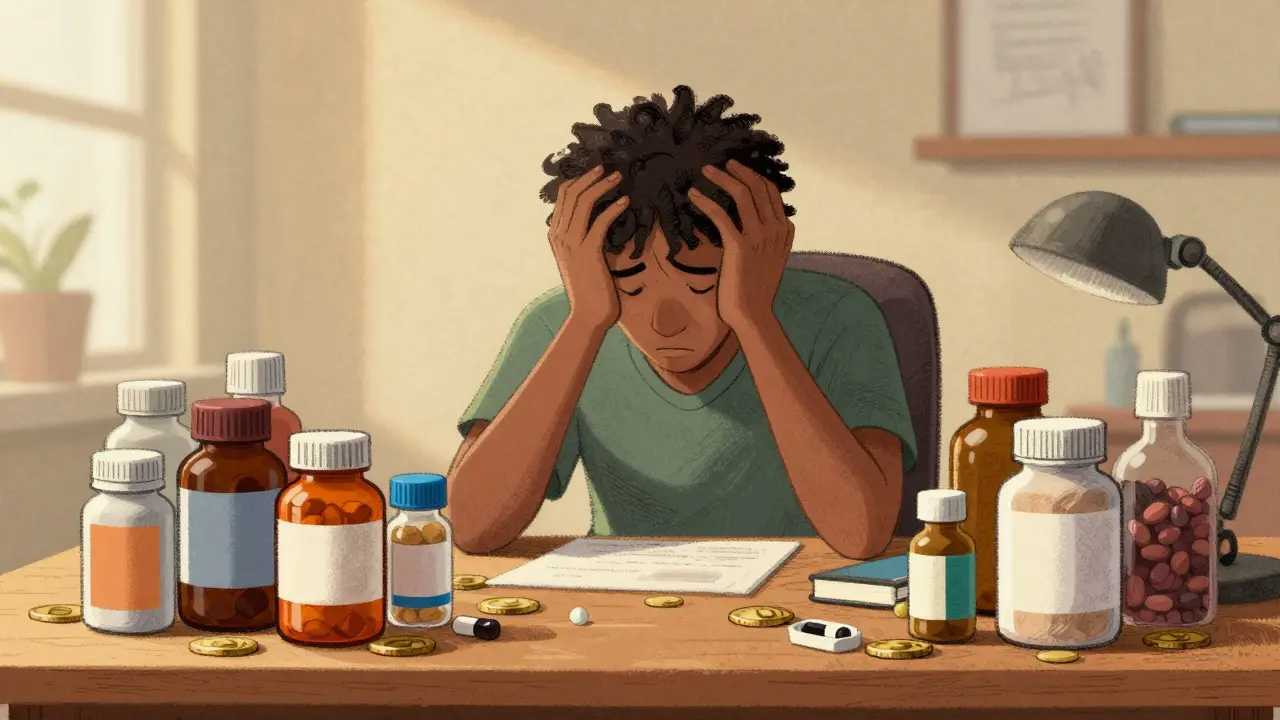
We often think of health as separate from finance, but they are deeply intertwined. The cumulative economic expense of medication non-adherence in the United States hit approximately $529 billion in 2016. While that number dates back slightly, the trend has not improved significantly, suggesting the figure remains alarmingly high in the current economic landscape. These costs aren’t paid by the government alone; they affect the premiums every person pays through taxes and insurance contributions.
| Metric | Impact | Source Estimate |
|---|---|---|
| Annual Preventable Deaths | 125,000 to 200,000 | US/Magellan Health |
| Hospitalizations | 10% to 25% of total | JMCP / Magellan |
| National Cost | $529 Billion | US Estimates |
| Readmissions | 50% linked to adherence | Medicare Data |
The math works against you if you cut corners on treatment. An hour of hospital care is vastly more expensive than a bottle of pills taken correctly at home. When adherence drops, the healthcare system gets flooded with acute cases that could have been managed as outpatient issues.

Why People Stop Taking Meds
Blaming patients for “noncompliance” misses the point entirely. Most barriers are structural or psychological rather than intentional disobedience. Cost is the biggest driver, with nearly 8% of working-age adults admitting in 2021 that price was the reason they skipped doses. As inflation hits prescription prices, this number continues to climb.
Beyond money, fear plays a major role. Many people experience Side Effectsunwanted reactions caused by medication that make them uncomfortable enough to quit. If a drug causes nausea or weight gain, a rational patient might weigh those negatives against the invisible benefit of preventing a stroke five years down the line. Often, the visible negative feels worse than the hypothetical future threat.
There are also deep-seated trust issues. Black, Latino, and minority populations face disproportionately higher nonadherence rates. This isn’t random; it stems from historical discrimination within medical systems and ongoing barriers like lack of pharmacy access or complex language barriers. When patients feel unheard or targeted, their willingness to follow instructions naturally declines.
Finding the Balance and Solutions
The good news is that fixing this doesn’t require superpowers; it requires simple adjustments and better communication. The World Health Organizationspecialized agency of the United Nations responsible for international public health suggests that adherence interventions can be more effective than the drugs themselves in some scenarios. How can you improve your own habits?
- Open Communication: Tell your doctor if the cost is too high. They may have samples or generic alternatives that work just as well.
- Simplify the Routine: Pill boxes that sort doses by day remove the mental load of remembering "morning" vs. "afternoon" pills.
- Use Technology: Mobile apps that send text reminders have shown to improve adherence by up to 18%. If your phone can remind you to call a friend, it can remind you to take medicine.
- Pharmacist Support: Pharmacists are highly trained in regimen management. Asking them to review your stack of bottles can reveal interactions or redundant costs.
Treating adherence as a team sport rather than a solo responsibility changes the outcome. When patients understand the "why" behind the schedule, retention of that schedule improves significantly.
Can stopping medication for a few days cause permanent damage?
Yes, depending on the condition. For unstable heart conditions or blood pressure, stopping for even a few days can trigger rebound hypertension or clotting events. Always consult your doctor before changing your regimen.
Is it okay to skip doses to save money?
No, this usually leads to worse financial outcomes later. Skipping doses often results in emergency room visits that cost thousands of dollars compared to the monthly cost of medication.
Who is most likely to struggle with adherence?
Elderly patients, those with multiple chronic conditions, and individuals facing financial hardship or systemic barriers like limited access to pharmacies show the highest risk factors.
What should I do if side effects are unbearable?
Contact your provider immediately. There are almost always alternative formulations or dosages available that minimize these effects without losing efficacy.
Does age change how I should take my meds?
Older adults often metabolize drugs differently and may need adjusted dosages. Always check for age-specific guidelines, especially for seniors living alone.
Debra Brigman
March 29, 2026 AT 09:08The architecture of our biological resilience is often dismantled by the simplest oversight of daily routine, turning a mundane bottle of pills into a symbol of life itself. We stand at the crossroads of discipline and fate where the absence of a chemical intervention reshapes the narrative of survival in ways that are invisible until catastrophe strikes. It is a profound irony that the tools designed to sustain us become the very instruments of our undoing when neglected through mere forgetfulness or convenience. This fragility highlights a deeper philosophical tension between human intentionality and biological determinism in the modern age. We pretend to control our outcomes while ignoring the silent guardians standing watch in our kitchen cabinets. The numbers suggest a terrifying indifference to probability that we collectively ignore at our own peril. Perhaps the true disease isn't the infection or the hypertension but the disconnect from our own dependency structures. Every missed dose is a gamble with odds stacked heavily against our biological machinery. We must respect the pharmacological covenant we make with our bodies when we ingest these compounds. Life becomes a series of small choices that echo loudly in the final accounting of health statistics. The silence of a non-event is the loudest success story medicine has to offer.
Rohan Kumar
March 29, 2026 AT 23:03Oh sure because Big Pharma wants you on forever 😂 They sell the solution and the problem 🙄 Just follow their script and pay the bill 💸. The stats are cooked anyway 📉 Why do you think profits keep rising while people die more 🤷♂️ Wake up sheeple 🐑💊 #trusttheprocess or whatever 🚫🧠
Sarah Klingenberg
March 30, 2026 AT 23:29I understand the frustration about costs and trust issues but dismissing the science entirely doesn't help anyone get better 🙂. It's really hard when side effects feel worse than the original symptom though. We need to find middle ground where patients feel heard by their doctors first. There is so much room for better communication in clinical settings worldwide. Your experience matters a lot even when the data feels cold. Maybe try asking for generic options if cost is the barrier 🌟. It's okay to be skeptical but also okay to protect your long term future too 🙂.
walker texaxsranger
March 31, 2026 AT 17:00data manipulation everywhere medical industry buys politicians regulatory capture ignores root causes. biochemistry is complex but adherence models fail patient agency completely ignored systemic failures masked as individual compliance issues. placebo effect utilized to mask drug efficacy lack of transparency in trial data selection bias prevalent throughout meta analysis reports. financial incentives drive prescribing habits more than clinical necessity ever could possibly dictate outcomes. question everything especially when presented as absolute truth by corporate entities funding research grants.
Richard Kubíček
April 1, 2026 AT 03:38There is definitely room for improvement in how systems handle these challenges but the core benefit of medication shouldn't be thrown away completely. I believe we can solve these structural issues while still acknowledging that the drugs themselves save lives. It is about building a bridge between patient needs and provider capabilities effectively. We should focus on empowerment rather than blame when discussing non-adherence rates. Many people simply need more support to navigate the complexities of their regimens successfully. Hope is a powerful tool in healing just as much as the pharmaceutical interventions themselves. Let us work together to ensure everyone has access to the care they truly deserve. Small steps towards better understanding can lead to massive improvements in community health outcomes eventually.
Austin Oguche
April 2, 2026 AT 02:13The cultural context of healthcare delivery is often overlooked in these discussions regarding global adherence patterns. Different regions face unique barriers ranging from pharmacy accessibility to linguistic clarity in instructions. A respectful approach acknowledges that one size does not fit all in treatment plans internationally. We must listen to the specific needs of diverse populations to improve overall outcomes meaningfully. Trust is built on consistent and empathetic interactions between care providers and patients daily. Bridging these gaps requires patience and dedication from all sides of the equation involved.
Tony Yorke
April 2, 2026 AT 19:27Consistency wins.
Paul Vanderheiden
April 3, 2026 AT 11:15I really appreciate that kind of energy and motivation because staying consistent is the hardest part of the journey for most people honestly. It takes real courage to show up every single day even when you feel nothing changing yet. You are doing great by just reading this and thinking about your health seriously today. Remember that your doctor is on your team and wants you to succeed just as much as you do. Don't give up because setbacks happen but you can always reset and try again tomorrow. Keep pushing forward with kindness toward yourself throughout the process always. Believe in your ability to heal and manage your condition effectively over time.
Jordan Marx
April 4, 2026 AT 23:28Adherence isn't just binary. It exists on a spectrum. Polypharmacy introduces complexity. Drug-drug interactions become frequent. Pharmacokinetics shift unpredictably. Bioavailability decreases over cycles. Therapeutic windows narrow significantly. Compliance drops correlate with renal stress. We see metabolic syndrome indicators spike. Patient education remains insufficient globally. Health literacy varies by socioeconomic status. Structural barriers hinder access points. Insurance coverage gaps create friction. Prior authorization delays treatment initiation. Outpatient management requires systemic support. Telehealth might bridge some divides. Remote monitoring offers data insights. Real-world evidence matters most here.
Shawn Sauve
April 6, 2026 AT 15:04This technical breakdown helps clarify the systemic issues at play nicely 😊. It is important to acknowledge the difficulty while maintaining boundaries around safety protocols though. Great insight into the multifaceted nature of the problem. Keep up the good sharing of knowledge with the group 🙂.