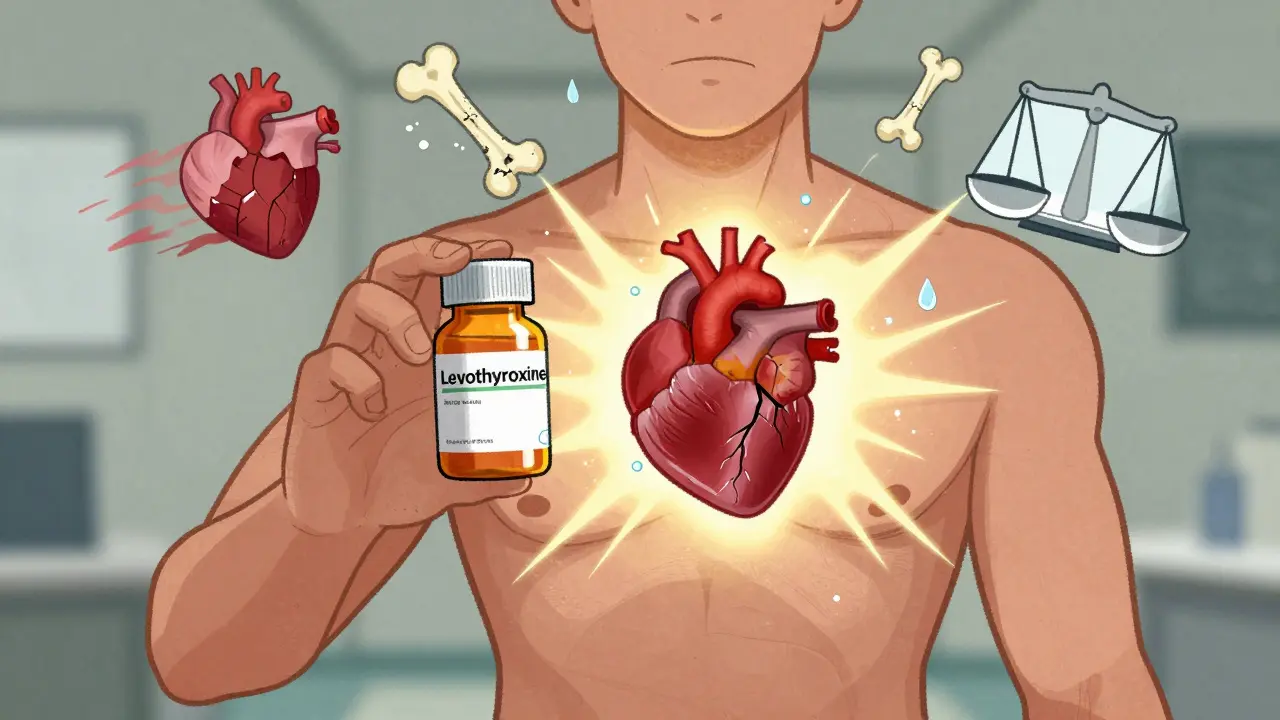
Most people think of thyroid medication like levothyroxine as a simple, safe pill - take one daily, feel better. But when it’s misused, it can send your body into chaos. Too much? Your heart races, you lose weight uncontrollably, and your bones start crumbling. Too little? You’re exhausted, cold, and depressed. And the worst part? Many of these cases aren’t accidents. They’re deliberate. People are taking thyroid meds to lose weight, boost energy, or chase performance gains - and they’re ending up in emergency rooms.
What Happens When You Take Too Much
Taking extra levothyroxine - even just a few pills a day - can trigger factitious hyperthyroidism. This isn’t Graves’ disease. It’s not your immune system attacking your thyroid. It’s you flooding your body with synthetic T4. The results are fast and brutal. Within 30 days, 78% of people who abuse the drug start showing symptoms: trembling hands, heart palpitations, night sweats, diarrhea, and a constant feeling of being wired. One Reddit user, FitLifeJunkie, took 200mcg daily for three months to lose weight. He ended up in the ER with a heart rate of 142 bpm. His doctor told him he was lucky to be alive.Doctors can tell the difference between autoimmune hyperthyroidism and medication-induced cases. In Graves’ disease, your thyroid is overactive and soaks up radioactive iodine. In factitious cases, your thyroid is shut down - the scan shows almost no uptake. Your thyroglobulin levels stay low because your gland isn’t making anything. That’s the smoking gun.
But the damage goes beyond symptoms. Chronic overdose increases your risk of osteoporosis by 3.2 times. Bone density drops 2-4% every year without treatment. Heart rhythm problems aren’t rare - 12% of overdose cases develop irregular pulses. In extreme cases, body temperature spikes above 104°F (40°C). That’s hyperthermia. It can lead to organ failure.
What Happens When You Skip or Stop
It’s not just taking too much. Not taking enough is just as dangerous. Many patients skip doses because they feel fine - or because they’re afraid of side effects. Others stop cold turkey when they think they’re cured. But thyroid hormones don’t work like antibiotics. Your body doesn’t bounce back in a week.When you miss doses, your TSH (the brain’s signal to your thyroid) doesn’t adjust right away. It takes six weeks for TSH to reflect a change in your dose. That’s why some patients get misdiagnosed. They take a missed pill the morning of their blood test, their T4 spikes, and their doctor thinks they need more medication - when they actually need less.
A 2022 survey found that 19% of thyroid patients occasionally skip pills. Of those, 43% saw symptoms return within 72 hours: fatigue, brain fog, weight gain, and cold intolerance. One woman on HealthUnlocked kept losing weight, so her doctor kept increasing her dose. She was secretly taking extra pills. It took six months to stabilize after she admitted the truth.
Medications You Didn’t Know Could Break Your Thyroid
Levothyroxine isn’t the only culprit. Some drugs you’d never suspect can wreck your thyroid function. Amiodarone, a heart rhythm drug, is 37.3% iodine by weight. That’s a massive dose. It can cause both hyperthyroidism and hypothyroidism - and it’s hard to predict which. Type 1 amiodarone-induced thyrotoxicosis (AIT) happens when the iodine overload forces your thyroid to make too much hormone. Type 2 is different: your thyroid gets inflamed and leaks stored hormone. Both require different treatments.Iodinated contrast dye used in CT scans can trigger thyrotoxicosis too. It doesn’t happen right away. It shows up 2-12 weeks later. This is called the Jod-Basedow effect. If you have an underlying thyroid issue - even a mild one - the iodine can push you over the edge.
And then there are cancer drugs. Immune checkpoint inhibitors, used to treat melanoma and lung cancer, cause thyroid dysfunction in up to 8% of patients. These cases often start quietly - maybe just a little fatigue - but can spiral fast. Doctors now recommend testing thyroid levels every 4-6 weeks during treatment. Ignoring it can mean missing a life-threatening shift.
Who’s Most at Risk - And Why
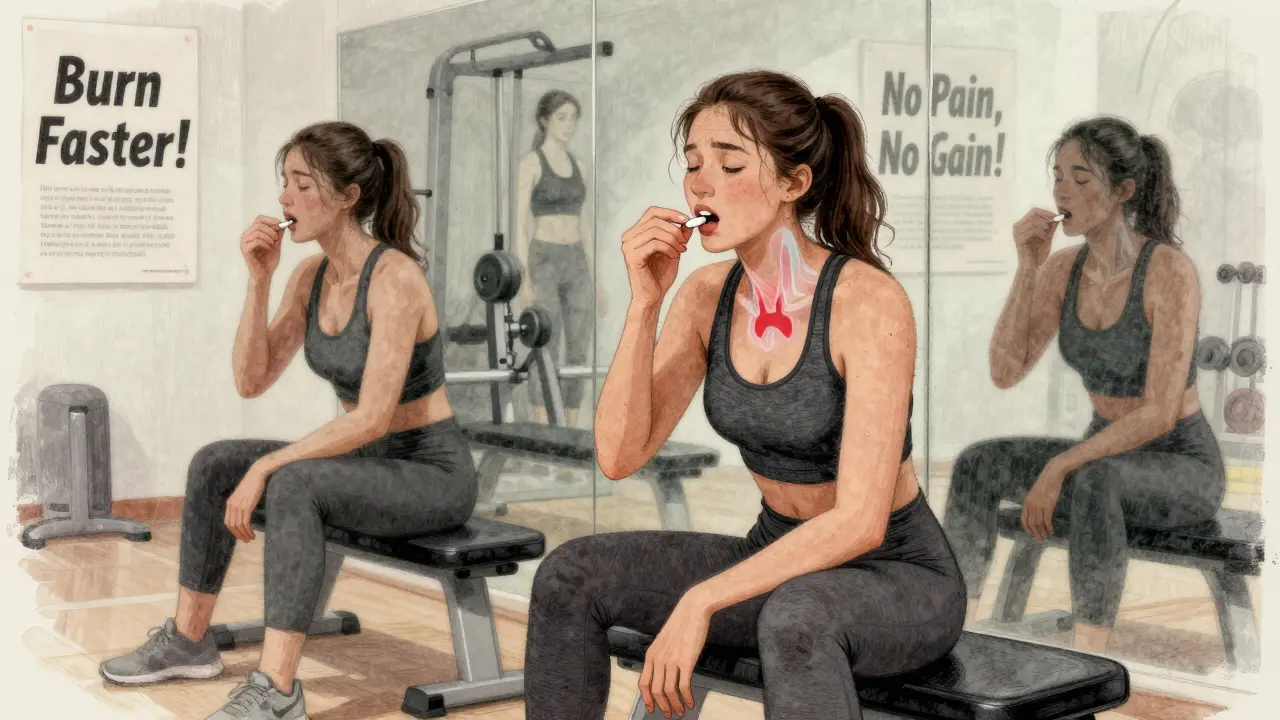
It’s not just people with diagnosed thyroid disease. A 2021 study found that 12% of patients presenting with hyperthyroid symptoms were abusing thyroid meds. Sixty-eight percent were women, average age 34.7. Why? Weight loss. Fitness culture has turned levothyroxine into a secret weapon. One study found 8.7% of gym-goers admitted to using thyroid medication without a prescription.Online stores make it easy. In 2022, the FDA tracked 217 websites selling thyroid hormone pills without prescriptions - up 43% from 2020. These aren’t regulated. One man bought a “natural thyroid booster” online. It contained unlisted levothyroxine. He ended up with atrial fibrillation.
Even people with real prescriptions aren’t safe. A 2022 review found that 38% of negative reviews on Drugs.com blamed doctors for not monitoring levels properly. Forty-two percent of patients who didn’t respond to treatment were taking their pills with food, calcium, or iron - all of which block absorption by 35-50%. Taking your pill with coffee? That cuts absorption too. Timing matters.
How to Stay Safe - Real Steps, Not Just Advice
If you’re on thyroid medication, here’s what actually works:- Get your TSH and free T4 tested every 6-8 weeks when starting or changing your dose. Don’t wait for symptoms.
- Take your pill on an empty stomach, at least 30-60 minutes before food or coffee. Wait 4 hours before taking calcium, iron, or antacids.
- Never take someone else’s pills. Never double up because you missed a dose. Call your doctor instead.
- If you’re using a brand like Synthroid, stick with it. Generic versions are fine - but switching brands too often can cause small dose variations that throw off your balance.
- Ask your doctor about the new digital pill version of levothyroxine, approved in June 2023. It has a tiny sensor that confirms you swallowed it. Early data shows a 52% drop in dosing errors.
And if you’re thinking of using thyroid meds to lose weight - don’t. The weight loss is temporary. The damage is permanent. Muscle loss, heart strain, bone thinning - none of it’s worth a few pounds. And you won’t keep the weight off once you stop. Your metabolism will crash harder than before.

What Recovery Looks Like
Stopping abuse doesn’t mean instant recovery. Your body needs time. For mild cases, a 2-3 week washout period - no meds, close cardiac monitoring - is often enough. Eighty-seven percent of people return to normal without further treatment.But if you’ve been abusing it for months, you might need long-term care. Heart rhythm issues may require beta-blockers. Bone density loss may need calcium and vitamin D, or even osteoporosis drugs. And mental health support? Crucial. Many patients who abuse thyroid meds have underlying anxiety or body image disorders.
One Reddit user, ThyroidWarrior87, shared: “After my doctor adjusted my dose based on real testing, my energy returned and I stopped losing hair within two months.” That’s the goal - not a quick fix. It’s balance.
Why This Is Getting Worse - And What’s Being Done
The thyroid medication market is booming. It’s worth $3.8 billion and growing fast. But with more prescriptions comes more misuse. Between 2017 and 2022, inappropriate thyroid prescriptions rose 22%. Fifteen percent of those had no baseline testing.Hospitals are seeing more complications. Hospitalizations for thyroid medication errors are up 18% since 2019. Costs in the U.S. alone hit $427 million a year.
But there’s hope. The Endocrine Society’s 2023 update recommends point-of-care TSH tests - results in minutes - so doctors can adjust doses faster. Telemedicine programs are being rolled out to monitor patients remotely. Early results show a 28% drop in misuse by 2026.
The real solution? Education. Patients who get clear, detailed counseling have a 63% lower chance of noncompliance. That’s not just about pills. It’s about trust, understanding, and knowing your body’s limits.
Can you really get hyperthyroidism from taking too much levothyroxine?
Yes. Taking more than prescribed - even just a few extra pills a day - floods your body with synthetic T4. This causes factitious hyperthyroidism, which looks like Graves’ disease but has different lab results. Your thyroid shuts down, your TSH plummets, and your heart and bones pay the price. It’s not a myth - it’s a common ER admission.
How do you know if your thyroid symptoms are from meds or your own thyroid?
Doctors check two things: radioactive iodine uptake and thyroglobulin levels. If your thyroid is overworking on its own (like in Graves’), it will soak up iodine and produce thyroglobulin. If you’re taking too much levothyroxine, your thyroid is suppressed - so uptake is low and thyroglobulin stays low. That’s the key difference.
Is it safe to take thyroid medication for weight loss?
No. It’s dangerous and ineffective long-term. Levothyroxine forces your body to burn calories faster, but it also breaks down muscle, increases heart strain, and weakens bones. Any weight lost is mostly water and muscle. Once you stop, your metabolism slows, and you gain it all back - plus more. The risks far outweigh any short-term benefit.
What should you do if you think you’ve taken too much?
Stop taking the medication immediately. Call your doctor or go to the ER if you have chest pain, a heart rate over 120, shaking, or fever. Don’t wait. Mild cases can resolve in weeks with rest and monitoring. Severe cases need hospital care. Never try to “tough it out.”
Can other medications mess up your thyroid even if you’re not on thyroid drugs?
Absolutely. Amiodarone (a heart drug), iodine-based contrast dye (used in CT scans), and immune checkpoint inhibitors (for cancer) can all trigger thyroid dysfunction. These aren’t side effects you can ignore - they need active monitoring. Always tell your doctor you’re on thyroid meds if you’re prescribed something new.
Next Steps If You’re Worried
If you’re on thyroid medication and you’ve skipped doses, taken extra pills, or used it to lose weight - you’re not alone. But you need to act. Book a thyroid panel (TSH, free T4, sometimes free T3). Be honest with your doctor. Bring your pill bottles. Write down your symptoms. Ask about the digital pill option. And if you’re using supplements bought online that claim to “boost thyroid function” - stop. They’re unregulated, often contain hidden hormones, and could be poisoning you.Thyroid health isn’t about speed. It’s about stability. The right dose, taken right, with monitoring - that’s how you feel better. Not by pushing harder. By listening to your body.
Sona Chandra
January 10, 2026 AT 17:07THIS IS WHY PEOPLE ARE DYING IN THEIR 30S FROM ‘FITNESS HACKS’ - YOU THINK YOU’RE BEING SMART TAKING LEVOTHYROXINE TO LOSE WEIGHT BUT YOU’RE JUST SLOWLY KILLING YOUR HEART AND BONES. I SAW A GIRL IN THE GYM TAKE 4 PILLS A DAY AND SAY ‘IT’S JUST A TINY BOOST’ - SHE ENDED UP IN THE ER WITH A FIBRILLATION. NOBODY TELLS YOU THIS UNTIL IT’S TOO LATE.
Jennifer Phelps
January 12, 2026 AT 10:27I used to skip my dose because I felt fine then I’d take two on test day to look normal and my doctor kept upping my dose for months until I admitted I was cheating. Now I take it with water at 5am before coffee and my TSH is stable. Nobody talks about the timing thing
Lauren Warner
January 12, 2026 AT 20:28Let’s be real the entire thyroid medication market is a scam fueled by wellness influencers and lazy endocrinologists who don’t bother checking thyroglobulin levels. If you’re on levothyroxine and your doctor doesn’t know the difference between Graves’ and factitious hyperthyroidism you’re being grossly mismanaged. The FDA should shut down these online pharmacies yesterday.
Amanda Eichstaedt
January 13, 2026 AT 14:44I grew up in a household where thyroid meds were treated like vitamins. My mom took them for ‘energy’ even though she wasn’t hypothyroid. She lost 30 pounds in six months then started having panic attacks and couldn’t sleep. It took two years to get her thyroid back to normal. This isn’t just about fitness culture - it’s about how we’ve normalized chemical shortcuts for emotional and physical discomfort. We need to talk about the anxiety behind the abuse not just the physiology.
Jose Mecanico
January 13, 2026 AT 20:09I’m a nurse and I’ve seen this too many times. People come in with palpitations and weight loss thinking it’s anxiety. We run the labs and their TSH is undetectable. They deny taking extra meds until we show them the low thyroglobulin. Then they cry and say they just wanted to feel normal again. It’s heartbreaking. You don’t need to be a doctor to know this is dangerous but we don’t educate people enough.
Abner San Diego
January 15, 2026 AT 16:20Why are we even talking about this like it’s a mystery The FDA knows about the 217 websites selling thyroid meds online and they do nothing because Big Pharma makes too much money off prescriptions. This isn’t an individual failure it’s a systemic one. Your doctor doesn’t care if you take it wrong because they get paid for the follow ups and the labs. You’re a revenue stream.
Eileen Reilly
January 16, 2026 AT 18:24my friend took synthroid for 3 months to get lean for a wedding and now she has osteoporosis at 29. she thought it was just a pill. she didnt even know it was a hormone. now she has to take calcium and vitamin d and her doc says she might never fully recover. why is this not on every fitness app warning
Monica Puglia
January 18, 2026 AT 10:16Just want to say if you’re reading this and you’re taking thyroid meds without a prescription - you’re not alone. I did it too. I thought I was being disciplined. Turns out I was just scared of my own body. Getting help wasn’t weak. It was the bravest thing I’ve ever done. I’m 8 months clean now and my hair is growing back. ❤️
Cecelia Alta
January 19, 2026 AT 20:19Let me break this down for the people still thinking this is a ‘hack’ - you’re not losing fat you’re losing muscle and bone and organ function. Levothyroxine doesn’t target belly fat it targets your entire metabolic infrastructure and then you collapse. The weight comes back harder because your thyroid is fried. And yes I know you think you’re different - you’re not. The 8.7% of gym rats taking it? Half of them are in therapy now. The other half are in the hospital. You think you’re winning? You’re just delaying the crash.
gary ysturiz
January 21, 2026 AT 07:56If you’re on thyroid meds take it the same time every day. Empty stomach. Wait an hour before food. Don’t mix it with coffee or calcium. It’s simple. You don’t need to be a scientist. Just follow the rules. Your body will thank you.
Jessica Bnouzalim
January 22, 2026 AT 10:56Wait - so the digital pill that confirms you swallowed it? That’s actually real? I’ve been taking mine with my morning smoothie and wondering why I’m still tired… I’m switching to the digital version tomorrow. Thank you for this. I didn’t even know this existed.
Bryan Wolfe
January 22, 2026 AT 23:07Thank you for writing this. I’ve been on levothyroxine for 12 years and I’ve had doctors who didn’t check my levels for over a year. I finally switched to a new endo who tests every 6 weeks and now I feel like myself again. It’s not about speed. It’s about patience. And listening. You’re not broken - you just need the right dose. And the right support.
Lawrence Jung
January 23, 2026 AT 09:07Thyroid meds are just another tool in the capitalist machine to make you feel inadequate so you’ll buy more pills more tests more supplements. The real solution is learning to rest. To eat. To breathe. Not to manipulate your biology with synthetic hormones you bought off a shady website. We’ve lost touch with the natural rhythm of the body. And now we’re paying for it in ER visits and broken bones.