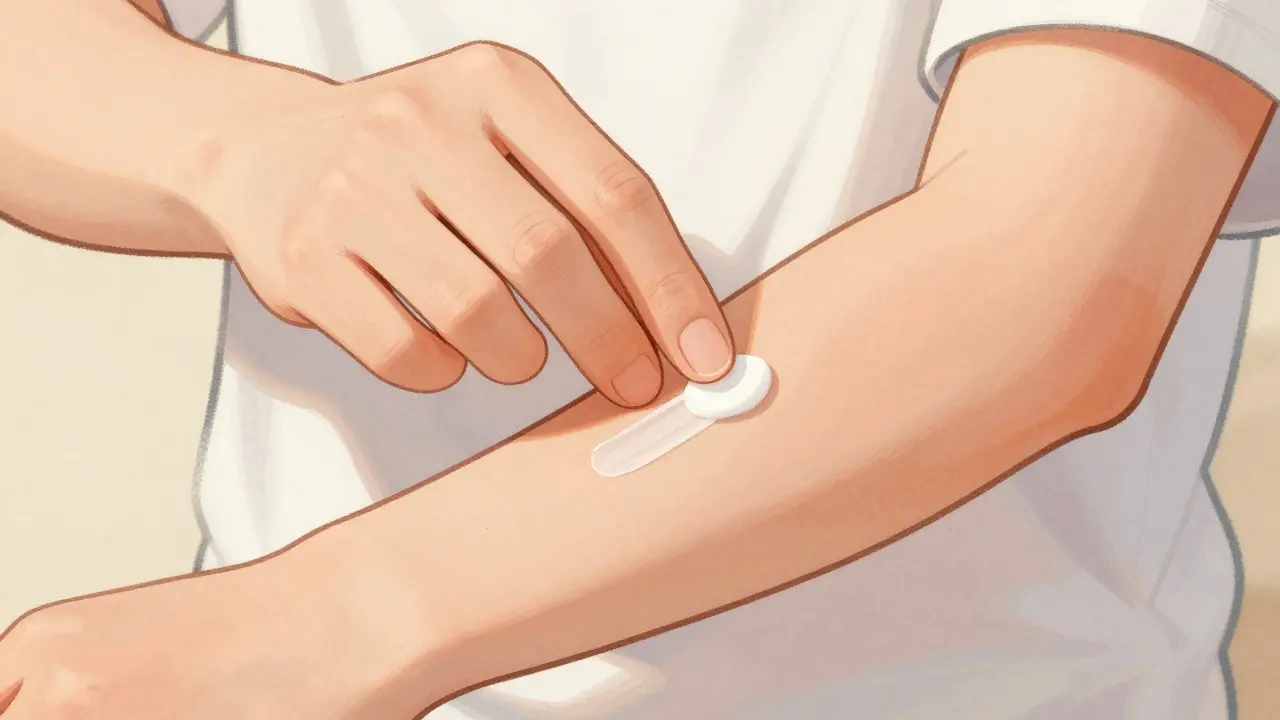
Topical steroids are one of the most common treatments for eczema, psoriasis, and other inflamed skin conditions. They work fast, reduce redness and itching, and are often the first thing a doctor reaches for. But if you’ve ever heard someone say, "I used it for too long and my skin got paper-thin," you know there’s a darker side. The truth is, topical steroids are safe when used right-but dangerous when used wrong. Skin thinning isn’t rare. It’s predictable. And it’s preventable.
What Topical Steroids Actually Do
Topical corticosteroids are anti-inflammatory drugs you put directly on your skin. They don’t cure eczema or psoriasis, but they silence the immune overreaction causing the flare. Unlike oral steroids that flood your whole body, topical versions mostly stay where you put them. Your skin breaks down most of the medicine before it can enter your bloodstream. That’s why they’re safer than pills for localized problems. But potency matters. There are seven strength levels, from mild (like over-the-counter hydrocortisone) to super-potent (like clobetasol). A cream you can buy without a prescription is not the same as the one your dermatologist prescribes for severe plaques. Using a super-potent steroid on your face is like using a chainsaw to trim your eyebrows-it’s overkill and risky.How Skin Thinning Happens
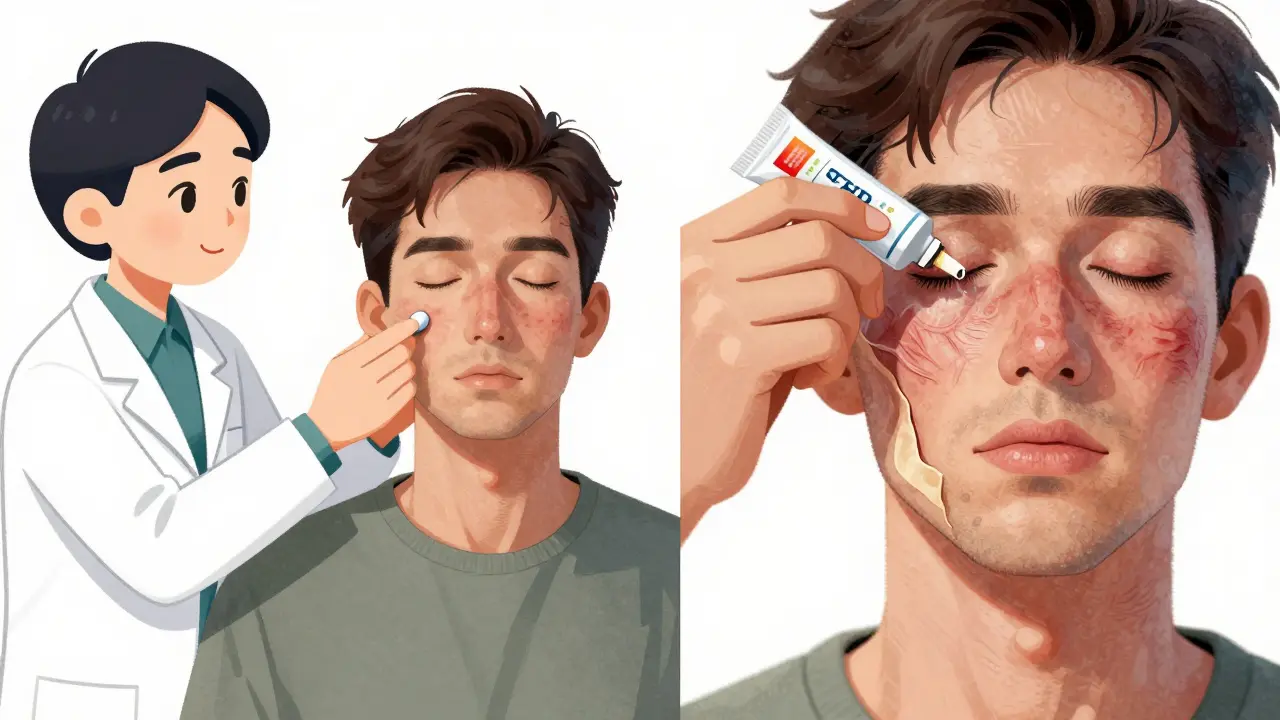
Skin thinning, or atrophy, isn’t just about looking pale or shiny. It’s structural. Steroids suppress collagen production, the protein that gives skin its strength. Over time, the dermis gets thinner. Capillaries become visible. Bruising happens with light bumps. Stretch marks appear. On the face, skin can look translucent. On the inner arms or groin, it tears easily. This isn’t magic. It’s biology. Studies show skin thinning becomes noticeable after just 2-4 weeks of daily use with high-potency steroids, especially on thin-skinned areas like eyelids, neck, or armpits. The National Institutes of Health warns that even short-term use of Class I steroids (the strongest) on sensitive skin can cause permanent changes if misused.Where and When to Use Them
Not all skin is the same. Thicker skin on your palms or soles can handle stronger steroids. Thin skin on your eyelids? Stick to mild. The UK’s NHS and the American Academy of Family Physicians both agree: only mild steroids should ever touch the face, groin, or underarms. Anything stronger should be reserved for thick, scaly patches on elbows, knees, or back. Duration matters just as much as strength. Super-potent steroids should never be used for more than two weeks straight. Potent ones? No more than four. Long-term use-even with low-potency creams-can still cause thinning if applied daily for months. The goal isn’t to eliminate the condition forever. It’s to calm the flare, then step down.The Fingertip Unit: How Much to Use
Most people use too little-or too much. And both are wrong. One fingertip unit (FTU) is the amount of cream or ointment squeezed from a standard tube, from the tip of your index finger to the first crease. One FTU covers about two adult handprints. Here’s what you need:- One hand (front and back): 1 FTU
- One arm: 3 FTUs
- One leg: 6 FTUs
- One foot: 2 FTUs
- Entire face and neck: 2.5 FTUs
How to Apply Them Right
It’s not just about how much you use. It’s how you use it. - Apply a thin layer. You shouldn’t see a white residue. Rub it in gently until it disappears. If it’s still visible, you’ve used too much. - Wash your hands before and after. You don’t want to spread the steroid to your eyes or mouth. - Wait 20-30 minutes before applying moisturizer. Steroids need to absorb into the skin. If you slather on lotion right after, it washes the medicine away. - Use it once a day. Twice daily doesn’t help more. It just increases side effects. The American Academy of Family Physicians says there’s zero evidence that applying more than once a day improves outcomes.What Happens When You Stop
Stopping abruptly after long-term use can backfire. Your skin may flare worse than before. That’s not a rebound effect-it’s withdrawal. It’s called topical steroid withdrawal (TSW), and it’s real. Symptoms include burning, redness, oozing, and intense itching. It’s more common with high-potency steroids used on the face for months. The fix? Step-down therapy. Start with a strong steroid to get control, then switch to a weaker one every 1-2 weeks. After that, move to non-steroidal options like calcineurin inhibitors (tacrolimus, pimecrolimus) or crisaborole. Many dermatologists now use this method for chronic eczema. It reduces dependency and avoids long-term damage.Alternatives to Steroids
Steroids aren’t the only option. For sensitive areas or long-term use, non-steroidal treatments are growing in popularity. - Tacrolimus and pimecrolimus: These are creams that calm inflammation without thinning skin. They’re FDA-approved for facial eczema and often used when steroids aren’t safe. - Crisaborole: A non-steroidal ointment for mild-to-moderate eczema. Less effective than steroids for flares, but safer for daily use. - Phototherapy: UV light treatment for widespread disease. Requires clinic visits but avoids topical chemicals entirely. Cost is a barrier. Non-steroidals are often more expensive and not always covered by insurance. But for people who’ve had skin thinning, they’re worth it.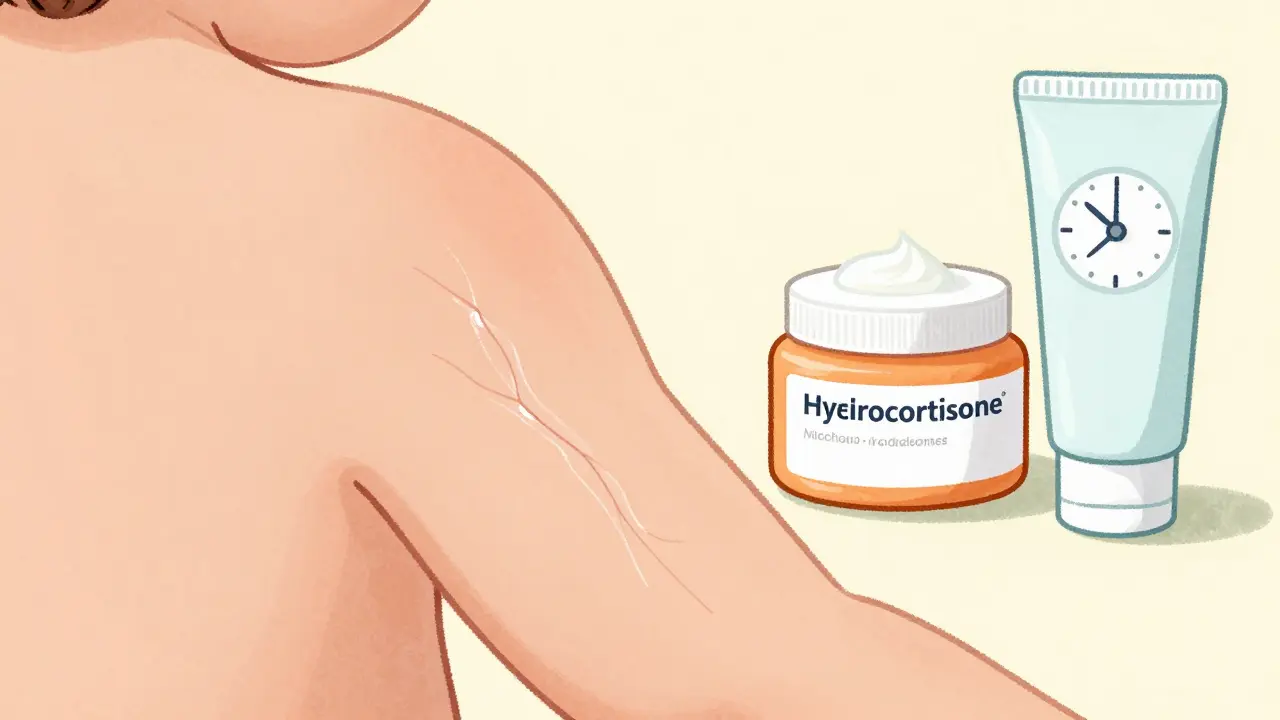
What Patients Are Saying
Online forums are full of stories. Some people say steroids saved their lives. Others describe years of recovery after skin thinning, bruising, and striae. One Reddit user wrote: "I used clobetasol on my face for 8 months to clear acne. When I stopped, my skin peeled, burned, and turned bright red. I looked like I had third-degree burns. It took 18 months to heal." Another said: "My doctor gave me hydrocortisone for my baby’s diaper rash. I used it for six months. Now her skin is paper-thin and tears every time I change her. We’re still dealing with it." These aren’t outliers. They’re predictable outcomes of misuse.How to Avoid the Trap
You don’t need to fear topical steroids. You need to respect them. - Never use a prescription steroid without knowing its strength. - Never use a strong steroid on your face, eyelids, or genitals unless your doctor specifically says so. - Never use it for longer than two weeks without checking in. - Always use the fingertip unit method. - Always pair it with moisturizer-but wait 30 minutes. - If your skin looks thin, bruised, or stretched, stop and see a dermatologist. The UK’s NHS and the American Academy of Dermatology both have free patient guides with visual FTU demos. Use them. Watch the videos. Practice on your hand before applying to your child’s eczema.The Bottom Line
Topical steroids are powerful tools. Used correctly, they bring relief. Used carelessly, they cause damage that can last years. Skin thinning isn’t a myth. It’s a warning sign. And it’s avoidable. The goal isn’t to stop using them. It’s to use them smarter. Short bursts. Right strength. Right place. Right amount. And always, always with a plan to step down. If you’ve been using steroid cream for more than a month without a doctor’s check-in, it’s time to talk to someone. Your skin will thank you.Can topical steroids cause permanent skin thinning?
Yes, especially with long-term use of high-potency steroids on thin skin areas like the face, armpits, or groin. Skin thinning can become visible within weeks and may not fully reverse even after stopping the medication. Early detection and switching to non-steroidal treatments can help prevent permanent changes.
How do I know if I’m using too much steroid cream?
If you see a thick white layer on your skin after applying, you’re using too much. You should apply a thin, almost invisible layer that disappears after gentle rubbing. Also, if you’re using more than a few fingertip units per day for more than two weeks, you’re likely overusing it. Always follow your doctor’s instructions on quantity and duration.
Is it safe to use steroid cream on my child’s eczema?
Yes, but only with the right strength and duration. For children, use the mildest effective steroid-usually low-potency hydrocortisone. Never use medium or strong steroids on their face, neck, or diaper area without a doctor’s direction. Apply only once daily for no more than 7-10 days at a time. Always combine with fragrance-free moisturizers and monitor for signs of thinning or irritation.
Can I use steroid cream every day for chronic eczema?
No. Daily long-term use increases the risk of skin thinning, stretch marks, and withdrawal reactions. For chronic eczema, doctors recommend a "step-down" approach: start with a stronger steroid for 1-2 weeks to control the flare, then switch to a weaker one or a non-steroidal alternative like tacrolimus for maintenance. This reduces dependency and protects skin integrity.
What should I do if my skin looks thin after using steroid cream?
Stop using the steroid immediately and see a dermatologist. Skin thinning can be assessed visually and sometimes with a dermoscope. Your doctor may recommend switching to non-steroidal treatments, using gentle moisturizers, and avoiding sun exposure (thin skin burns easily). In some cases, laser therapy or topical retinoids may help rebuild collagen, but recovery takes months to years.
Are over-the-counter steroid creams safe for long-term use?
Over-the-counter hydrocortisone (1%) is low-potency and generally safe for short-term use (up to 7 days). But using it daily for weeks or months-even at low strength-can still cause skin thinning, especially on sensitive areas. If your condition doesn’t improve in a week, see a doctor. Don’t assume OTC means safe for endless use.
Sachin Bhorde
December 15, 2025 AT 23:36FTU method is everything. I used to eyeball it till my dermatologist showed me how much I was wasting. One FTU = one adult palm. No more, no less. Saved my skin and my wallet.
Kaylee Esdale
December 17, 2025 AT 20:36my kid’s eczema went from screaming to silent in 3 days with low-potency hydrocortisone + ceramide cream. steroids aren’t evil-ignorance is.
Marie Mee
December 17, 2025 AT 23:43they’re just hiding the real cause-chemicals in your shampoo and laundry detergent. doctors don’t want you to know this.
Patrick A. Ck. Trip
December 19, 2025 AT 15:07While I appreciate the comprehensive overview, I must respectfully note that the clinical evidence regarding topical steroid withdrawal remains contentious within peer-reviewed literature. The phenomenon, while anecdotally prevalent, lacks robust longitudinal validation.
Brooks Beveridge
December 21, 2025 AT 05:25you’re not alone if you’ve been scared to stop. i did too. but stepping down with tacrolimus? life-changing. your skin remembers kindness. 💪
Kent Peterson
December 23, 2025 AT 05:00Why are we letting Big Pharma dictate skin care? In my grandfather’s day, we used coconut oil and patience. Now? We’re dosing babies like lab rats. This is a scam.
Jane Wei
December 23, 2025 AT 14:27used clobetasol on my eyelids for a month. now they look like parchment. never again. just say no.
BETH VON KAUFFMANN
December 24, 2025 AT 06:18Let’s be clear: skin atrophy isn’t ‘predictable’-it’s inevitable with prolonged use of Class I-II steroids. The NIH guidelines are conservative for a reason. You’re not ‘using them smart’ if you’re using them daily for more than 14 days. Period. The JAAD study cited? It was funded by a pharma subsidiary. Conflict of interest alert.
Also, the fingertip unit? Most patients can’t even measure a teaspoon accurately. The whole system is flawed. Why not just make non-steroidal first-line? Cost isn’t an excuse. We spend billions on biologics while ignoring safer, cheaper alternatives.
And don’t get me started on ‘step-down therapy.’ That’s just a fancy way of saying ‘we’re addicted and don’t know how to quit.’ The real solution is early intervention with barrier repair creams, microbiome modulation, and avoidance triggers. Steroids are a Band-Aid on a bullet wound.
My dermatologist told me to use hydrocortisone ‘as needed.’ I interpreted that as ‘every day until it’s gone.’ Three years later, I have striae on my inner thighs and translucent skin on my cheeks. No one warned me. No one showed me the FTU. No one said ‘stop.’
Doctors are overworked. Patients are anxious. The system fails. And we’re left with thin skin and trauma.
Non-steroidals aren’t ‘expensive alternatives.’ They’re the standard of care. We just haven’t made them accessible yet.
If you’re reading this and you’ve been on steroids for more than 6 weeks? Stop. Now. See a dermatologist who specializes in eczema-not your GP. Your skin isn’t broken. It’s been abused.
And yes, I’m still healing. It’s been 11 months. I cry sometimes. But I’m learning to live without the crutch.
Josh Potter
December 25, 2025 AT 08:34bro i used steroid cream on my neck for 2 months because i thought it was a rash. now my skin looks like a crumpled paper bag. i regret everything. just use moisturizer. pls.
Meghan O'Shaughnessy
December 26, 2025 AT 18:12in India, we call this ‘corticosteroid dependence.’ my aunt used it for her psoriasis for 15 years. when she stopped, her whole body flared. she had to go to a clinic in Mumbai for phototherapy. now she’s fine-but it took 2 years.
Donna Packard
December 28, 2025 AT 09:35thank you for sharing this. i’m so glad someone is talking about this without fear. your post gave me the courage to talk to my dermatologist.
Michael Whitaker
December 29, 2025 AT 20:53Interesting how you dismiss the concept of TSW as anecdotal, yet cite JAAD studies funded by manufacturers. The real issue is that the medical establishment refuses to acknowledge systemic failure. Patients are being treated as lab rats while insurance companies profit from biologics. You speak of ‘step-down’ as if it’s a solution-it’s merely damage control. The real solution? Ban super-potent steroids from OTC access and require mandatory FTU training for prescribers. Until then, we’re just rearranging deck chairs on the Titanic.
Peter Ronai
December 30, 2025 AT 16:51YOU’RE ALL WRONG. STEROIDS ARE A TOXIC PLAGUE. THEY’RE DESIGNED TO MAKE YOU DEPENDENT SO BIG PHARMA CAN SELL YOU EXPENSIVE NON-STEROIDALS LATER. THIS IS A SCAM. I STOPPED EVERYTHING AND WENT RAW-NO LOTIONS, NO MEDS, JUST WATER AND SUN. MY SKIN IS NOW PERFECT. YOU’RE ALL BRAINWASHED.
Victoria Rogers
January 1, 2026 AT 09:42my dermatologist told me to use it for 2 weeks but i kept going because it worked too well. now my face is shiny and thin and i look like i’m 80. but hey at least my eczema is gone right? 😂