Antibiotic Liver Injury Calculator
Calculate Your R-ratio
When you take an antibiotic, you expect it to kill the infection-not harm your liver. But for some people, that’s exactly what happens. Antibiotic-related liver injury is one of the most common causes of drug-induced liver damage, and it’s not rare. In fact, antibiotics are responsible for about 64% of all drug-induced liver injury cases seen in intensive care units. That’s not a small number. It’s a major clinical problem, and it’s happening right now, in hospitals and clinics around the world.
How Antibiotics Hurt the Liver
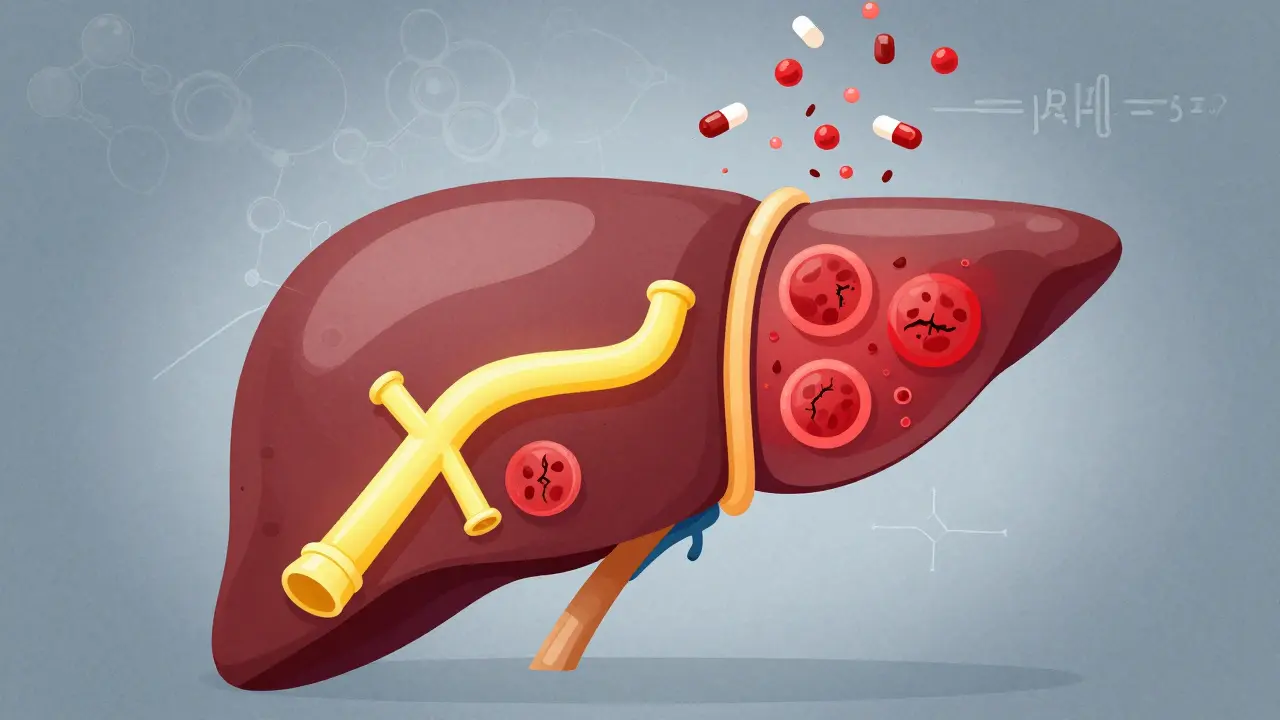
Not all antibiotics cause liver damage, but the ones that do don’t follow a simple pattern. The injury usually shows up in two ways: as hepatitis (liver cell damage) or cholestasis (bile flow blockage). Doctors use a simple number called the R-ratio to tell them which one they’re dealing with. It’s calculated by dividing the highest ALT level (a marker of liver cell damage) by the highest ALP level (a marker of bile duct problems), both compared to their normal upper limits. If the R-ratio is above 5, it’s mostly hepatitis. If it’s below 2, it’s mostly cholestasis. And if it’s in between, it’s mixed.
For example, amoxicillin-clavulanate-a common combo used for sinus infections and pneumonia-causes cholestasis in 70 to 80% of cases. That means bile builds up, and patients often get jaundice (yellow skin), itchy skin, and dark urine. On the other hand, ciprofloxacin and azithromycin more often cause mixed injury, with both liver cell damage and bile flow problems happening together.
The timing matters too. With amoxicillin-clavulanate, liver enzymes usually start climbing 1 to 6 weeks after you start the drug. But with fluoroquinolones like ciprofloxacin, it can happen as fast as 1 to 2 weeks. That’s why doctors need to know not just which antibiotic, but how long it’s been taken. Studies show that if you’re on antibiotics for 7 days or more, your risk of liver injury jumps 3.2 times compared to shorter courses.
Which Antibiotics Are the Worst?
Some antibiotics are far more dangerous to the liver than others. Amoxicillin-clavulanate tops the list. It’s estimated to cause 15 to 20 cases of liver injury per 100,000 prescriptions. That’s high. Compare that to ciprofloxacin, which causes only 1 to 3 cases per 100,000. But even though fluoroquinolones are less common, they’re still risky because they’re used so widely.
Then there’s piperacillin-tazobactam (TZP), a powerful IV antibiotic often used in ICUs for severe infections. In patients on TZP for 7 days or longer, nearly 29% developed liver injury. That’s almost 1 in 3. Meropenem, another common ICU antibiotic, caused liver injury in only 12% of similar patients. And here’s something surprising: men are 2.4 times more likely than women to get liver injury from meropenem. Why? We don’t fully know yet, but it points to biological differences we’re only beginning to understand.
Rifampin, used for tuberculosis and sometimes for stubborn infections, causes dose-related damage. The higher the dose, the worse the liver injury. And when it’s combined with isoniazid (a TB drug), the risk multiplies. Even though isoniazid isn’t a typical antibiotic, it’s often given alongside them, and the combo is a known liver hazard.
How the Damage Happens
It’s not just about the drug itself. Antibiotics trigger liver injury through multiple pathways. One major mechanism is mitochondrial damage. Liver cells rely on mitochondria for energy. Certain antibiotics block the mitochondria’s ability to burn fatty acids, which leads to a buildup of toxic byproducts and cell death. That’s what Dr. Bryan H. Norman calls mitotoxicity.
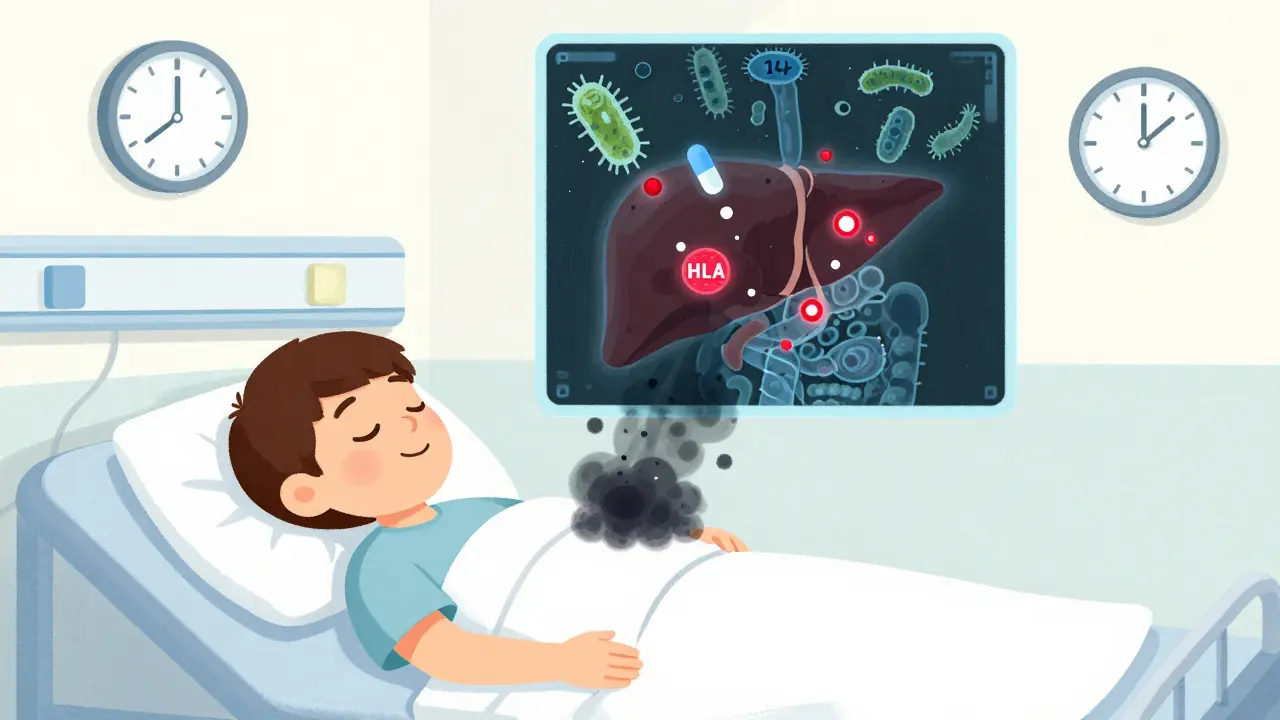
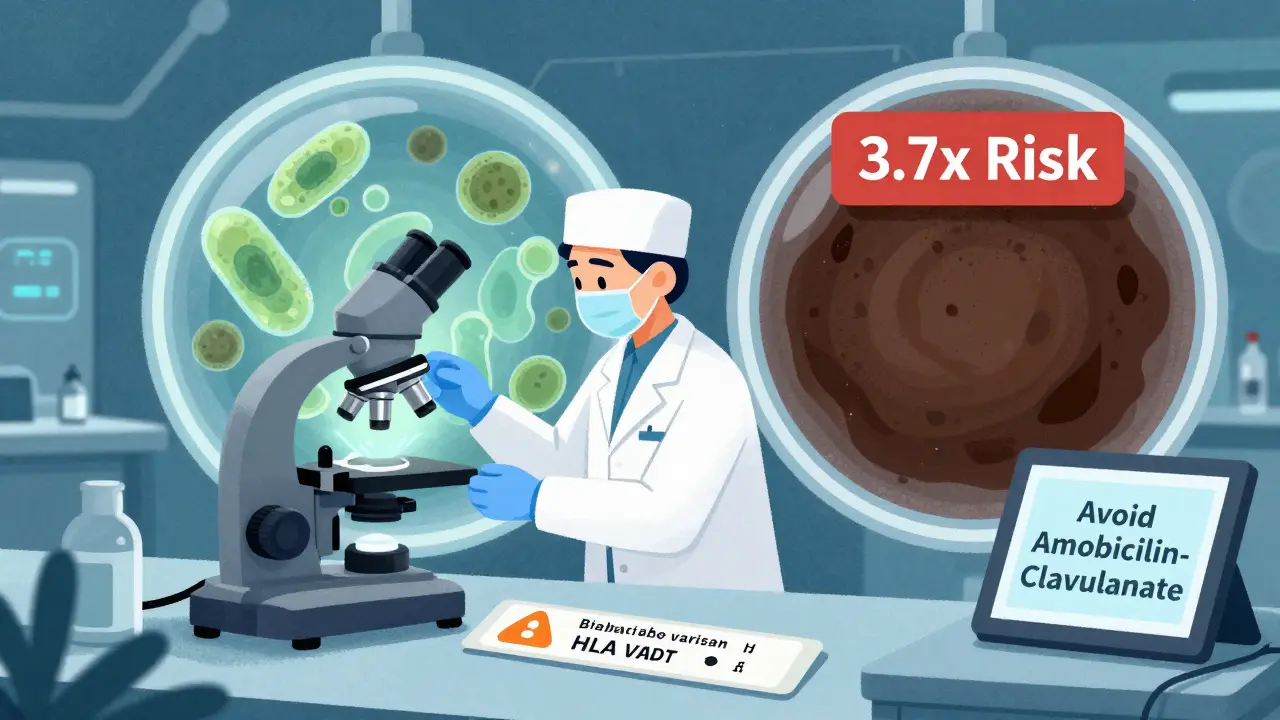
Another big player is the gut microbiome. Antibiotics don’t just kill bad bacteria-they wipe out the good ones too. This throws off the balance of your gut, weakens the intestinal barrier, and lets toxins leak into the bloodstream. These toxins travel straight to the liver, where they trigger inflammation and damage. Research shows that people with low levels of a specific gut bacterium called Faecalibacterium prausnitzii have a 3.7 times higher risk of developing antibiotic-related liver injury. That’s a strong signal that your gut health might predict your liver risk.
And then there’s genetics. Some people are just more vulnerable because of their HLA genes-genes that help your immune system recognize threats. If your immune system mistakenly targets your liver cells after antibiotic exposure, it can cause a severe, unpredictable reaction. This is called idiosyncratic DILI, and it’s not dose-dependent. You can take a normal dose and still get hit hard. That’s why some people get liver injury and others don’t, even on the same drug.
Recognizing the Signs
Many people never notice anything. Their liver enzymes rise quietly during routine blood tests, and that’s it. But others develop clear symptoms: fatigue, nausea, loss of appetite, dark urine, pale stools, and jaundice. In serious cases, confusion or bleeding can occur, which means the liver is failing.
Doctors use clear thresholds to decide when to stop an antibiotic:
- ALT more than 5 times the upper limit of normal (ULN)
- ALP more than 2 times ULN and symptoms like jaundice
- Total bilirubin more than 2 times ULN and ALT more than 3 times ULN (this signals mixed injury)
But here’s the catch: in critically ill patients, it’s hard to tell if the liver damage is from the antibiotic or from the infection itself. Sepsis, low blood pressure, and shock can all raise liver enzymes. That’s why doctors often miss the real cause. One study found that nearly 38% of patients on TZP developed liver injury, and 13% had to stop the drug because of it. But many others stayed on it because the infection was too dangerous to treat differently.
What Should You Do?
If you’re prescribed an antibiotic, especially one known to affect the liver, ask about monitoring. Baseline liver tests before starting are a good idea. For high-risk drugs like amoxicillin-clavulanate, repeat testing after 1 to 2 weeks is common. If you’re in the hospital on IV antibiotics for more than a week, weekly blood tests are standard.
Don’t panic if your enzymes go up slightly. Small changes happen. But if they climb sharply-especially with symptoms-talk to your doctor. Don’t stop the antibiotic on your own. Sometimes, the infection is more dangerous than the liver injury. The key is communication and monitoring.
What’s Changing in the Future?
Research is moving fast. Scientists are now testing whether probiotics can help prevent liver injury by restoring gut bacteria after antibiotics. Early trials are promising. There’s also work underway to create genetic tests that can identify people at high risk before they even take the drug. If you carry certain HLA variants, you might be told to avoid amoxicillin-clavulanate altogether and switch to a safer alternative.
Some companies are developing gut microbiome tests that could predict your risk based on your bacterial profile. These aren’t available yet, but they’re in phase 2 trials and could be in clinics within the next few years.
Meanwhile, regulatory agencies like the FDA and EMA are tightening requirements for antibiotic safety testing. Any new antibiotic now has to prove it won’t cause liver damage before it’s approved. That’s why fewer new antibiotics are hitting the market-because the risk is too high.
The Bottom Line
Antibiotics save lives. But they can also hurt your liver. The risk is real, especially with certain drugs, long courses, or if you’re already sick. The good news? Most cases are mild and reversible if caught early. The key is awareness, monitoring, and knowing when to question the treatment. If you’re on an antibiotic for more than a week, especially if you’re in the hospital or have other liver risks, make sure your doctor is checking your liver enzymes. Don’t wait for jaundice to appear. By then, it might be too late.
Can antibiotics cause liver damage even if I’ve taken them before without issues?
Yes. Antibiotic-related liver injury is often idiosyncratic, meaning it doesn’t happen the first time you take the drug. It can appear after multiple exposures, or even after years of safe use. This is because the immune system or metabolic pathways can change over time. A person who took amoxicillin-clavulanate without problems last year might develop liver injury the next time-even at the same dose.
Are over-the-counter antibiotics linked to liver injury?
In most countries, true antibiotics require a prescription. But some countries allow limited OTC use, and people sometimes misuse animal antibiotics or purchase them online. These unregulated sources carry higher risks because dosing is unclear, and the drugs may be counterfeit or contaminated. Even a short course from an unverified source can trigger liver injury. There’s no safe OTC antibiotic.
How long does it take for the liver to recover after stopping the antibiotic?
Most people recover fully within weeks to a few months after stopping the drug. ALT and ALP levels usually drop back to normal in 4 to 12 weeks. But recovery can take longer if the injury was severe, if the person has other liver conditions, or if they continue drinking alcohol. In rare cases, liver damage can progress to acute liver failure, requiring a transplant.
Is there a blood test that can predict antibiotic liver injury before it happens?
Not yet for routine use. Current monitoring relies on liver enzyme tests after the drug is started. But research is advancing rapidly. Genetic testing for HLA variants (like HLA-B*57:01 for flucloxacillin) is already used in some European clinics. Gut microbiome profiling is being tested in trials. Within the next 5 years, we may have simple blood or stool tests that can predict your personal risk before prescribing an antibiotic.
Do children and older adults have different risks?
Children rarely develop antibiotic-related liver injury. The risk increases with age, especially after 60. Older adults often have reduced liver function, take multiple medications, and have other health conditions that make them more vulnerable. Studies show patients over 65 are 2.5 times more likely to develop severe liver injury than younger adults on the same antibiotics.
Philip Blankenship
February 18, 2026 AT 02:55Man, I never realized how wild it is that antibiotics can mess with your liver like that. I’ve been on amoxicillin-clavulanate twice-once for a sinus infection, once for a tooth abscess-and zero issues. But now I’m thinking, maybe I just got lucky? The part about the R-ratio is actually super useful. I’m a nurse, and we check LFTs all the time, but I never connected the dots between the numbers and the drug timing. 1-6 weeks? That’s such a specific window. Makes me wonder if we should be doing follow-up labs at 3 weeks for high-risk scripts instead of waiting for symptoms. Also, the gut microbiome angle? Mind blown. I’ve been taking probiotics since COVID, and now I feel like I was onto something.
Liam Earney
February 20, 2026 AT 00:32Oh, wow… I mean… wow. Just… wow. I’ve been on TZP for 10 days last year… and my ALT went up to 140… and they just said, “It’s probably the sepsis.” But now I’m sitting here, reading this… and I realize… they didn’t even consider… the antibiotic…? I mean… I had jaundice… I had itching… I had dark urine… and no one… connected… the dots…? I’m not even mad… I’m just… heartbroken… for every other patient who got ignored… because… doctors… are… busy…? And now… I’m scared… to take… anything… ever… again…
Brenda K. Wolfgram Moore
February 20, 2026 AT 19:04This is one of the most important posts I’ve read in months. Seriously. We treat antibiotics like candy-pop one for a sniffle, another for a sore throat-and never think twice. But the numbers don’t lie: 64% of ICU drug-induced liver injuries? That’s not a side effect-that’s a systemic blind spot. I’m glad the FDA is tightening approval standards. We need more proactive monitoring, especially for older adults and those on long courses. And yes, baseline LFTs should be standard, not optional. This isn’t fear-mongering-it’s harm reduction. Let’s make this common knowledge, not just a medical footnote.
Digital Raju Yadav
February 22, 2026 AT 02:17Western medicine is a joke. You give people antibiotics like they’re vitamins, then act shocked when their liver breaks? In India, we’ve been using traditional liver tonics like kalmegh and bhumiamla for centuries to protect against drug toxicity. No one here gets liver injury from amoxicillin because we don’t just dump chemicals into the body-we balance it. You think your fancy R-ratios and HLA tests are science? We’ve been doing preventative hepatoprotection for 5000 years. Your system is reactive. Ours is preventive. Learn from us before more people die from your overprescribing.
Sam Pearlman
February 22, 2026 AT 09:38Okay but… what if I told you… the real problem isn’t the antibiotics… it’s the fact that we’ve turned every cough into a medical emergency? I mean… how many of these cases are just people who didn’t need antibiotics in the first place? Like… a viral URI? No. You need amoxicillin. And then… boom… liver. I’m not anti-antibiotic. I’m anti-unnecessary-antibiotic. Stop treating the flu like it’s a war. Let your body do its job. The liver isn’t fragile-it’s being abused. And we’re the abusers.
Steph Carr
February 24, 2026 AT 07:05So let me get this straight. We’ve got a system that monitors your liver after you’ve already damaged it, while ignoring the fact that your gut flora has been nuked for weeks? And you’re telling me we’re not testing for Faecalibacterium prausnitzii levels before prescribing? That’s like checking your car’s engine after it’s caught on fire because you used the wrong fuel. We’re so obsessed with treating symptoms that we’ve forgotten to prevent them. Also-why is it always men getting hit harder by meropenem? Is it hormones? Testosterone toxicity? Or are we just bad at noticing women’s symptoms? Asking for a friend who’s been told her fatigue is ‘just stress’ for 7 years.
Oliver Calvert
February 25, 2026 AT 15:09Good breakdown. Key point missed: cholestasis isn’t always jaundice. I’ve seen patients with isolated ALP elevation and zero symptoms. If you’re on antibiotics beyond 7 days, check ALP and GGT weekly. Don’t wait for ALT to spike. Also-fluoroquinolones cause mixed injury because they hit mitochondria AND bile transporters. That’s why they’re sneaky. And yes, gut barrier integrity matters. But probiotics? Not all strains help. Stick to Lactobacillus rhamnosus GG and Bifidobacterium infantis. The others are marketing.
Logan Hawker
February 26, 2026 AT 02:24Let’s be real-this is just another example of pharmaceutical capitalism prioritizing market share over patient safety. Amoxicillin-clavulanate dominates because it’s cheap and broad-spectrum, not because it’s optimal. Meanwhile, the real science-mitochondrial toxicity, HLA-mediated immune responses, gut-liver axis disruption-is being sidelined because it’s too complex to market. We need a paradigm shift from “one-size-fits-all” prescribing to precision hepatotoxicity profiling. Until then, we’re just playing Russian roulette with liver enzymes. And yes, I’m aware this sounds like a TED Talk. But the data doesn’t lie. The future of medicine isn’t in dosing guidelines-it’s in genomic and microbiomic stratification. And if you’re not thinking about that… you’re not thinking at all.
James Lloyd
February 26, 2026 AT 22:41