Methadone QT Risk Estimator
Patient Parameters
Select all that apply:
Estimated Risk Level
Disclaimer: This tool is for educational purposes only and does not constitute medical advice. Always consult a healthcare professional regarding medication risks and cardiac monitoring.
Imagine a medication that saves lives by treating opioid dependence but carries a hidden cardiological time bomb. That is Methadone, a long-acting synthetic opioid agonist. While it is a cornerstone in addiction treatment, it has an infamous reputation for causing QT interval prolongation, which can lead to Torsades de Pointes (TdP), a life-threatening heart rhythm disorder. The real danger spikes when methadone is combined with other drugs that also affect the heart's electrical system. This additive effect creates a perfect storm for arrhythmias.
The Hidden Cardiac Mechanism of Methadone
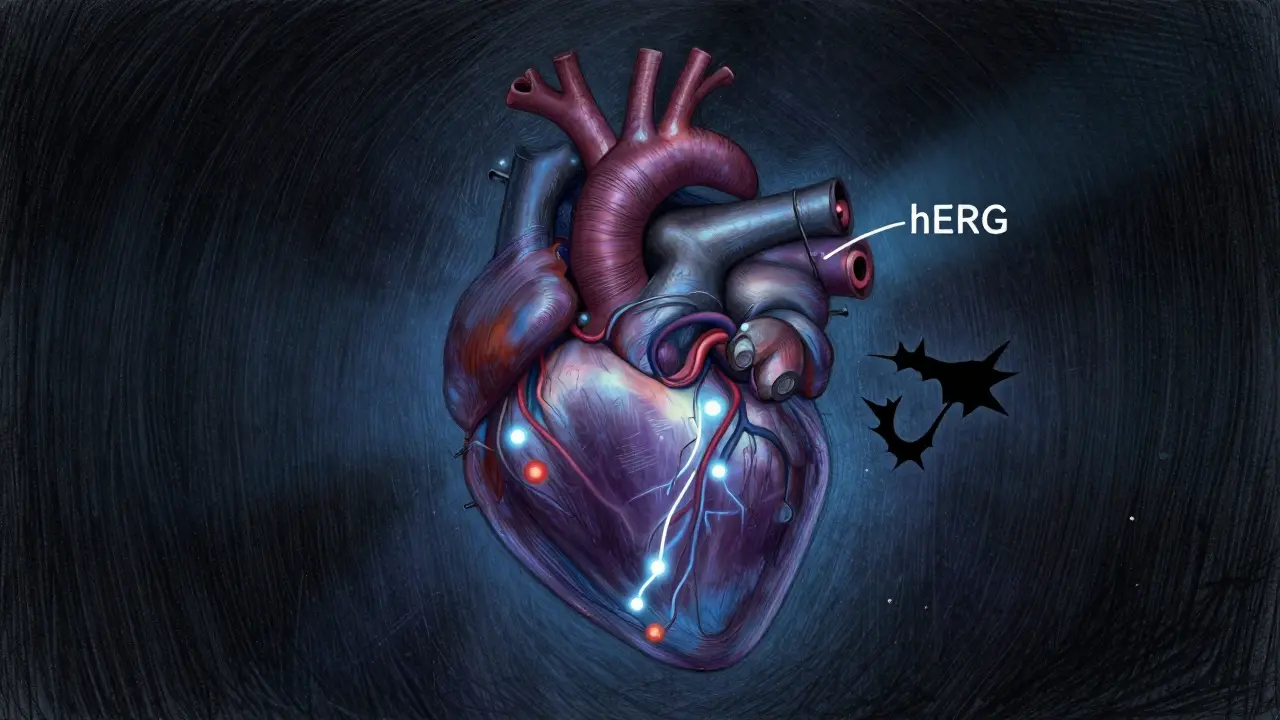
To understand the risk, we need to look at what happens inside your heart cells. Your heart beats because of electrical signals that tell muscle cells to contract and relax. This process involves ion channels opening and closing. Methadone blocks specific potassium channels, specifically the rapidly activating delayed rectifier potassium current (IKr) via the hERG channel. When these channels are blocked, the heart takes longer to reset its electrical charge after each beat. This delay shows up on an electrocardiogram (ECG) as a prolonged QT interval.
Recent research from 2022 published in JAHA revealed a second layer to this problem. Methadone also blocks the inward rectifier potassium current (IK1) at concentrations similar to its effect on IKr. This dual-channel blockade is unique. Most other QT-prolonging drugs only hit one target. By hitting two, methadone causes greater membrane instability. This leads to delayed afterdepolarizations and lengthens the T Peak-T End interval, making the heart more susceptible to chaotic rhythms like TdP.
Why the Combination is Dangerous
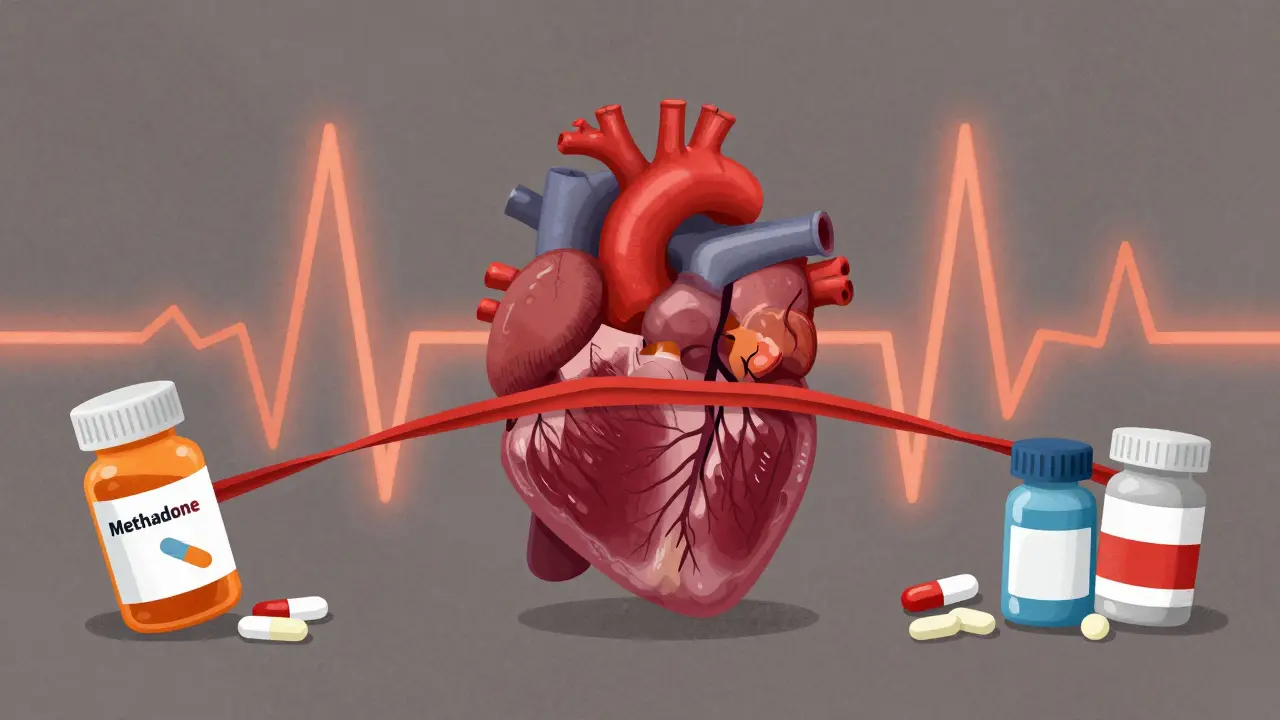
Using methadone alone carries risks, but adding another QT-prolonging drug multiplies the danger. This is called an additive interaction. If you take methadone with antibiotics like erythromycin or antidepressants like citalopram, both drugs push the QT interval longer. The heart’s repolarization reserve gets exhausted. Think of it like stretching a rubber band too far; eventually, it snaps. In cardiac terms, that snap is a lethal arrhythmia.
The U.S. Food and Drug Administration (FDA) issued a black box warning in 2006 highlighting this exact risk. They noted that concomitant use of multiple QT-prolonging agents significantly increases the likelihood of TdP. A case report by Lamont detailed a patient who developed persistent QT prolongation and TdP while using methadone with cocaine. Even though cocaine has a short half-life, the synergistic effect was deadly. New Zealand’s Medsafe documented similar cases, including one patient on 150 mg/day methadone who died suddenly at home after experiencing recurrent syncope.
Identifying High-Risk Drug Interactions
Not all drugs carry the same weight. Some combinations are particularly hazardous. Here are common categories of drugs that interact dangerously with methadone:
- Antimicrobials: Macrolides (e.g., erythromycin, clarithromycin) and fluoroquinolones (e.g., moxifloxacin). These are often prescribed for infections but can severely prolong QT when mixed with opioids.
- Antifungals: Fluconazole is a frequent culprit. It inhibits enzymes that metabolize methadone, raising methadone levels while independently affecting the heart.
- Psychotropics: Antipsychotics like haloperidol and antidepressants like citalopram and venlafaxine. Mental health patients often receive methadone, making this intersection critical.
- HIV Protease Inhibitors: Ritonavir not only prolongs QT but also inhibits CYP3A4, the enzyme that breaks down methadone. This creates a pharmacokinetic-pharmacodynamic double whammy: higher methadone levels and increased direct cardiac toxicity.
| Drug Class | Examples | Risk Level | Mechanism of Interaction |
|---|---|---|---|
| Macrolide Antibiotics | Erythromycin, Clarithromycin | High | Direct hERG blockade + metabolic inhibition |
| Fluoroquinolones | Moxifloxacin | Moderate-High | Direct hERG blockade |
| SSRIs/SNRIs | Citalopram, Venlafaxine | Moderate | Dose-dependent QT prolongation |
| Antipsychotics | Haloperidol, Quetiapine | High | Strong hERG blockade |
| Protease Inhibitors | Ritonavir | Very High | Metabolic inhibition + direct QT effect |
Who Is Most at Risk?
Not everyone on methadone will develop arrhythmias. However, certain factors amplify the risk. Dose matters significantly. QTc prolongation >500 milliseconds is rarely associated with doses below 100 mg/day. Above this threshold, the risk climbs steeply. Longitudinal data shows that over 16 weeks of therapy, peak QTc increases exceeded 450 milliseconds in 69% of males and 470 milliseconds in 72% of females.
Other risk factors include:
- Electrolyte Abnormalities: Low potassium (hypokalemia) or low magnesium (hypomagnesemia) makes the heart more irritable.
- Structural Heart Disease: Existing damage to the heart muscle reduces its ability to handle electrical stress.
- Bradyarrhythmias: Slow heart rates give the QT interval more time to prolong, increasing TdP risk.
- Family History: Personal or family history of Long QT Syndrome indicates a genetic predisposition.
Dr. Chirag R. Barbhaiya of Beth Israel Medical Center emphasized that the presence of these co-factors substantially amplifies methadone's arrhythmogenic potential. You cannot look at the drug in isolation; you must look at the whole patient.
Monitoring and Management Strategies
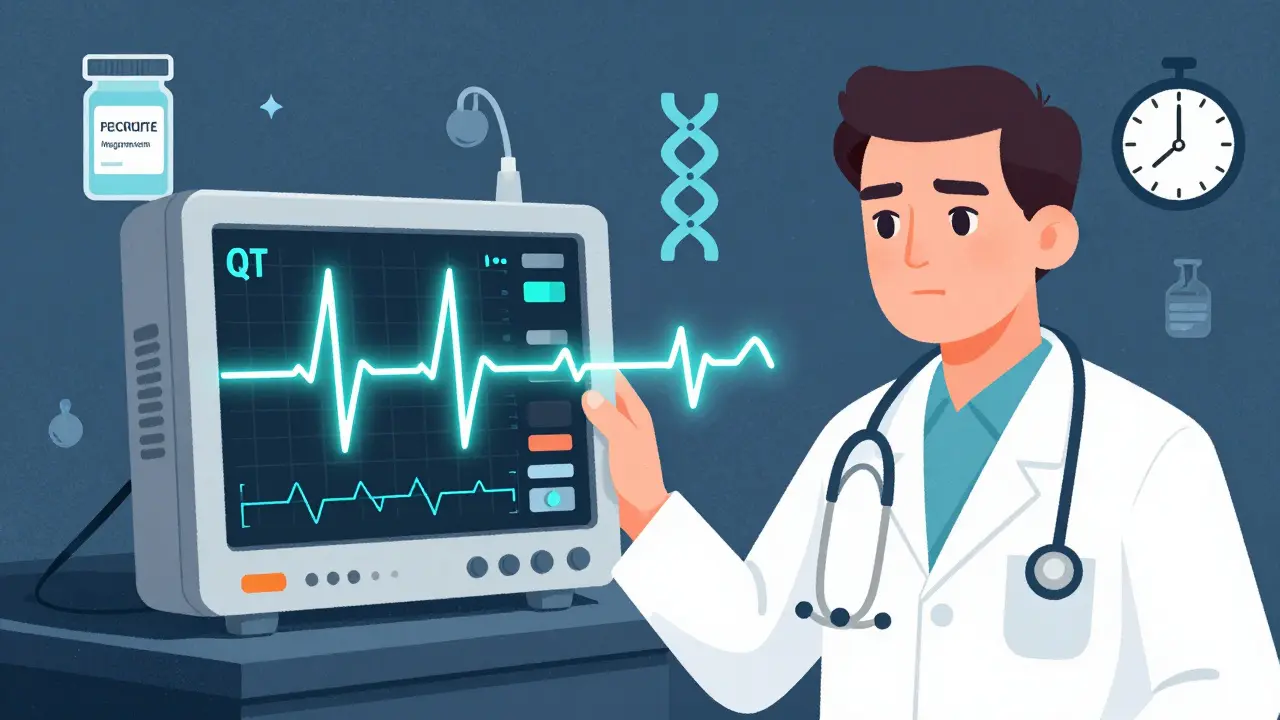
So, how do we keep patients safe? Vigilance is key. Current clinical guidelines recommend a comprehensive risk assessment before starting methadone. This includes a baseline ECG for every patient. After the dose stabilizes, repeat monitoring is essential. For high-risk patients, periodic ECGs during maintenance therapy are non-negotiable.
Here are the critical thresholds to watch for:
- Normal QTc: ≤430 ms for men, ≤450 ms for women.
- Borderline Prolongation: 431-450 ms for men, 451-470 ms for women. Requires evaluation.
- High Risk: QTc >500 ms OR an increase >60 ms from baseline. Requires immediate intervention.
If a patient crosses into the high-risk zone, you have several options. First, check for electrolyte imbalances and correct them. Second, review their medication list. Can you switch a macrolide antibiotic to a safer alternative like azithromycin (which has lower QT risk)? Third, consider reducing the methadone dose. In a New Zealand case, reducing methadone from 120 mg/day to 60 mg/day normalized the QTc and resolved self-limiting TdP.
If dose reduction isn't viable due to withdrawal symptoms, switching to Buprenorphine is a strong consideration. Buprenorphine has 100-fold less hERG channel blockade than methadone. It offers similar therapeutic efficacy for opioid dependence with a dramatically safer cardiac profile. This switch is often the best move for patients with persistent QT issues despite dose adjustments.
The Safety-Efficacy Paradox
We must acknowledge the bigger picture. Methadone saves lives. It reduces mortality by 20-50% compared to non-treatment, decreases criminal activity, and improves adherence to care. The cardiac risk is real, but it does not outweigh the benefits if managed correctly. The goal is not to fear methadone, but to respect its potency. With proper screening, monitoring, and avoidance of dangerous drug combinations, most patients can stay on effective therapy without suffering cardiac events.
As new research emerges, such as the identification of IK1 blockade, our tools for risk stratification will improve. Techniques like U-wave integral analysis may soon help us predict loss of repolarization reserve more accurately. Until then, careful clinical judgment remains our best defense.
What is the normal QTc interval range?
A normal QTc interval is defined as ≤430 milliseconds for men and ≤450 milliseconds for women. Borderline prolongation is classified as 431-450 ms for men and 451-470 ms for women.
At what methadone dose does QT risk increase significantly?
The risk of significant QTc prolongation (>500 ms) becomes substantially more prevalent at doses exceeding 100 mg per day. Below this threshold, the risk is much lower but still present.
Can I take antibiotics while on methadone?
You can take some antibiotics, but you must avoid those that prolong QT. Macrolides like erythromycin and clarithromycin, and fluoroquinolones like moxifloxacin, are high-risk. Safer alternatives like azithromycin or penicillins should be discussed with your doctor.
Why is buprenorphine considered safer for the heart?
Buprenorphine has minimal hERG channel blockade-approximately 100-fold less than methadone. This means it has a negligible effect on the QT interval, making it a safer option for patients with cardiac risk factors.
What should I do if my QTc exceeds 500 ms?
This is a medical emergency requiring immediate intervention. Steps typically include correcting electrolytes, stopping any interacting medications, reducing the methadone dose, or switching to buprenorphine under close medical supervision.